Author: tomlirish

FATIMA REVISITED

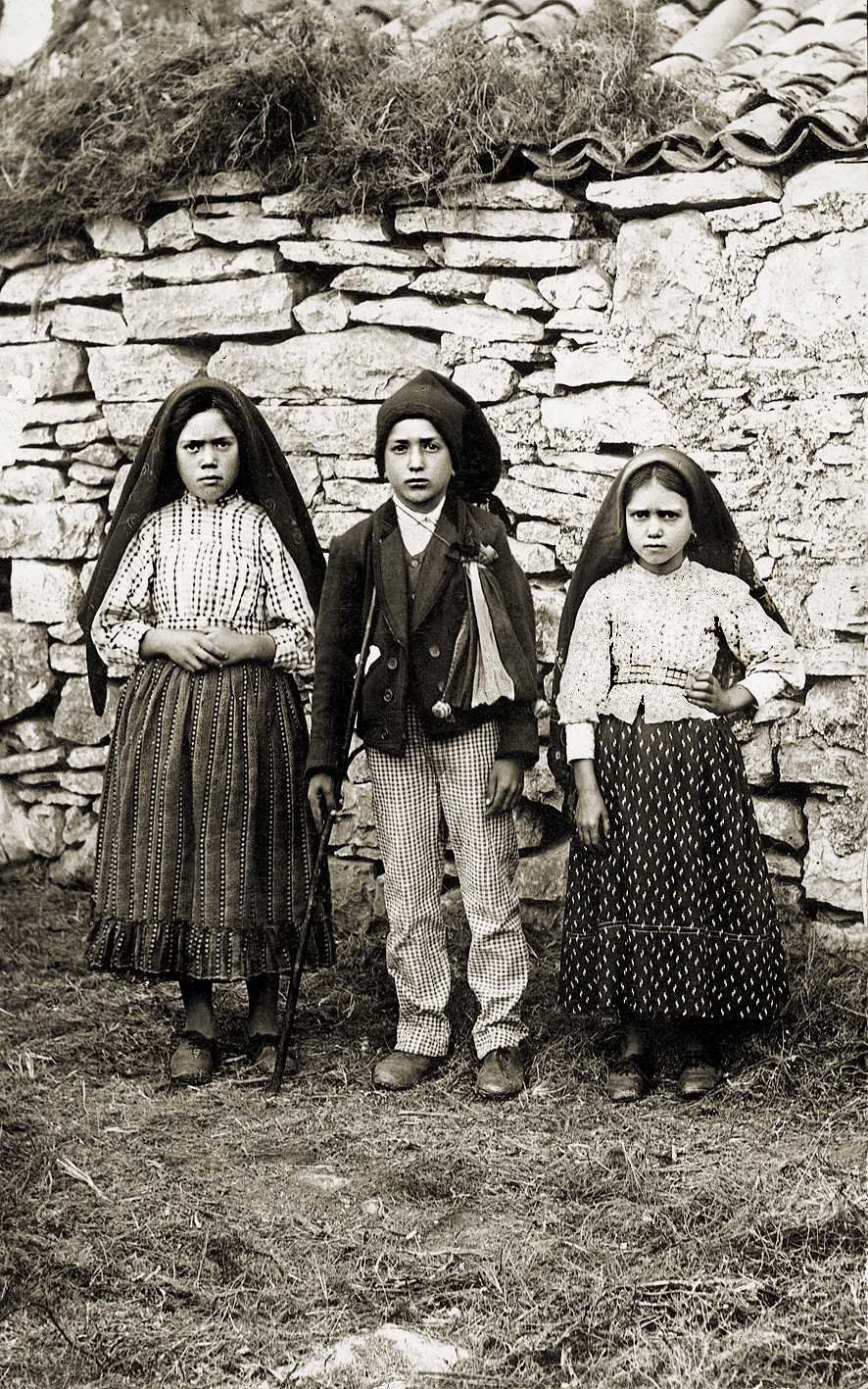
ChildrensofFatima

“A stern warning has been launched from that place [Fatima] that is directed against the prevailing frivolity, a summons to the seriousness of life, of history, to the perils that threaten humanity. It is that which Jesus Himself recalls very frequently: ‘Unless you repent you will all perish.'” (Pope Benedict XVI, when he was Cardinal Ratzinger)

The continuity and importance of the Fatima apparitions was manifested by the papacy of Saint John Paul II who beatified two of the three Fatima seers, Jacinta and Francisco Marto, on May 13, 2000. It is well known that “Pope John Paul II credited Our Lady of Fátima with saving his life following the assassination attempt on Wednesday, May 13, the Feast of Our Lady of Fátima, in 1981.” Thereafter, Pope John Paul II visited the Shrine in Fatima, Portugal three times.

Pope Francis’ pontificate was entrusted to Our Lady of Fatima on May 13, 2013. And in May of 2010 Pope Benedict visited Fatima . The Pope Emeritus is linked to Fatima by the very fact that as Cardinal Ratzinger he authored the church’s official explanation of the third Fatima secret (see link below to the actual text of the famous third secret and the commentary of Cardinal Ratzinger). This is all very mysterious to us, but the curious thing about Fatima to me is not so much its mysterious nature but rather the compelling – or should I say overwhelming – objectivity of the final apparition. Really, one would be hard-pressed to doubt that something truly magnificent happened on that amazing day! I am referring to the “miracle of the sun” which occurred on October 13, 1917 in Fatima, Portugal (see directly below an actual photograph of the crowd that day at the Cova da Iria where the miracle took place).
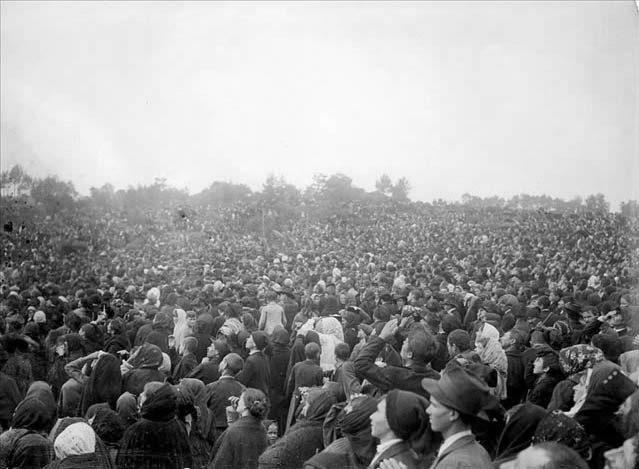
Miracle_of_the_Sun

In any event, I gathered up some of my Fatima books and reviewed the compelling facts which point to the validity of the Fatima apparitions. From my own review of the facts it would appear that the following circumstances are established beyond any reasonable doubt:

1. The Fatima children (the seers seen in the photograph above) made known that the Virgin Mary would return to the Cova da Iria on October 13, 1917 and that a miracle would take place at that time to authenticate the apparitions;

2. That a huge crowd, most definitely in the tens of thousands, showed up at the Cova that day to see what might take place, and;

3. That (as also reported in the secular press) at the appointed time and place a spectacular solar phenomenon took place which, as the well respected Catholic author Thomas Walsh states, has been established “beyond any doubt” (p. 150, Our Lady of Fatima).

Francis Johnston sets forth many credible testimonies of this solar miracle in his book, Fatima: The Great Sign, including verbatim descriptions of the event from the secular and atheistic press (see chapter 5). In summary, then, the sign promised by the seers to take place on October 13, 1917 did in fact occur. By any reasonable standard of authenticating evidence, the events mentioned above have been firmly and most definitely established. My sense of Fatima is, well, given what took place, pay very close attention to its message.

But the message of Fatima was not an easy one for modern ears, especially with its emphasis on conversion, penance and living an expiatory life-style (in many respects it sounded back to the Gospel message of repent and turn away from sin, reflected not only in John the Baptist and Jesus but in all the writers of the New Testament).

In the strange occurrences following Vatican II, there was a mad rush in certain Catholic circles to redefine Catholicism and, most especially, to rewrite the moral theology text books, with this aim: to make sin, and especially sexual sin, more acceptable. A desperate attempt was made, to varying degrees and progressively, to approve contraception, masturbation, active homosexuality and even abortion (and incredible damage was done to the church, to Catholics and to society by the confusion and immorality which followed, a price we are paying dearly for today).

Fortunately, the Holy Spirit sent us Saint John Paul II, the Fatima Pope, who put the brakes on this mischief (and foul interpretation of Vatican II) by issuing two incredibly important encyclicals: The Splendor of Truth and The Gospel of Life. Even now, given all the harm done, the church is still in recovery mode.

At Fatima, Mary came to us as Our Lady of the Rosary. She came to warn us that God is deeply offended by sin (and our lack of repentance). She offered us the safety and security of her Immaculate heart and, among other things, she urged us to pray the daily rosary. Dear friend, those rosary beads are one of the most powerful weapons we have to turn away from sin, purify our hearts, and draw closer to Jesus. Dear friend, pray the rosary!!

Tom Mulcahy, J.D.

P.S. The new and excellent movie, The 13th Day, is a wonderful way to reappropriate the Fatima message. It is reported that Pope Francis intends to visit Fatima in 2017 to commemorate the 100th anniversary of the apparitions. The lead quote from Cardinal Ratzinger is at page 110 of The Ratzinger Report (Ignatius Press). Here is a link to the official text of The Third Secret of Fatima and the official Vatican commentary on it:

The Message of Fatima – Vatican.va

Vatican radio on May 11, 2016 reported the following :”Pope Francis on Wednesday said Our Lady of Fatima “invites us once again to turn to prayer, penance, and conversion.”The Holy Father noted the Feast of Our Lady of Fatima is commemorated this year on this Friday (13 May) during his remarks to Polish-speaking pilgrims at his General Audience.“She asks us to never offend God again. She forewarns all humanity about the necessity of abandoning oneself to God, the source of love and mercy,” Pope Francis said.“Following the example of St. John Paul II, a great devotee of Our Lady of Fatima, let us listen attentively to the Mother of God and ask for peace for the world,” – he continued – “Praised be Jesus Christ!”Thirty-five years ago, Pope St. John Paul II was shot by Mehmet Ali Ağca during the General Audience, which took place on the Feast of Our Lady of Fatima in 1981.The saint attributed his survival to Our Lady, and gave one of the bullets used in the attack to the Shrine of Our Lady of Fatima in Portugal. The bullet was placed in the crown of the statue of the Virgin Mary which is housed at the shrine.”

Photographs: Public Domain, U.S.A. per Wikipedia.

To SHARE on SOCIAL MEDIA: click on “Leave a comment” or “Comments” below (and this will bring up social media icons if they are not already present).

To LEAVE A COMMENT: click on “Leave a comment” or “Comments” below, and then scroll down to the box which says, “Leave Your Own Comment Here,” which is at the end of any comments already made. If the comment section is already present, merely scroll to the end of any comments already made.

All rights reserved.

Any ads following this note are by WordPress and not CatholicStrength.
THE PROFOUND INFLUENCE OF THE VIRGIN MARY IN THE LIVES OF SAINTS JOHN PAUL II AND MOTHER TERESA OF CALCUTTA

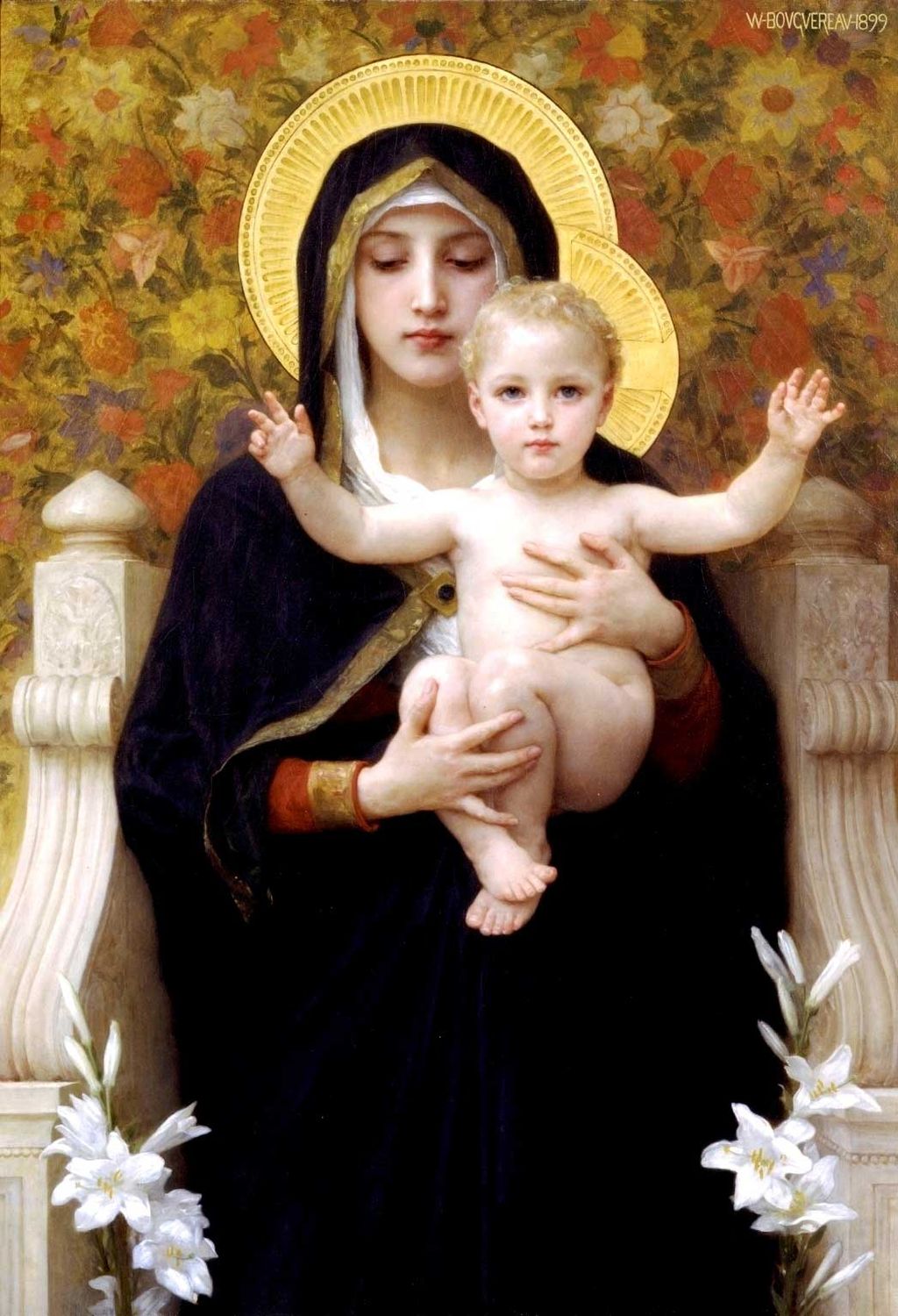
1024px-La_Vierge_au_lys

 “…there are Catholics who do not see clearly enough the necessity of having recourse to Mary that they may attain to intimacy with the Savior” (The Three Ages of the Interior Life, Volume I, page 119, by Father Garrigou-LaGrange)

Very important spiritual lessons can be learned from studying the lives of the saints. Indeed, studying the lives of the saints, and how they grew in holiness, is one of the most important things we can do in the spiritual life. This concept of imitating the lives of the saints is expressed in the New Testament by Saint Paul when he says at 1 Cor. 4:16, “I urge you, then, be imitators of me.” The saints show us how to imitate Christ.

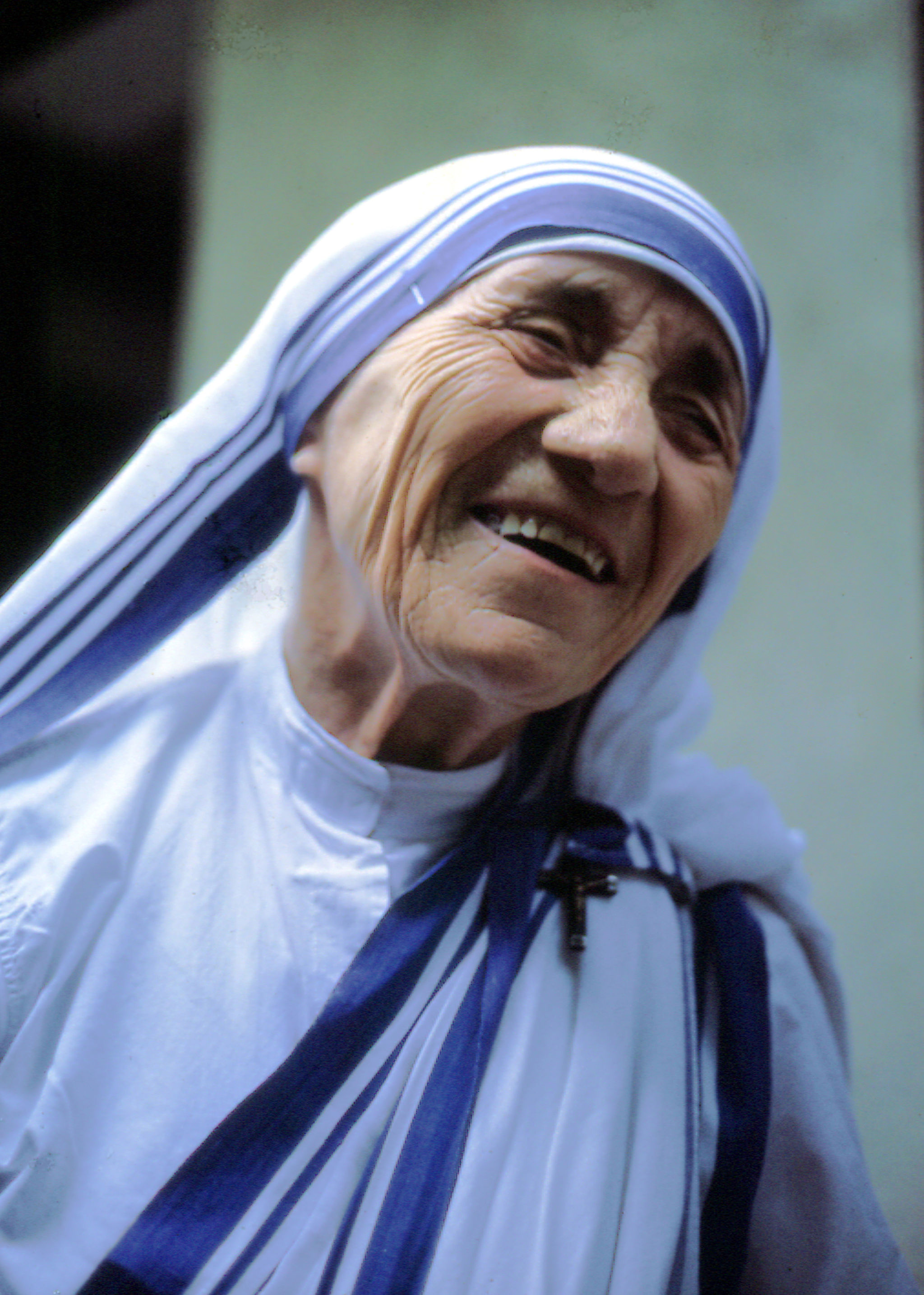
In  my own lifetime it is hard to think of two people who drew closer to Jesus Christ than Saint Pope John Paul II and Blessed Mother Teresa of Calcutta. And if the greatness of a saint is judged, in part, by the souls they led to Jesus and salvation, then the influence of Mother Teresa and John Paul II is truly staggering. What then are we to make of the meteoric rise to Beatification and then Canonization of both Saint John Paul II and Blessed Mother Teresa of Calcutta (I understand that their Beatifications were two of the fastest ever in the history of the modern church, and Mother Teresa will be canonized on September 4, 2016)? Our examination of their lives discloses a profoundly important fact; namely, that both of these “saints” were molded in the “school of Mary,” having consecrated their lives to the Blessed Virgin.

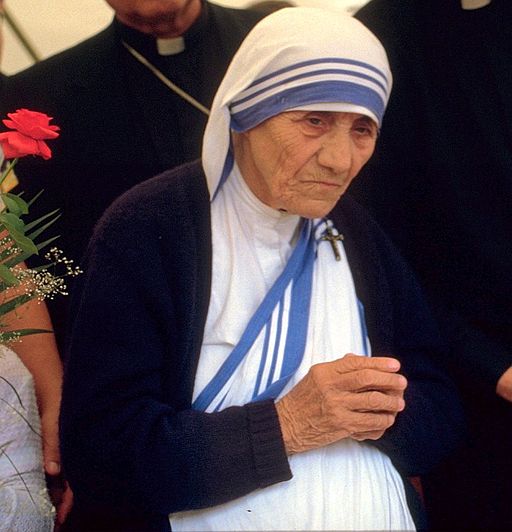
512px-MotherTeresa_094

A profound lesson to be learned from examining the lives of Saint John Paul II and Blessed Mother Teresa of Calcutta is thus that devotion to Mary – and even more so, consecration – is a powerful aid to growing closer to Jesus Christ. Both John Paul II and Mother Teresa were profoundly consecrated to the Blessed Virgin Mary, both according to the method proposed by Saint Louis DeMontfort in True Devotion to Mary. Father Joseph Langford has written about Mother Teresa’s mystical relationship with Mary in an awesome book entitled, Mother Teresa: In the Shadow of Our Lady. In that book Father Langford describes in detail the nature of Mother Teresa’s profound consecration to Mary.

As to Pope John Paul II, he pointed to his consecration to Mary as a turning point in his life, saying:

‘The reading of this book (True Devotion to Mary) was a decisive turning-point in my life. I say “turning-point,” but in fact it was a long inner journey. . . – This “perfect devotion” is indispensable to anyone who means to give himself without reserve to Christ and to the work of redemption.’

A book explaining Blessed John Paul II’s consecration to Mary is Totus Tuus: John Paul II’s Program of Marian Consecration and Entrustment by Father Arthur B. Calkins.

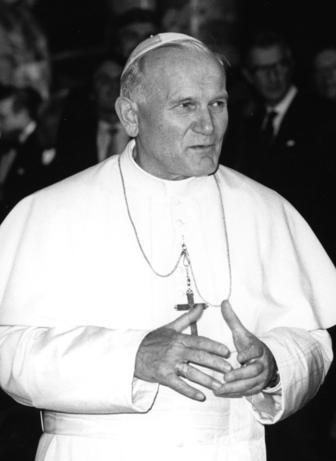
Vom 15. bis 19. November 1980 besuchte Seine Heiligkeit Papst Johannes Paul II. die Bundesrepublik Deutschland. Auf Einladung von Bundespräsident Karl Carstens hat der Papst seinen pastoralen Besuch mit einem offiziellen in Bonn verbunden. Am 15. November gab der Bundespräsident einen Empfang zu Ehren Seiner Heiligkeit auf Schloß Augustusburg in Brühl bei Bonn. Dort führte Papst Johannes Paul II. auch ein Gespräch mit Bundeskanzler Helmut Schmidt. Gleichzeitig traf Bundesaußenminister Hans-Dietrich Genscher mit Kardinal-Staatssekretär Casaroli zusammen. Im Anschluß an den offiziellen Teil begab sich der Papst auf den Bonner Münsterplatz, um dort eine Ansprache zu halten. Ferner bestand der pastorale Teil aus Besuchen in Köln, Osnabrück, Mainz, Fulda, Altötting und München. In allen diesen Städten hielt Papst Johannes Paul II. die Heilige Messe. Eigentlicher Anlaß seines Aufenthaltes in der Bundesrepublik war der 700. Todestag von Albertus Magnus (1193-1280), dessen Grab der Papst in Köln besuchte. Bundespräsident Karl Carstens und Papst Johannes Paul II. auf Schloß Augustusburg in Brühl.

I am currently reading Father Edmund’s biography of Saint Paul of the Cross, the founder of the Passionists, an order of priests dedicated to the love of Jesus crucified. Saint Paul of the Cross was an extraordinary man who practiced the most austere penances and was raised to a very high level of mystical union with God (“the transforming union”) by the relatively early age of around thirty years old. And as with all the saints, the Blessed Virgin played a critical role in his spiritual development and was also instrumental in helping him to establish his new order of priests.

An even more modern saint is Saint Faustina Kowalska, the “visionary of Divine Mercy” to whom Jesus appeared and through whom He established the Divine Mercy devotion. If you read her diary, the tremendous scope of her devotion to Mary becomes obvious and palpable. In her diary (79) she wrote this beautiful prayer of consecration to the Virgin Mary:

O Mary, my Mother and my Lady, I offer You my soul, my body, my life and my death, and all that will Follow it. I place everything in Your hands. O my Mother, cover my soul with Your virginal mantle and grant me the grace of purity of heart, soul and body. Defend me with Your power against all enemies, and especially against those who hide their malice behind the mask of virtue. O lovely lily! You are for me a mirror, O my Mother!

The lesson to be learned, then, is that devotion to Mary is an “essential” component of our faith in Jesus Christ, and that the lives of the saints prove – truly beyond any doubt – that devotion to the Mother of God leads to greater union with Jesus Christ. In our own time, this point is demonstrated in a remarkable manner by Saint John Paul the II and Blessed Mother Teresa of Calcutta. Thus, in the Vatican II Decree on the Apostolate of the Laity, we are told:

“All should devoutly venerate [Mary] and commend their life and apostolate to her maternal care.”

Tom Mulcahy, M.A.

References: Chapter V of Growth In Holiness by Father Faber; Chapter VI, The Influence of Mary Mediatrix, in Volume I of The Three Ages of the Interior Life; and True Devotion to Mary by Saint Louis DeMontfort. If you are interested in making the total consecration to Jesus through Mary, I recommend the book, Preparation for Total Consecration, put out by The Apostolate for Family Consecration (or Preparation for Total Consecration by Montfort Publications).

Images: The Virgin of the Lilies, Public Domain, U.S.A. (at Wikipedia). The photo Of Pope John Paul II is by Lothar Schaack, November 15, 1980, under a Creative Commons Attribution-Noncommercial license (found at Wikipedia). The photo of Mother Teresa is by Turelio, July 13, 1986 under a Creative Commons Attribution-Share Alike 2.0 Germany license (found at Wikipedia).

To SHARE on SOCIAL MEDIA: click on “Leave a comment” or “Comments” below (and this will bring up social media icons if they are not already present).

To LEAVE A COMMENT: click on “Leave a comment” or “Comments” below, and then scroll down to the box which says, “Leave Your Own Comment Here,” which is at the end of any comments already made. If the comment section is already present, merely scroll to the end of any comments already made.

All rights reserved.

Any ads following this note are by WordPress and not CatholicStrength.
 

THE MASS IS THE EVER-LIVING PRAYER OF JESUS ASCENDED INTO HEAVEN

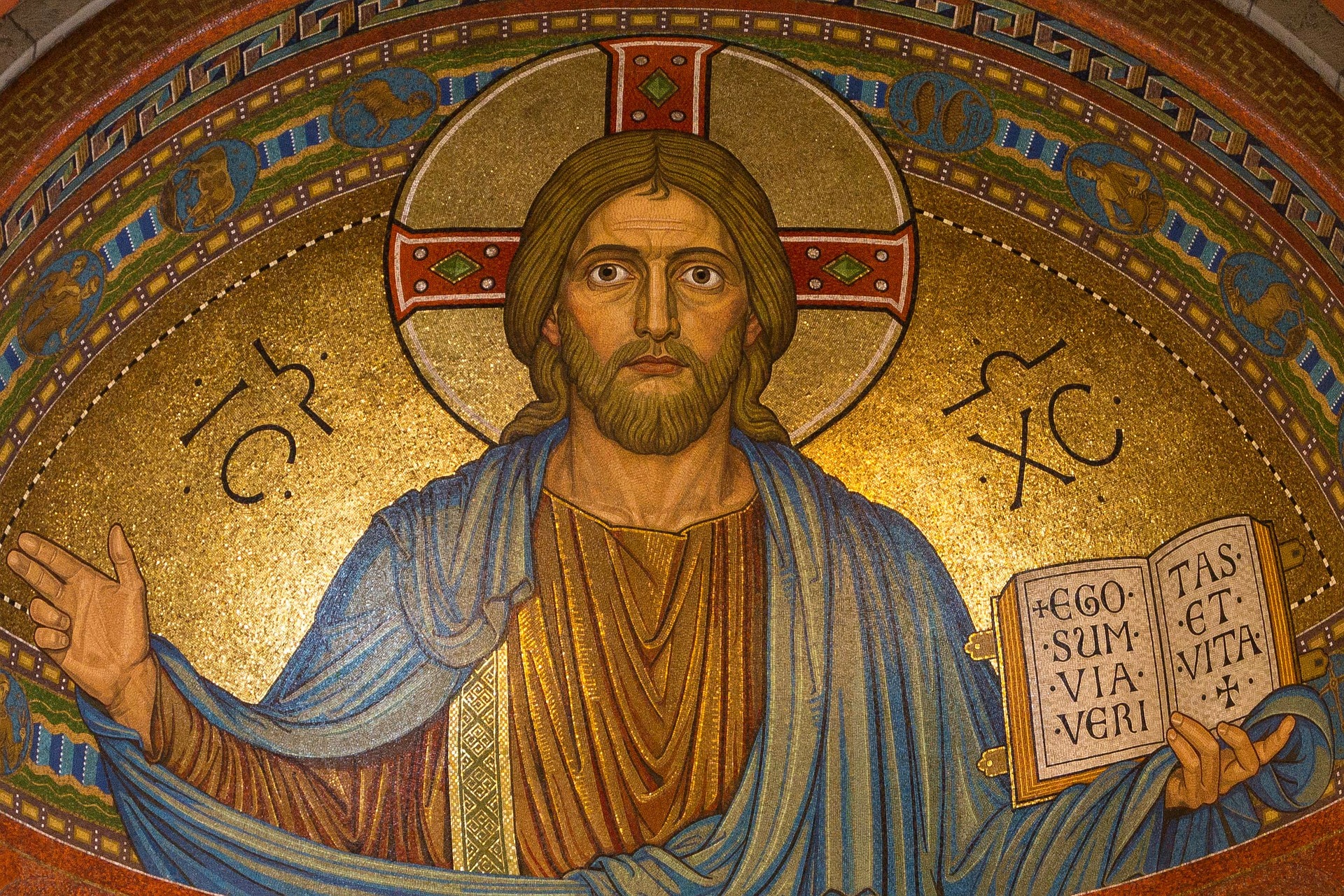
christ-898330_1920

“Every high priest is appointed to offer both gifts and sacrifices, and so it was necessary for this one also to have something to offer (Hebrews 8:3). Now the main point of what we are saying is this: We do have such a high priest, who sat down at the right hand of the throne of the Majesty in heaven” (Hebrews 8:1)

The reason why the daily Mass is the greatest event on planet earth each and every day is because it makes present to us in time and space the ever-living prayer within the heart of Jesus Christ ascended into Heaven. What is this prayer? It is the offering of Jesus to the Father of his Calvary sacrifice that is perpetuated by our Eucharistic liturgy (just as Jesus commanded it to be when he instituted the Eucharist on Holy Thursday as a memorial of his passion and death).

Imagine you have your own personal priest…and that priest is able to offer on your behalf a most beautiful sacrifice to God –  a sacrifice of Infinite value, a sacrifice which is a universal cause of all graces, a sacrifice containing every possible grace needed for your sanctification. How awesome would that be!  And what does Hebrews 8:1 say?: – it says that we do have such a priest who is in heaven right now. And this high priest, says Hebrews, is appointed to offer gifts and sacrifices on our behalf (Hebrews 8:3) And how is this done?: – most especially through the Mass, through the Eucharistic sacrifice, through the gifts of bread and wine. And so the true priest at every Mass is Jesus.

It is true that the Holy Mass is the Memorial of Christ’s sacrifice at Calvary. But as a memorial ceremony normally involves the remembrance of someone who is dead, the Mass is altogether unique because Jesus is alive – indeed He is Risen and Glorified!  Jesus is the true Priest who celebrates each and every Mass! So when you go to Mass you are going to a liturgical gathering to pray with Jesus and to join in with Jesus to offer to the Eternal Father Jesus’ Infinite sacrifice which won our redemption. It is therefore an awesome privilege to attend Mass and to make this offering to the Father with our High Priest, Jesus, and to offer yourself to the Father in union with Jesus. In Holy Mass the sacrifice of Calvary is made present to us in a sacramental manner through the ongoing priestly ministry of Jesus Christ (see CCC 1362-1368).

Indeed, there are additional powerful words in the Epistle to the Hebrews about Jesus’ ongoing priestly ministry in Heaven (words that should really give us great encouragement!). In the seventh chapter of Hebrews we read: “… because Jesus lives forever [in Heaven], he has a permanent priesthood. Therefore he is able to save completely those who come to God through him, because he always lives to intercede for them” (Hebrews 7:24-25; CCC 519).

Moreover, the author of Hebrews identifies Jesus’ never-ending priesthood in Heaven as the true fulfillment of the Order of Melchizedek, the very first priesthood mentioned in the Old Testament (see Genesis 14). In fact, the Order of Melchizedek is mentioned multiple times in Hebrews! This is a very significant point for Catholics because the “thanksgiving offering” made by the priest Melchizedek in the Old Testament was that of bread and wine (Genesis 14:18), which constituted a “communion sacrifice” per Dr. Scott Hahn. Jesus is identified in Hebrews as “the mediator of a new covenant” (Hebrews 12:24). The true sacramental sign of this New Covenant is identified by Jesus as the Holy Eucharist (“This cup is the new covenant in my blood, which is poured out for you” – Luke 22:20). As such we are advised in Hebrews not to neglect ‘to meet together” for the New Testament liturgy (Hebrews 10:25), the Mass, of our High Priest, Jesus Christ (see CCC 692).

CONCLUSION:
The Mass, then, is the ever-living prayer present in the heart of Jesus Christ.  It’s where the full power of Christ’s universal sacrifice and offering is made present on earth. What a privilege it is for us to attend this daunting and holy ceremony which connects heaven and earth, and to unite our hearts and our prayers to Jesus’ loving oblation to the Father. And then to partake of the fruit of this sacrifice – the supernatural food which feeds our souls. At Mass Jesus is the priest, the victim and our holy communion. “Praise be Jesus Christ, now and forever.”

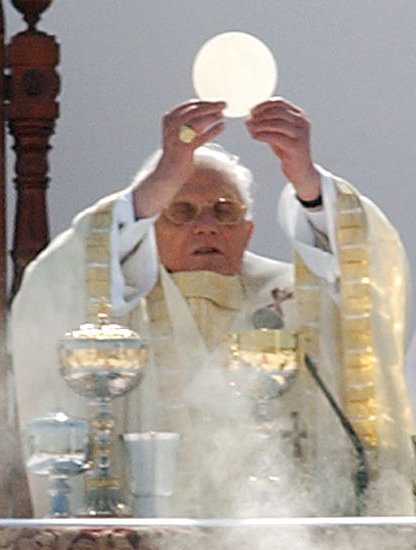
BentoXVI-51-11052007_(frag)

Tom Mulcahy, M.A.

Photo Attribution

This photo of Pope Benedict XVI celebrating Mass on May 11, 2007 was taken by Fabio Pozzebom/ABr and produced by Agência Brasil, a public Brazilian news agency. This file is licensed under the Creative CommonsAttribution 3.0 Brazil license (per Wikipedia).

Sources: My source for this note is Father Garrigou-LaGrange’s essay, “Assistance at Mass, the Source of Sanctification,” Chapter 31, Volume 1, of The Three Ages of the Spiritual Life, pages 407-413 (TAN). It is Father Garrigou-LaGrange who states that the the Mass is “the oblation ever living in the heart of Jesus” (p.407). Father Garrigou-LaGrange also states that the Mass “is the greatest act of each of our days,”  that the Mass is “a universal cause of graces,” and that the Mass contains “all the graces we need for our sanctification.” You can see that I have incorporated these precise observations of Father Garrigou-LaGrange in my note. I am also relying on Scott Hahn’s talk, “The Meal of Melchizedek,” and his book, The Lamb’s Supper. The following sections of The Catechism of the Catholic Church, mentioned in The Lamb’s Supper, reinforce some of the key ideas in this note pertaining to the profound value of the Mass:

The celebrants of the heavenly liturgy

1137 The book of Revelation of St. John, read in the Church’s liturgy, first reveals to us, “A throne stood in heaven, with one seated on the throne”: “the Lord God.”1 It then shows the Lamb, “standing, as though it had been slain”: Christ crucified and risen, the one high priest of the true sanctuary, the same one “who offers and is offered, who gives and is given.”2 Finally it presents “the river of the water of life . . . flowing from the throne of God and of the Lamb,” one of most beautiful symbols of the Holy Spirit.3

. . . is present in the earthly liturgy . . .

1088 “To accomplish so great a work” – the dispensation or communication of his work of salvation – “Christ is always present in his Church, especially in her liturgical celebrations. He is present in the Sacrifice of the Mass not only in the person of his minister, ‘the same now offering, through the ministry of priests, who formerly offered himself on the cross,’ but especially in the Eucharistic species. By his power he is present in the sacraments so that when anybody baptizes, it is really Christ himself who baptizes. He is present in his word since it is he himself who speaks when the holy Scriptures are read in the Church. Lastly, he is present when the Church prays and sings, for he has promised ‘where two or three are gathered together in my name there am I in the midst of them.”‘11

1089 “Christ, indeed, always associates the Church with himself in this great work in which God is perfectly glorified and men are sanctified. The Church is his beloved Bride who calls to her Lord and through him offers worship to the eternal Father.”12

. . . which participates in the liturgy of heaven

1090 “In the earthly liturgy we share in a foretaste of that heavenly liturgy which is celebrated in the Holy City of Jerusalem toward which we journey as pilgrims, where Christ is sitting at the right hand of God, Minister of the sanctuary and of the true tabernacle. With all the warriors of the heavenly army we sing a hymn of glory to the Lord; venerating the memory of the saints, we hope for some part and fellowship with them; we eagerly await the Savior, our Lord Jesus Christ, until he, our life, shall appear and we too will appear with him in glory.”13

 To SHARE on SOCIAL MEDIA: click on “Leave a comment” or “Comments” below (and this will bring up social media icons if they are not already present).

To LEAVE A COMMENT: click on “Leave a comment” or “Comments” below, and then scroll down to the box which says, “Leave Your Own Comment Here,” which is at the end of any comments already made. If the comment section is already present, merely scroll to the end of any comments already made.

All rights reserved.

Any ads following this note are by WordPress and not CatholicStrength.

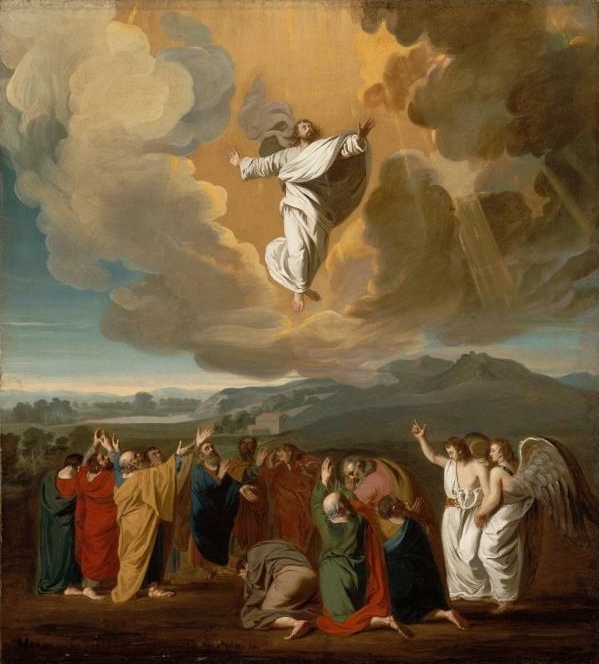
THE TRUE MEANING OF JESUS’ ASCENSION INTO HEAVEN

Jesus_ascending_to_heaven

                            “For our citizenship is in heaven”  (Philippians 3:20)

I picture Jesus returning to the Father in Heaven, saying, “FatherMission Accomplished” and then saying, “Father, let us breathe forth our Holy Spirit upon the world through my risen and Glorified body.”

One lesson we clearly glean from our Lord’s Ascension is that the entire trajectory of Jesus’ earthly life was Heaven. He, Jesus, is the first born of many brethren (Romans 8:29). Therefore, the absolute true meaning of life is Heaven. Saint Paul says it beautifully: “Our citizenship is in Heaven” (Philippians 3:20). To truly understand the meaning of life we must get this principle straight. Take a look at your Passport: I hope it says “Citizen of Heaven.” Heaven is your true home. We are pilgrims here on planet earth.

Another lesson we glean initially from our Lord’s Resurrection, and ultimately from his Ascension, is the incredibly profound meaning of the the ultimate destiny of the human body. In the Catechism of the Catholic Church we read the following very significant words: “The Father’s power ‘raised up’ Christ his Son and by doing so perfectly introduced his Son’s humanity, including his body, into the Trinity. Jesus is conclusively revealed as ‘Son of God in power according to the Spirit of holiness by his Resurrection from the dead’ ” (CCC 648, my emphasis). “Christ’s Ascension marks the definitive entrance of Jesus’ humanity into God’s heavenly domain, whence he will come again….” (CCC 665). Consequently, any claim that Christianity devalues the body or human nature is misguided. Pope Benedict XVI, in a homily in 2005, stated: “Christ’s Ascension means … that He belongs entirely to God. He, the Eternal Son, led our human existence into God’s presence, taking with Him flesh and blood in a transfigured form. The human being finds room in God; through Christ, the human being was introduced into the very life of God.” C.S. Lewis adds:

“Next to the Blessed Sacrament itself, your neighbor is the holiest object presented to your senses.”

Christ’s Ascension also signifies the beginning of the final hour of human history. By Christ’s Ascension into Heaven the final age – indeed the final “hour” – of the world has begun. The Catechism states: “Since the Ascension God’s plan has entered into its fulfillment. We are already at ‘the last hour’. ‘Already the final age of the world is with us, and the renewal of the world is irrevocably under way; it is even now anticipated in a certain real way, for the Church on earth is endowed already with a sanctity that is real but imperfect’ ” (CCC 670). All Christians are living in “end times,” which means that we should be diligently preparing for the return of the Lord who is already present to us through the Holy Eucharist. 

Finally, our Lord’s Ascension shows that He is the King and High Priest of all creation. There are powerful words in the Epistle to the Hebrews about Jesus’ ongoing priestly ministry in Heaven (words that should really give us great encouragement!). In the seventh chapter of Hebrews we read: “… because Jesus lives forever [in Heaven], he has a permanent priesthood. Therefore he is able to save completely those who come to God through him, because he always lives to intercede for them” (Hebrews 7:24-25; CCC 519). Is it not incredibly encouraging to know that Jesus is always living to make intercession for you! Does not that revelation of his incessant intercession for you fill your heart with confidence!

Moreover, the author of Hebrews identifies Jesus’ never-ending priesthood in Heaven as the true fulfillment of the Order of Melchizedek, the very first priesthood mentioned in the Old Testament (see Genesis 14). In fact, the Order of Melchizedek is mentioned multiple times in Hebrews! This is a very significant point for Catholics because the “thanksgiving offering” made by the priest Melchizedek in the Old Testament was that of bread and wine (Genesis 14:18), which constituted a “communion sacrifice” per Dr. Scott Hahn. Jesus is identified in Hebrews as “the mediator of a new covenant” (Hebrews 12:24). The true sacramental sign of this New Covenant is identified by Jesus as the Holy Eucharist (“This cup is the new covenant in my blood, which is poured out for you” – Luke 22:20). As such we are advised in Hebrews not to neglect ‘to meet together” for the New Testament liturgy (Hebrews 10:25), the Mass, of our High Priest, Jesus Christ (see CCC 692). Jesus ascended into Heaven is the true High Priest at every Mass.

Tom Mulcahy, M.A.


Sources: Significantly, Luke 22:20 is the only place in the Gospels where Jesus uses the term, “New Covenant.” For the material in this note on Hebrews and the High Priesthood of Jesus as it pertains to the Order of Melchizedek and the Eucharist, I am relying on Dr. Scott Hahn and The Ignatius Catholic Study Bible.The quote from Pope Benedict XVI found at

Ascension Thursday and meeting Christ face-to-face 

Image: Asension by John Singleton Copley, 1775, Museum of Fine Arts, Boston, a Public Domain work of art (U.S.A.)

To SHARE on SOCIAL MEDIA: click on “Leave a comment” or “Comments” below (and this will bring up social media icons if they are not already present).

To LEAVE A COMMENT: click on “Leave a comment” or “Comments” below, and then scroll down to the box which says, “Leave Your Own Comment Here,” which is at the end of any comments already made. If the comment section is already present, merely scroll to the end of any comments already made.

All rights reserved.

Any ads following this note are by WordPress and not CatholicStrength.

THE WONDERFUL HEALING POWER OF NATURE

bridge-77159_1920

I am convinced that many people would experience improved mental well-being if they increased their contact and communion with the natural beauty of God’s creation. 

God, who is, as the scholastic theologians say, in His creation by His POWER, PRESENCE and ESSENCE is most assuredly present in the transformative beauty of the natural world.

Commenting on the healing power of nature, Saint Pope John Paul II made the following observation:

“The aesthetic value of creation cannot be overlooked. Our very contact with nature has a deep restorative power; contemplation of its magnificence imparts peace and serenity. The Bible speaks again and again of the goodness and beauty of creation, which is called to glorify God.”  (John Paul II, 1990 World Day of Peace Message, no. 14.)

What is being urged upon us here is an improved communion with nature. Who hasn’t felt a special feeling of tranquility walking along the ocean shore, or gazing upon a majestic mountain? And yet how often do we find ourselves cut-off and deprived of the beauty of nature for many reasons. Pope Francis made this observation in his recent encyclical on the environment, saying, “In some places, rural and urban alike, the privatization of certain spaces has restricted people’s access to places of particular beauty” (no. 45).
 
Father Irala, in his popular book, Achieving Peace of Heart, tells us that “we must live beauty.” He maintains that we need to be “reeducated” to “receive the external world.” This means, in one context, that if we are looking at a beautiful river we should spend some time peering into it –contemplating it – so that we may receive the vital influx of its beauty. It’s as if he was saying, “take some time to stop and smell the roses.” 
 
Father Irala tells an interesting story about a businessman who was on the verge of a nervous breakdown. It was apparently felt that the overworked businessman needed some time away from his hectic office to unwind and rejuvenate, but since this remedy wasn’t feasible his physician requested that “an aquarium of tropical fish built in his private office and that he spend an hour every day peacefully watching the graceful convolutions of those little creatures.” It is related that “before the year was out he sent a donation to [his physician’s] hospital as a token of gratitude for his cure” (p.41).
 
Perhaps many of us need to be reoriented to the beauty of the natural world and its deep healing power. If we are alienated from nature, we are in some sense alienated from God. Near the end of Laudato Si, Pope Francis wrote these poetic words:
 
“All-powerful God, you are present in the whole universe and in the smallest of your creatures. You embrace with your tenderness all that exists. Pour out upon us the power of your love, that we may protect life and beauty” (no. 246).
 
Let us not only protect life and beauty; let us immerse ourselves in its “restorative power.”
 
Tom Mulcahy, M.A.
 

P.S. As a practical example, many of us spend time walking along a nature trail. To reeducate your mind to the beauty of nature, spend some time actually peering into the moving stream along the trail, or looking receptively at a strange but beautiful flower you pass by. Father Irala says that we should let the beauty “enter deep into us.” We are not talking about pantheism, but rather about God manifested through the beauty of his external creation. This is, in essence, a form of religious contemplation.

To SHARE on SOCIAL MEDIA: click on “Leave a comment” or “Comments” below (and this will bring up social media icons if they are not already present).

To LEAVE A COMMENT: click on “Leave a comment” or “Comments” below, and then scroll down to the box which says, “Leave Your Own Comment Here,” which is at the end of any comments already made. If the comment section is already present, merely scroll to the end of any comments already made.

All rights reserved.

Any ads following this note are by WordPress and not CatholicStrength.
HEALING YOUR EMOTIONS

sunset-97056_1920

The beautiful emotions God has given us work tremendous good in our lives when they are under the guidance of our rational and spiritual faculties. A child lives his life primarily on an emotional level, but to mature he must gradually bring his emotional life under the control of right reason and spiritual life. In this context it may be helpful to see our lives from this four-fold perspective:

1. Physical Life;

2. Emotional Life;

3. Rational Life; and

4. Spiritual Life

What is being urged upon us here is the proper management of our emotional life by the higher faculties of human reason and Divine grace. By spiritual life, then, I am referring to the life of grace given to us by God which flows to us by way of prayer and sacramental life. Recourse to prayer and the sacraments is a great aid in healing impaired emotional life.

We know very well that letting our emotions flow freely can be psychologically healing –  as in sharing our emotions and feelings with a friend or in therapy. But in a different context unregulated emotional life can be very damaging. In this sense if emotional life is not brought under the control and guidance of rational and spiritual life it can become a tyrant – and as such inordinate anger or sadness can even lead to violence or other destructive conduct.

We see in the garden of Gethsemane Jesus seemingly crushed by the weight of sorrow and grief – yet he has the strength of mind and the strength of grace to complete his mission, saying to the apostles, “Arise, let us go” (Matthew 26:46). Jesus teaches us to place our emotional life under the guidance and strength of grace.

Once a person I knew quite well was suffering significant emotional turmoil and had clearly strayed from the light of right reason. His emotional life had simply engulfed his rational life. I told this person that he had always been a person of great common sense, and that this would be a good time for him to gather-up and make good use of the excellent common sense God had given him. He took my advice and within a few days he was doing much better.

Spiritual life can profoundly impact our emotional life for the better. Thus, if we are experiencing to a harmful degree the emotions of bitterness and resentment, we can take recourse to spiritual life in order to re-channel these vexing emotions into positive forces. By allowing the powerful spiritual virtues of meekness and gentleness to descend into our emotions, we can heal our emotions and make them occasions for acts of virtue and charity. Thus, what started out in the direction of hatred ends in the life-giving direction of charity! “The act of virtue,” Saint Thomas Aquinas says, “is even more meritorious when it makes good use of the passions [or emotions] in view of a virtuous end.” Therefore, “passions or emotions regulated…by right reason…are forces to be used in the service of virtue” (Fr. Garrigou-LaGrange). Here we see a fundamental insight of Saint Thomas: that grace builds upon nature.

Right reason involves not only a knowledge of the virtues but in addition the elimination of what psychologists call cognitive distortions (meaning erroneous ways of thinking). Becoming acquainted with the ten common distorted ways of thinking, and correcting the ones that pertain to you, is one of the most valuable things you can do for emotional health and well-being (see link below). Learning to recognize and correct defective thinking patterns is essentially curative.

Finally, spiritual life involves prayer and the sacraments. Suffice it to say in this short note that the Sacraments of Reconciliation, the Eucharist (including Eucharistic adoration), and the Anointing of the Sick are powerful means of healing grace. Moreover, as Father Padovani, a therapist, points out, we can bring our broken emotions to God freely in prayer. In prayer we approach God in faith and hope, theological virtues which in and of themselves are pathways to healing since they direct us towards God. In prayer we can ask God for the “ever-new graces” we need to heal distorted or impaired emotions. God can restore beauty and balance to our emotional life, or give us the grace to carry the crosses that no one can avoid on this earthly pilgrimage.

person-371015_1280

In short it is a great benefit simply to see that we need to place our emotional lives under the protection and guidance of our rational and spiritual lives. To see this necessity is already the beginning  of the healing of emotional life.

Tom Mulcahy, M.A.

References. The book by Father Padovani is entitled: Healing Wounded Emotions. In Feeling and Healing Your Emotions it is psychiatrist C.W. Baars who mentions at page 55 that “a child lives predominantly on the emotional level….” However, for this note I am relying predominantly on Father Garrigou-LaGrange, a Thomist, who demonstrates how the theology of Saint Thomas Aquinas promotes emotional well-being through the proper ordering of emotional life to rational life and rational life to spiritual life. See The Three Ages of the Interior Life, Vol. 1, Chapter 23. Nothing in this note is meant to be a substitute for good and necessary medical and professional care.

Link: If you type in at Google, “Ten types of cognitive distortions,” numerous sites will bring up this important list. The list is very helpful; however, I can’t tell you about the recommendability of any particular site.

To SHARE on SOCIAL MEDIA: click on “Leave a comment” or “Comments” below (and this will bring up social media icons if they are not already present).

To LEAVE A COMMENT: click on “Leave a comment” or “Comments” below, and then scroll down to the box which says, “Leave Your Own Comment Here,” which is at the end of any comments already made. If the comment section is already present, merely scroll to the end of any comments already made.

All rights reserved.

Any ads following this note are by WordPress and not CatholicStrength.
SAINT MOTHER TERESA’S FIRST HOLY COMMUNION

THE STARTING POINT FOR LOVE: THE REALIZATION I AM NEEDED BY ANOTHER

 girls-462072_1920

         Let us therefore love God, because God first hath loved us”  (1 John 4:19)

In his lengthy biography of the life of Saint Pope John Paul II, George Wiegel includes a letter written by the then Father Wojtyla (the future Pope John Paul II) to Teresa Heydel. In this letter the future Pope shares with Teresa a profound insight of his into the nature of love, saying:

“After many experiences and a lot of thinking,  I am convinced that the (objective) starting point of love is the realization that I am needed by another.  The person who objectively needs me most  is also, for me, objectively, the person I most need. This is a fragment of life’s deep logic, and  also a fragment of trusting in the Creator and in Providence.”   (Witness To Hope, p. 102)

George Wiegel comments that “Love, for Karol Wojtyla, was the truth at the very center of the human condition, and love always meant self-giving, not self-assertion” (p. 101). In this short note, I would like to make two applications of Saint John Paul II’s special insight into the nature of love – his conviction being that the objective starting point for love is the realization that I am needed by another.

The first application of the Pope’s special insight into the nature of love involves a person who is struggling in life and feels either unwanted or of little value. The psychological value of the Pope’s insight into the nature of love is not only to assure this person that you love him (consider, for example, a child who has been bullied) but, moreover, that you need his love. The child needs to know not only that he (or she) is loved but also that he is needed by you (that you need his love).

The second application of the Pope’s special insight into the nature of love touches upon the very mystery of your own existence. If love means that we are truly needed by another, then it follows logically that God has chosen to need your love! Stated in another manner, God truly desires and seeks your love. Does this not fill your heart with love for God!

Saint Therese of Lisieux, who was declared a Doctor of the Church by Pope John Paul II, received profound insights from the Holy Spirit about the nature of love. She says in her autobiography that in “1895  I received the grace to understand better than ever how much Jesus desires to be loved.” In another place in her autobiography she tells us that Jesus sought out the love of the Samaritan woman he met at the well (see John 4: 1-27). Saint Therese says, “[Jesus] did not fear to beg for a little water from the Samaritan woman. He was thirsty. But when he said:‘Give me to drink,’ it was the love of His poor creature the Creator of the universe was seeking. He was thirsty for love” (Autobiography, Clarke edition, p.189). Jesus truly desires and needs your love.

Father Faber, who died about ten years before Saint Therese was born, adds these words:

“That God condescends intensely to desire our love, there can be  no possible doubt….Blessed, blessed God! Wonderful Father…this mystery of His desiring our poor love should of itself be a lifelong joy to us in our time of pilgrimage.”   (The Creator and the Creature, pages 124-125)

A profound fragment of love’s deep logic – rooted in the Wisdom of creation – is that God loves you and desires your love in return. It is a fragment of Infinite worth.

Tom Mulcahy, M.A.

Reference: The inspiration and material for this note comes from Consoling the Heart of Jesus (see especially page 58) by Father Michael E. Gaitley. In his book Father Gaitley explains how Jesus’ words, “I thirst,” were of profound importance in the spirituality of both Saint Therese of Lisieux and Blessed Mother Teresa of Calcutta. In considering, theologically, God’s need for our love we should reflect on the fact that God freely chose in Jesus Christ to become a human being, thus linking His life profoundly with the human race.

To SHARE on SOCIAL MEDIA: click on “Leave a comment” or “Comments” below (and this will bring up social media icons if they are not already present).

To LEAVE A COMMENT: click on “Leave a comment” or “Comments” below, and then scroll down to the box which says, “Leave Your Own Comment Here,” which is at the end of any comments already made. If the comment section is already present, merely scroll to the end of any comments already made.

Any ads following this note are by WordPress and not CatholicStrength.

THE HEALING POWER OF CATHOLIC POETRY

forest-690519_640

THE WORLD is charged with the grandeur of God” (Father Gerard Manley Hopkins)

Religious poetry can be very healing and comforting inasmuch as it draws us closer to God who is the source of all goodness and well-being. Poetry in general has always had a metaphysical dimension, but religious poetry has a theological dimension because it is specifically God-directed. “And our hearts are restless,” says Saint Augustine,  “until they rest in God.” Poetry can help us to attain to this rest in God, which in turn enhances our well-being.

Psalm 23 can be particularly comforting:

The Lord is my shepherd;
I shall not want.
He makes me to lie down in green pastures;
He leads me beside the still waters.
He restores my soul;
He leads me in the paths of righteousness
For His name’s sake.
Yea, though I walk through the valley of the shadow of death,
I will fear no evil;
For You are with me (vs. 1-4)

Psychiatrist Smiley Blanton relates he had little success in treating a patient’s depression until he began reading to her these words from Cardinal Newman’s poem Lead, Kindly Light:

Lead, kindly Light, amid the encircling gloom,
Lead Thou me on!
The night is dark, and I am far from home—
Lead Thou me on!
Keep Thou my feet; I do not ask to see
The distant scene—one step enough for me.

 I was not ever thus, nor prayed that Thou
Shouldst lead me on.
I loved to choose and see my path; but now,
Lead Thou me on!
I loved the garish day, and, spite of fears,
Pride ruled my will: remember not past years.   

So long thy power hath blessed me, sure it still
Will lead me on;
O’er moor and fen, o’er crag and torrent, till
The night is gone;
And with the morn those angel faces smile
Which I have loved long since, and lost awhile.

Dr. Smiley states: “Later, I explained that her depression would take some time to cure but that her recovery would be hastened if she would just try to relax for an hour or so each day and as far as possible banish all unpleasant thoughts from her mind. And I recommended she prepare herself by reading this poem and some others…. (The Healing Power of Poetry, p.30).” Dr. Smiley further states that “I write from a long experience in using poetry as a specific means of therapy.”

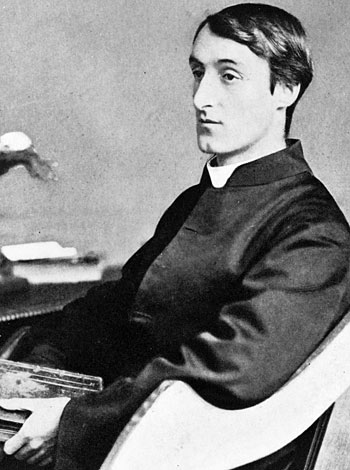
The poetic originality of the priest-poet Gerard Manley Hopkins has a profound rejuvenating quality to it. Here we look at his masterpiece, God’s Grandeur.

THE WORLD is charged with the grandeur of God.
It will flame out, like shining from shook foil;
It gathers to a greatness, like the ooze of oil
Crushed. Why do men then now not reck his rod?
Generations have trod, have trod, have trod;
And all is seared with trade; bleared, smeared with toil;
And wears man’s smudge and shares man’s smell: the soil
Is bare now, nor can foot feel, being shod.

And for all this, nature is never spent;
There lives the dearest freshness deep down things;
And though the last lights off the black West went
Oh, morning, at the brown brink eastward, springs—
Because the Holy Ghost over the bent
World broods with warm breast and with ah! bright wings.

What is it about this poem that heals us? It is as W.H. Gardner observes of Hopkin’s poetry the “sensation of inscape – a quasi-mystical illumination, a sudden perception of the deeper pattern, order, and unity which gives meaning to external forms….” (Penguin Poets, Gerard Manley Hopkins, Introduction). Hopkin’s poetry frees us from the excessive analysis that burdens the mind and takes us back to the “primal intensity” of simplicity and beauty that draws us nearer to God. Here is another example of “inscape” in Hopkin’s poetry:

Pied Beauty
Glory be to God for dappled things
For skies of couple-colour as a brinded cow;
For rose-moles all in stipple upon trout that swim;
Fresh-firecoal chestnut-falls; finches’ wings;
Landscapes plotted and pieced—fold, fallow, and plough;
And all trades, their gear and tackle and trim.
 
All things counter, original, spare, strange;
Whatever is fickle, freckled (who knows how?)
With swift, slow; sweet, sour; adazzle, dim;
He fathers-forth whose beauty is past change:
Praise Him.
GerardManleyHopkins

(Gerard Manley Hopkins, S.J.)

G.K. Chesterton, who was a convert, also speaks to the healing dimension of poetry in a very unique way. He says: “Imagination does not breed insanity. Exactly what does breed insanity is reason. Poets do not go mad; but chess-players do. Poetry is sane because it floats easily in an infinite sea; reason seeks to cross the infinite sea, and to make it finite. The poet only desires exaltation and expansion, a world to stretch himself in. The poet only asks to get his head into the heavens. If the madman could for an instant become careless, he would become sane” (as edited). Mysticism, says Chesterton, “keeps men sane. As long as you have mystery you have health; when you destroy mystery you create morbidity. The ordinary man has always been sane because the ordinary man has always been a mystic.” It is because poetry can express meaning with less restrictions than a purely rationalistic approach to life, and is therefore not enclosed in the “prison of one thought,” that it more closely approaches the frontier of “first principles,” the light of which “we look at everything” else.

John Ciardi once said that “Poetry itself is a religion; it gives meaning to life.” Paul Roche adds that poetry “is in touch with a wider, deeper and more immediate range of being.” But religious poetry goes even further than this: it puts us in touch with the primordial reality of all things: God who has life in Himself. The greatest value of (religious) poetry, then, when read and meditated upon, is that it restores our own being in God. Now that’s Catholic strength!

Thomas Mulcahy, M.A.

Ref. I am relying primarily on The Healing Power of Poetry by Dr. Smiley Blanton (Guidepost Associates, Inc.). Nothing in this note is intended to be a substitute for good and necessary medical and professional care. I am quoting from Chesterton’s classic book, Orthodoxy.

Note on poetry and prayer: When the words of a poem, deeply experienced, elevate your heart to God there is in this moment an invitation to prayer. It is not to be forgotten that the ultimate purpose of meditation is to enkindle prayer and conversation with God. On this point see Pope Benedict XVI’s address of August 31, 2011 wherein he discusses how “artistic beauty can lead the heart to God” and prayer. See also Conversation With Christ by Thomas Rohrbach. Prayer unites us to God.

Photo: Gerard Manley Hopkins (Public Domain, U.S.A.)

To SHARE on SOCIAL MEDIA: click on “Leave a comment” or “Comments” below (and this will bring up social media icons if they are not already present).

To LEAVE A COMMENT: click on “Leave a comment” or “Comments” below, and then scroll down to the box which says, “Leave Your Own Comment Here,” which is at the end of any comments already made. If the comment section is already present, merely scroll to the end of any comments already made.

Any ads following this note are by WordPress and not CatholicStrength.

 

THE INFALLIBLE EFFICACY OF PRAYER ACCORDING TO SAINT THOMAS AQUINAS