Author: tomlirish

THE GREAT GRACE OF FINAL PERSEVERANCE

JESUS’ INCARNATION STARTED AN AMAZING PURITY REVOLUTION!

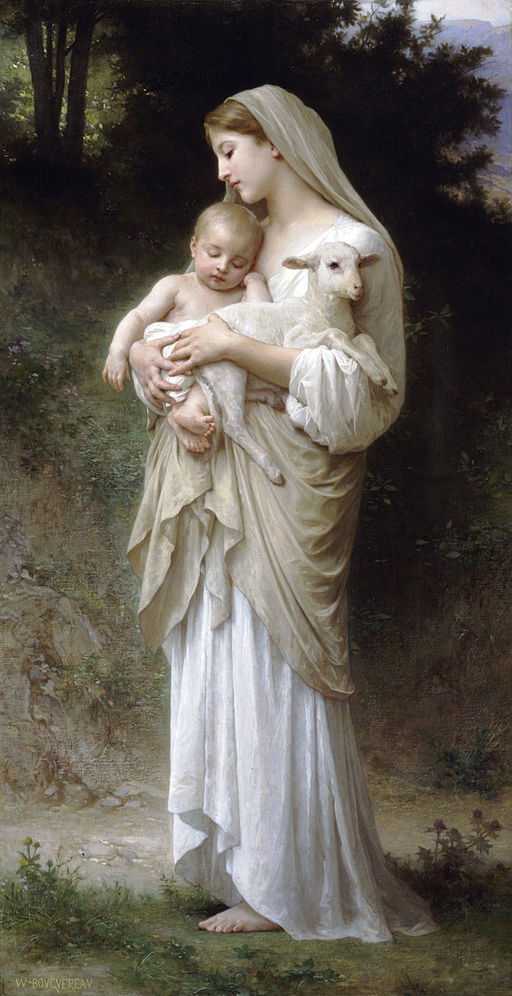
 512px-Bouguereau-Linnocence (1)

               “Blessed are the pure in heartfor they shall see God”  (Matt 5: 8)

The Kingdom of the Incarnation is built on purity. “Since all God’s works are a disclosure of Himself,” we can look  backwards to the commencement of the Kingdom of the Incarnation to see that, by the overwhelming weight of the evidence, Christ’s Kingdom is built on purity (we cannot deny that God’s love is an even deeper foundation for this Kingdom, but love and purity go hand in hand).

The evidence for our conclusion is simply the overwhelming purity of the four main members of Christ’s Kingdom at its very inception:

FIRST, we have the Blessed Virgin Mary, whose Immaculate Conception is, in essence, the hidden beginning of Christ’s Kingdom. Jesus chose to enter humanity through the Immaculate one, who is both Virgin and mother.

SECOND, we have our Lord himself, the “Celibate Bridegroom,” who is nothing short of INFINITE PURITY.

THIRD, we have Saint John the Baptist,  Jesus’ forerunner, who is a man of “mighty mortifications” and consecrated to celibacy.

FOURTH, we have Saint Joseph, a preeminent model of purity in the church (often depicted in art holding a lily of purity).

From these telling facts, we can see very clearly that not only was the Kingdom of the Incarnation built on purity, but that, in fact, this new Kingdom ushered in a monumental purity revolution. From these providential works of God (namely, the persons Mary, Jesus, John the Baptist and Joseph), which came at the very beginning of the Kingdom of the Incarnation, we reach the very important conclusion that the Eternal Father has the highest regard for purity (and thus that purity and holiness are inseparable). Stated differently, God’s Eternal and Infinite Purity shines forth at the commencement of Jesus’ Kingdom (“…God’s works are so many mirrors in which He allows His creatures to behold the reflection of His invisible perfections and hidden beauty….” F.W. Faber).

Now, Jesus Christ is the Lord of purity, and he preaches mightily and dramatically about the importance of purity in his Sermon on the Mount. As the Lord of purity it follows that Jesus is also the Lord of Marriage. Jesus demonstrates his supreme jurisdiction over marriage by declaring null and void the limited Mosaic permission of divorce. Moreover, Jesus raises the union of a man and woman in marriage to a sacrament. And any Catholic who understands what a sacrament is thus also understands the surpassing dignity and holiness of the married state!

For many of us men, impurity has sometimes proven to be a formidable obstacle to growth in holiness. Temptations to impurity test our worth and power of perseverance. In his short reflection entitled, “Do I Love God?,” Father Eymard (Saint Peter Julian Eymard, 1811-1868), the founder of the Blessed Sacrament Fathers, urges us to consider that our faithfulness to purity is a demonstration of our love for God. He states: “Purity is born spontaneously of love. It cannot be taught like a science: it is inspired, we sense it. Love creates it like a pure white flame…. The state of grace is nothing other than purity.”

God loves purity (or we might say that God is purity). God’s love of purity is revealed in a dramatic way at the beginning of Jesus’ Kingdom in the persons of Mary, Jesus, John the Baptist and Joseph. Your desire to be pure, despite so many obstacles patent in our culture, is a wonderful sign of your love for God. And if the road to greater purity proves difficult, rest assured that through prayer, devout use of the sacraments of Reconciliation and the Eucharist, and loving devotion to Mary, you will make progress.

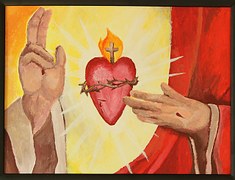
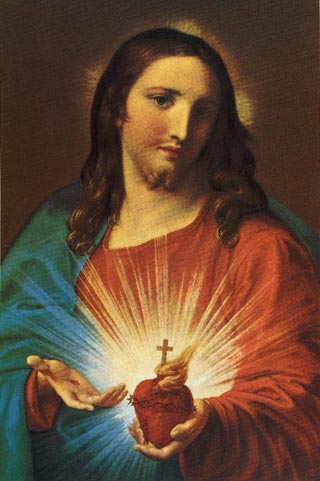
Batoni_sacred_heart

Tom Mulcahy, M.A. (on the vigil of the Feast of the Sacred Heart of Jesus)


Sources: The Blessed Sacrament by Father Faber, wherein he discusses how God’s works are a disclosure of who God is (see pages 33-56). It is Father Faber who uses (somewhere) the expression “Kingdom of the Incarnation.” The tone, content and style of this note draws heavily on Father Faber!; and The Eucharist and Christian Perfection (Volume I) by Saint Peter Julian Eymard (Emmanuel Publications), which is actually a series of retreat reflections he made to the Brothers of Saint Vincent de Paul, but certainly applicable to the laity as well.

Images: Innocence by William-Adolphe Bouguereau, 1893, (Public Domain, U.S.A.); Sacred Heart of Jesus, in the side chapel of Gesu in Rome, 1867, by Pompeo Batoni (Public Domain, U.S.A.)

To SHARE on SOCIAL MEDIA: click on “Leave a comment” or “Comments” below (and this will bring up social media icons if they are not already present).

To LEAVE A COMMENT: click on “Leave a comment” or “Comments” below, and then scroll down to the box which says, “Leave Your Own Comment Here,” which is at the end of any comments already made. If the comment section is already present, merely scroll to the end of any comments already made.

All rights reserved.

Any ads following this note are by WordPress and not CatholicStrength.
 

TO BE HAPPY WE MUST LEARN TO LIVE BEAUTY

amazing-736886_1280

“The personal inability to perceive truth and beauty is related…to a lack of wonder….It is troubling that in a universe replete with mind-boggling fascinations masses of people live dull and drab lives” (The Evidential Power of Beauty by Father Thomas Dubay).

We are talking here about what Father Thomas Dubay calls “being alive to beauty,” especially beauty in the external/natural world, and also about the impediments which prevent us from perceiving, experiencing and living beauty. Our conclusion will be that beauty can be trans-formative – truly enhancing our well-being –  if we are open to it.

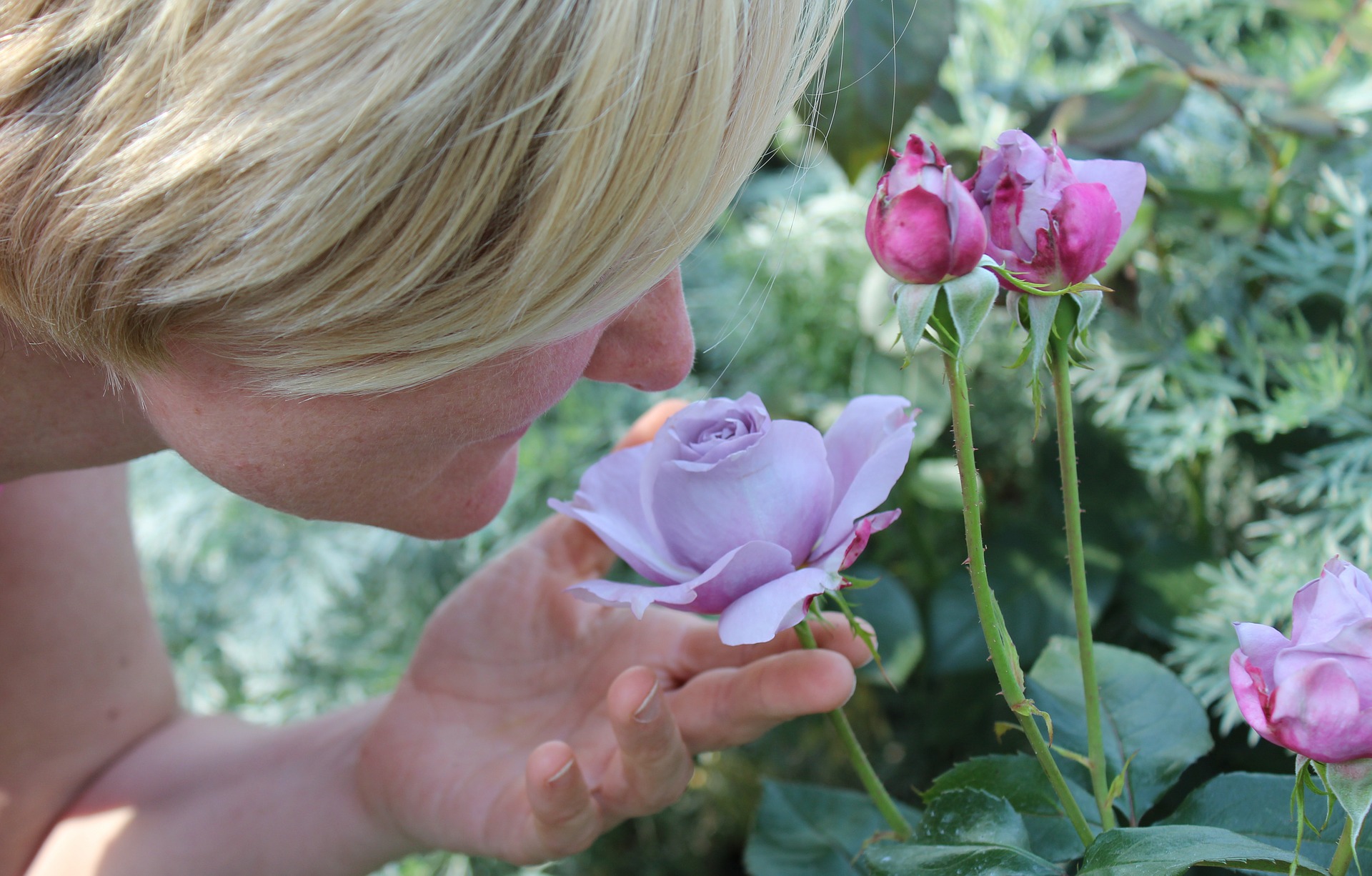
Father Irala, in his popular book, Achieving Peace of Heart, tells us that “we must live beauty.” He maintains that we need to be “reeducated” to “receive the external world.” This means, in one context, that if we are looking at a beautiful river we should spend some time peering into it –contemplating it – so that we may receive the vital influx of its beauty. Father Irala says that we should let the beauty “enter deep into us.”

Pope Francis made this observation in his recent encyclical on the environment, saying, “In some places, rural and urban alike, the privatization of certain spaces has restricted people’s access to places of particular beauty” (no. 45). Thus, one formidable impediment to experiencing the beauty of the natural world can simply be our access to it. Another obstacle, as Father Dubay points out, is our lack of wonder. We need to nurture a desire to explore and experience the beauty of the natural world, freeing ourselves from that technological world of artificially created images that keep us trapped in a world of inner-subjectivity detached from truth and beauty.

But most of all I want to stress in this note the mechanics of being receptive to beauty in the natural world, a simple process which will have powerful and tangible results. Father Irala calls this process the “reeducation of receptive power.” It is critical that we re-learn to be receptive to the beauty of the external world and the vital influx of its beauty.

Father Irala laments that many of us fail to have “clear sensations” of the beauty of the external world. “Only rarely,” he says, do we come out into the exterior world, beautiful and joyful as it was created by God” (especially if we are experiencing emotional difficulties). We are preoccupied, worried, and caught up in our own subjective world. Some people even find it difficult to put down their cell phones as they walk along a beautiful nature trail.

However, we can relearn to receive the true “sensations” of nature’s beauty. Here are instructions given by Father Irala to improve our receptive power in areas of sight and sound.

Sight: “For your re-education you should apply your sense of sight for about ten or twenty seconds to a landscape, an object, a detail. Keep a tranquil or almost passive attention. Take your time. Consider the object before you and no other. Pay no attention to any other idea. Let the object enter within you as it is in itself, without any special effort. Look at it the way a young child does. [Remain] loose and relaxed.”

Hearing: “Apply your hearing to a near or distant noise. Let yourself be penetrated by the sounds, as above, naturally, without mental discussion of the fact or its cause. Be a mere receiver of sound and perceive it with pleasure and relaxation.”

valley-1309222_1920

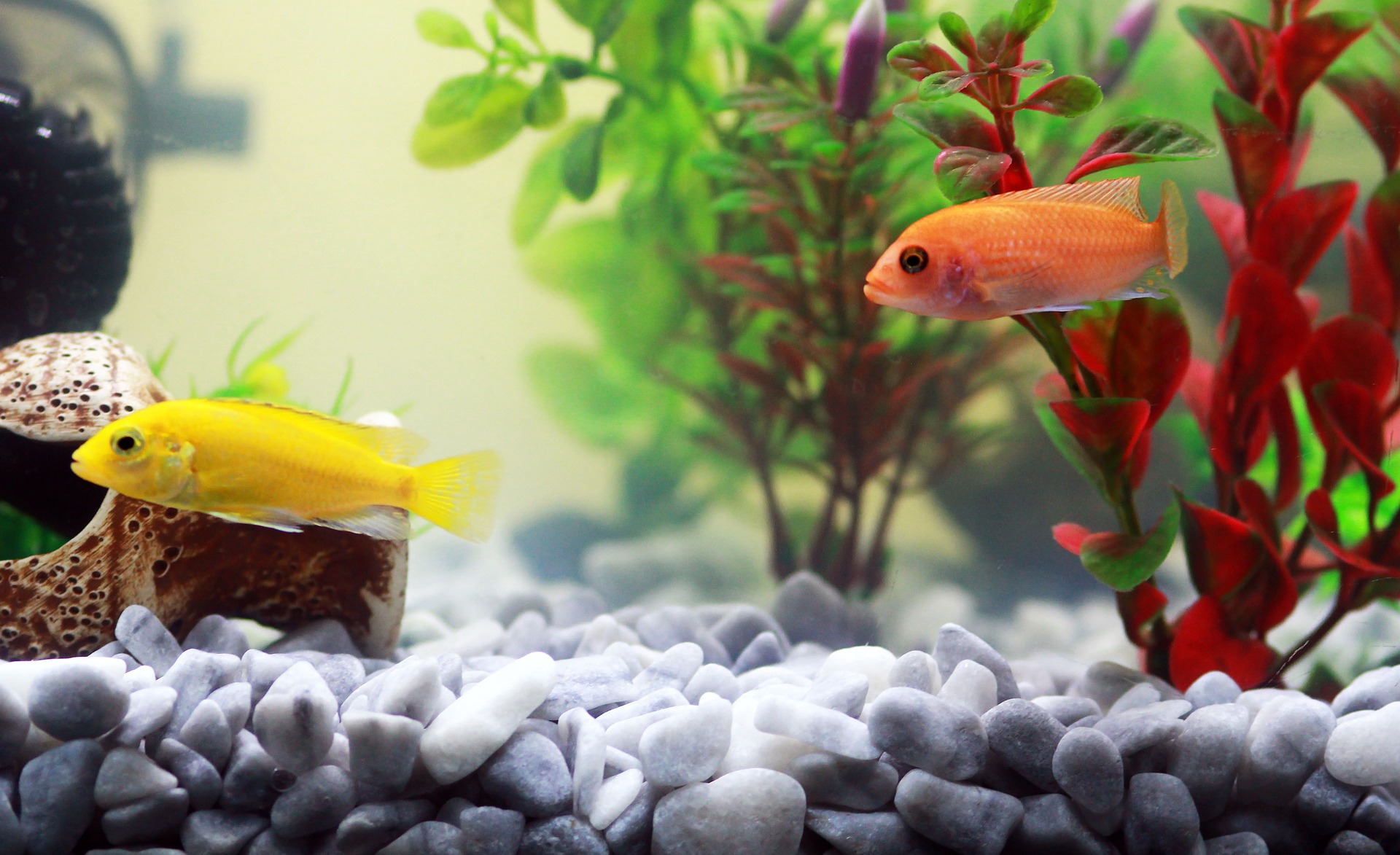
Father Irala tells an interesting story about a businessman who was on the verge of a nervous breakdown. It was apparently felt that the overworked businessman needed some time away from his hectic office to unwind and rejuvenate, but since this remedy wasn’t feasible his physician requested that “an aquarium of tropical fish built in his private office and that he spend an hour every day peacefully watching the graceful convolutions of those little creatures.” It is related that “before the year was out he sent a donation to [his physician’s] hospital as a token of gratitude for his cure” (p.41).

fish-961953_1920

“At first,” says Father Irala, it is not so easy to practice these fully conscious sensations with no attention at all paid to anything else. So, in your first attempts, you might find yourself thinking about the process itself, or the cause, effect, or some circumstances, instead of what you perceive. But in a few days, after a series of good tries, you will succeed in separating the pure sensation from accessory mental processes. And then you will find joy or rest in the sensation itself.”

Commenting on the healing power of nature, Saint Pope John Paul II made the following observation: “The aesthetic value of creation cannot be overlooked. Our very contact with nature has a deep restorative power; contemplation of its magnificence imparts peace and serenity. The Bible speaks again and again of the goodness and beauty of creation, which is called to glorify God.”  (John Paul II, 1990 World Day of Peace Message, no. 14.)

And the great Catholic philosopher, Jacques Maritain, states: “The part played by the senses in the perception of beauty is even rendered enormous in us, and well nigh-indispensable…only sense knowledge possesses perfectly in man the intuitiveness required for the perception of the beautiful.”

In conclusion, our senses open to us a world of incredible beauty that has a “deep restorative power” to heal us and make us happy. We can train ourselves to be more perceptive to the “clear sensations” and the “vital influx” of the beauty of the natural world. To shut ourselves off from this beauty is certainly unwise and most likely harmful. But to immerse ourselves in the beauty of the natural world is profoundly healthy and rejuvenating – the way God meant it to be.

woman-546103_1920

Tom Mulcahy, M.A.

Ref. Achieving Peace of Heart by Father N. Irala and The Evidential Power of Beauty by Father Thomas Dubay.

To SHARE on SOCIAL MEDIA: click on “Leave a comment” or “Comments” below (and this will bring up social media icons if they are not already present).

To LEAVE A COMMENT: click on “Leave a comment” or “Comments” below, and then scroll down to the box which says, “Leave Your Own Comment Here,” which is at the end of any comments already made. If the comment section is already present, merely scroll to the end of any comments already made.

All rights reserved.

Any ads following this note are by WordPress and not CatholicStrength.
MARY’S VISITATION TO ELIZABETH IGNITED AN EXPLOSION OF AMAZING GRACES

ETERNAL LIFE AND THE HOLY EUCHARIST

altar-window-1059741_640

“Whoever eats my flesh and drinks my blood has eternal life, and I will raise them up at the last day.” (John 6:54)

God has Eternal Life in Himself. In fact, Eternity is one of His Infinite perfections. Stunningly, he calls us to share in His Eternal Blessedness, to become partakers of His Divine nature, to share in His Eternal joy! “In the preaching of Jesus,” says the great Dominican scholar Father Garrigou-LaGrange,“everything is directed immediately toward eternal life.” This statement alone is a marvelous revelation of the underlying mission of Jesus. Jesus leads us to Eternal Life and gives Himself to us in the Holy Eucharist to securely accomplish this objective.

The Holy Eucharist is the sacrament of Eternal Life left to the Church by Jesus Christ. “Through the food of the Eucharist,” writes Saint John Paul II, “Christ’s eternal life penetrates and flows within human life. Therefore, as St. Thomas Aquinas writes, the Eucharist is ‘the culmination of the spiritual life and the goal of all the sacraments.'”

The Eucharist is, therefore, simply the most important “thing” there is on planet earth! With the exception of its sister sacraments and the entire order of grace, everything else on planet earth pales in comparison to the value of the Eucharist. If you have made your First Holy Communion, you have entered into a superior order of existence directed immediately at securing for you the gift of Eternal Life.

Jesus, whose very words as Eternal Wisdom triumph infallibly over the carnal prudence of worldly wise men, directs us to eat his body and to drink his blood. His very words at instituting the Eucharist on Holy Thursday assure us that this is the sacrament of the “new covenant in my blood” (Luke 22: 20 ). And during his Eucharistic discourse, Jesus emphatically stated: “Truly, truly I say to you, unless you eat the flesh of the Son of man and drink his blood, you have no life in you; he who eats my flesh and drinks my blood has eternal life….” (John 6:53-54).

Why are our hearts not more on fire for the Holy Eucharist? Why do we have such an appetite for “petty, peripheral things”? The degree to which our lives should be focused on the Holy Eucharist really should be nothing short of extraordinary. “If thou didst know the gift of God” (John 4:10).

Tom Mulcahy, M.A.

Sources: The Creator and the Creature by F.W. Faber (discussing, among other things, God’s Infinite Perfections); The Three Ages of the Interior Life by Father Garrigou-Lagrange; Saint Pope John Paul II, General Audience of April 8, 1992 which contained the quote from Saint Thomas Aquinas found at Summa Theol., III, q66, a. 6) ; the terms ‘carnal prudence” and “worldly wise-man” are from John Bunyan’s The Pilgrim’s Progress; Dietrich Von Hilderbrand used the expression, “petty, peripheral things.” Catholic theologians explain that “God has life in Himself.” “For as the Father has life in himself, so he has granted the Son also to have life in himself” (John 5:26).

To SHARE on SOCIAL MEDIA: click on “Leave a comment” or “Comments” below (and this will bring up social media icons if they are not already present).

To LEAVE A COMMENT: click on “Leave a comment” or “Comments” below, and then scroll down to the box which says, “Leave Your Own Comment Here,” which is at the end of any comments already made. If the comment section is already present, merely scroll to the end of any comments already made.

All rights reserved.

Any ads following this note are by WordPress and not CatholicStrength.

THE HOLY SPIRIT MAKES US LOVERS OF GOD

 Andrea_del_Verrocchio,_Leonardo_da_Vinci_-_Baptism_of_Christ_-_Uffizi

“And hope does not disappoint us, because God has poured out his love into our hearts by the Holy Spiritwhom he has given us” (Romans 5:5)

If truth be told we were created to be great lovers of God, and hopefully our happy eternity will be just that! Tauler, the renowned mystic and Dominican, says in one of his sermons that “so incomprehensible is the Holy Spirit in His greatness, so infinite in His loving richness, that all His greatness and infinity eludes any image our human reason could form.” Words like these, meditated on, will no doubt increase our love for God.

A basic principle of our faith (which, from time to time, eludes us) is that, due to our fallen nature, we do not have the capacity to truly love God, but rather, as the spiritual writers lament, we are turned towards self (away from God) and we tend to find our repose in created things.

In short, to love God, we must be born again from above (see John 3:1-21). Thus God is forced, so to speak, to give us a commandment to love Him with all our heart, soul, strength, and mind (Luke 10:27), but even then we find this beautiful commandment hard to put into practice. We are like that desperate soul at the end of the seventh chapter of Romans who cries out: “Oh, what a miserable person I am! Who will free me from this life that is dominated by sin and death?” (Romans 7:24). And how does Saint Paul respond to this cry of help? He writes the eighth chapter of Romans wherein Paul mentions the Holy Spirit (or Spirit) some eighteen times. The solution to this person’s distress – and ours too – is the Holy Spirit!

Saint Thomas Aquinas, the “angelic doctor,” says three amazing things about the Holy Spirit that I would like to bring to your attention. I use the adjective “amazing” because what he says is truly awesome! These three statements of Saint Thomas, set forth below, are drawn from three separate documents (see references below):

1. SAINT THOMAS SAYS THAT “THE SPIRIT WHO INSTILLS IN US THE LOVE WITH WHICH GOD LOVES HIMSELF IS THE HOLY SPIRIT”

Comment: The foundation of all true love is the Holy Spirit. The bond of love uniting God the Father and God the Son is the Holy Spirit. “God is love” (1 John 3: 23). We thus begin to live and love, as Father Leen points out, by the very life of God!

2. SAINT THOMAS SAYS THAT “THE NEW LAW IS THE HOLY SPIRIT IN PERSON”

Comment: The way we keep the commandments, including the great commandment to love God and neighbor, is through the power of the Holy Spirit – which is a towering theme in Romans, chapter eight.

3. SAINT THOMAS SAYS THAT “THE HOLY SPIRIT MAKES US LOVERS OF GOD”

Comment: The very love which unites the Holy Trinity, which is the Holy Spirit, is also given to us, so that we can love God with His own love! We are made “partakers of the divine nature” (2 Peter 1:4).

In light of the above discussion, and the illuminating insights of Saint Thomas Aquinas, what profound devotion we should have to our interior guest, the Holy Spirit! We need the Holy Spirit in order to love God, and God graciously – through the merits of Jesus Christ – gives Him to us! Listen to Saint Paul:

 “And hope does not disappoint us, because God has poured out his love into our hearts by the Holy Spiritwhom he has given us” (Romans 5:5)

“If you only knew what the gift of God is” (John 4:10).

 Tom Mulcahy, M.A.


ReferencesThe quote from Tauler is found on page 91 of The Classics of Western Spirituality: Johannes Tauler Sermons.        With respect to the first quote from Saint Thomas Aquinas, Blessed Abbot Marmion in Christ, The Life Of The Soul quotes Saint Thomas on page 17: “Therefore the Spirit who instills in us the love with which God loves Himself is called the Holy Spirit.” The second quote from Saint Thomas appears on page 255 of Holy Spirit of God  by F.X. Durrwell (Servant Books), and fully reads: “The new law which is the Holy Spirit in person.” The third quote from Saint Thomas appears on page 46 of Volume I, The Three Ages of the Spiritual Life, by Father Garrigou-LaGrange (TAN Books), and reads in full: “Therefore, because the Holy Spirit makes us lovers of God, it follows that by the Holy Spirit that we are constituted contemplators of God….” Fathers Grou and Garrigou-LaGrange make the point that as the result of original sin and actual sin, we are “turned away from God” and fixated on self and things. With respect to the reference to Father Leen, see pages 63-70 of his book, The Holy Spirit (Scepter Press).

Image: The Baptism of Christ by Andrea del Verrocchio and Leonardo da Vinci, circa 1475 (Public Domain, U.S.A.) In baptism we received the great gift of the indwelling of the Holy Spirit in our soul along with sanctifying grace.

To SHARE on SOCIAL MEDIA: click on “Leave a comment” or “Comments” below (and this will bring up social media icons if they are not already present).

To LEAVE A COMMENT: click on “Leave a comment” or “Comments” below, and then scroll down to the box which says, “Leave Your Own Comment Here,” which is at the end of any comments already made. If the comment section is already present, merely scroll to the end of any comments already made.

All rights reserved.

Any ads following this note are by WordPress and not CatholicStrength.

   

THE HOLY SPIRIT IS THE CONVINCER (AND YET MANY REMAIN UNCONVINCED)

THE HOLY SPIRIT AS UNCREATED PERSON-GIFT

peace-dove-920066_1280

“And hope does not disappoint us, because God has poured out his love into our hearts by the Holy Spiritwhom he has given us” (Romans 5:5)

Saint Pope John Paul II‘s encyclical on the Holy SpiritDominum et Vivificantem, contains wonderful insights into the nature and mission of the Holy Spirit. In this short note, I will discuss the concept or revelation of the Holy Spirit as “Person-Gift” as developed by John Paul II in the encyclical.

You get married. What an incredible gift you have been given by God: the gift of another person. Truly, excepting God and grace, it is hard to fathom a greater gift than this – your spouse. Marital love then blossoms into the gift of another person: a child destined to praise God for all eternity! These are amazing gifts. These are persons made in the image and likeness of God.

 In Dominum et Vivificantem John Paul II points out that in the Old Testament “the personality of the Holy Spirit is completely hidden” (17). But in the New Testament the “Holy Spirit is revealed in a new and fuller way,” not only as a gift from Jesus but as a “Person-Gift” (22). Just as Jesus Christ in His Incarnation is a Person-gift from the Father, so too is the Holy Spirit a Person-gift from God the Father and Jesus. This giving of the Holy Spirit as a gift to us is truly the greatest of all possible gifts, for the Holy Spirit is the “personal love” proceeding from the Father and the Son, which John Paul II calls “uncreated Love-Gift.” It is “through the Holy Spirit [that] God exists in a mode of gift” (10).The Holy Spirit is “Person-Love” and “Person-Gift” (10).

In light of the above insights of John Paul II we can begin to understand why Jesus was so anxious to leave the apostles and return to the Father (“If I go, I will send him [the Holy Spirit] to you,” John 16:7): Jesus wanted the apostles – and us – to receive the ultimate gift of His love – the “Person-Gift” and the “Person-Love” of the Holy Spirit. The Holy Spirit is “the Lord and giver of life”; he is the “Infinite Spirit” of love and the “inexhaustible source” of eternal life. Our Lord’s death, Resurrection and Ascension therefore converge to bring forth a most incredible gift: “The Holy Spirit as a Person who is the gift” (23).

The “eternal love” of the Father and the Son is a Person-Gift: this Person-Gift is the Holy Spirit. The Holy Spirit is the final gift, the gift of God’s own life within us, justifying us, sanctifying us, filling our hearts with love, a love “welling up to eternal life” (John 4:14). And so we say, with renewed fervor, in the words of that ancient hymn of the church, Come Holy Spirit, Creator Blest, and in our souls take up Thy rest.”

Tom Mulcahy, M.A.

P.S. Mary’s life began (as the Immaculate Conception) in profound union with the Holy Spirit, and the angel greets her accordingly as “full of grace.” The progress of the spiritual life is to draw ever closer to the Holy Spirit. It is thus that Saint Louis DeMontfort has such high regard for the prayer,Veni Creator Spiritus. The basic or fundamental truth is that we are made whole, or become our true selves, when united to God. Mary was given this gift of union with God from the very beginning. Mary is our model in the spiritual life.

To SHARE on SOCIAL MEDIA: click on “Leave a comment” or “Comments” below (and this will bring up social media icons if they are not already present).

To LEAVE A COMMENT: click on “Leave a comment” or “Comments” below, and then scroll down to the box which says, “Leave Your Own Comment Here,” which is at the end of any comments already made. If the comment section is already present, merely scroll to the end of any comments already made.

All rights reserved.

Any ads following this note are by WordPress and not CatholicStrength.
 

THE ECOLOGY OF THE BODY: POPE FRANCIS SAYS NO TO TRANSGENDER IDEOLOGY AND HOMOSEXUAL MARRIAGE

Franciscus_kotel (1)

“Male and female God created them” (Genesis 1:28)

“The young need to be helped to accept their own body as it was created, for thinking that we enjoy absolute power over our own bodies turns, often subtly, into thinking that we enjoy absolute power over creation.” (Pope Francis, Amoris Laetitia)

The quote set forth above from Pope Francis is from his recently released Apostolic Exhortation on the family, Amoris Laetitia. In that exhortation Pope Francis also indicated that the sex education of the young “should help young people to accept their own bodies and to avoid the pretension to cancel out sexual differences….” (#285). Parents therefore have a serious obligation to find out whether their kid’s school is involved in any immoral conduct which would encourage gender identity confusion (see Gender Ideology Harms Children | American College of Pediatricians).

In his highly publicized encyclical on the environment, Laudato Si, Pope Francis makes some fascinating insights into the ecology of the human body. There can be little doubt that Pope Francis has a thorough knowledge of Saint John Paul II’s well known “theology of the body,” and Francis mentions explicitly in his encyclical Pope Benedict’s “ecology of man.” Pope Francis states that a genuine human ecology involves the acceptance of our bodies in the male and female forms in which nature gives them to us. He states that it is “not a healthy attitude” which would seek to “cancel out sexual differences” between men and women.

These words of our Holy Father are found in section 155 of Laudato Si, under the heading, “Ecology and Daily Life,” and are set forth below:

155. Human ecology also implies another profound reality: the relationship between human life and the moral law, which is inscribed in our nature and is necessary for the creation of a more dignified environment. Pope Benedict XVI spoke of an “ecology of man”, based on the fact that “man too has a nature that he must respect and that he cannot manipulate at will”. It is enough to recognize that our body itself establishes us in a direct relationship with the environment and with other living beings. The acceptance of our bodies as God’s gift is vital for welcoming and accepting the entire world as a gift from the Father and our common home, whereas thinking that we enjoy absolute power over our own bodies turns, often subtly, into thinking that we enjoy absolute power over creation. Learning to accept our body, to care for it and to respect its fullest meaning, is an essential element of any genuine human ecology. Also, valuing one’s own body in its femininity or masculinity is necessary if I am going to be able to recognize myself in an encounter with someone who is different. In this way we can joyfully accept the specific gifts of another man or woman, the work of God the Creator, and find mutual enrichment. It is not a healthy attitude which would seek “to cancel out sexual difference because it no longer knows how to confront it”.

The Holy Father Francis also spoke, just days prior to the release of the encyclical, these important words:

“… Being parents is based on the diversity of being male and female, as the Bible reminds us. This is the ‘first’ and most fundamental difference, constitutive of the human being. It is a wealth. Differences are wealth. “We men learn to recognize, through the female figures we encounter in life, the extraordinary beauty that women bear. And women follow a similar path, learning from male figures that the man is different and has his own way of feeling, understanding and living. And this communion in difference is very important also in the education of children”. (Pope Francis,  June, 2015)

In Amoris Laetitia Pope Francis also stated that homosexual marriage is not part of God’s plan for marriage and family. The Pope stated:

“There are absolutely no grounds for considering homosexual unions to be in any way similar or even remotely analogous to God’s plan for marriage and family”   It is unacceptable “that local Churches should be subjected to pressure in this matter and that international bodies should make financial aid to poor countries dependent on the introduction of laws to establish ‘marriage’ between persons of the same sex”(#251)

In Amoris Laetitia Pope Francis specifically referenced Section 2358 of the Catechism of the Catholic Church which states in full: “The number of men and women who have deep-seated homosexual tendencies is not negligible. This inclination, which is objectively disordered, constitutes for most of them a trial. They must be accepted with respect, compassion, and sensitivity. Every sign of unjust discrimination in their regard should be avoided. These persons are called to fulfill God’s will in their lives and, if they are Christians, to unite to the sacrifice of the Lord’s Cross the difficulties they may encounter from their condition.” These “families,” said the Pope, “should be given respectful pastoral guidance, so that those who manifest a homosexual orientation can receive the assistance they need to understand and fully carry out God’s will in their lives” (Amoris Laetitia,  #250).

Marriage between a man and a woman is deeply embedded in the wisdom of creation and the ecology of the body. Pope Francis makes this point in a beautiful way in his encyclical on the environment, Laudato Si, which he reaffirmed in the recently released Apostolic Exhortation Amoris Laetitia, a truth Jesus affirms in the most radical way possible (see Matt. 19: 3-10).

Tom Mulcahy, M.A.


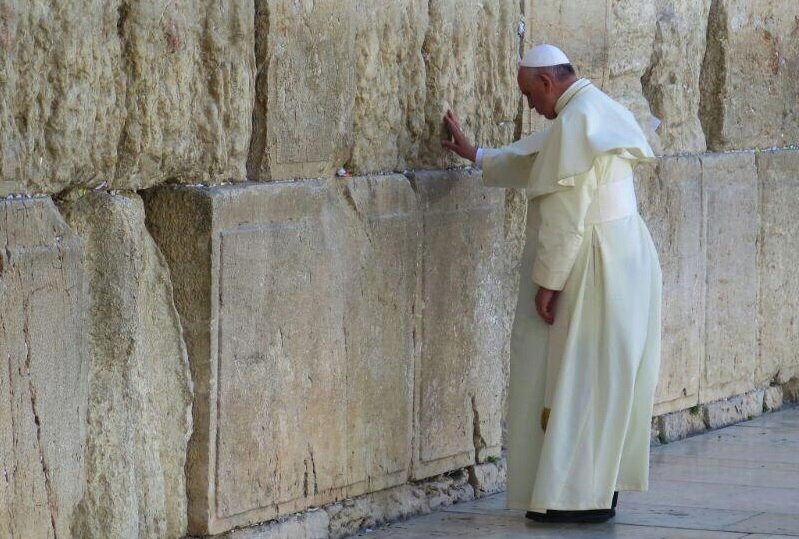
Photo: Pope Francis praying at the Western Wall in Jerusalem in 2014 available under a Creative Commons Attribution-Noncommercial license.

To SHARE on SOCIAL MEDIA: click on “Leave a comment” or “Comments” below (and this will bring up social media icons if they are not already present).

To LEAVE A COMMENT: click on “Leave a comment” or “Comments” below, and then scroll down to the box which says, “Leave Your Own Comment Here,” which is at the end of any comments already made. If the comment section is already present, merely scroll to the end of any comments already made.

All rights reserved.

Any ads following this note are by WordPress and not CatholicStrength.
 

IMAGES OF THE HOLY SPIRIT

Holy_Spirit_as_Dove_(detail)

“This fullness of the Spirit was not to remain uniquely the Messiah’s, but was to be communicated to the whole messianic people. On several occasions Christ promised this outpouring of the Spirit, a promise which he fulfilled first on Easter Sunday and then more strikingly at Pentecost.”  (CCC 1287)

We poor creatures, “married as we are to our senses”, need images in order to mediate to our minds the presence of God.  As Father Karl Adam states in his classic, The Spirit of Catholicism, “God’s revelation makes use of human instruments, the infinite of the finite; the ineffable and the transcendent is clothed in visible forms and signs.” In order to draw closer to the Holy Spirit it is helpful to present to our mind images that represent or mediate to us the Holy Spirit’s presence and activity in our lives. Relying on the Catechism of the Catholic Church, this note discusses some of the common symbols of the Holy Spirit that assist us in calling to mind and sensing His presence in our lives. These symbols are: fire, air, wind, water, the dove, and oil. 

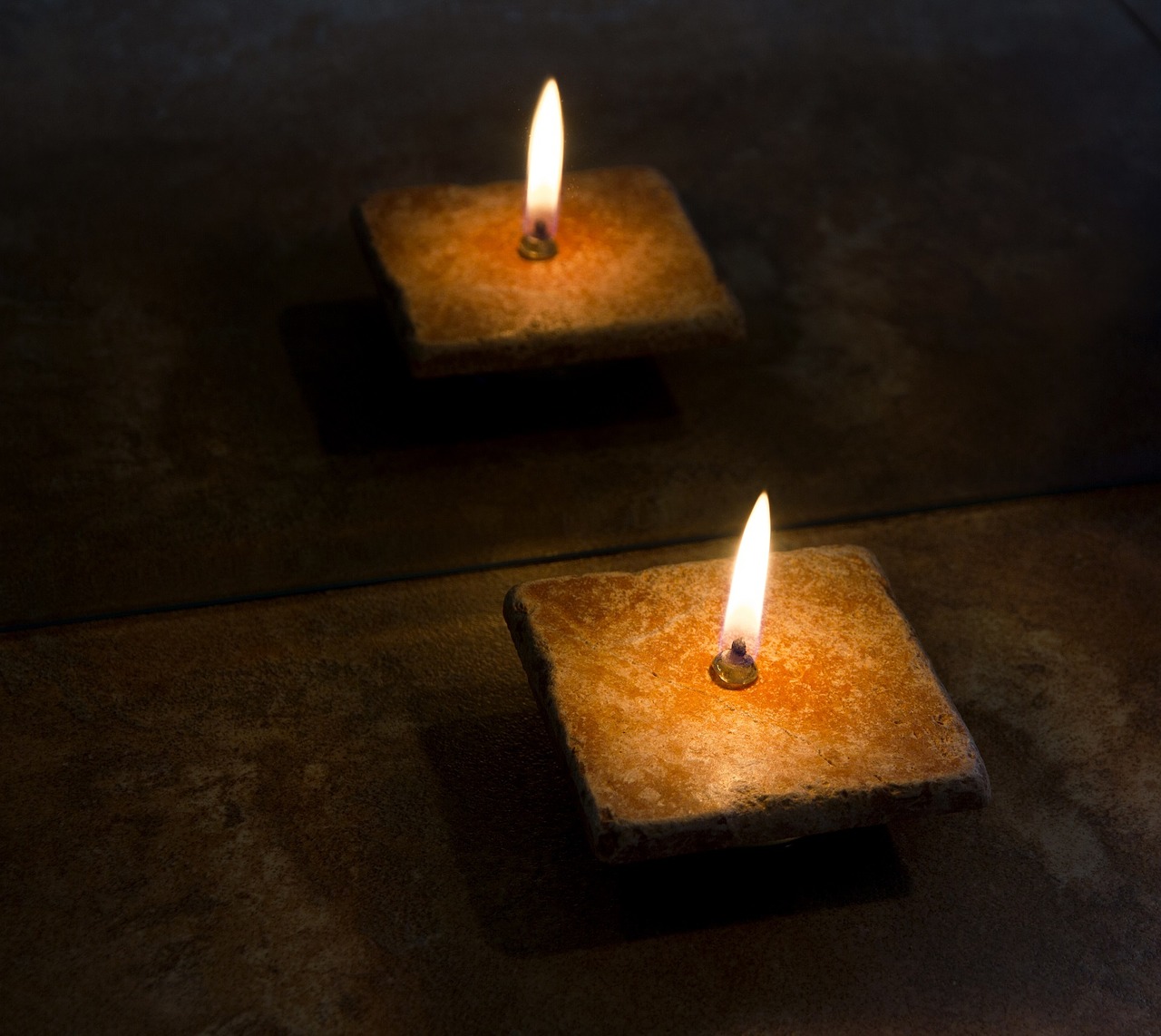
1. THE SYMBOL OF FIRE
candle-1285947_1280


Comment: The Catechism of the Catholic Church states:

“Fire. While water signifies birth and the fruitfulness of life given in the Holy Spirit, fire symbolizes the transforming energy of the Holy Spirit’s actions. The prayer of the prophet Elijah, who “arose like fire” and whose “word burned like a torch,” brought down fire from heaven on the sacrifice on Mount Carmel. This event was a “figure” of the fire of the Holy Spirit, who transforms what he touches. John the Baptist, who goes “before [the Lord] in the spirit and power of Elijah,” proclaims Christ as the one who “will baptize you with the Holy Spirit and with fire.” Jesus will say of the Spirit: “I came to cast fire upon the earth; and would that it were already kindled!” In the form of tongues “as of fire,” the Holy Spirit rests on the disciples on the morning of Pentecost and fills them with himself The spiritual tradition has retained this symbolism of fire as one of the most expressive images of the Holy Spirit’s actions. “Do not quench the Spirit (696).”
 
2. THE SYMBOL OF AIR
sky-114446_1280

               Then [Jesus] breathed on them and said, ‘Receive the Holy Spirit’ ” 
            
    (John 20:22)


Comment:
 Father Faber draws heavily on this image, stating:

Then I pictured Him [the Holy Spirit] as if He were the view-less air, which I breathed, which was my life as if the air were He, going into me and coming out, and He a Divine Person, sweetly envious of the Son, sweetly coveting the Sacred Humanity which He Himself had fashioned, and coming into the world on beautifulest mission, seeking to be as near incarnate as He could be without an actual incarnation; and it was so near that he seemed almost human, though unincarnate.And this was the clearest view I ever could see of that Divine Person. May he forgive what I have written of Him…and bear with me a little longer, till I have dawn my last breath in Him, and breathed it forth again as my first breath of another life, a fresh son newly born at the Feet of the Eternal Father (Notes on Doctrinal and Spiritual Subjects, Vol. 1, p.98)!” See note on symbols at the end of this post.

3. THE SYMBOL OF WIND

sunset-86214_1920

Comment: The rushing wind at Pentecost (Acts 2:2) invokes this symbol. Every rush of wind, every breeze, can serve as a powerful reminder of the Holy Spirit.

4. THE SYMBOL OF WATER

waterfall-828948_1920

Comment: Water is a powerful image of the Holy Spirit, and most especially in the Gospel of John:

“On the last day of the feast, the great day, Jesus stood up and proclaimed, “If any one thirst, let him come to me and drink.  He who believes in me, as the scripture has said, `Out of his heart shall flow rivers of living water.'” Now this he said about the Spirit, which those who believed in him were to receive; for as yet the Spirit had not been given, because Jesus was not yet glorified.” (John 7:37-39)

See also CCC 694.  Just like we need water to live, so too do we need the Holy Spirit for spiritual life. We use water to cleanse and nourish us: these are images which draw us into the life of the Holy Spirit. We can also use Holy water in our homes.

5.THE SYMBOL OF THE DOVE

peace-dove-920066_1280

Comment: 
The peaceful dove is a wonderful image of the Holy Spirit. The CCC discusses the symbol of the dove in the following manner:

“The dove. At the end of the flood, whose symbolism refers to Baptism, a dove released by Noah returns with a fresh olive-tree branch in its beak as a sign that the earth was again habitable. When Christ comes up from the water of his baptism, the Holy Spirit, in the form of a dove, comes down upon him and remains with him. The Spirit comes down and remains in the purified hearts of the baptized. In certain churches, the Eucharist is reserved in a metal receptacle in the form of a dove (columbarium) suspended above the altar. Christian iconography traditionally uses a dove to suggest the Spirit (701).”

6. THE SYMBOL OF OIL

baptism-239697_1920

Comment: 
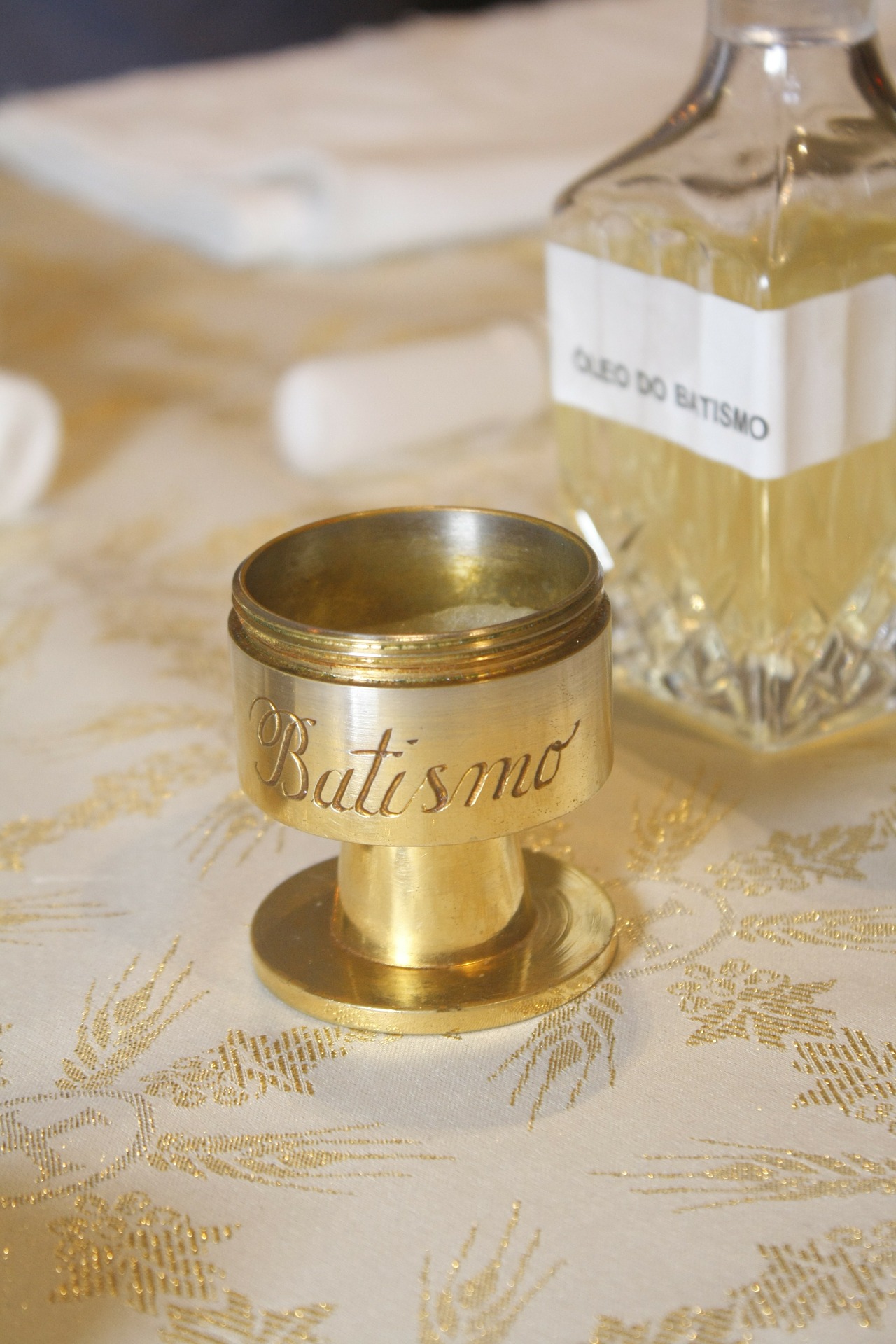
Oil can remind us that we have been anointed by the Holy Spirit by virtue of our baptism and Confirmation. Blessed
oils are sacramentals which we can use in our own homes. The CCC states:

Anointing. The symbolism of anointing with oil also signifies the Holy Spirit, to the point of becoming a synonym for the Holy Spirit. In Christian initiation, anointing is the sacramental sign of Confirmation, called “chrismation” in the Churches of the East. Its full force can be grasped only in relation to the primary anointing accomplished by the Holy Spirit, that of Jesus. Christ (in Hebrew “messiah”) means the one “anointed” by God’s Spirit. There were several anointed ones of the Lord in the Old Covenant, pre-eminently King David. But Jesus is God’s Anointed in a unique way: the humanity the Son assumed was entirely anointed by the Holy Spirit. The Holy Spirit established him as “Christ.” The Virgin Mary conceived Christ by the Holy Spirit who, through the angel, proclaimed him the Christ at his birth, and prompted Simeon to come to the temple to see the Christ of the Lord. The Spirit filled Christ and the power of the Spirit went out from him in his acts of healing and of saving. Finally, it was the Spirit who raised Jesus from the dead. Now, fully established as “Christ” in his humanity victorious over death, Jesus pours out the Holy Spirit abundantly until “the saints” constitute – in their union with the humanity of the Son of God – that perfect man “to the measure of the stature of the fullness of Christ”: “the whole Christ,” in St. Augustine’s expression (695)

CONCLUSION:

Merazhofen_Pfarrkirche_Josephsaltar_Altarblatt_Pfingstwunder

These symbols of the Holy Spirit help us to image the invisible Holy Spirit. They are aids. The Holy Spirit is not air or water. We are not pantheists. However, God is present in nature by his power, presence and essence. Moreover, the Holy Spirit does truly indwell in our souls by sanctifying grace. “Come Holy Ghost, Creator Blest, and in our hearts take up Thy rest.”

Tom Mulcahy, M.A.


Photos: The lead image is a picture of a stained glass representation of the Holy Spirit as a dove from St. Peter’s Basilica in Rome, circa 1660, by Gian Lorenzo Bernini (Public Domain, U.S.A.). The final image (immediately above) of Mary and the Apostles at Pentecost, by Fidelis Schabet, 1867 (photo image released into the public domain by the author per Wikipedia).


To SHARE on SOCIAL MEDIA: click on “Leave a comment” or “Comments” below (and this will bring up social media icons if they are not already present).

To LEAVE A COMMENT: click on “Leave a comment” or “Comments” below, and then scroll down to the box which says, “Leave Your Own Comment Here,” which is at the end of any comments already made. If the comment section is already present, merely scroll to the end of any comments already made.

All rights reserved.

Any ads following this note are by WordPress and not CatholicStrength.