Author: tomlirish

MARY IS THE TRUE DAVIDIC QUEEN ASSUMED INTO HEAVEN

Diego_Velázquez_-_Coronation_of_the_Virgin_-_Prado

“Make your request, my mother, for I will not refuse you.” (1 Kings 2:20)

These are the words of him who is holy and true [Jesus], who holds the key of David. What he opens no one  can shut, and what he shuts no one can open.” (Rev. 3:7)

The Virgin Mary is the true Davidic Queen assumed into Heaven. This is so because Jesus Christ is the true Heavenly King who holds the key of David.

There can be no doubt that Matthew’s Gospel envisions the restoration of the Old Testament Davidic Kingdom through the person of Jesus Christ, whom Matthew right away identifies as the “son of David” (see Matt 1:1).  This is the very first verse of the New Testament, and the Jewish reader back then would have known automatically that the messiah was to be a descendant of the royal line of David. God had promised David an everlasting Kingdom (2 Sam. 7:12-17), and Jesus was clearly seen as the person who would “rebuild David’s fallen tent” (Acts 15:16). The overarching theme of Matthew’s Gospel is the Kingdom, or more precisely the Kingdom of Heaven, and Jesus inaugurates this Kingdom by establishing his church which brings the ancient Davidic monarchy to its true “perfection” (see references below).

Just as David established the Kingdom of Israel with its twelve tribes, Jesus established His Heavenly Kingdom on the foundation of the twelve apostles. And just as the Davidic King would have a  Prime Minister, who was given the “keys to the Kingdom” as a sign of his office (see Isaiah 22: 20-22), Jesus selected  Peter as his first Prime Minister and entrusted to him the keys of the Kingdom (see Matthew 16:19).   Jesus even promised that the gates of hell would not prevail against his Church, which is his “Kingdom on earth.”

According to Dr. Hahn, “The structure of David’s monarchy was neither incidental or accidental; in God’s providential plan, it foreshadowed the Kingdom of God” (Hail, Holy Queen, p.76). “The Davidic monarchy finds its perfect fulfillment in the reign of Jesus Christ – and there was never a Davidic King without a Davidic Queen: the King’s own mother, the queen mother” (Id at 83, emphasis added). The queen mother was known as the gebirah or “great lady” (Id at 79). The “Gebirah was more than a title; it was an office with real authority” (id at 80). Thus, at 1 Kings 2:20 we read the reigning King say, “Make your request, my mother, for I will not refuse you.” Neither could Jesus refuse his mother’s request at Cana, even though the Lord’s time had not yet come to perform his first miracle (John 2:5). Mary, although ever-Virgin, is the mother of Jesus and the mother of the church. “Hear then, O house of David!…The Lord Himself will give you a sign. Behold, a virgin shall conceive and bear a son, and shall call his name Immanuel” (Is 7:13-14).

Rightly so, Mary is the Queen and mother of all Christians. From the cross, Jesus told John to “behold his mother” (John 19:27), and in his vision of Heaven described in the Book of Revelation John sees the Blessed Virgin “clothed with the sun…and on her head a [queenly] crown of twelve stars….” (Rev. 12: 1). The Queenship of Mary, Mother of God, is no mere sentiment of overly maternalistic Catholics: it was foreshadowed by the Davidic  monarchy in the Old Testament and brought to fruition by the best of all Kings, Jesus Christ. Mary now reigns forever as Queen and Mother in the Kingdom of Heaven:

“…the Immaculate Virgin, preserved free from all stain of original sin, when the course of her earthly life was finished, was taken up body and soul into heavenly glory, and exalted by the Lord as Queen over all things, so that she might be the more fully conformed to her Son, the Lord of lords and conqueror of sin and death….This motherhood of Mary in the order of grace continues uninterruptedly from the consent which she loyally gave at the Annunciation and which she sustained without wavering beneath the cross, until the eternal fulfillment of all the elect. Taken up to heaven she did not lay aside this saving office but by her manifold intercession continues to bring us the gifts of eternal salvation.” (From the Vatican II document, Lumen Gentium, quoted at CCC 966, 969).

“Hail Holy Queen, Mother of mercy, our life, our sweetness, and our hope.”

Tom Mulcahy, M.A.


Ref. I am carving this short note out of Dr. Hahn materials including The Ignatius Catholic Study Bible on MatthewHail, Holy Queen (Double Day); audio series on Gospel of Matthew Rome Sweet Home (Ignatius); and see also Disc six of Why the Hell? on “The 
New Eve.” In Redemptoris Mater, 47, Saint John Paul II states:

“Thanks to this special bond linking the Mother of Christ with the Church, there is further clarified the mystery of that “woman” who, from the first chapters of the Book of Genesis until the Book of Revelation, accompanies the revelation of God’s salvific plan for humanity. For Mary, present in the Church as the Mother of the Redeemer, takes part, as a mother, in that monumental struggle; against the powers of darkness” which continues throughout human history. And by her ecclesial identification as the “woman clothed with the sun” (Rev. 12:1), it can be said that “in the Most Holy Virgin the Church has already reached that perfection whereby she exists without spot or wrinkle.” Hence, as Christians raise their eyes with faith to Mary in the course of their earthly pilgrimage, they “strive to increase in holiness.” Mary, the exalted Daughter of Sion, helps all her children, wherever they may be and whatever their condition, to find in Christ the path to the Father’s house.Thus, throughout her life, the Church maintains with the Mother of God a link which embraces, in the saving mystery, the past, the present and the future, and venerates her as the spiritual mother of humanity and the advocate of grace.”

Image: The Coronation of the Virgin by Diego Velazquez, circa 1645 (according to Wikipedia The work of art depicted in this image and the reproduction thereof are in the public domain worldwide. The reproduction is part of a collection of reproductions compiled by The Yorck Project. The compilation copyright is held by Zenodot Verlagsgesellschaft mbH and licensed under the GNU Free Documentation License.).

To SHARE on SOCIAL MEDIA: click on “Leave a comment” or “Comments” below (and this will bring up social media icons if they are not already present).

To LEAVE A COMMENT: click on “Leave a comment” or “Comments” below, and then scroll down to the box which says, “Leave Your Own Comment Here,” which is at the end of any comments already made. If the comment section is already present, merely scroll to the end of any comments already made.

All rights reserved.

Any ads following this post are from WordPress and not this blog.
 

THREE ESSENTIAL PRACTICES THAT PROTECT AND STRENGTHEN CATHOLIC MARRIAGES

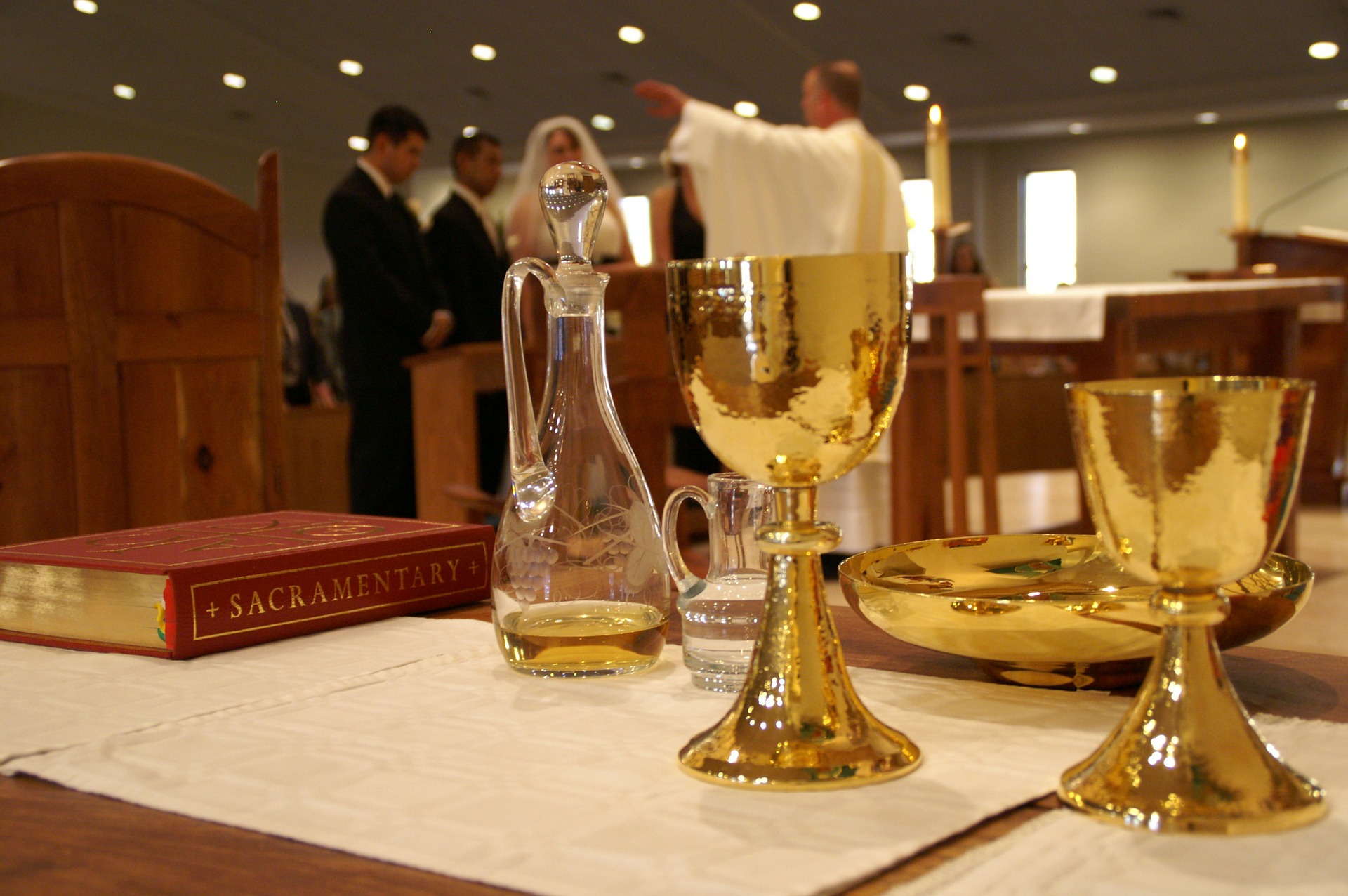
 sacrament-338987_1920 (1)

“At a moment in history in which the family is the object of numerous forces that seek to destroy it or in some way to deform it, and aware that the well-being of society and her own good are intimately tied to the good of the family, the Church perceives in a more urgent and compelling way her mission of proclaiming to all people the plan of God for marriage and family, ensuring their full vitality and human and Christian development, and thus contributing to the renewal of society and of the People of God.” (Apostolic Exhortation Familiaris Consortio of Saint Pope John Paul II, 3)

In The Catholic Family in the Modern World  the saintly priest, Father John Hardon, specifically warns married Catholics that the de-Christianization of society harms families and thus – by implication –  threatens your own marriage! And I know there is nothing more important to you than God and your God-centerd marriage. If you have a strong Catholic marriage are you ready for the trials and spiritual warfare that are sure to come? And if your marriage is experiencing rocky times, what positive action can you take to rebuild it and save it from disaster?  We men cannot afford to be passive, like Adam, who stood silently next to Eve as the infernal serpent attacked his wife (see Genesis 3: 6). Thus, the great Father Hardon, relying heavily on Saint Pope John Paul II, tells us that three things are absolutlely necessary to protect, fortify and strengthen our marriages, and these three essential practices are: PRAYER, the EUCHARIST and THE SACRAMENT OF RECONCILIATION. We consider these three indispensable practices below, relying on Father Hardon.
 

1.  PRAYER

Perseverance in marital love, says Father Hardon, “is impossible without God’s grace.” He continues: “And what is the primary source of grace that we always have at our disposal? It is prayer. No matter how badly off a marriage may be, no matter how tragic a once flourishing family may become, the one indispensable condition, either for restoring married love…or for growth in marital charity, is prayer. Why? Because part of the divine plan, which is what providence means, is that we should obtain many of the things we need only by asking God to grant them.” Thus, “we have no choice; either we pray or we do not get the divine light and strength we need. Either husbands and wives pray or they will not receive the grace to even sustain their married love.” The “most fundamental reason for failure [in marriage] is lack of prayer” (45-46).

Practical Consideration: Am I praying on a regular and sustained basis for my spouse and for my marriage and for the virtues I need to grow in holiness?


2. THE EUCHARIST: THE SOURCE OF CHRISTIAN MARRIAGE

Father Hardon states: “According to Pope John Paul II, ‘The Eucharist is the very source of Christian marriage.’ What can he possibly mean? He means that except for the Holy Eucharist as Sacrifice, as Holy Communion, and as Real Presence, Christian marriage would not survive. Why not? Because the heart of Christian marriage is the practice of Christian charity, but Christian charity is a bad dream unless sustained and nourished and enlightened and protected by the constant flux of supernatural grace whose principal divinely instituted source is the Holy Eucharist….Believing married people must be devoted to the Holy Eucharist if they want their marriage even to survive, let alone to thrive. This is not piety. It is a factual reality” (47-48).

Practical Consideration: Do I have a strong desire to receive Jesus in the Holy Eucharist? Do I realize how much I need sacramental union with Jesus in order to grow in charity? Do I try to attend mass frequently? Do I adore Jesus in Eucharistic Adoration on a regular – preferably weekly – basis? Do I know what the practice of spiritual communion is?


3. SACRAMENTAL CONFESSION STRENGTHENS MARRIAGES

According to Father Hardon, the Sacrament of Confession, “the sacrament of peace,” is “necessary to restore peace to families” broken by sin and conflict. The repentance and forgiveness that are basic to the Sacrament of Penance heal families and restore family unity. In this regard Father Hardon quotes from Pope John Paul II’s Apostolic Exhortation on the family,
Familiaris Consortio (Section 58), quoted below:

The Sacrament of Conversion and Reconciliation

58. An essential and permanent part of the Christian family’s sanctifying role consists in accepting the call to conversion that the Gospel addresses to all Christians, who do not always remain faithful to the “newness” of the Baptism that constitutes them “saints.” The Christian family too is sometimes unfaithful to the law of baptismal grace and holiness proclaimed anew in the sacrament of marriage. Repentance and mutual pardon within the bosom of the Christian family, so much a part of daily life, receive their specific sacramental expression in Christian Penance. In the Encyclical Humanae vitae, Paul VI wrote of married couples: “And if sin should still keep its hold over them, let them not be discouraged, but rather have recourse with humble perseverance to the mercy of God, which is abundantly poured forth in the sacrament of Penance.” The celebration of this sacrament acquires special significance for family life. While they discover in faith that sin contradicts not only the covenant with God, but also the covenant between husband and wife and the communion of the family, the married couple and the other members of the family are led to an encounter with God, who is “rich in mercy,” who bestows on them His love which is more powerful than sin, and who reconstructs and brings to perfection the marriage covenant and the family communion.

Practical Consideration: Do you, your spouse and your children utilize this great sacrament of peace on at least a monthly basis so as to draw from this sacrament the forgiveness, healing and strength your family needs? Do you, as the father of the family, specifically set aside family time for the whole family to attend Confession together, and then perhaps to go out together afterwards for some family fun and bonding?


Tom Mulcahy, M.A.


Ref.  See the referenced text of Father Hardon for a more detailed explanation of these three practices. Some of the quoted material was slightly edited for this note.

To SHARE on SOCIAL MEDIA: click on “Leave a comment” or “Comments” below (and this will bring up social media icons if they are not already present).

To LEAVE A COMMENT: click on “Leave a comment” or “Comments” below, and then scroll down to the box which says, “Leave Your Own Comment Here,” which is at the end of any comments already made. If the comment section is already present, merely scroll to the end of any comments already made.

All rights reserved.

Any ads following this post are from WordPress and not this blog.

 

A RELIABLE KEY TO GRASPING THE MEANING OF LIFE

truth-1123020_1920

                               “[God] is Glorified in His Saints” (2 Thes. 1:10)

We are all looking for evidence and knowledge that points to the ultimate meaning of life. And the purpose of this note is to suggest that the Catholic Saints hold the key (or should I say a key) to unlocking and discovering the meaning of life. Indeed, the more we study the lives of the saints, the more we will discover the meaning of life.

This interest in the saints “is not an interest of mere pious curiosity. It is inspired by the growing realization that the saints, and the saints alone, have found what all other men are vainly seeking – a real life. It is beginning to dawn on the intelligence of those who are sincerely searching for the truth and who, with unprejudiced minds, are seeking for a solution to the problem of existence that the real men and women are the saints and it is only they who know what life is” (The Holy Spirit, p. 11, Father Edward Leen).

Father Leen. a great spiritual writer who died in 1956, adds: “Earnest souls are beginning to regard the saints…as men and women who have received a deep initiation into the secret of living and who are, in consequence, apt to initiate others. It is felt that they alone know while all others are but groping in a state of more or less blindness. The saint is recognized to be the one who really succeeds in finding life and is, therefore, studied chiefly as an ‘essayist on living’. They considered their highest knowledge to be…persevering contact with God.”

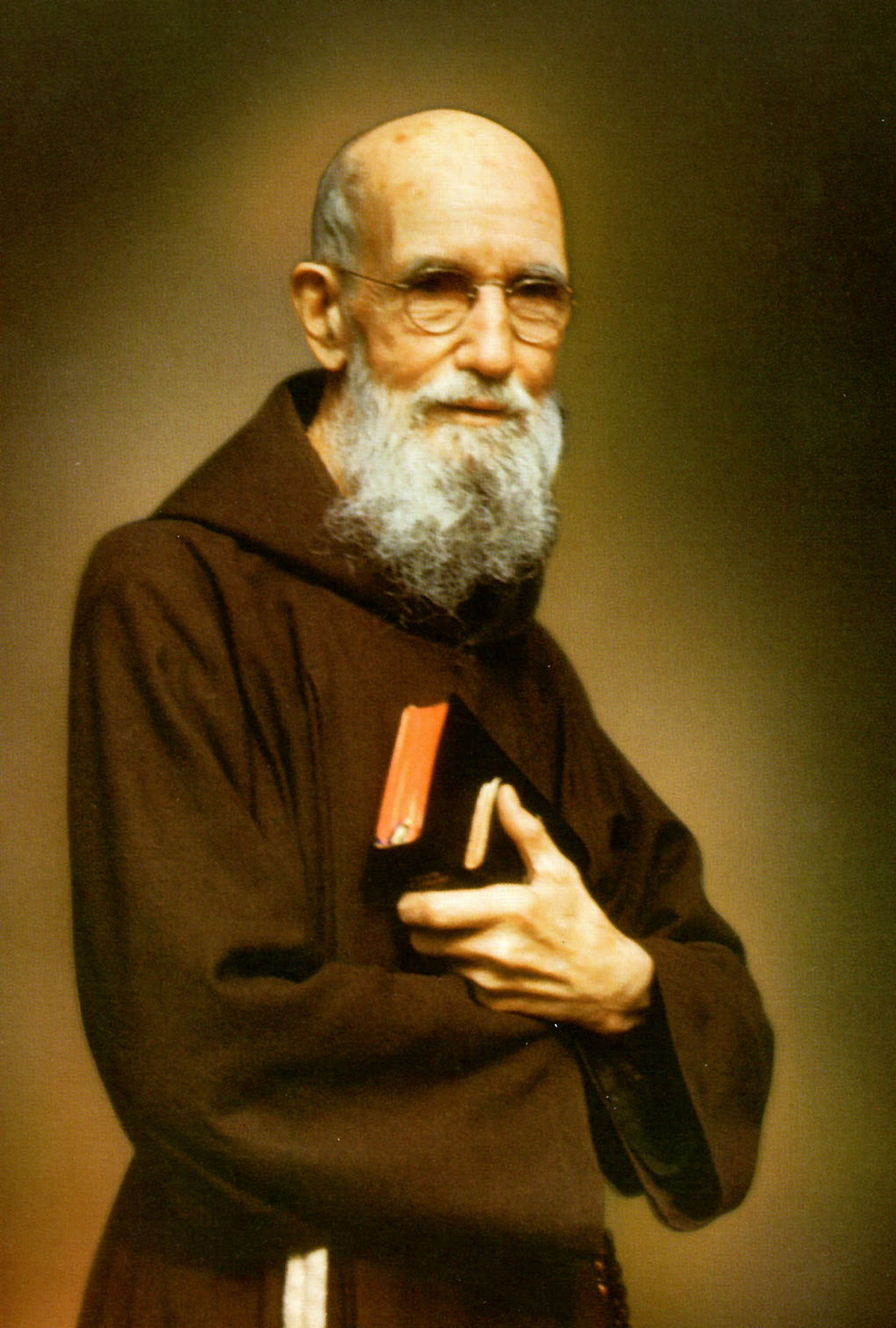
Take, as one example, Father Solanus Casey, who lived and worked for many years in Detroit as the door-keeper at Saint Bonaventure’s (not very far from where I am writing this note). Although he is presently only “Venerable,” this Capuchin priest who died in 1957, now under consideration for beatification, was deeply initiated into the true meaning of life. As a consequence of this initiation he had great confidence in God and a profound love for the poor and sick. A number of books have been written about his ministry to the sick (who would come to see him at St. Bonaventure’s where he was a simple porter) and the many healing miracles attributed to him (from which he got the reputation as a miracle worker). His simple life touched the lives of so many people seeking hope, healing and encouragement, and continues to do so. I have personally sought his intercession at the site of his tomb in the Solanus Casey Center in Detroit, and I know many other people who have done likewise (see solanuscenter.org). Father Solanus, pictured below, is one example of how a “Saint” shows to us the true meaning of life.

File:Solanuscasey.jpg

Take, as another example, the renowned and holy priest of Ars, Saint John Vianney. He died in 1859 and was canonized in 1925. He labored incessantly to restore the faith and vitality of the villagers in Ars, sometimes spending up to 18 hours a day in the confessional. He lived a very austere and mortified life. One thing we can learn from his life, in contrast to the cynicism and anti-supernaturalism of our age, is that miracles actually do occur. This saintly priest tells us in his own written words of a miracle he personally witnessed. He tells a story  about a parishioner of his who was having trouble believing the host really becomes the body of Jesus Christ at Mass. The parishioner said a sincere prayer to the Blessed Virgin Mary asking her to help him believe. St. John Vianney then relates what happened as he was distributing communion:

“I do not say this happened to someone else, but that it happened to myself. At the moment this man came up to receive Holy Communion, the Sacred Host detached Itself from my fingers while I was still a good way off, and went off Itself and placed Itself upon the tongue of that man.”

And in more recent times we have the Eucharistic prodigy involving Blessed Alexandrina da Costa. Her life was one of expiatory suffering and was intimately tied to the Passion of Jesus. She lived exclusively on the Eucharist for 13 years and was beatified by Pope John Paul II on April 26, 2004, now himself a Saint! To understand the incredible magnitude of this Eucharistic miracle, consider for a moment that a human being would be lucky to survive even one week without water.

There is a beautiful book about her by Francis Johnston in which is revealed the revelation she received that many people would become “ardently Eucharistic” through devotion to her. Please note that she was placed in a hospital for forty days and under intense observation was observed to keep her Eucharistic fast, living only on the Bread of Life, which was her sustenance (the official report of Dr. Araujo “confirmed the prodigy as ‘scientifically inexplicable,’ [and stated] it is absolutely certain that during forty days of being bedridden in hospital [Alexandrina] did not eat or drink….”).

She died in 1955. The manner in which she predicted the supernatural decomposition of her body was observed to have occurred, and no doubt this sped up the process of her rapid beatification. If you are looking for truth, the life of Blessed Alexandrina da Costa says look to the Eucharist!

A great spiritual writer, Father John G. Arintero, tells us that “one saint is sufficient to illumine a century.” And in our present times how many of us were greatly influenced – and even returned to the Catholic faith – because of the illuminating life of Saint Pope John Paul “the Great.” It is not possible in this short note to relate how this priest, pastor, philosopher and Pope, not to mention mystic and theologian, profoundly influenced the course of the Church and world events for the better. But his impact and holiness were so huge that he has already been canonized a Saint, and there is little doubt that his encyclicals and other papal writings will greatly guide the church for years and decades to come. And what does this saint tell us?: he tells us that a major turning point in his life, in his growth in holiness, was the consecration of his life to the Virgin Mary.

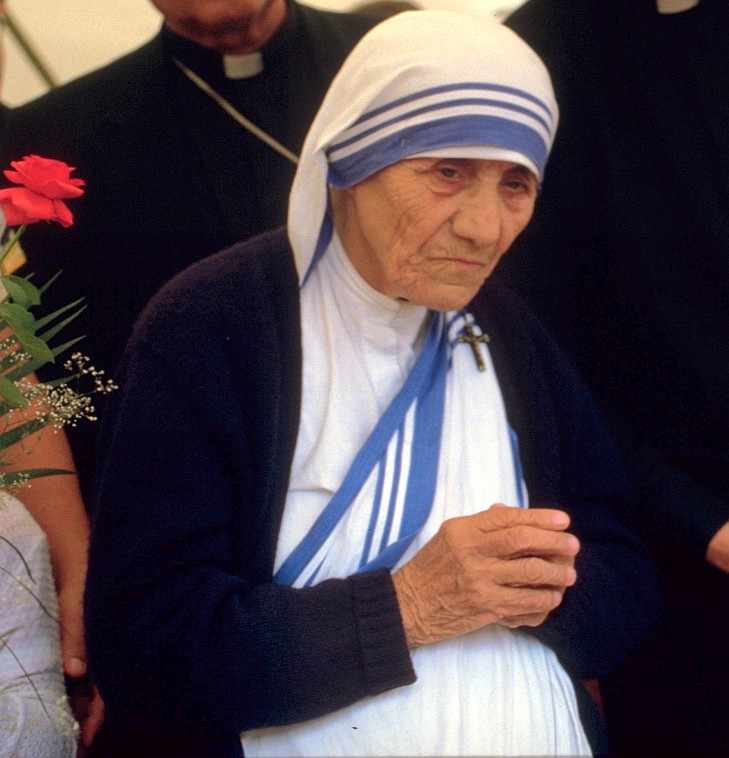
And Blessed Mother Teresa will be canonized by Pope Francis on September 4th of this year. And she too had a huge impact on the world through her devotion to the poor. And, like Pope John Paul II, she made and greatly valued the DeMontfort consecration to the Blessed Virgin Mary. Additionally, she placed a high priority on the Eucharist and Eucharistic adoration. She was always seen carrying a rosary. An excellent book which sets forth the nature of her mystical life, and the communications she received from Jesus and Mary, is Come Be My Light by Father Brian Kolodiejcchuk.

MotherTeresa_094

The great spiritual writer, Father Albert M. Weiss, says that those who “receive the saints” find a “great means of salvation.” He adds: “A people will never fall hopelessly into corruption as long as they have a single saint.”

Can we not see that the lives of the saints, with all their supernatural manifestations of grace, show us what truth really is and WHO truth really is?

The Saints are so many mirrors reflecting the life of Jesus Christ. And Jesus Christ is the Way, the Truth, and the Life (John 14:6).

Tom Mulcahy, M.A.

Photo Attribution: The photo of Mother Teresa is by Turelio, July 13, 1986 under a Creative Commons Attribution-Share Alike 2.0 Germany license (found at Wikipedia). The photo or drawing of Father Solanus Casey is by photographer Mohatma Gandhi under the Creative Commons Attribution-Share Alike 3.0 Unported license (at Wikipedia).

References: The Holy Spirit by Father Edward Leen; Saint John Paul the Great by Jason Evert (see quote by Cardinal George on back cover); Nothing Short of a Miracle by Patricia Treece; Alexandrina: The Agony and the Glory by Francis Johnston; The Mystical Evolution by Father John G. Arintero; The Little Catechism of the Cure of Ars (TAN); and Dictionary of Saints by John Delaney.

To SHARE on SOCIAL MEDIA: click on “Leave a comment” or “Comments” below (and this will bring up social media icons if they are not already present).

To LEAVE A COMMENT: click on “Leave a comment” or “Comments” below, and then scroll down to the box which says, “Leave Your Own Comment Here,” which is at the end of any comments already made. If the comment section is already present, merely scroll to the end of any comments already made.

All rights reserved.


MARY IMMACULATE: FULLY ALIVE IN THE HOLY SPIRIT!

THE GREAT DISCOVERY: THE INDWELLING OF THE HOLY SPIRIT

FORGIVENESS OPENS THE FLOODGATES OF GRACE

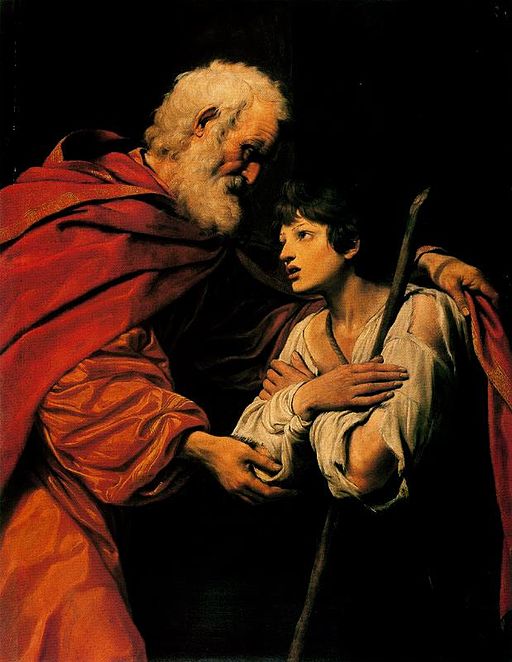
 512px-L_Spada_Regreso_del_hijo_pródigo_Museo_del_Louvre

“He who knows how to forgive prepares for himself many graces from God” (Saint Faustina Kowalska, Diary, 390)

It’s in your own best interest to forgive. If you’re hanging on to unforgiveness, it’s in your own best interest to let go! You don’t want to forfeit graces God wants to give you because of a refusal to forgive. God’s will is quite clear here: even though it can be quite difficult, we must forgive. Indeed, a plethora of New Testament passages, set forth below, speak to a spiritual law of the Gospel that, in essence, impedes us from seeking the Father’s mercy if we are unable to extend mercy to those who have harmed us.
 
 Luke 6:37…………………..Forgive, and you will be forgiven.”
 
 Matthew 6:12……………. “and forgive us our sins, as we have forgiven those who have sinned against us.”
 
 Matthew 6:14-15……….. “For if you forgive men when they sin against you, your heavenly Father will also forgive you. But if you do not forgive men their sins, your Father will not forgive your sins.”
 
 Mark 11:25…………………..”And whenever you stand praying, forgive, if you have anything against anyone, so that your Father also who is in heaven may forgive you your trespasses.”
 
 Ephesians 4:32……………”Be kind to one another, tenderhearted, forgiving one another, as God in Christ forgave you.”
 
 Colossians 3:13…………..”Bearing with one another and, if one has a complaint against another, forgiving each other; as the Lord has forgiven you, so you also must forgive.”
 
 Matthew 18:21-22……….”Then Peter came up and said to him, “Lord, how often will my brother sin against me, and I forgive him? As many as seven times?” Jesus said to him, “I do not say to you seven times, but seventy times seven.”
 
The Catechism of the Catholic Church, echoing the scripture passages cited above, talks about how hardened, unforgiving hearts can cut-off the outpouring of mercy. The Catechism – almost getting a little emotional – talks of this situation as being “daunting.” These important words are from Section 2840 of the CCC:

2840 Now – and this is daunting – this outpouring of mercy cannot penetrate our hearts as long as we have not forgiven those who have trespassed against us. Love, like the Body of Christ, is indivisible; we cannot love the God we cannot see if we do not love the brother or sister we do see. In refusing to forgive our brothers and sisters, our hearts are closed and their hardness makes them impervious to the Father’s merciful love; but in confessing our sins, our hearts are opened to his grace.

Conversely, the floodgates of grace open up when we honor God’s will and courageously choose to forgive. In Life Everlasting, Father Garrigou-Lagrange, the great Dominican and mystical theologian (who once taught the future Pope John Paul II), tells us of the amazing transformation of a Jewish man he personally knew who had the courage to forgive. He relates:
 
“I knew a young Jew, the son of an Austrian banker, in Vienna. He had decided on a lawsuit against the greatest adversary of his family, a lawsuit that would have enriched him. He suddenly recalled this word of the Pater Noster, which he had sometimes heard: “Forgive us our trespasses as we forgive those who trespass against us.” He said to himself: “How would it be if, instead of carrying on this lawsuit, I would pardon him?” He followed the inspiration, forgave completely, renounced the lawsuit. At that same moment he received the full gift of faith. This one word of the Our Father became his pathway up the mountain of life. He became a priest, a Dominican, and died at the age of fifty years. Though nothing particularly important appeared in the remainder of his life, his soul remained at the height where it had been elevated at the moment of his conversion. Step by step he mounted to the eternal youth which is the life of heaven. The moral runs thus: One great act of self-sacrifice may decide not only our whole spiritual life on earth but also our eternity. We judge a chain of mountains by its highest peak.”
 
Dear friend, Saint Faustina Kowalska tells us that we are most like God when we show mercy and forgiveness to others  (Diary 1148). But, practically speaking, it is simply in our own best interest to forgive. Why would we want to harm our own spiritual progress by hardening our hearts and refusing mercy to others? And keep in mind that God is constantly sending us actual graces to give us the courage and desire to forgive. God is all-helpful: ask Him for the power to forgive. 
 
Tom Mulcahy, M.A.
 
Reference: See Ignatius Catholic Study Bible, page 369, fn on Col. 3:12, wherein it states: “We express gratitude to the Lord by imitating his mercy in our relationships with others. In fact, extending forgiveness to others is necessary if we hope to receive the ongoing forgiveness of the Father (Mt 6:14-15;18:23-35).”  In his book, The Seven Secrets of Confession, Vinny Flynn discusses section 2840 of the CCC.

Image: Return of the Prodigal Son by Leonello Spada (1576-1622), Public Domain, U.S.A.

To SHARE on SOCIAL MEDIA: click on “Leave a comment” or “Comments” below (and this will bring up social media icons if they are not already present).

To LEAVE A COMMENT: click on “Leave a comment” or “Comments” below, and then scroll down to the box which says, “Leave Your Own Comment Here,” which is at the end of any comments already made. If the comment section is already present, merely scroll to the end of any comments already made.

All rights reserved.

Any ads following this post are from WordPress and not this blog.
 

THERE IS AN IMMENSE POWER IN KINDNESS

clasped-hands-541849_1920

“Love is kind” (1 Corinthians 13:4)

“But the fruit of the Holy Spirit is…kindness” (Galatians 5:22)

“The worst kinds of unhappiness, as well as the greatest amount of it,” says Father Faber, “come from our conduct to each other.” Thus, he says, “if our conduct…were under the control of kindness,” we would live in a vastly happier world.

I have a little note I taped to the top rim of my computer screen which says, KINDNESS/POWER, but I have to admit that kind words do not always come out of my mouth when someone interrupts me while I’m zoned in on the internet world. Kindness is a huge virtue in the spiritual life, and one we need to put into practice more and more.

Father Faber mentions that kindness is a “considerable power.” He says that it is kindness that “makes life more endurable,” and which has the power to “make life’s capabilities blossom.” Faber says that “kindness is the overflowing of self upon others. We put others in the place of self. We treat them as we should wish to be treated ourselves.” Faber adds that “kindness adds sweetness to everything.”

The purpose of this short note is to suggest that kind words are a considerable power we have at our disposal. In fact, Faber says that kindness is “an immense power.” Grace-filled kindness is so powerful that this virtue can ripen into a fruit of the Holy Spirit (see Galatians 5:22). A fruit of the Holy Spirit, which involves a certain perfection of a supernatural virtue, is an enormous power. We should therefore pray to the Holy Spirit for an increase of the virtue of kindness.

Faber says that “kindness seems to know of some secret fountain of joy deep in the soul” and that it offers us a “peculiar participation in the spirit of Jesus.” He says that “men do not sufficiently understand” the “value” of kindness. “The interior beauty of a soul through habitual kindliness of thought is greater than our world can tell.”

Father Faber says there is “hardly a power on earth equal to” kind words. He further points out that there are so many “fortunate opportunities” to be kind. When you think about it, the opportunity for great heroism may never come our way, but we can say kind things all day long! And what do kind words cost us? Virtually nothing! But what is lost if we fail to speak kindly? As Faber points out, kind words are not only remedial, helping those in need of encouragement, they actually produce happiness. He says, “how often have we ourselves been made happy by kind words.” It “would be worth going through fire and water to acquire the right and to find the opportunity of saying kind words.”

Faber says that “not only is kindness due everyone, but a special kindness is due everyone.” And “is there any happiness in the world like the happiness of the disposition made happy by the happiness of others?,” Faber asks. “There is no joy to be compared with it.” “Kindness is the turf of the spiritual world, whereon the sheep of Christ feed quietly beneath the Shepherd’s eye.”

Let us make a resolution, then, to be an “apostolate of kindness.” Let us reflect on what a great virtue kindness is, and what power it has to bring sunshine and happiness where there is gloom and discouragement. And through kind words the “bruised reed” will not be broken, and the “flickering candle” will not be extinguished (see Matt. 12:20), and we will see that “our neighbor is our refuge” and self “the demon foe” (George MacDonald).

I spoke a word of praise today – 
One I had no need to say – 
I spoke a word of praise to one,
Commending some small service done;
And in return, to my surprise,
I reaped rewards of mountain size.
Such a look of pleasure shone 
Upon his face – I’ll never own 
A gift more beautiful to see
Than that swift smile he gave to me.
I spoke one little word of praise, 
And  sunshine fell on both our ways.   
(from The Gift of Wonder by renowned poet Helen Lowrie Marshall)

Tom Mulcahy, M.A.

Ref. As you can see, I am relying almost completely on Father Faber’s famous essay, “Kindness,” in his book, Spiritual Conferences (TAN). Although a long essay it is well worth reading and meditating on. Faber’s point that a special kindness is due to everyone, if taken to heart, has the power to increase our personal holiness. One word of caution: kindness and praise must be sincere and genuine. A false kindness, a calculated kindness, is easily detected. That is why we should pray to the Holy Spirit for the supernatural growth of the virtue of kindness.

To SHARE on SOCIAL MEDIA: click on “Leave a comment” or “Comments” below (and this will bring up social media icons if they are not already present).

To LEAVE A COMMENT: click on “Leave a comment” or “Comments” below, and then scroll down to the box which says, “Leave Your Own Comment Here,” which is at the end of any comments already made. If the comment section is already present, merely scroll to the end of any comments already made.

All rights reserved.

Any ads following this post are from WordPress and not this blog.
 

A SURE SIGN YOU ARE ON THE RIGHT PATH

way-918900_1920 (1)

“Enter through the narrow gate. For wide is the gate and broad is the road that leads to destruction, and many enter through it. But small is the gate and narrow the road that leads to life, and only a few find it.” (Matthew 7:13-14)

Here, in my opinion, is a sure sign that you are on the right path – that is, on the path that leads to Heaven. Conversely, I would maintain that it is a sure sign that something is amiss in your spiritual life if you devalue this essential means of sanctification. In short, I maintain that it is a sure sign that you are on the path leading to Eternal Life if you dearly value the Sacrament of Confession.

Our lives are in need of continual purification – this due not only to the weakness of our nature corrupted by the effects of original sin but also due to the corrupting influence of the world – and there are special purifying graces in Sacramental Confession that not only forgive our sins but also strengthen us to fight the good fight. We need these graces.

The Sacrament of Confession, established by Jesus after his Resurrection, is the most assured means to root out sin and impurity from our lives. The other day I was listening to a talk given by Father Michael Scanlan of Franciscan University, and he mentioned in his talk that he had never met a priest who hadn’t seen amazing things occur in the confessional.

When we walk out of the confessional we are forgiven, renewed, empowered and protected from evil. Confession is truly an awesome sacrament! (See John 20:22-23).

While Pope, Saint John Paul II drew attention to the healing power of Confession, saying:

“It [sacramental Confession] also performs an authentic ‘spiritual resurrection,’ restores the dignity and the good of the life of the children of God, the most precious of which is friendship with God.”

“It would be illusory to desire to reach holiness, according to the vocation that each one has received from God, without partaking frequently of this sacrament of conversion and sanctification,” that, together with the Eucharist, “accompanies the path of the Christian towards perfection.”

“Penance, by its nature,” he explained, “involves purification, in both the acts of the penitent who lays bare his conscience because of the deep need to be pardoned and reborn, and in the effusion of sacramental grace that purifies and renews.”  (May 29, 2004 Catholic New Agency)

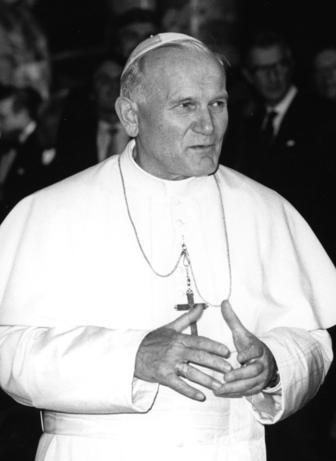
Vom 15. bis 19. November 1980 besuchte Seine Heiligkeit Papst Johannes Paul II. die Bundesrepublik Deutschland. Auf Einladung von Bundespräsident Karl Carstens hat der Papst seinen pastoralen Besuch mit einem offiziellen in Bonn verbunden. Am 15. November gab der Bundespräsident einen Empfang zu Ehren Seiner Heiligkeit auf Schloß Augustusburg in Brühl bei Bonn. Dort führte Papst Johannes Paul II. auch ein Gespräch mit Bundeskanzler Helmut Schmidt. Gleichzeitig traf Bundesaußenminister Hans-Dietrich Genscher mit Kardinal-Staatssekretär Casaroli zusammen. Im Anschluß an den offiziellen Teil begab sich der Papst auf den Bonner Münsterplatz, um dort eine Ansprache zu halten. Ferner bestand der pastorale Teil aus Besuchen in Köln, Osnabrück, Mainz, Fulda, Altötting und München. In allen diesen Städten hielt Papst Johannes Paul II. die Heilige Messe. Eigentlicher Anlaß seines Aufenthaltes in der Bundesrepublik war der 700. Todestag von Albertus Magnus (1193-1280), dessen Grab der Papst in Köln besuchte. Bundespräsident Karl Carstens und Papst Johannes Paul II. auf Schloß Augustusburg in Brühl.

Consider it a great treasure – indeed, an invaluable treasure – that you have such easy access to this Sacrament. Treasure it. Desire it. Don’t fear it, for it is a dear friend. Be so happy to confess your sins and faults. This Sacrament will take you where you want to go, “upward, onward,” to Eternal Life! 

Tom Mulcahy

Ref. I am relying most particularly on Father Lallemant who says on page 50 of The Spiritual Doctrine that Confession produces “great purity of heart,” and also that it “is a matter of moral demonstration that nothing conduces more to the progress of souls than confession and daily communion….”

Photo attribution: The photo of Pope John Paul II is by Lothar Schaack, November 15, 1980, under a Creative Commons Attribution-Noncommercial license (found at Wikipedia).

To SHARE on SOCIAL MEDIA: click on “Leave a comment” or “Comments” below (and this will bring up social media icons if they are not already present).

To LEAVE A COMMENT: click on “Leave a comment” or “Comments” below, and then scroll down to the box which says, “Leave Your Own Comment Here,” which is at the end of any comments already made. If the comment section is already present, merely scroll to the end of any comments already made.

All rights reserved.

Any ads following this post are from WordPress and not this blog.

WHAT TWO SISTERS TEACH US ABOUT THE NECESSITY OF PRAYER

 2048px-Johannes_(Jan)_Vermeer_-_Christ_in_the_House_of_Martha_and_Mary_-_Google_Art_Project (1)

THERE IS NO GOSPEL WITHOUT THE MORAL GOSPEL

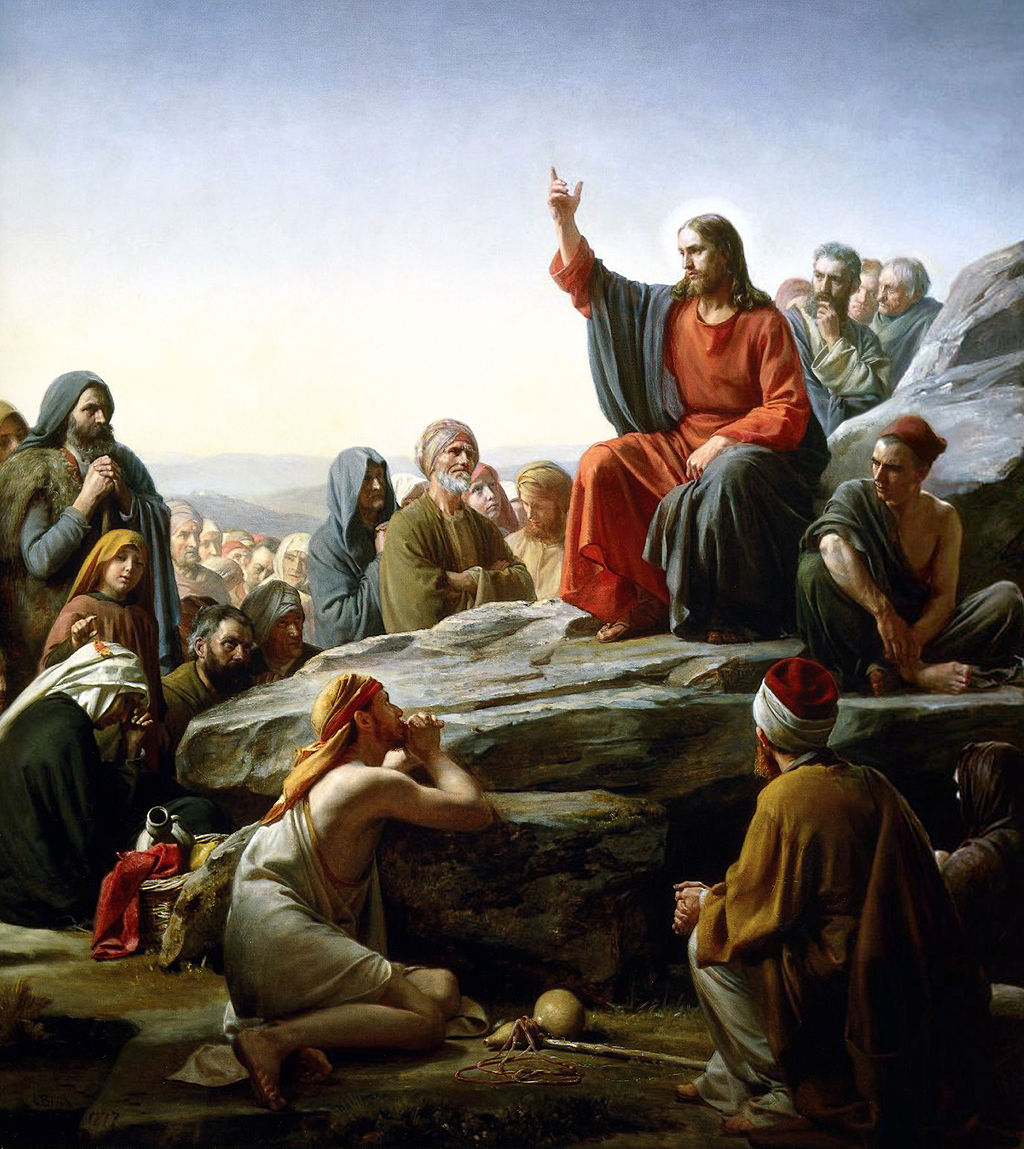
 1024px-Bloch-SermonOnTheMount (1)

                       “For this is the will of God, your sanctification….” (1 Thes. 4:3)

Morality is not a consolation prize in the Catholic Church…a sort of additional benefit you get if you want to apply for it. No, Catholic morality is the very heart and soul of the Gospel, indeed, it is the very joy of the Gospel.

In the preaching of Jesus the critical importance of morality is emphasized from the beginning of his ministry. Jesus may very well have met people “where they are,” in some sense of that phrase, but only to point them in the direction of living profoundly by the moral Gospel. Thus, in his famous Sermon on the Mount (Matt. 5-7), preached at the commencement of his ministry, Jesus lays out a “manifesto” which is “a compendium of the moral code of Christianity” (Catholic Bible Dictionary, page 828). “He teaches on anger, adultery, marriage and divorce, oaths, retaliation, love for enemies, and alms-giving” (Id at 828). The fundamental importance of the moral life is firmly established – sometimes very dramatically –  in the preaching of Jesus. The beatitudes themselves represent the very highest moral perfection attainable in this life.

The Gospel is a call to holiness which will ultimately result in your complete and utter sanctification in Heaven. Therefore, there is no Gospel without the moral Gospel. To preach the Gospel is to preach holiness of life in imitation of Jesus and the Saints. To peach the Gospel is to preach a break with sin and a new life of grace in Christ. To preach the Gospel is to lead sinners to repentance. When we first hear someone preaching the Gospel, what do we hear: “Repent, for the Kingdom of God is at hand” (Mark 1: 2-4).

The modern tendency to preach the Gospel without reference to its moral demands will only lead to an “obscuring of the moral sense” (Pope John Paul II, Veritatis Splendor, 106). Saint John Paul II teaches us that the “New Evangelization” must include the presentation of the moral Gospel. The Pope stated:

“Evangelization — and therefore the “new evangelization” — also involves the proclamation and presentation of morality. Jesus himself, even as he preached the Kingdom of God and its saving love, called people to faith and conversion (cf. Mk 1:15). And when Peter, with the other Apostles, proclaimed the Resurrection of Jesus of Nazareth from the dead, he held out a new life to be lived, a “way” to be followed, for those who would be disciples of the Risen One (cf. Acts 2:37-41; 3:17-20). Just as it does in proclaiming the truths of faith, and even more so in presenting the foundations and content of Christian morality, the new evangelization will show its authenticity and unleash all its missionary force when it is carried out through the gift not only of the word proclaimed but also of the word lived. In particular,the life of holiness which is resplendent in so many members of the People of God, humble and often unseen, constitutes the simplest and most attractive way to perceive at once the beauty of truth, the liberating force of God’s love, and the value of unconditional fidelity to all the demands of the Lord’s law, even in the most difficult situations. For this reason, the Church, as a wise teacher of morality, has always invited believers to seek and to find in the Saints, and above all in the Virgin Mother of God “full of grace” and “all-holy”, the model, the strength and the joy needed to live a life in accordance with God’s commandments and the Beatitudes of the Gospel.” (Veritatis Splendor, 107)

 Saint John Paul II also reminded us that God’s Mercy is given to us to forgive, not justify, sin.

“In this context, appropriate allowance is made both for God’s mercy towards the sinner who converts and for the understanding of human weakness. Such understanding never means compromising and falsifying the standard of good and evil in order to adapt it to particular circumstances. It is quite human for the sinner to acknowledge his weakness and to ask mercy for his failings; what is unacceptable is the attitude of one who makes his own weakness the criterion of the truth about the good, so that he can feel self-justified, without even the need to have recourse to God and his mercy. An attitude of this sort corrupts the morality of society as a whole, since it encourages doubt about the objectivity of the moral law in general and a rejection of the absoluteness of moral prohibitions regarding specific human acts, and it ends up by confusing all judgments about values.” (Veritatis Splendor, 104).

Our children deserve to hear the full Gospel – that is to say they deserve to hear the Gospel preached without neutering its moral imperative. There is no Gospel without the moral Gospel because Jesus came to save us from sin.

“Here is a trustworthy saying that deserves full acceptance: Christ Jesus came into the world to save sinners….” (1 Timothy 1:15).

Tom Mulcahy, M.A.

Note: The panoply of virtues and gifts given to us in baptism, which flow from sanctifying grace, are supernatural strengths with which to lead a moral life.

Reference: I had a Professor who once said: “There is no Gospel without the moral Gospel.”

ImageSermon on the Mount by Carl Bloch, Public Domain, U.S.A.

To SHARE on SOCIAL MEDIA: click on “Leave a comment” or “Comments” below (and this will bring up social media icons if they are not already present).

To LEAVE A COMMENT: click on “Leave a comment” or “Comments” below, and then scroll down to the box which says, “Leave Your Own Comment Here,” which is at the end of any comments already made. If the comment section is already present, merely scroll to the end of any comments already made.

All rights reserved.

Any ads following this post are from WordPress and not this blog.