Author: tomlirish

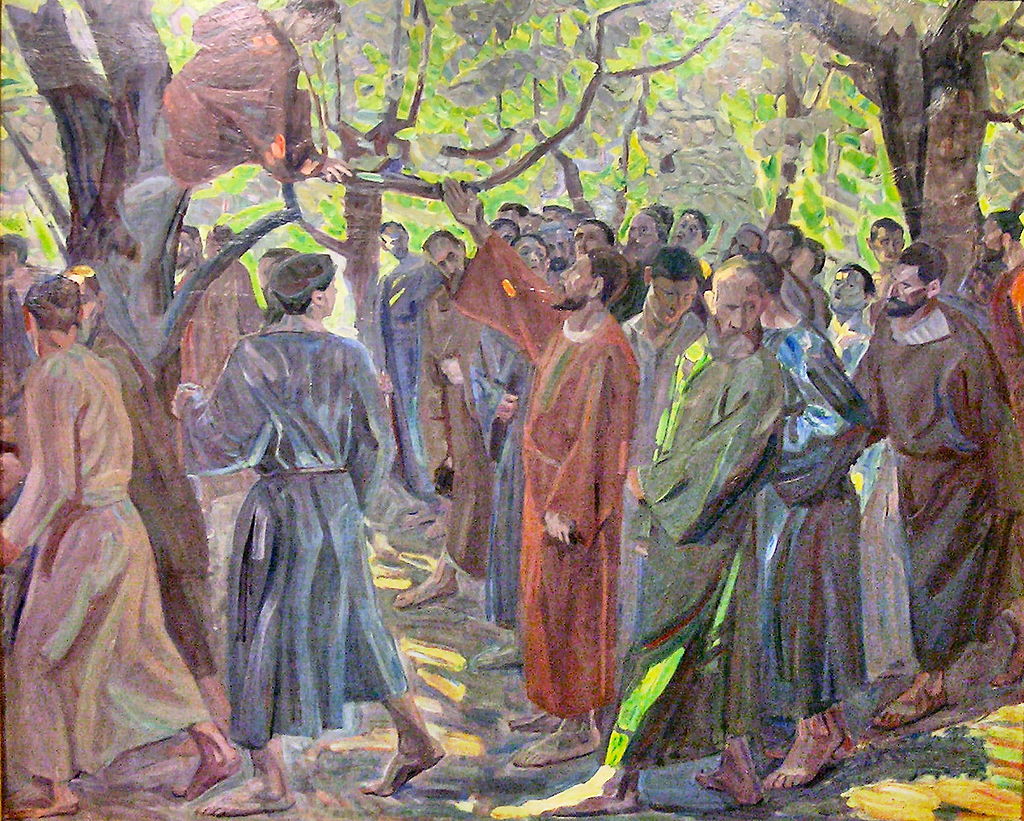
THE ZACCHAEUS PRINCIPLE AND YOUR CHILDREN

 1024px-Niels_Larsen_Stevns-_Zakæus

THE AMAZING POWER OF GRATITUDE IN THE SPIRITUAL LIFE

GREEDY FOR HEAVEN

 schoneck-963411_1920

                        “Be ambitious for the higher gifts” (1 Corinthians 12:31)

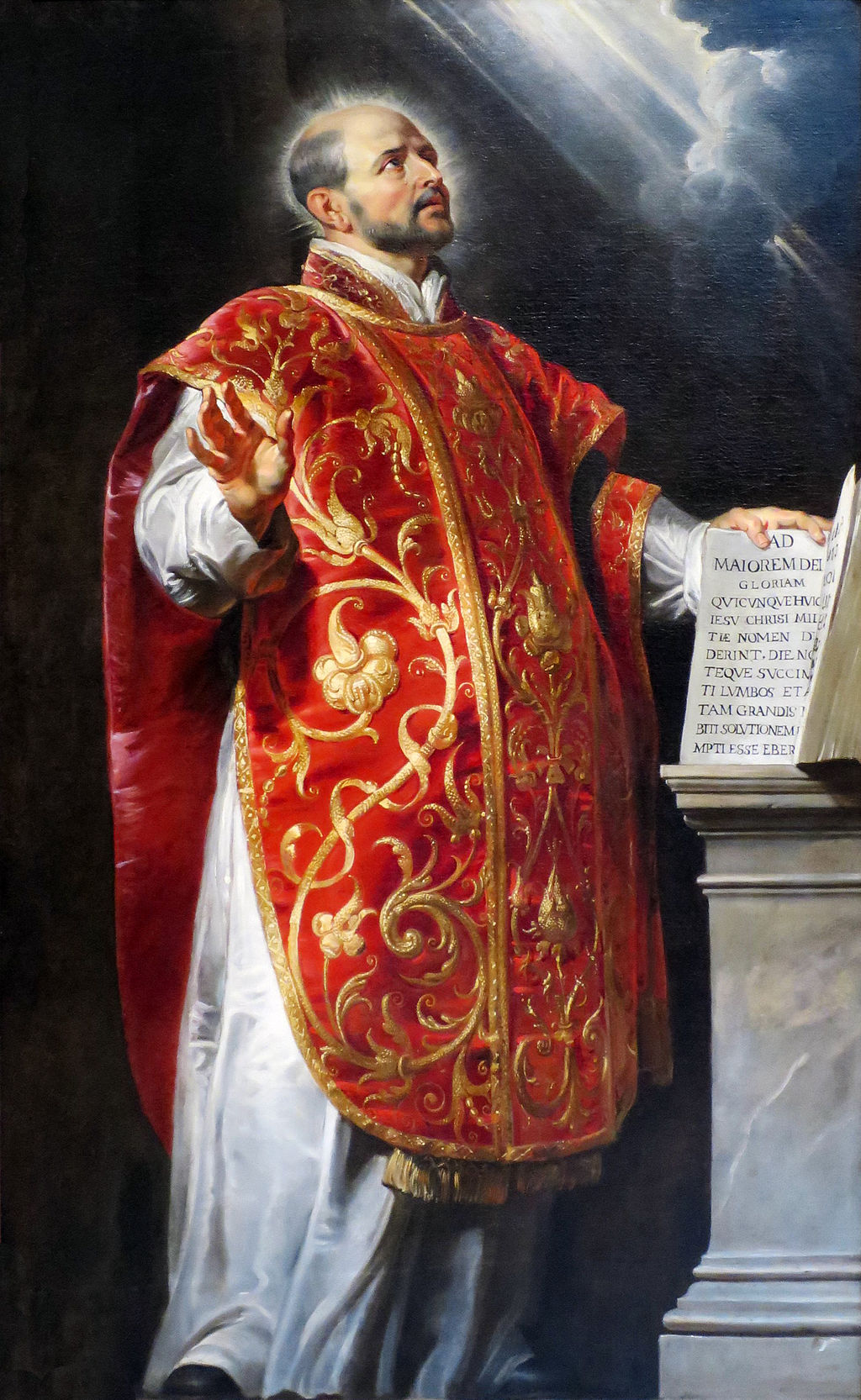
In evaluating our lives, we should not discount the length of eternal life.  What God is offering to us, ETERNAL LIFE, is simply stunning, overwhelming and unfathomable! Certainly a fundamental part of the Ignatian Exercises is simply to do the math: to reflect on the shortness of life and the incredible length of eternity. And then to choose wisely, which is why we pray to the Holy Spirit for the gift of Wisdom. To miss out on Heaven – and all that Heaven is – simply cannot be an option. “Who could endure the loss?”

 As to death, it is a great grace to realize that we are going to die. In essence, our lives are but a preparation for death. God, in His providence, already knows the day and moment of our death, and He has already put in place the graces we will need to be saved. We need to cooperate with those graces, and all will be well.

Unfortunately, so many people live their lives without much thought about their impending death. They realize that other people die but they sort of see themselves as a bystander to the death of other people –  somehow convincing themselves that it won’t happen to them.

And although attending someone’s funeral may make such a person anxious about death, it is also the case that we are quite adept at putting in to place psychological defense mechanisms that quickly assuage such thoughts and turn our attention back to the world.

As I see it, there is a gigantic cultural conspiracy in place to convince us that we are not going to die. The plan is to outlive death by taking the right vitamins, wearing the best make-up, and seeing the best doctors. And yet everyone still dies. We are all on an absolute collision course with death. Only God knows for sure how much time we have left. And the clock keeps ticking.

I think it is interesting that in Mother Teresa‘s mystical life the Virgin Mary told her to tell families to say the rosary (reference: Come Be My Light, Doubleday, p.99). This prayer not only helps us to contemplate the life of Christ, including his death and resurrection, but it continually reminds us of the two most important moments in our lives – the present moment and the moment of our death. We ask Mary to “pray for us now and at the hour of our death.”  It is in the “sacrament of the present moment” that we can choose to conform our will to God’s grace, and it is at the moment of death that we need all of Heaven (that great cloud of witnesses, Hebrews 12:1) interceding for us to persevere to the end.  It is important to pray for the grace of final perseverance and for the fortitude to die a good death. It is reassuring to know that we are asking Mary’s help in this regard when we pray the rosary.

 In First Corinthians it says (at 2:9):

“Eye has not seen, ear has not heard, nor has it so much dawned on man what God has prepared for those who love Him.”

Don’t put your trust in the passing things of this world (those idols have no power to save you). Be a little greedy for Heaven, and in the process transform that greed into love and gratitude for a God who, after dying for our sins and humbling himself to be our very eternal life-giving food, has prepared for us such an immense reward that the magnitude of the joy and love we will experience in Heaven is beyond our narrow understanding, lasting for endless ages, in the glory of the “ever-blessed” life of God. In short, to say that Heaven is going to be awesome is an incredible understatement.

Tom Mulcahy, M.A.

Inspiration: The Imitation of Christ (chapter 48); The Spiritual Exercises of Saint Ignatius of Loyola; and F.W. Faber’s The Creator and the Creature (from where I derive the title to the note and I am otherwise heavily indebted to him for the tone and content of the note).

To SHARE on SOCIAL MEDIA: click on “Leave a comment” or “Comments” below (and this will bring up social media icons if they are not already present).

To LEAVE A COMMENT: click on “Leave a comment” or “Comments” below, and then scroll down to the box which says, “Leave Your Own Comment Here,” which is at the end of any comments already made. If the comment section is already present, merely scroll to the end of any comments already made.

Any ads following this note are by WordPress and not CatholicStrength.

THEOLOGY OF THE BODY IN A NUTSHELL

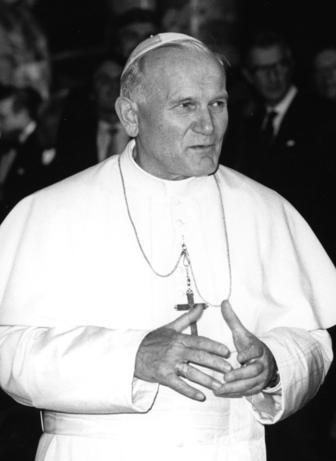
Vom 15. bis 19. November 1980 besuchte Seine Heiligkeit Papst Johannes Paul II. die Bundesrepublik Deutschland. Auf Einladung von Bundespräsident Karl Carstens hat der Papst seinen pastoralen Besuch mit einem offiziellen in Bonn verbunden. Am 15. November gab der Bundespräsident einen Empfang zu Ehren Seiner Heiligkeit auf Schloß Augustusburg in Brühl bei Bonn. Dort führte Papst Johannes Paul II. auch ein Gespräch mit Bundeskanzler Helmut Schmidt. Gleichzeitig traf Bundesaußenminister Hans-Dietrich Genscher mit Kardinal-Staatssekretär Casaroli zusammen. Im Anschluß an den offiziellen Teil begab sich der Papst auf den Bonner Münsterplatz, um dort eine Ansprache zu halten. Ferner bestand der pastorale Teil aus Besuchen in Köln, Osnabrück, Mainz, Fulda, Altötting und München. In allen diesen Städten hielt Papst Johannes Paul II. die Heilige Messe. Eigentlicher Anlaß seines Aufenthaltes in der Bundesrepublik war der 700. Todestag von Albertus Magnus (1193-1280), dessen Grab der Papst in Köln besuchte. Bundespräsident Karl Carstens und Papst Johannes Paul II. auf Schloß Augustusburg in Brühl.

“Man, whom God created male and female, bears the divine image imprinted on his body ‘from the beginning.’ Man and woman constitute two different ways of the human ‘being a body’ in the unity of that image.” (Saint Pope John Paul II)

The Resurrection of Jesus provides a wonderful platform upon which to discuss Saint John Paul II’s Theology of the Body – this because Jesus in His divinity did not return to the Father as a disembodied Spirit but as a human being fully reunited to His resurrected and Glorified body which – get this – he then introduced into the very life of the Trinity.  The Catechism of the Catholic Church puts it like this:

“The Father’s power “raised up” Christ his Son and by doing so perfectly introduced his Son’s humanity, including his body, into the Trinity.”  (no. 648)

The human body, by way of revelation and Catholic theology, therefore has an infinite worth as a partaker in the Eternal Life merited by Jesus Christ.

Theology of the Body is an attempt to heal the alienation which sometimes exists between body and spirit – an alienation which did not exist prior to sin. An example of this alienation is pornography which disregards the person-hood and dignity of the participants in favor of pecuniary gain and carnal pleasure. Even in marriage there can be body-lust, body-shame and body-alienation due to our fallen nature and the violation of Pope John Paul II’s “personalistic norm” which states that the human person is the kind of good that does not admit of misuse and cannot be treated as an object of use and as such a means to an end. According to the Pope, “the general problem of sexual relationships between a man and a woman cannot be solved in a way that contradicts the personalistic norm” (see pages 41 and 65 of Love and Responsibility).

Sexual love therefore has a profound “nuptial” meaning because it is only within the framework of sacramental marriage that there can be a complete gifting of self – body and spirit – which supports “the total physical, moral, psychological and spiritual well-being of the woman and the man” – all of which serves to nurture an “enduring covenant” of love.

The nuptial meaning of the human body is affirmed in creation because both the man and the woman, although different, are made in the image of God (Genesis 1:27). Therefore there is a profound complementarity between the body of the man and the body of the woman which shows they were made for each other and for the complete donation of self – in the fulness of their totality as beloved persons – in life-long marriage. The grace given in the Sacrament of Marriage therefore heals the dualistic sexual alienation caused by sin (which Pope John Paul II calls a violation of the personalistic norm, a principle he fashions from the philosophy of phenomenology).

In short, because every man and every woman is a body-person with inherent dignity and infinite worth, human sexuality finds its authentic and “life-giving” expression in sacramental marriage where the exchange of sexual intimacy can be “integrated into a total self-donation made in the will.” In this way the husband and wife mirror in the grace given to them the very LIFE of self-donation which is the essence of God’s Trinitarian existence.

“Those who seek the accomplishment of their own human and Christian vocation in marriage are called, first of all, to make this theology of the body, whose beginning we find in the first chapters of Genesis, the content of their life and behavior. How indispensable is a thorough knowledge of the meaning of the body, in its masculinity and femininity, along the way of this vocation! A precise awareness of the nuptial meaning of the body, of its generating meaning, is necessary” (Saint Pope John Paul II).

Tom Mulcahy, M.A.


References: 

Love and Responsibility by Karol Wojtyla. A good article (I have relied on) summarizing this topic can be found in Our Sunday Visitor’s Encyclopedia of Catholic Doctrine. It is Saint Pope John Paul II’s strong belief that artificial birth control violates the personalistic norm by objectifying sexual  pleasure as an end in itself. It is noteworthy that the high rate of divorce coincides with the introduction of the contraceptive pill, along with other factors. The two quotes from Pope John Paul II compiled by Constance Hull at catholic-link.org

Photo attribution: The lead photo above is by Lothar Schaack, November 15, 1980, under a Creative Commons Attribution-Noncommercial license (found at Wikipedia).

To SHARE on SOCIAL MEDIA: click on “Leave a comment” or “Comments” below (and this will bring up social media icons if they are not already present).

To LEAVE A COMMENT: click on “Leave a comment” or “Comments” below, and then scroll down to the box which says, “Leave Your Own Comment Here,” which is at the end of any comments already made. If the comment section is already present, merely scroll to the end of any comments already made.

Any ads following this note are by WordPress and not CatholicStrength.

A THEOLOGY OF DEATH AND RESURRECTION BASED ON PIGEON FEATHERS

bird-368924_640

“For ever since the world was created, people have seen the earth and sky. Through everything God made, they can clearly see his invisible qualities–his eternal power and divine nature.” (Romans 1:20)

 “…unless a grain of wheat falls to the ground and dies, it remains just a grain of wheat…. (John 12:24)

Christians often view resurrection as an event that will occur down the road – after death – in that future time beyond time. We see the relevance of resurrection as something that happened in the past to Jesus, and as something we hope will happen to us in the future. The purpose of this note is to focus on death and resurrection, not as future events, but as events that are part of the very fabric of our daily lives. The seeds of eternal life are sown during our time on earth, so that time is the medium through which eternity must force its way into our hearts and souls. Christianity is a religion that requires a resurrection in one’s life before death if there is to be a resurrection to eternal life after death. Using an example from literature,I hope to shed some light on how, during the course of our lives, we encounter death and resurrection as first-hand experiences which draw us closer to God.

John Updike’s short story, Pigeon Feathers, presents a striking example of a person who undergoes a death and resurrection experience in the very context of trying to understand the meaning of death. In Updike’s story, David, at age 14, suddenly finds himself doubting his childhood faith at a time when the turbulence of a move to a new home has him feeling displaced and insecure. To strengthen his childhood belief in life after death, which he finds under attack after browsing through a book skeptical of Jesus’ resurrection, he turns to his parents for guidance and support. To his own surprise, David finds out that his parents’ faith in the claims of Christianity is not altogether that strong. In fact, David discovers, his father is practically an atheist!

Still, David holds out hope that his minister, Reverend Dopson, will confirm that each person’s soul is immortal. But far from providing David with consolation, Dopson shatters David’s security in life after death by suggesting that after death, “I suppose you could say that our souls are asleep.”

Panicked and depressed about his parents’ and his minister’s “submission to death,” David takes a rifle out to the family barn to shoot some pigeons. With “splinters of light” shining through the darkness of the barn, the barn becomes almost a micro-universe for David to work out his struggles with the issues of life and death. David then proceeds to the task of retrieving the dead pigeons he has shot in order to bury them.

David had never seen a pigeon up close before. An examination of some of the dead pigeons up close produced a resurrection in his life. Updike movingly describes David’s resurrection experience:

“The feathers were more wonderful than dog’s hair, for each filament was shaped within the shape of the feather, and the feathers in turn were trimmed to fit a  pattern that flowed without error across the bird’s body…and across the surface of the infinitely adjusted yet somehow effortless mechanics of the feathers played idle designs of color, no two alike, designs executed, it seems, in a controlled rapture, with a joy that hung level in the air above and behind him. Yet these birds breed into  the millions and were exterminated as pests. Into the fragrant open earth he dropped one broadly banded in slate shades of blue, and on top of it another, mottled all over in rhymes of lilac and grey. The next was almost wholly, white, but for a salmon glaze at its throat. As he fitted the last two, still pliant, on the top, and stood up, crusty coverings were lifted from him, and with a feminine slipping sensation along his nerves that seemed to give the air hands, he was robed in this certainty: That the God who had lavished such craft upon these worthless birds would not destroy his whole Creation by refusing to let David live forever.”

David had to die to his childhood faith in order to be reborn into a deeper, more mature faith.  He had to take control over his own faith life rather than living it vicariously through his parents or his minister. He had to shoot down his childhood faith in order to see how precious and costly that faith was to him. The wonderful form, symmetry and beauty of the pigeon feathers revealed to David the majestic presence of a loving God. David discovered in a moment of time a transcendent truth: that God loved him with an everlasting love.

The deaths we die and the resurrections we experience in our daily lives are the events which shape who we are and what we are to become for all eternity. Whether it is a teenager in despair (like David) discovering God’s presence, or an addict finally falling to his knees to invoke God’s help, these are the kinds of experiences in life which radically draw us closer or further away from God. In the final analysis the person of Jesus helps us to understand that our desire for permanency is not an illusion. God “vindicated” Jesus in history by raising him from the dead. And by trusting in God, like Jesus, God will also open to us the door to eternal life.

Tom Mulcahy, M.A.

To SHARE on SOCIAL MEDIA: click on “Leave a comment” or “Comments” below (and this will bring up social media icons if they are not already present).

To LEAVE A COMMENT: click on “Leave a comment” or “Comments” below, and then scroll down to the box which says, “Leave Your Own Comment Here,” which is at the end of any comments already made. If the comment section is already present, merely scroll to the end of any comments already made.

Any ads following this note are by WordPress and not CatholicStrength.

A RESURRECTION GIFT: THE MINISTRY OF HEALING CONFESSION

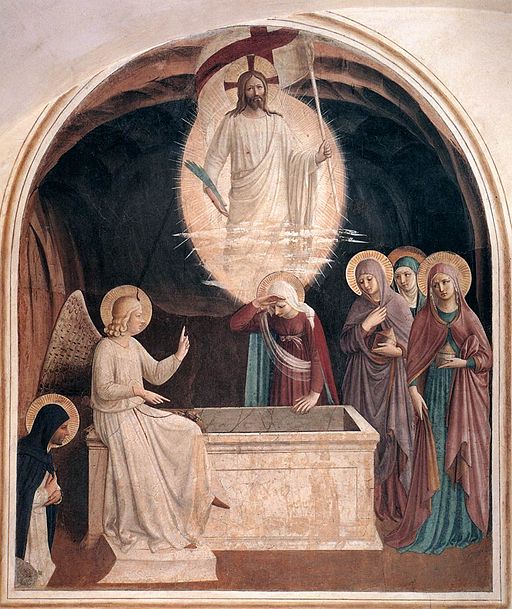
HAVE YOU ENCOUNTERED THE RISEN CHRIST AND NEWNESS OF LIFE?

 Fra_Angelico_-_Resurrection_of_Christ_and_Women_at_the_Tomb_(Cell_8)_-_WGA00542 (1)

RESURRECTION: CREDIBLE WITNESSES ARE HELPFUL!

 Mantegna,_Andrea_-_La_Résurrection_-_1457-1459
 

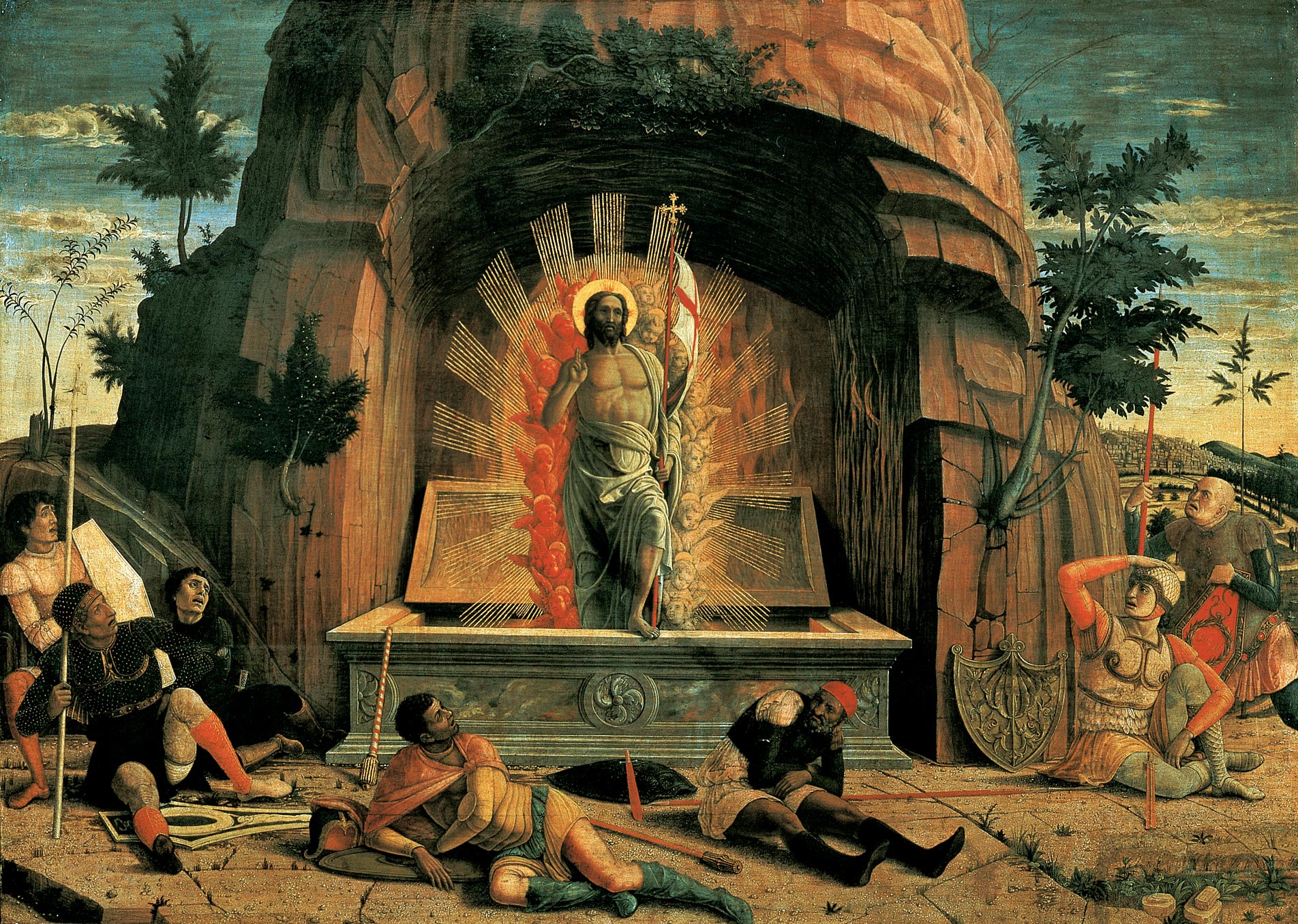
                     “God raised this Jesus; of this we are all witnesses.” (Acts 2:32)

It’s a very embarrassing moment for a lawyer trying a case in front of a jury when the judge says, “Please call your next Witness,” and that next witness hasn’t shown up. Witnesses are very important, and this concept of “witness” has a definite place in Christianity.

In 2 Peter 1:16 the concept of witness is elaborated upon by the apostle, who says:

For we did not follow cleverly devised stories when we told you about the coming of our Lord Jesus Christ in power, but we were eyewitnesses of his majesty.” (2 Peter 1: 16)
 
And at John 21:24 another apostle – obviously John – signs his affidavit of authenticity at the end of his Gospel by stating:
 
“This is the disciple who testifies to these things and who wrote them down. We know that his testimony is true.” (John 21: 24-25)
 

The Catechism of the Catholic Church tells us that the Resurrection of Jesus Christ was a real and historical event: “The mystery of Christ’s resurrection is a real event, with manifestations that were historically verified, as the New Testament bears witness” (CCC 639). Clearly there are aspects of our Lord’s Resurrection which transcend the limitations of time and space – still the event itself was witnessed in history and dramatically changed the lives of those who witnessed it. Peter, speaking on the day of Pentecost, says:God raised this Jesus; of this we are all witnesses” (Acts 2:32)

Relying on his apostolic credentials, Saint Paul writes powerfully about the historical reliability of  Jesus’ Resurrection in 1 Corinthians 15, stating: 

“For I delivered to you as of first importance what I also received, that Christ died for our sins according to the Scriptures, and that He was buried, and that He was raised on the third day according to the Scriptures, and that He appeared to Cephas, then to the twelve. After that, he appeared to more than five hundred of the brothers and sisters at the same time, most of whom are still living, though some have fallen asleep. Then he appeared to James, then to all the apostles, and last of all, as to one untimely born, He appeared to me also.”  (1 Cor. 15: 3-8)
 

The Apostle speaks here of the living tradition of the Resurrection which he had learned after his conversion at the gates of Damascus” (CCC 639). In this famous passage (just quoted above) Paul mentions 500 hundred witnesses to Jesus’ resurrection, and he further adds that some of these witnesses have died, which means that most are still alive and can provide corroborating testimony! Five hundred witnesses would make for a long trial!

The great Biblical scholar C.H. Dodd comments on this concept of witness as it pertains to the resurrection. He states: “The main weight [regarding the truth of Jesus’ Resurrection] … is placed on the testimony that Jesus was ‘seen’ alive after death, by a number of his followers….” (The Founder of Christianity, page 167). Dodd adds: Something had happened to these men, which they could describe only by saying they had ‘seen the Lord’. This is not an appeal to any generalized ‘Christian experience’. It refers to a particular series of occurrences, unique in character, unrepeatable, and confined to a limited period” (p.168). Dodd therefore concludes:

“[For] the original witnesses [the resurrection of Jesus was] an immediate, intuitive certainty. They were dead sure they had met with Jesus, and there was no more to be said about it….Now they were new men in a new world, confident, courageous, enterprising, the leaders of a movement which made an immediate impact and went forward with an astonishing impetus.” (p. 170)
 
Almost all of these apostles went on to convincingly confirm that they witnessed the resurrected Jesus with the witness – the Greek word “martyr” literally means witness – of their own lives, which is a most powerful testimony. Who are we today – some 2000 years later – but the living beneficiaries and stewards of the most important testimony ever given: “CHRIST IS RISEN! ALLELUIA!
 
Tom Mulcahy, J.D.
 
ReferencesThe Founder of Christianity by C.H. Dodd, The Catechism of the Catholic Church, and The Ignatius Catholic Bible Study on 1 Corinthians 15. Image: (Public Domain, U.S.A.) Image: The Resurrection by Andrea Mantegna (Public Domain, U.S.A.).

All rights reserved.

To SHARE on SOCIAL MEDIA: click on “Leave a comment” or “Comments” below (and this will bring up social media icons if they are not already present).

To LEAVE A COMMENT: click on “Leave a comment” or “Comments” below, and then scroll down to the box which says, “Leave Your Own Comment Here,” which is at the end of any comments already made. If the comment section is already present, merely scroll to the end of any comments already made.

Any ads following this note are by WordPress and not CatholicStrength.
 

JUDAS REJECTED JESUS’ EUCHARISTIC DOCTRINE

Ref. The Gospel of John (audio series) by Dr. Scott Hahn

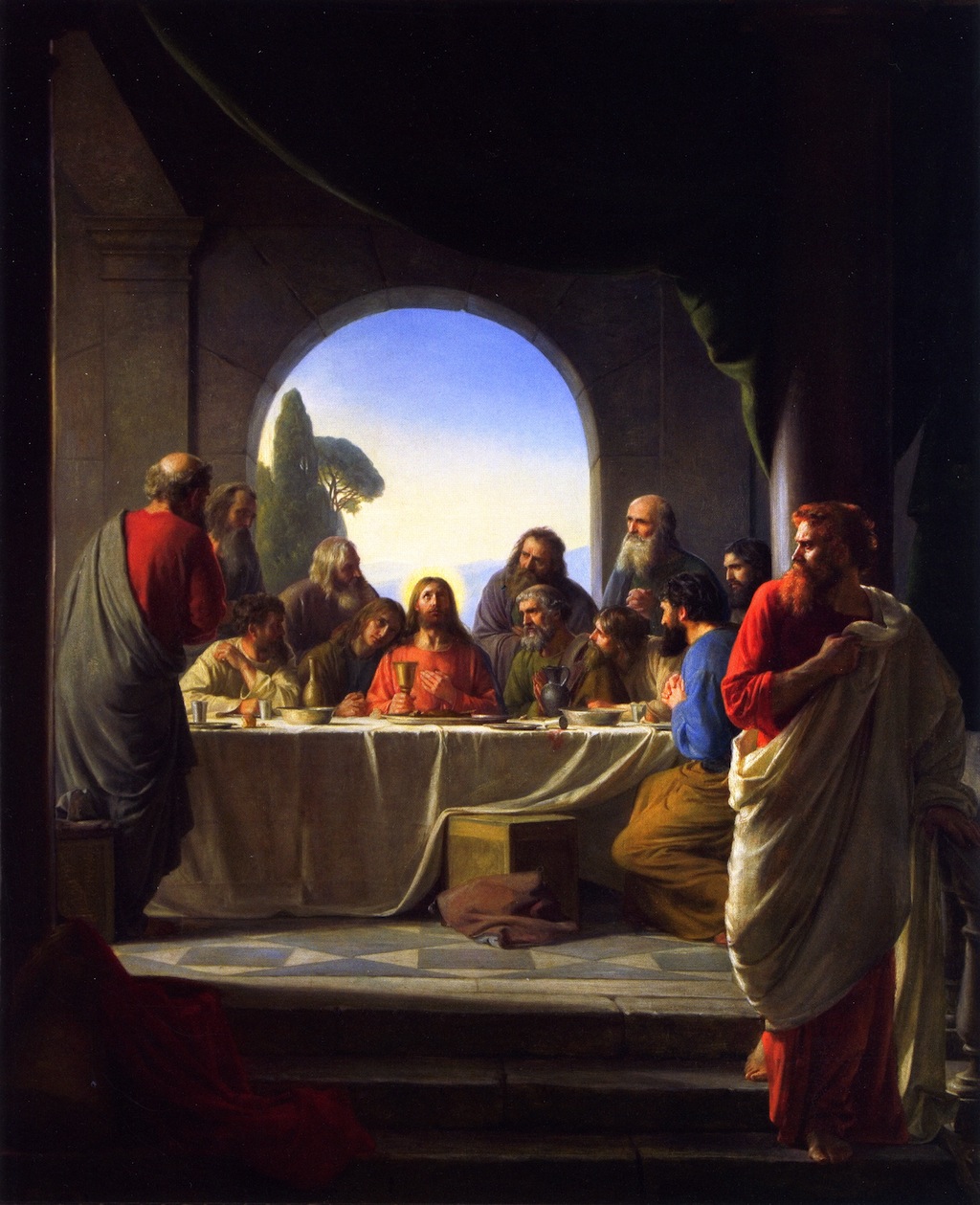
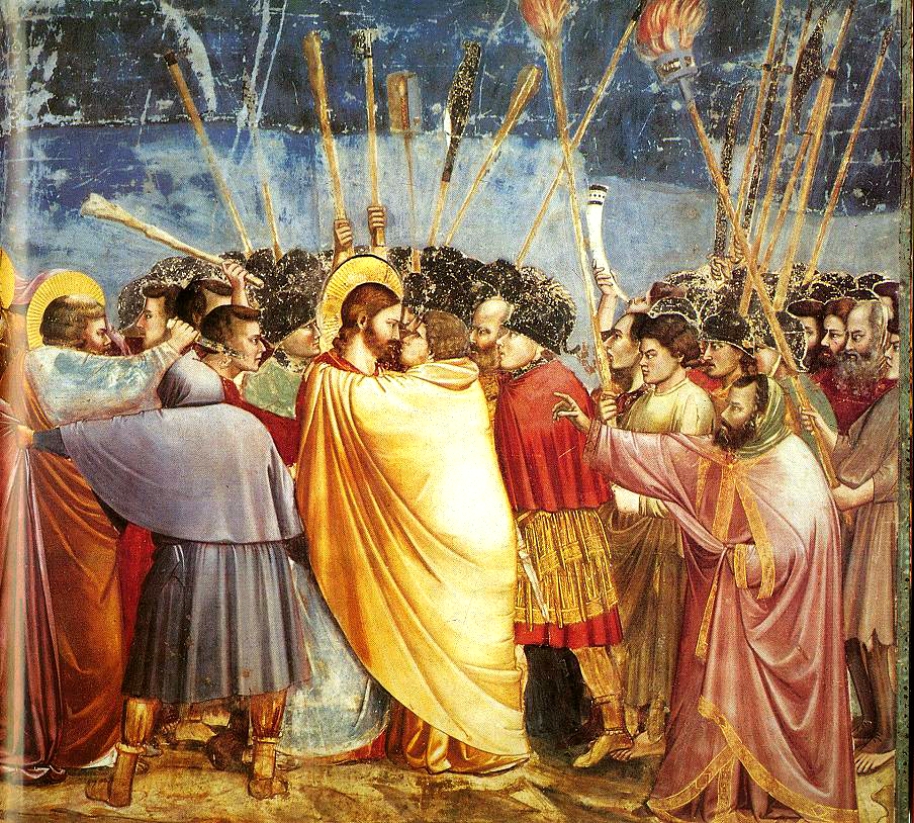
Images: The Last Supper by Carl Bloch; The Kiss of Judas by Giotto (Public Domain, U.S.A.)

All rights reserved.

To SHARE on SOCIAL MEDIA: click on “Leave a comment” or “Comments” below (and this will bring up social media icons if they are not already present).

To LEAVE A COMMENT: click on “Leave a comment” or “Comments” below, and then scroll down to the box which says, “Leave Your Own Comment Here,” which is at the end of any comments already made. If the comment section is already present, merely scroll to the end of any comments already made.

Any ads following this note are by WordPress and not CatholicStrength.

VERY POWERFUL GRACES FROM WALKING WITH JESUS ALONG THE WAY OF THE CROSS


“There is no practice more useful for our souls than the Way of the Cross made with devotion. Its supernatural efficacy is beyond compare” (Blessed Abbot Marmion)


Because the Saints and great spiritual writers remind us emphatically about the good work that is done in our souls by way of devotion to our Lord’s sorrowful passion, we should constantly be on the outlook for devotions that might have the ability to increase our love for our crucified Lord. Here is an ancient devotion of the Church, The Way of the Cross, which might be very helpful to many of us. After making The Way of the Cross in April of 2006, Pope Benedict XVI spoke these words:

“The Way of the Cross is not something of the past and of a specific point on earth. The Lord’s cross embraces the world, his Way of the Cross goes across continents and time. We cannot just be spectators on the Way of the Cross. We are involved.” 

The Catechism of the Catholic Church echoes the teaching of Pope Benedict, stating a point of capital importance:

“The Paschal mystery of Christ, by contrast, cannot remain only in the past, because by his death he destroyed death, and all that Christ is – all that he did and suffered for all men – participates in the divine eternity, and so transcends all times while being made present in them all. The event of the Cross and Resurrection abides and draws everything toward life.” (CCC 1085)

When we walk with the Lord on the road to Calvary we are not merely reliving a past event! Far from it – the Cross of Christ is the very answer to the riddle of life. 

There is a beautiful chapter in Blessed Abbot Marmion’s book, Christ in His Mysteriesabout the incredible efficacy of The Way of the Cross devotion (Blessed Marmion, pictured below, died in 1923, and was beatified by Pope John Paul II). It is always helpful to get spiritual advice from a “Saint.” He says: “This contemplation of the sufferings of Jesus is very fruitful. After the sacraments and liturgical worship, there is no practice more useful for our souls than the Way of the Cross made with devotion. Its supernatural efficacy is beyond compare” (p.267).

File:Marmion (1888).jpg

Blessed Marmion elaborates that when “you accompany the God-Man along the road to Calvary, with faith, humility and love, with the true desire of imitating the virtues He manifests in His Passion, be assured that your souls will receive choice graces which will transform them little by little into the likeness of Jesus and Jesus Crucified” (270, my emphasis). Blessed Marmion then provides his own Way of the Cross meditations for all fourteen stations (see pages 271-284). These are powerful words from a great spiritual guide!

Here is a devotion you can do with your kids at Church utilizing the Stations of the Cross, or meditatively at home using the various devotional booklets on The Way of the Cross, the one by Saint Alphonsus de Ligouri being very popular. Don’t cast off this devotion of the The Way of the Cross as some ancient ritual no longer relevant to your walk with the Lord. Nothing could be further from the truth. We all need to practice walking with the Lord to Calvary, learning from the Lord how to embrace the crosses of our daily lives.

 
Tom Mulcahy, M.A.


References: The quotes from Pope Benedict and  the Catechism of the Catholic Church were found in Chapter 5 of The Seven Secrets of Confession by Vinny Flynn. It is Father Leen in his book, Why the Cross?, who states that “it is clear that the gospel is the gradual revelation of the cross as the key to the riddle of existence” (p.90). It is Father Faber who reminds us that Christ’s mysteries do an actual work “in our souls.”

Photo Attribution: The lead photo above is by Unterillertaler, October 20, 2011, “Simon of Cyrene,” at Wikipedia under Stations of the Cross, available under a Creative Commons Attribution-Noncommercial license. The photo caption is: “Station 5: Simon of Cyrene helps Jesus carry the Cross, Good Friday procession 2011 at Ulm, Germany.”

All rights reserved.

To SHARE on SOCIAL MEDIA: click on “Leave a comment” or “Comments” below (and this will bring up social media icons if they are not already present).

To LEAVE A COMMENT: click on “Leave a comment” or “Comments” below, and then scroll down to the box which says, “Leave Your Own Comment Here,” which is at the end of any comments already made. If the comment section is already present, merely scroll to the end of any comments already made.

Any ads following this note are by WordPress and not CatholicStrength.