Author: tomlirish

THE THREE O’CLOCK DEVOTION

ancient-clock-1427041_1920

                            Jesus: “At three o’clock, implore My mercy”

Here is a simple devotion anyone can practice for just a few moments at the three o’clock hour or close thereto. It’s a way to lift your heart and soul to Jesus in prayer as part of a devotional practice that draws upon our Lord’s Passion and Death (our Lord gave up His life on the cross at 3 pm). Now, please note that this quick devotion – taking only seconds – was promulgated by the Lord Himself: it’s His idea!  He revealed the practice to Saint Faustina, the visionary of Divine Mercy. By now, with her having been canonized, and the Feast of Divine Mercy having been established by the Church as Jesus told her it would!, it seems highly probable that the revelations of Jesus to this mystic are authentic.  Note how generous the Lord is: he promises significant graces for such a small amount of effort in making this lightning- quick devotion!

THE DEVOTION:

In His revelations to Saint Faustina, Jesus encouraged the following devotional practice:

“At three o’clock, implore My mercy, especially for sinners; and if only for a brief moment, immerse yourself in My Passion, particularly in My abandonment at the moment of agony: This is the hour of great mercy for the whole world. I will allow you to enter into My mortal sorrow. In this hour, I will refuse nothing to the soul that makes a request of Me in virtue of My Passion.” (Diary, 1320).

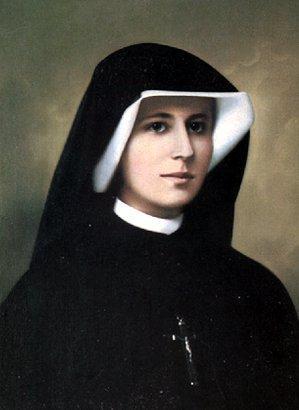
200px-faustina

(Saint Faustina Kowalska, 1905-1938, who was canonized by Saint Pope John Paul II on April 30, 2000)

Please note that this practice does not require you to say the Chaplet of Divine Mercy, as highly advantageous as that would be. It only requires a few brief moments of prayer in the manner Jesus describes. One thing you constantly find the saints recommending is the efficacy of meditating on the Lord’s Passion. Here’s a simple way to do it in the time it takes to tie your shoes! The Lord is good to us. Could He make it any easier?

File:Divina Misericordia (Eugeniusz Kazimirowski, 1934).jpg

“Jesus, I trust in You.”

Tom Mulcahy

Image Attribution: Per Wikipedia, the image of Jesus above is the “Original painting of the Divine Mercy (by Eugeniusz Kazimirowski in 1934). This is this image which was done with Sister Faustina’s instructions and before her death in 1938, unlike the most known version by Adolf Hyła painted in 1943.” This work/file is is licensed under the Creative Commons Attribution-Share Alike 4.0 International license. The picture of Saint Faustina, Public Domain, U.S.A.


To SHARE on SOCIAL MEDIA: click on “Leave a comment” or “Comments” below (and this will bring up social media icons if they are not already present).

To LEAVE A COMMENT: click on “Leave a comment” or “Comments” below, and then scroll down to the box which says, “Leave Your Own Comment Here,” which is at the end of any comments already made. If the comment section is already present, merely scroll to the end of any comments already made.

All rights reserved.

Any ads following this note are by WordPress and not CatholicStrength.


THERE IS POWER IN DEVOTION TO OUR LADY OF SORROWS

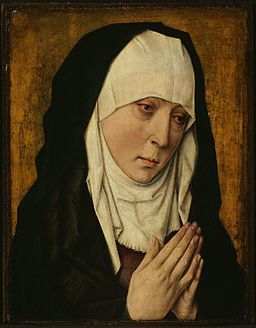
Mater_dolorosa
 

Then Simeon blessed them and said to Mary, his mother: ‘This child is destined to cause the falling and rising of many in Israel, and to be a sign that will be spoken against, so that the thoughts of many hearts will be revealed. And a sword will pierce your own soul too.’ ”   (Luke 2:34-35)

“We draw [Jesus] toward us the moment we begin to think of His Mother’s sorrows. He is beforehand, says Saint Anselm, with those who meditate His Mother’s woes. And do we not stand in need of power in heaven? What a great work we have to do in our souls, and how little of it is already done! How slight is the impression we have made yet on our ruling passion, on our besetting sin! How superficial is our spirit of prayer, how childishly timid our spirit of penance, how transitory our moments of union with God! We want vigor, determination, consistency, solidity, and a more venturous aspiration.

In short, our spiritual life wants power.  And here is a devotion so solid and efficacious, that it is eminently calculated to give us this power, as well by its masculine products in the soul as by its actual influence over the Heart of our Blessed Lord. Who, that looks well at the saints, and sees what it has done for them, but will do his best to cultivate this devotion in himself.

…do not some of us feel that the world grows more attractive to us as we grow older? It should not be so; but so it is. This comes of lukewarmness. Age unlearns many things; but woe betide it when it unlearns vigor, when it unlearns hope! Rest is a great thing. It is the grand want of age. But we must not lie down before our time! Ah! how often has fervent youth made the world its bed in middle life! and when at last the world slipped from under it, whither did it fall? If we live only in the enervating ring of domestic love, much more in the vortex of the world,we must live with Jesus in the spirit of Mary or we are lost.

Let us learn this in increased devotion to her [sorrows]… and it will become in us a continually flowing fountain of supreme unworldliness. Torpor will become impossible. Oblivion [forgetfulness] of supernatural things will become unknown. We shall feel that rest will be present for a while; but we will disdain the temptation [to flee from the cross]. Mary will teach us to stand beneath the cross….

He who is growing in devotion to the Mother of God is growing in all good things. His time cannot be better spent; his eternity cannot be more infallibly secured…. And there is nothing about Our Lady which stimulates our love more effectually than her dolors [sorrows]” (Emphasis added).

Edited and slightly adapted from The Foot of the Cross: The Sorrows of Mary, pages 68-73, by Father F.W. Faber (TAN Books). Father Faber, a convert, was one of the great spiritual writers of the 19th century.

Tom Mulcahy

Image: Mater Dolorosa by Dieric Bouts, circa 1480-1500, Art Institute of Chicago (Public Domain, U.S.A.)

P.S. The Seven Sorrows of Mary are: 1) The Prophecy of Simeon; 2) The Flight into Egypt; 3) The Three Days’ Loss: 4)  Mary meets her son with the cross; 5) The Crucifixion (Mary at the foot of the cross); 6) Jesus is taken down from the cross; and 7) The burial of Jesus. The devotional booklet I use and recommend is: Devotion to the Sorrowful Mother (TAN Books). The Feast Day for Our Lady of Sorrows is September 15.

To SHARE on SOCIAL MEDIA: click on “Leave a comment” or “Comments” below (and this will bring up social media icons if they are not already present).

To LEAVE A COMMENT: click on “Leave a comment” or “Comments” below, and then scroll down to the box which says, “Leave Your Own Comment Here,” which is at the end of any comments already made. If the comment section is already present, merely scroll to the end of any comments already made.

All rights reserved.

Any ads following this note are by WordPress and not CatholicStrength.

THE SECRET OF GREAT FAITH

 woman-571715_640

Every now and then you may stumble across a note or an essay that turns out to have great value for your spiritual journey. This type of experience happened to me when I was reading a book by Patricia Treece which led me to a note written by Father Ralph Tichenor on the power of praising God, a power which he refers to as a “secret of great faith.”

In the book I was reading by Patricia Treece (who is an author of books on the saints), she mentions an encounter she had with a holy priest named Father Ralph Tichenor when she was still Protestant. Treece relates in her book that the holy priest’s face normally”beamed” with “love and goodwill,” but during the night in question, while he was giving a “simple talk,” she actually saw the priest “suffused by a yellowish-white light which streamed out to me. The light was warm and sweet. As this light touched me, I said to myself, ‘I’m being healed.’” She then relates the healing she received and “spiritual benefits as well” from this “luminous priest.” Interested to find out a little about Father Tichenor, who died in 1983, I searched the web and came across a rather amazing note written by the priest entitled, The Secret of Great Faith,” which is an awesome note about the power of praising God.

In his note Father Tichenor writes: “Let me sum up. The secret of faith without doubt is praise continuous, great triumphant praise which becomes a way of life.” He says that “the Holy Spirit…is calling us to a life of praise.” He says that “through praise (and only praise of God) the whole world will be renewed.”

Father Tichenor  tells us that “many Catholics underestimate the power of praise.” He further states that even Catholics who live  “disciplined lives of prayer and intercession” find their faith “weak” and “uncertain” because the secret of great faith is to be “engaged in the praise of God.” From “the Scriptures,” he says, “we find that the entire universe…is seen as engaged in one great chorus of praise to the Creator.”

Father Tichenor adds that praise of God gives us power over evil because “Satan fears praise even more than prayer.” Satan “simply cannot operate in…a setting” where there is “joyful praise” and “reverence,” “adoration,” and “acceptable worship” of God. “So where there is great triumphant praise, Satan is overcome, confused and banished.”

Tichenor instructs us that “to be most effective, praise must be great, continuous, a fixed habit, a lifetime occupation, a vocation, a total way of life.” This means that we must learn to praise God not only when we are filled with joy “but always,” even when “things are painful, humiliating and even disastrous.”

Father Tichenor tells the story of a woman who came to him whose daughter was “on drugs, alcohol and involved in prostitution.” Father Tichenor instructed the woman to “give your daughter to Jesus” in faith and to praise and thank God for her daughter in all circumstances, no matter how dire and difficult. So the mother one night got on her knees and entrusted her daughter to God.  As the mother’s attitude and behavior changed a healing occurred. Father Tichenor relates:

“This kept on for awhile and then there was a complete change in her daughter. The mother and daughter came to me about six months later, and the healing had been complete. I asked the daughter what had happened. She said the first night when her mother didn’t complain and wasn’t in tears startled her….And finally, since she was received at home with love, she wanted to know how her mother was able to do it. When she found out how, she wanted to have whatever her mother had. So they went to a prayer meeting. The daughter is now baptized in the Spirit and very active in the Renewal.”

To sum up, according to Father Tichenor the secret of great faith is praise continuous! “We must continue ceaselessly to live a life of praise to the Glory of God.” And as “one praises and worships, he is transformed step-by-step from glory-to-glory, into the image of the infinitely joyous God.”

Tom Mulcahy, M.A.


P.S.  In All for Jesus, Chapter 8, Father Faber relays a number of methods used by the saints to praise God. It is a chapter well worth reading. The book by Patricia Treece is The Mystical Body, p. 37.

To SHARE on SOCIAL MEDIA: click on “Leave a comment” or “Comments” below (and this will bring up social media icons if they are not already present).

To LEAVE A COMMENT: click on “Leave a comment” or “Comments” below, and then scroll down to the box which says, “Leave Your Own Comment Here,” which is at the end of any comments already made. If the comment section is already present, merely scroll to the end of any comments already made.

All rights reserved.

Any ads following this note are by WordPress and not CatholicStrength.


THE GREAT VALUE OF SHORT PRAYERS MADE FROM THE HEART

church-820339_1280 (1)

“And now these three remain: faith, hope and love. But the greatest of these is love.” (1 Cor. 13:13)

The cultivation of these three virtues, infused into our souls at baptism, is crucial. These are the “God-centered” virtues of faith, hope and love. These are the virtues that direct our attention directly at God: we reach out to God in faith, we press closer to Him in hope, and by love we unite ourselves to God. Thus, the development and practice of the theological virtues (or God-centered virtues) is hugely important. We need to practice these virtues. We need to make acts of faith, hope and love to the “living” and infinitely good God (I am drawing from Father Tanquerey’s great book, The Spiritual Life).

One simple way to “exercise” the theological virtues of faith, hope and love is through ejaculatory prayer – that is, by very short prayers made from the heart. Of ejaculatory prayer (or short prayers of aspiration) Father Paul O’Sullivan says:

“The custom of making ejaculations is of such transcendent importance that all the Saints practiced it and raised themselves to an eminent height of sanctity by its means” (How to be Happy, How to be Holy, page 228).

He further says of these short, ejaculatory prayer: “Nothing is easier, nothing more useful or profitable to use than these little prayers, which we can say at every moment. Nothing will make us more happy” (p. 211). Now these short, affective prayers are very useful to busy men and women who may find prayer time hard to come by (although we must make prayer a priority). The same, short affective prayer of love can be lifted up to God throughout the day multiple times (even hundreds of time per day). We may simply say, “Jesus, I Trust n You,” or, “Sacred Heart of Jesus I have boundless confidence in Thee,” or, “My God, I love Thee,” or, “My God, grant that I may love Thee more and more,” or, “Come Holy Ghost, Creator Blest, and in my heart take up thy rest.” These are but a few examples of short, ejaculatory prayers that can be easily said all through the day; and the examples chosen correspond specifically to acts of faith, hope and love.

These short, ejaculatory prayers deepen our affection for God. It becomes habitual for us to let God know how much we love Him and how much we trust in Him. And since the theological virtues are not natural virtues, but rather supernatural virtues infused into our souls at baptism, the exercise of these virtues directs more efficaciously our union with God (relying again on Father Tanquerey). In short, ejaculatory prayer is a very practical and effective way to exercise the all-important theological virtues. 

EXAMPLE: A man goes on a hectic three day business trip. He decides that his “go-to” prayer of aspiration throughout the trip will be: “Oh Sacred Heart of Jesuswhom I adore, help me to love Thee more and more.” This prayer constitutes an exercise of the theological virtues. He also decides that in times of temptation he will say this aspiration: “By thy Immaculate Conception, O Virgin Mary, make my body pure and my soul holy” (Raccolta)! This short prayer not only venerates Mary but also is an exercise of the moral virtues. Importantly, as Father Tanquerey demonstrates, the theological virtues support the moral virtues and, conversely, the moral virtues support the theological virtues. Thus, Jesus says, “If you love me you will keep my commandments” (John 23: 23-45)

There is a famous book, The Way of the Pilgrim, wherein the author relates how simply repeating the Jesus prayer (“Lord Jesus Christ, Have Mercy on me”) hundreds and thousands of time per day transformed his life. Ejaculatory prayers, said with love, can be very powerful and very useful to growth in holiness.

Tom Mulcahy

SourcesThe Spiritual Life by Father Adolphe Tanquerey (TAN), see especially pages 458-459; and How to be Happy, How to be Holy by Father Paul O’Sullivan (TAN). Most of the short prayers I cited are taken from  Father O’Sullivan or from a pamphlet entitled, How to Converse Continually and Familiarly with God, by St. Alphonsus Liguori (TAN).

To SHARE on SOCIAL MEDIA: click on “Leave a comment” or “Comments” below (and this will bring up social media icons if they are not already present).

To LEAVE A COMMENT: click on “Leave a comment” or “Comments” below, and then scroll down to the box which says, “Leave Your Own Comment Here,” which is at the end of any comments already made. If the comment section is already present, merely scroll to the end of any comments already made.

All rights reserved.

Any ads following this note are by WordPress and not CatholicStrength.


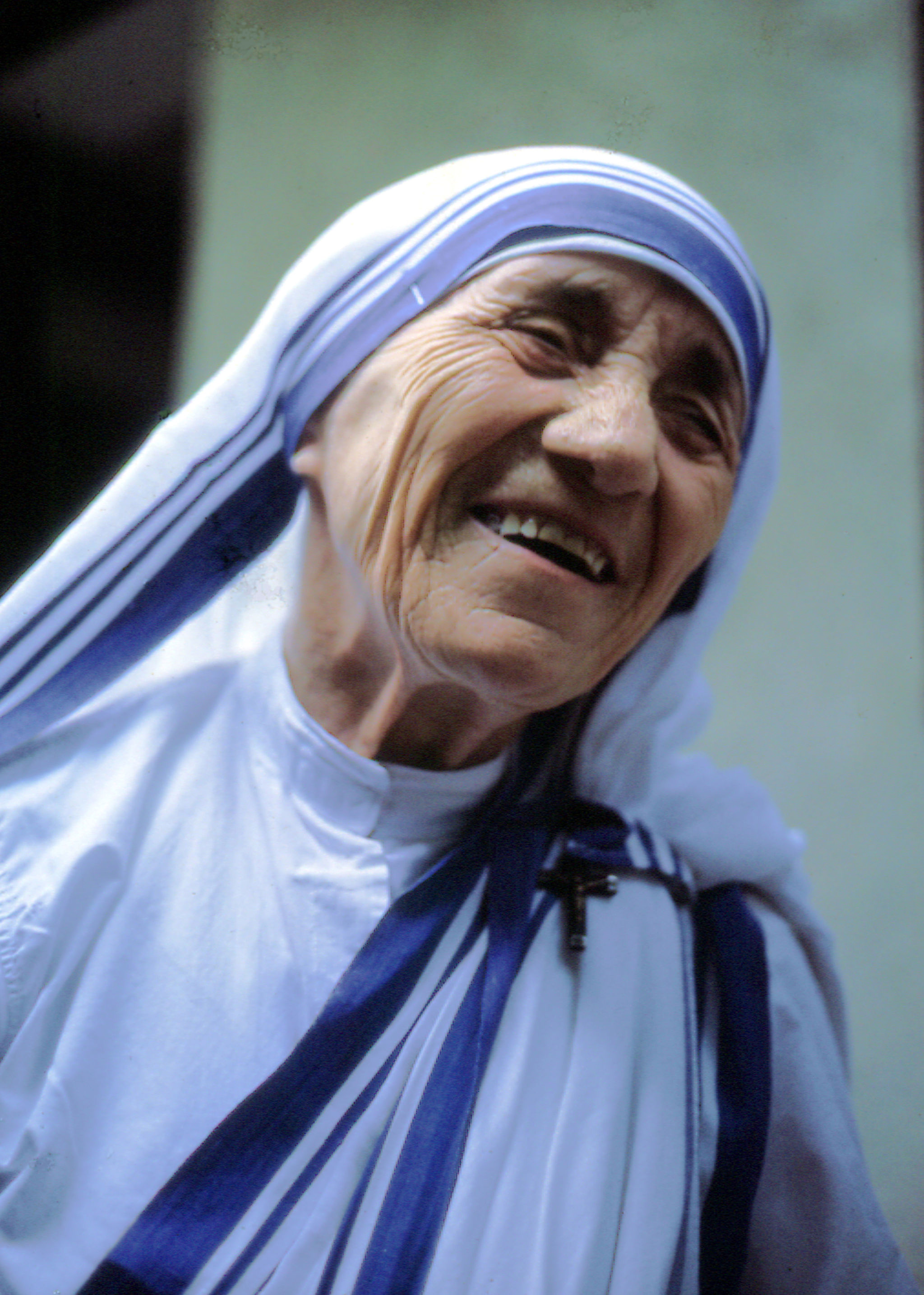
SAINT MOTHER TERESA’S FIRST HOLY COMMUNION CHANGED HER LIFE!

 Mutter_Teresa_von_Kalkutta

The New Atheism’s Infatuation With The Irrational

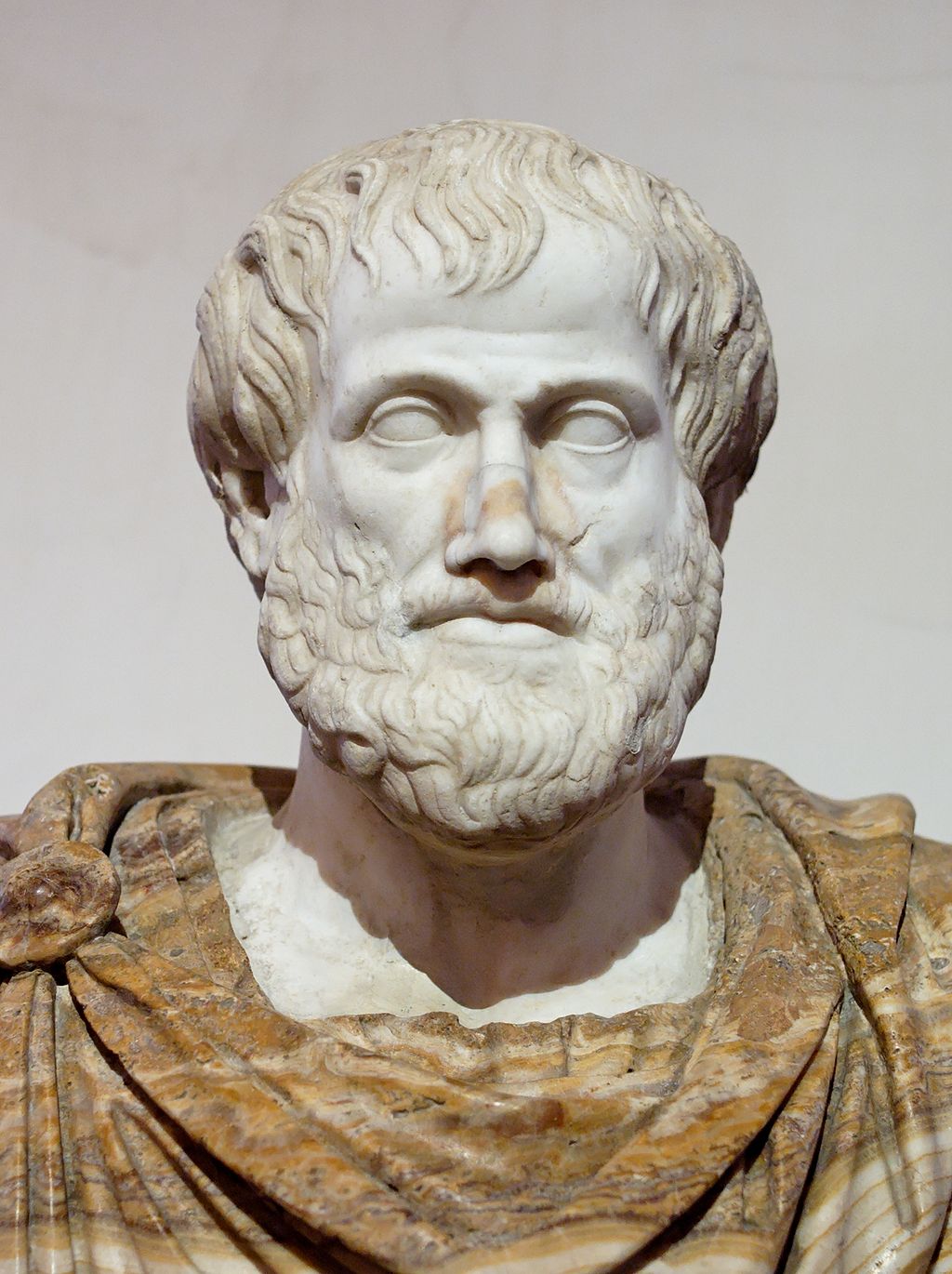
1024px-Aristotle_Altemps_Inv8575

(Aristotle, who maintained that man is a rational animal)

“Being Atheist, it is characteristic of the advancing wave that it repudiates the human reason….But the Faith and the use of the intelligence are inextricably bound up. The use of reason is a main part – or rather the foundation – of all inquiry into the highest things”  (Hilaire Belloc)

Atheism, perhaps attractive at first, ultimately sells out and collapses because it cannot maintain continuity with rational thinking. The “New Atheism” (which is essentially a series of recent books touting atheism) clothes itself in the aura of scientific credibility, but then when these atheists leave their comfort zone and begin to speculate about ultimate causation their theories breakdown and become murky; their arguments even become preposterous and manifestly irrational.

The so called “New Atheism,” which even goes so far as to refer to itself as a venture in improbability, is permanently flawed (for as the genius of G.K.  Chesterton points out, “if there was no God, there would be no atheists!”).  As far as I’m concerned, the only thing different about the new atheism, when compared to the old atheism, is that the new atheism is newer than the old atheism! In fact, David Hart (who wrote a book on this subject) is of the opinion that the old atheists were actually better atheists than the new ones. He laments:

“The principal source of my melancholy, however, is my firm conviction that today’s most obstreperous infidels lack the courage, moral intelligence, and thoughtfulness of their forefathers in faithlessness.”  (“Believe it or Not” www.firstthings.com)

The real appeal of atheism is not its intellectual prowess (atheism requires a positively irrational faith in blind chance); no, the real appeal of atheism is moral autonomy so that God can be conveniently pushed aside. “The fool says in his heart, ‘There is no God’” (Psalm 14:1).

Frankly, these new atheists need to show a little more humility. It’s not like they’ve suddenly discovered the answer to the age old question: “Why is there something rather than nothing?” Point in fact: the well known physicist, Stephen Hawking, who responded to the question, “Why does the universe bother to exist?,” by saying: “I don’t know the answer to that.”

I have to admit that it is always a little amusing to me when a mere creature, who has only been alive no more than a handful of decades, proclaims with noticeable hubris that his mind has reached the conclusion that the universe – and human beings – are nothing but an accident. I have greater respect for the deist who sees the implausibility of denying a creator, but has a great distaste for actually having any sort of relationship with such a being. In any event, if the computer I am typing on was to suddenly start shouting at me that it had no ultimate designer, and that it came about by mere chance, I would have to tell it to, well, shut-up!

Recently I had the idea of pretending to be an atheist. I wanted to see what it felt like to be an atheist (to believe somehow that all that we see, hear, feel and touch is nothing but an accident). I even thought of praying to the ungod of the accidental universe to see how he managed to bring it all together by accident (although here I could be accused of reverting to primitive religious superstition). But I prayed to this ungod anyways.  And as I prayed my lovely wife walked into the room: and I said, “ungod, you are truly amazing.”    

“There’s my wife, and she is sort of like a perfect partner to me! She’s all so feminine (thanks for those gentle curves), and I’m masculine (I played football in seventh grade). I must be insane to think that you pulled off this amazing complementarity between my wife and I by accident, and so hats off to you, ungod, because the chances of this happening by accident must have been, well, zero.” I paused then to see if ungod would say anything back to me, but he didn’t, and the whole thing actually backfired on me as I began to see the complementarity between my wife and I as a rather obvious revelation that I did have a creator. Then I remembered that quote by C.S. Lewis: “A young man who wishes to remain a sound atheist cannot be too careful of his reading.” In my case, it simply wasn’t a good idea to pray to ungod.     

Years ago Carl Sagan (the astronomer) was the unofficial High Priest of atheistic scientism. Sagan helped to popularize Haeckel’s theory of recapitulation, a theory that maintains that human embryonic development recapitulates in miniature the grand course of  biological evolution. It is well known, now, that Haeckel forged some of his well known drawings of human embryonic development (ones that were standard for years in biology texts and tended to dehumanize the fetus), and the theory is now generally regarded as defunct. We therefore need to be careful not to grant to scientific theory an aura of infallibility that ultimately serves merely as a disservice to science. Even scientists need to distinguish carefully between scientific fact and scientific theory. Thus, in the current debate over evolution, it is important to know that the two leading proponents of the theory – Dawkins and Gould – have seemingly diametrically opposing views as to how evolution happened , i.e., the dispute between gradualism and punctuated equilibrium. Gould opted for punctuated equilibrium due to the paucity of the fossil record. We still have a lot to learn about the “mechanics and pace” of biological evolution. Pope Francis points us in the right direction, having said: “The evolution of nature does not contrast with the notion of creation, as evolution presupposes the creation of beings that evolve.”

Dawkins’ book, The Blind Watchmaker, shows just how unscientific scientists can be. Frankly,  Dawkins (one of the top “new atheists”) must be embarrassed for having said what he said. In his book, Dawkins maintains that if one was to see a statue of the Virgin Mary wave its hand, such an occurrence, although improbable, could be explained by the laws of physics and chemistry. Here are Dawkins own words from the book:

“In the case of the marble statue, molecules in solid marble are continuously jostling against one another in random directions. The jostlings of the different molecules cancel one another out, so the whole hand of the statue stays still. But if, by sheer coincidence, all the molecules just happened to move in the same direction at the same moment, the hand would move. If they then all reversed direction at the same moment the hand would move back. In this way it is possible for a marble statue to wave at us. It could happen. The odds against such a coincidence are unimaginably great but they are not incalculably great. A physicist colleague has kindly calculated them for me. The number is so large that the entire age of the universe so far is too short a time to write out all the noughts! It is theoretically possible for a cow to jump over the moon with something [[171]] like the same improbability. The conclusion to this part of the argument is that we can calculate our way into regions of miraculous improbability far greater than we can imagine as plausible.”

Let’s give Dawkins a break. Perhaps he was having a bad day when he wrote this rubbish. But how can I trust anything he says in light of the scientific foolishness employed by him in the just cited quotation.

Michael Corey, in discussing the possibility whether our “wondrous universe could have evolved by blind chance” quotes the distinguished University of Montreal psychiatrist Karl Stern as  labeling such a view of the universe as “crazy.” He further quotes Stern as saying: “And I do not at all mean crazy in the sense of a slangy invective but rather in the technical meaning of psychotic. Indeed such a view has much in common with certain aspects of schizophrenic thinking” (God and the New Cosmology, p.220). Stern is basically maintaining that it is flat out irrational to believe the universe came about by chance or accident.

Theism – belief in God –  is grounded in common sense. It need not be intimidated by the “bio-mythology” of an accidental universe. 

Tom Mulcahy, M.A.

Image: A bust of Aristotle in The National Museum of Rome. Saint Thomas Aquinas referred to Aristotle simply as “the philosopher.” Aristotle is known for maintaining that man is a rational animal. The image is in the Public Domain, U.S.A.

Ref. Answering the New Atheism (Wiker and Hahn). Concerning the complementary relationship between faith and science, see Catechism of the Catholic Church, sections 159, 283 and 284. In October of 2014, Pope Francis stated the following: “The Big Bang, which nowadays is posited as the origin of the world, does not contradict the divine act of creating, but rather requires it. The evolution of nature does not contrast with the notion of creation, as evolution presupposes the creation of beings that evolve.”

All rights reserved.

To SHARE on SOCIAL MEDIA: click on “Leave a comment” or “Comments” below (and this will bring up social media icons if they are not already present).

To LEAVE A COMMENT: click on “Leave a comment” or “Comments” below, and then scroll down to the box which says, “Leave Your Own Comment Here,” which is at the end of any comments already made. If the comment section is already present, merely scroll to the end of any comments already made.

Any ads following this note are by WordPress and not CatholicStrength.

JUDAS REJECTED THE EUCHARIST

Ref. The Gospel of John (audio series) by Dr. Scott Hah (especially his commentary on Chapter 6).

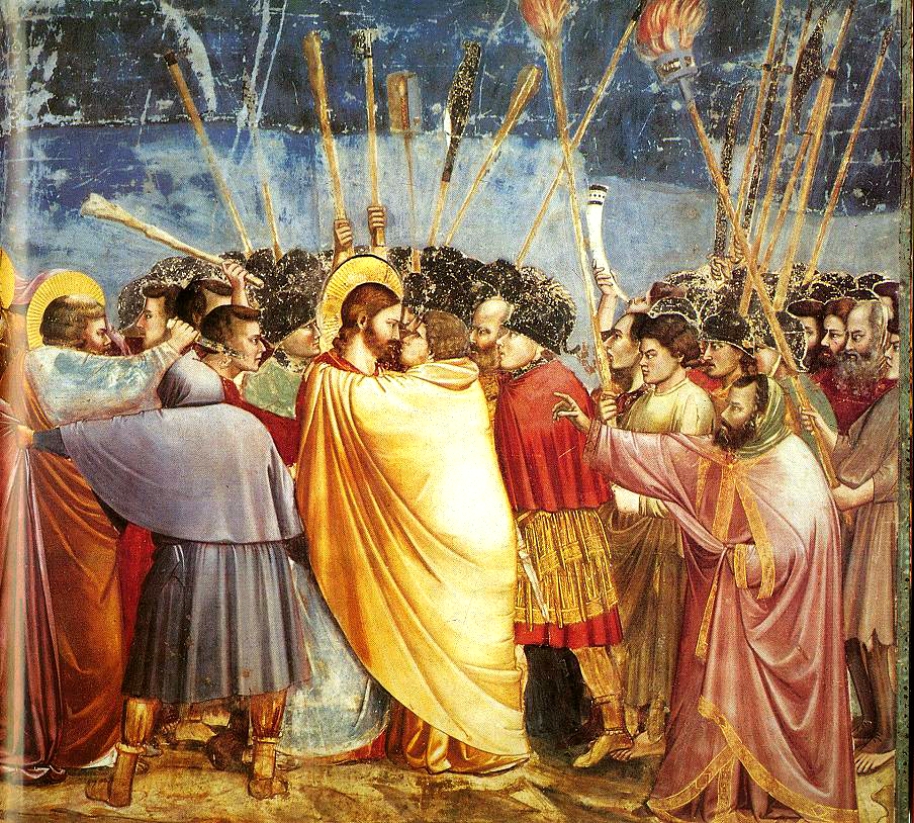
Image:  The Kiss of Judas by Giotto (Public Domain, U.S.A.)

All rights reserved.

To SHARE on SOCIAL MEDIA: click on “Leave a comment” or “Comments” below (and this will bring up social media icons if they are not already present).

To LEAVE A COMMENT: click on “Leave a comment” or “Comments” below, and then scroll down to the box which says, “Leave Your Own Comment Here,” which is at the end of any comments already made. If the comment section is already present, merely scroll to the end of any comments already made.

Any ads following this note are by WordPress and not CatholicStrength.

THE IMMENSITY OF THE REWARD

cross-792538_1920

“Eye has not seen, ear has not heard, nor has it so much dawned on man what God has prepared for those who love Him.” (1 Corinthians 2:9)

In evaluating our lives, we should not discount the length of eternal life.  What God is offering to us, ETERNAL LIFE, is simply stunning, overwhelming and unfathomable! Certainly a fundamental part of the Ignatian Exercises is simply to do the math: to reflect on the shortness of life and the incredible length of eternity. And then to choose wisely, which is why we pray to the Holy Spirit for the gift of Wisdom. To miss out on Heaven – and all that Heaven is – simply cannot be an option. “Who could endure the loss?”

 As to death, it is a great grace to realize that we are going to die. In essence, our lives are but a preparation for death. God, in His providence, already knows the day and moment of our death, and He has already put in place the graces we will need to be saved. We need to cooperate with those graces, and all will be well.

Unfortunately, so many people live their lives without much thought about their impending death. They realize that other people die but they sort of see themselves as a bystander to the death of other people –  somehow convincing themselves that it won’t happen to them.

And although attending someone’s funeral may make such a person anxious about death, it is also the case that we are quite adept at putting in to place psychological defense mechanisms that quickly assuage such thoughts and turn our attention back to the world.

As I see it, there is a gigantic cultural conspiracy in place to convince us that we are not going to die. The plan is to outlive death by taking the right vitamins, wearing the best make-up, and seeing the best doctors. And yet everyone still dies. We are all on an absolute collision course with death. Only God knows for sure how much time we have left. And the clock keeps ticking.

I think it is interesting that in Mother Teresa‘s mystical life the Virgin Mary told her to tell families to say the rosary (reference: Come Be My Light, Doubleday, p.99). This prayer not only helps us to contemplate the life of Christ, including his death and resurrection, but it continually reminds us of the two most important moments in our lives – the present moment and the moment of our death. We ask Mary to “pray for us now and at the hour of our death.”  It is in the “sacrament of the present moment” that we can choose to conform our will to God’s grace, and it is at the moment of death that we need all of Heaven (that great cloud of witnesses, Hebrews 12:1) interceding for us to persevere to the end.  It is important to pray for the grace of final perseverance and for the fortitude to die a good death. It is reassuring to know that we are asking Mary’s help in this regard when we pray the rosary.

 In First Corinthians it says (at 2:9):

“Eye has not seen, ear has not heard, nor has it so much dawned on man what God has prepared for those who love Him.”

Don’t put your trust in the passing things of this world (those idols have no power to save you). Be a little greedy for Heaven, and in the process transform that greed into love and gratitude for a God who, after dying for our sins and humbling himself to be our very eternal life-giving food, has prepared for us such an immense reward that the magnitude of the joy and love we will experience in Heaven is beyond our narrow understanding, lasting for endless ages, in the glory of the “ever-blessed” life of God. In short, to say that Heaven is going to be awesome is an incredible understatement.

“For whoever would draw near to God must believe that He…rewards those who seek Him” (Hebrews 11:6).

Tom Mulcahy, M.A.

Inspiration: The Imitation of Christ; The Spiritual Exercises of Saint Ignatius of Loyola; and F.W. Faber’s The Creator and the Creature (from where I derive the title to the note and I am otherwise heavily indebted to him for the tone and content of the note). Blessed Mother Teresa of Calcutta will be canonized by Pope Francis on September 4, 2016!

To SHARE on SOCIAL MEDIA: click on “Leave a comment” or “Comments” below (and this will bring up social media icons if they are not already present).

To LEAVE A COMMENT: click on “Leave a comment” or “Comments” below, and then scroll down to the box which says, “Leave Your Own Comment Here,” which is at the end of any comments already made. If the comment section is already present, merely scroll to the end of any comments already made.

Any ads following this note are by WordPress and not CatholicStrength.

SACRAMENTAL ILLUMINATION IN THE BOOK OF HEBREWS

 512px-Aerial_view_of_the_Statue_of_Christ_the_Redeemer

“Consequently, [Jesus our High Priest in Heaven] is able to save to the uttermost those who draw near to God through him, since he always lives to make intercession for them” (Hebrews 7:25)

The “towering theme” of Hebrews is the Eternal Priesthood of Jesus Christ which is mighty and active for us sojourners on earth. That this priesthood of Jesus in Heaven operates through sacramental grace here on earth can be seen from the sacramental imagery utilized in Hebrews. Jesus’ priesthood is thus intrinsically linked to the power of the sacraments.

Right at the beginning of Hebrews we are confronted with a powerful sacramental image – that of Jesus in Heaven being anointed for his “royal-priestly” ministry. The verse at Hebrews 1:9 states:“God has anointed you [Jesus] with the oil of gladness beyond your comrades.”  This sacramental-like anointing of Jesus as Eternal-Priest King is at the root and foundation of the anointing of priests for service in Jesus’ Church, and for the sacrament of anointing the sick. The only time in scripture Jesus is referred to as an “apostle” is at Hebrews 3:1. And what did the apostles do when Jesus sent them out on their first missionary journey: they anointed the sick (see Mark 6:12-13).

In Hebrews the Sacrament of Baptism is referred to as an “enlightenment” (6:4), baptism specifically mentioned at 6:2, and the author of Hebrews uses clear baptismal imagery at 10:22 where he talks about “hearts sprinkled clean from an evil conscience and our bodies washed in pure water.”

The Sacrament of Confirmation is specifically alluded to at 6:2 with reference to the “laying on of hands,”which not only “confers the Spirit” but is also indicative of priestly ordination.

At 6:4 there is reference to those who have “tasted the heavenly gift,” which is most likely a reference to the Eucharist. Moreover, in Hebrews the priestly “Order of Melchizedek” is mentioned five times in reference to Christ’s Eternal Priesthood. And what did the priest-king Melchizedek offer to God in sacrifice: bread and wine (see Genesis 14:18). The Eucharist is greatly prefigured by the sacrificial offering of Melchizedek. 

There are further references to the Eucharist in Hebrews, such as the one found at 13:10 where it states, “We have an altar from which those who serve the tent have no right to eat.” Moreover, the Eternal Priesthood of Jesus demands attendance at the Sunday liturgical celebration which is not to be “neglected” (10:25), otherwise, Jesus’ sacrifice (made present in the Eucharistic liturgy) is rendered fruitless, “and there no longer remains a sacrifice for sin” (10:26). Indeed, through sacramental worship we on earth come into the “celestial liturgy of Heaven” (see Hebrews 12:22-24; “You have come to Mount Zion and to the city of the living God….”).

The Sacrament of Marriage is also alluded to in Hebrews at 13:4 where it says: “Let marriage be held in honor among all, and let the marriage bed be undefiled….”

Although there is no specific reference to the Sacrament of Confession in Hebrews, the congregation is admonished to “obey” and “submit” to its pastors who “keep watch” over “their souls” (13:17). The great High Priest Jesus, in a powerful Resurrection appearance, gave these same pastors the priestly function of forgiving sins (see John 20:22-23).

In short, while the Epistle to the Hebrews demonstrates the powerlessness of the Old Testament Levitical and Temple priesthood, it concurrently demonstrates the sacramental power of Jesus’ Eternal priesthood in Heaven.

Tom Mulcahy, M.A.

Photo Attribution: Aerial view of the Statue of Christ the Redeemer in Rio de Janeiro, by Gustavo Facci (posted by Flickr). This file is licensed under the Creative Commons Attribution-Share Alike 2.0 Generic license. The photo was taken on Ferruary 18, 2011. This information at Wikipedia.

Reference: I am relying primarily on the footnotes in the Ignatius Catholic Study Bible on Hebrews. As I was reading over those notes – along with the text itself –  it became abundantly clear to me that the author of Hebrews had a high regard for the New Testament Sacraments, contrary to the opinion of some. Quotations above are from these footnotes. Dr. Scott Hahn and Curtis Mitch wrote the commentary and footnotes I am referring to, so I am constructing this note out of their scholarship. Dr. Taylor Marshall refers to Hebrews 3:1 as a “key verse,” saying: “Here the apostleship is paired with high priesthood. Christ is THE Apostle and High Priest. His New Testament ministers participate in this office. Hence, an apostle is a high priest. Apostolic succession transmits the apostolic priesthood.”

To SHARE on SOCIAL MEDIA: click on “Leave a comment” or “Comments” below (and this will bring up social media icons if they are not already present).

To LEAVE A COMMENT: click on “Leave a comment” or “Comments” below, and then scroll down to the box which says, “Leave Your Own Comment Here,” which is at the end of any comments already made. If the comment section is already present, merely scroll to the end of any comments already made.

All rights reserved.

Any ads following this post are from WordPress and not this blog.

THE EXTRAORDINARY VISION OF THE VIRGIN MARY IN KNOCK, IRELAND

 512px-Knock_shrine

“And the Lamb will conquer and the woman clothed in the sun will shine her light on everyone” (from the hymn, Lady of Knock)

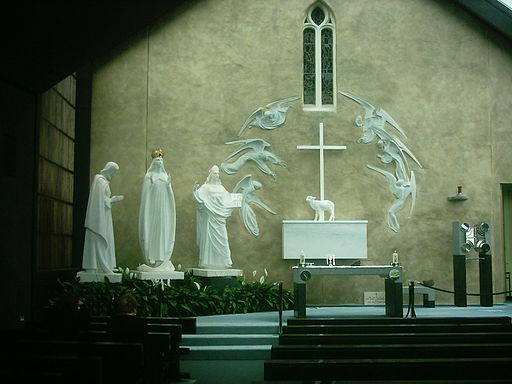
Here is the eyewitness testimony of Patrick Hill pertaining to the extraordinary vision (depicted above) he witnessed at the south wall of a small church in Knock, Ireland, St. John the Baptist, on the night of August 21, 1879:

“I am Patrick Hill; I live in Claremorris; my aunt lives at Knock; I remember the 21st August last; on that day I was drawing home turf, or peat, from the bog on an ass. While at my aunt’s at about eight o’clock in the evening, Dominick Byrne came into the house; he cried out: ‘Come up to the chapel and see the miraculous lights, and the beautiful visions that are to be seen there’. I followed him; another man by name Dominick Byrne, and John Durkan, and a small boy named John Curry, came with me; we were all together; we ran over towards the chapel. When we, running southwest, came so far from the village that on our turning, the gable came into view, we immediately beheld the lights; a clear white light, covering most of the gable, from the ground up to the window and higher. It was a kind of changing bright light, going sometimes up high and again not so high. We saw the figures – the Blessed Virgin, St. Joseph and St. John, and an altar with a Lamb on the altar, and a cross behind the lamb. At this time we reached as far as the wall fronting the gable: there were other people there before me; some of them were praying, some not; all were looking at the vision; they were leaning over the wall or ditch, with their arms resting on top. I saw the figures and brightness….  It was raining. I saw everything distinctly” (edited).

There is a tradition in Ireland, writes Mary Purcell in her summary of the apparition at Knock, that Saint Patrick, while on a missionary journey in the west of Ireland, blessed the remote village of Knock and predicted that one day it would become a center of devotion.

This prediction has come true, notes Purcell, as Knock has become a major Marian pilgrimage center. The Mother of God, the Blessed Virgin Mary, chose to bless Knock by appearing there in an apparition that occurred on August 21, 1879. Since this apparition was witnessed by eighteen people – including Patrick Hill, who was one of the fifteen official witnesses – its level of credibility is, on a merely human level, powerfully trustworthy.

The Mother of God appeared at Knock to remind us of the incredible importance of the Holy Sacrifice of the Mass. The apparition took place at about 8 pm at the south gable of the Church dedicated to Saint John the Baptist. The priest there, Father Cavanagh, was deeply devoted to Our Lady’s Immaculate Conception and had no bank account because “all that he ever had went to the poor” (Purcell, p.125).

The apparition of the Blessed Mother that evening was witnessed by about eighteen people, and there were 15 official witnesses who gave testimony to two “Commissions of Enquiry,” these witnesses ranging in age from six to seventy-five. Patrick Hill was age sixteen at the time. Their testimony was found trustworthy and satisfactory in 1879 and 1936. Pope John Paul II visited Knock in 1979. Mother Teresa of Calcutta also visited the Shrine.

What was seen, as Purcell says  in synopsis, was “an extraordinary brilliant light surrounding the gable wall of the church” with the figures of Our Lady, Saint Joseph and Saint John the Evangelist. “Besides them and a little to the right was an altar with a cross and a figure of a lamb” (see representation above). According to the Shrine website, this extraordinary apparition lasted approximately two hours in the “pouring rain,” accompanied, in part, with the “reciting [of] the rosary.” And although the witnesses to the apparition were “saturated” by the pouring rain, “not a single drop of rain fell on the gable or vision.”

The complete written testimonies of the fifteen official witnesses to this extraordinary apparition are available at https://www.knockshrine.ie/history/witnesses-accounts/

What was the meaning of the apparition? Reverend Dr. M. O’Carrol  explains: “The first lesson of the apparition is the Mass. Everything seems to point to that – the altar with the sacrificial Lamb, the gestures of Our Lady, the presence of Saint John in vestments, and the respectful attitude of Saint Joseph….” (Purcell at 143, citing Father M. O’Carroll). At Knock, where no words were spoken, Mary was pointing us to Jesus: to the Lamb of God who is both our sacrifice and our supernatural sustenance at Holy Mass.

“Mother, in this shrine [of our Lady of Knock] you gather the People of God of all Ireland and constantly point out to them Christ in the Eucharist and in the Church. At this solemn moment we listen with particular attention to your words : “Do whatever my Son tells you”. And we wish to respond to your words with all our heart. We wish to do what your Son tells us, what he commands us, for he has the words of eternal life” (Homily of Pope John Paul II, Shrine of Our Lady of Knock, September 30, 1979).

Tom Mulcahy, M.A.

Sources: The information for this note is gathered from  A Woman Clothed With the Sun (Image Books); and official Shrine Information on the internet; see https://www.knockshrine.ie/history/. This note is simply an edited compilation of information and facts from those two sources. The Feast of Our Lady of Knock is on August 17.

Image: A sculpture of the Knock apparition. This work has been released into the public domain by its author, EamonnPKeane at English Wikipedia.

To SHARE on SOCIAL MEDIA: click on “Leave a comment” or “Comments” below (and this will bring up social media icons if they are not already present).

To LEAVE A COMMENT: click on “Leave a comment” or “Comments” below, and then scroll down to the box which says, “Leave Your Own Comment Here,” which is at the end of any comments already made. If the comment section is already present, merely scroll to the end of any comments already made.

All rights reserved.

Any ads following this post are from WordPress and not this blog.