Author: tomlirish

THEOLOGY OF A BODY: FINDING HOMO-RELIGIOSUS

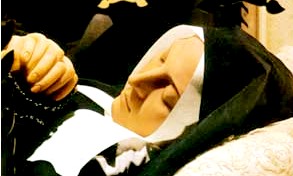
 bernadette

(The incorrupt body of Saint Bernadette)

“In many ways, throughout history down to the present day, men have given expression to their quest for God in their religious beliefs and behavior: in their prayers, sacrifices, rituals, meditations, and so forth. These forms of religious expression, despite the ambiguities they often bring with them, are so universal that one may well call man a religious being [homo-religiosus] ….” (Catechism of the Catholic Church, # 28)

SAINT PAUL’S MIRACULOUS HANDKERCHIEF STRONGLY CONFIRMS CATHOLIC THEOLOGY

bartolomeo_montagna_-_saint_paul_-_google_art_project


“so that even handkerchiefs and aprons that had touched [Saint Paul] were taken to the sick, and their illnesses were cured and the evil spirits left them.” (Acts 19:12)

I had a dream about a faith-filled and holy Protestant man…

He was standing by the road in the throes of a dreadful and deadly illness, barely clinging to life, and crying out, “someone help me.” Suddenly, he sees a kind lady approaching him with Saint Paul’s handkerchief, the one mentioned in the Acts of the Apostles, the one that God allowed to heal so many people. As he sees the relic coming close to him, his sense of hope ascends to an incredible height! His family is amazed that such a grace is being  given to him. But suddenly something sends him a scruple and he reasons: why should I touch a handkerchief that touched Saint Paul, a mere human? No, I will pray directly to Jesus, lest I steal away Jesus’ glory by honoring Paul. The crowd is urging him to touch the handkerchief but he refuses to do so. Suddenly, Jesus appears to him to calm his fear of offending Him, and says: “My son, be not afraid, it will give me great glory if you touch the handkerchief, for Paul was once my great enemy but through grace he became a mighty image of myself, and his transformation into a saint has given my Father great glory.”

Suddenly the man realizes that by amazing grace Saint Paul has been incorporated into the mystical body of Christ. He – Paul – is a part of Christ’s body. The man sees that God is indeed glorified in His saints (see 2 Thessalonians 1:10). He touches Saint Paul’s relic. He’s healed. His wife is crying tears of joy. And everyone is saying, “praise God!” 

What a great mystery the communion of saints is! How much does it tell us about how wonderful our Heavenly Father is! In the historical Protestant faith the model for justification is the courtroom and legal righteousness (imputed), but in the Catholic faith the model for justification is Divine sonship. We truly become sons and daughters of the eternal Father and cry out “Abba,”( Papa). It’s all a family affair. And what gives a Father more glory than allowing his sons and daughters to partake of His own life, and eat at his table, and perform miracles like Jesus did, and bring his children’s prayers to Him (I see the clear influence of listening to many hours of Scott Hahn tapes in the tone and content of this paragraph!).

“To venerate the relics of the saints is a profession of belief in several doctrines of the Catholic faith [including] the belief in the special intercessory power which the saints enjoy in heaven because of their intimate relationship with Christ the King; and… the truth of our closeness to the saints because of our connection in the communion of saints — we as members of the Church militant or pilgrim Church, they as members of the Church triumphant” (Fr. W. Saunders, “Church Teaching on Relics”). The fact that the New Testament identifies, in Paul’s Handkerchief, such a striking example of God’s power working through the relic of a Saint profoundly authenticates the Church’s teaching in this area.

So why pray to a saint in Heaven? : because it shows great confidence in the amazing munificence of the redemption merited by the Precious Blood, that sinners are made into saints and allowed participation in the very Trinitarian life of the omnipotent Creator. How great God is!! Far from detracting from God’s glory, the doctrine of the communion of saints is a rather amazing manifestation of it.

Tom Mulcahy, M.A.

P.S. It would be incredulous to think that Saint Paul, now glorified in heaven, has less influence in the Communion of Saints than what he had on earth! If we can pray for each other, consider what the Saints in Heaven can do! Its a beneficial practice to make friends with a new Saint and to be devoted to that Saint for a particular need which corresponds to that Saint’s particular sanctity. See what happens!

Image: Saint Paul by Bartolomeo Montagna, 1482, Public Domain, U.S.A.

To SHARE on SOCIAL MEDIA: click on “Leave a comment” or “Comments” below (and this will bring up social media icons if they are not already present).

To LEAVE A COMMENT: click on “Leave a comment” or “Comments” below, and then scroll down to the box which says, “Leave Your Own Comment Here,” which is at the end of any comments already made. If the comment section is already present, merely scroll to the end of any comments already made.

All rights reserved.

Any ads following this note are by WordPress and not CatholicStrength.

BACK TO THE GARDEN FOR CLARITY

 masaccio_-_the_expulsion_from_the_garden_of_eden_detail_-_wga14180

“The account of the fall in Genesis 3 uses figurative language, but affirms a primeval event, a deed that took place at the beginning of the history of man. Revelation gives us the certainty of faith that the whole of human history is marked by the original fault freely committed by our first parents.“(Catechism of the Catholic Church, 390)

The revolt against an Infinite Love – God’s love –  first gathered momentum in that beautiful garden described in Genesis (a place which at first did not know sin). What happened to our first parents there that might help us understand what is going on in our culture at the present time? It is imperative for us to understand what happened there, so we can fix that inherited defect in ourselves (or at least battle against it). 

The Catechism of the Catholic Church tells us what prompted our first parents to disobey God and sin:

“God created man in his image and established him in his friendship. A spiritual creature, man can live this friendship only in free submission to God. The prohibition against eating “of the tree of the knowledge of good and evil” spells this out: “for in the day that you eat of it, you shall die.” The “tree of the knowledge of good and evil” symbolically evokes the insurmountable limits that man, being a creature, must freely recognize and respect with trust. Man is dependent on his Creator, and subject to the laws of creation and to the moral norms that govern the use of freedom” (no. 396).

“Man, tempted by the devil, let his trust in his Creator die in his heart and, abusing his freedom, disobeyed God’s command. This is what man’s first sin consisted of. All subsequent sin would be disobedience toward God and lack of trust in his goodness” (no. 397).

“In that sin man preferred himself to God and by that very act scorned him. He chose himself over and against God, against the requirements of his creaturely status and therefore against his own good. Constituted in a state of holiness, man was destined to be fully “divinized” by God in glory. Seduced by the devil, he wanted to “be like God”, but “without God, before God, and not in accordance with God”  (no. 398).

The great theologian, Saint Thomas Aquinas, tells us that man first sinned by the desire to define for himself what is good and what is evil. Saint Thomas says that “man sinned primarily in aiming at a resemblance of God in virtue of which he should be capable of fixing for himself moral good and moral evil” (Summa Theologica, II-II, q.163, a. 2.).

Ralph Martin, in one of his talks, mentions that the devil seduced Adam and Eve into “contradicting God,” into believing that what God had said to them was not for their ultimate benefit. “Scripture portrays the tragic consequences of this first disobedience. Adam and Eve immediately lose the grace of original holiness. They become afraid of the God of whom they have conceived a distorted image – that of a God jealous of his prerogatives” (CCC, 399).

The analysis of sin in its original dimension,” says Saint Pope John Paul II,  indicates that, through the influence of the ‘father of lies,’ throughout the history of humanity there will be a constant pressure on man to reject God, even to the point of hating him” (DOMINUM ET VIVIFICANTEM no. 38). Here, then, is the situation we presently face: man is wholly intent on defining good and evil for himself without reference to God (“as if God wasn’t his ultimate happiness”). Vatican II stated, “For without the Creator the creature would disappear…when God is forgotten the creature itself grows unintelligible.” Man has become unintelligible…he no longer has any sense of who he is. G.K. Chesterton sensed this horrible predicament when he said that if you “take away the supernatural (God) what remains is the unnatural.” And what are we seeing right now, with the reemergence of our pagan line of descendants, but a rejection of God making man easy prey to “the malevolent force of sin which…lies in wait in the door of his heart” (Pope John Paul II, The Gospel of Life, no. 8).

Tom Mulcahy, M.A.

To SHARE on SOCIAL MEDIA: click on “Leave a comment” or “Comments” below (and this will bring up social media icons if they are not already present).

To LEAVE A COMMENT: click on “Leave a comment” or “Comments” below, and then scroll down to the box which says, “Leave Your Own Comment Here,” which is at the end of any comments already made. If the comment section is already present, merely scroll to the end of any comments already made.

All rights reserved.

Any ads following this note are by WordPress and not CatholicStrength.

THE GREAT AMERICAN APPARITION OF MARY TOOK PLACE IN WISCONSIN

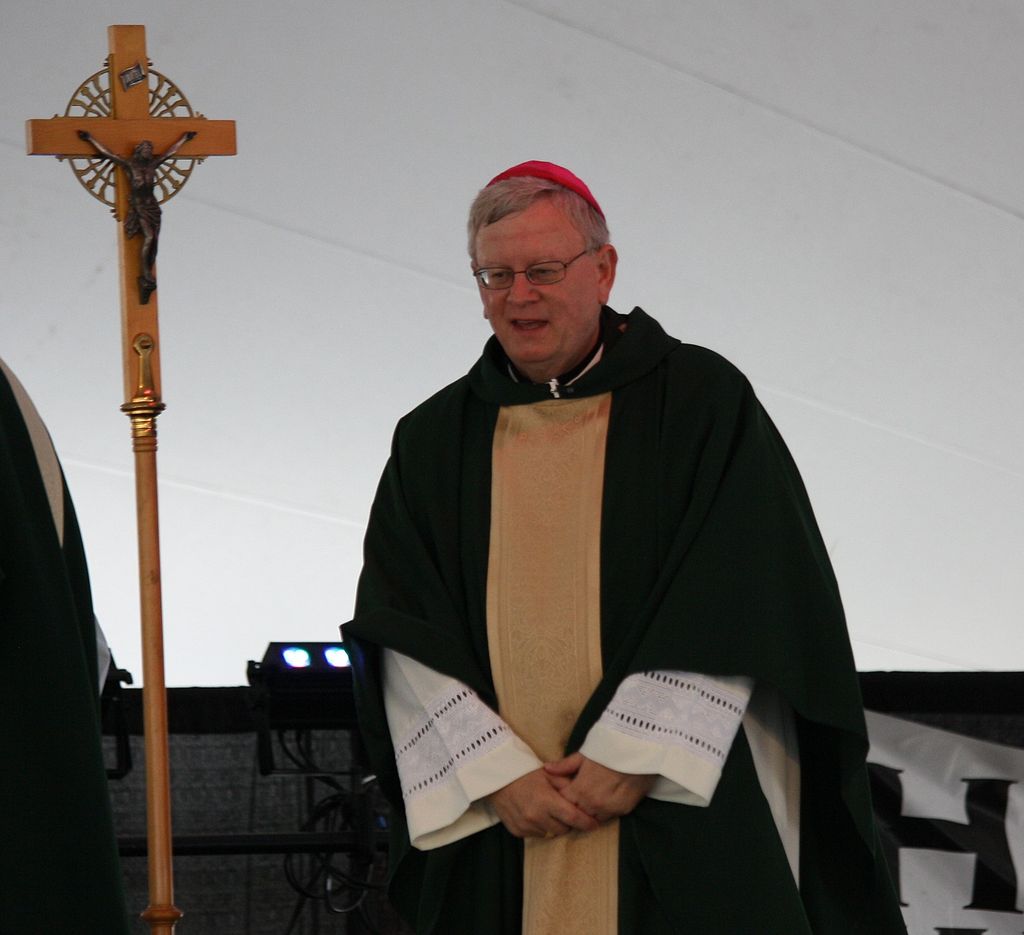
bishop_david_ricken_lifest_2012_sermon

“I do hereby approve these apparitions as worthy of belief by the Christian faithful” (Bishop David Ricken, pictured above)

Many Catholics are familiar with the great supernatural facts of Lourdes and Fatima, but not enough Catholics (especially in the United States) are aware that the Virgin Mary appeared to Adele Brise in 1859 in Champion, Wisconsin with a message that focused on the importance of the Sacraments, catechesis of the young, and the salvation of sinners. To underscore the importance of this apparition, the U.S. Bishops in 2016 designated The Shrine of Our Lady of Good Help, the location of the apparitions, a National Shrine, this following the published approval of the apparition by the Bishop for the Diocese of Green Bay, Rev. David L. Ricken, on December 8, 2010, who declared on that date the following:

“I declare with moral certainty and in accord with the norms of the Church that the events in October of 1859, do exhibit the substance of supernatural character, and I do hereby approve these apparitions as worthy of belief by the Christian faithful.”

I understand that the approval of this apparition of Our Lady of Good Help makes it the only approved Marian apparition in the United States at the Diocesan level , which only serves to underscore its importance.

Bishop Ricken summarized the apparition of the Virgin Mary to Adele Brise very succinctly, stating:

Incessant prayer has gone up in this place based upon the word of a young Belgian immigrant woman, Adele Brise, who in October 1859 said that the Blessed Mother, a Lady clothed in dazzling white, had appeared to her on this site. The Lady was elevated slightly in a bright light and gave words of solace and comfort and a bold and challenging mission for the young immigrant woman. The Lady gave her a two-fold mission of prayer for the conversion of sinners and catechesis. “I am the Queen of Heaven who prays for the conversion of sinners, and I wish you to do the same. You received Holy Communion this morning and that is well. But you must do more. Make a general confession and offer Communion for the conversion of sinners… Gather the children in this wild country and teach them what they should know for salvation… Teach them their catechism, how to sign themselves with the sign of the Cross, and how to approach the sacraments; that is what I wish you to do. Go and fear nothing, I will help you.” Adele Brise began immediately to fulfill the mandate and mission entrusted to her by the Lady and oftentimes at great personal sacrifice went to the homes of the children to instruct them in the largely unsettled and forested area in Wisconsin. Adele was ever obedient to the authorities of the Church and steadfast in the mission entrusted to her by Our Lady, no matter what difficulty she encountered.

Twelve years after the appearance of Mary to Adele Brise there was an extraordinary, supernatural confirmation of the apparition’s authenticity. Specifically, in 1871 “the great fire of Northern Wisconsin”, historically known as the Peshtigo fire, took direct aim at the Shrine of Our Lady of Good Help. Boris and Natasha, who have researched the Peshtigo fire, provide an excellent summary of what then happened:

“The Peshtigo fire burned from southwest to northeast up both sides of the Bay.  It was a wildfire of immense proportions with hurricane force winds and 2,000 degree temperatures.  Nothing in its path survived and it was headed right for Our Lady of Good Help.

Unable to fight it and with no hope of outrunning it, the people headed for the only place they could think of – the church. The compound was now about five acres in size and enclosed by a white picket fence. No one knows how many people eventually crowded in but it was a large number. They brought their livestock with them and there were reports that forest animals were also inside the fence.

With the fire bearing down on them, Sister Adele led them in prayer.  They said the Rosary.  They kneeled in prayer at the altar. They walked around the chapel in a processional with a statue of Mary lifted high and pleaded for salvation. Soon the fire was all around them.  Flames arched over the compound.  People watched nearby farms explode in flames. The outside of the picket fence was charred black.  Before this night was over, the heat, the flames, the smoke, the poisoned air and the flying debris would destroy over one million acres (2400 square miles) of old growth forest, kill 2500 people and incinerate at least a dozen communities. It was the largest and deadliest fire in American history – before or since – but the Chapel of Our Lady of Good Help was spared.

Morning brought a scene of total devastation as far as the eye could see.  It took years for the region to recover and some of the destroyed communities never re-built. In the middle of it was Our Lady of Good Help, a green oasis in a desert of destruction. Everyone and everything inside the fence were alive, uninjured and undamaged.  If the people of the Belgian colony ever had any doubts that the Virgin Mary had appeared to Adele, provided for her and protected her, there were none now.” [See their full article, with photos of the Shrine of Our Lady of Good Help and of Sister Adele Brise at the following link

First Marian apparition site in the US and survivor of the Peshtigo Fire]

CONCLUSION: The apparition of Our Lady of Good Help to Adele Brise in 1859 is of incredible importance to the Catholic Church in the United States and to all Catholics. A main focus of the apparition is the salvation of sinners and the need to teach the faith to the young. The reason for evangelization, the reason for catechesis, is so that people can be saved. If we don’t pass on the faith, the corresponding risk is the loss of salvation. What awesome and daunting responsibilities our Catholic faith has passed on to us. Our Lady of Good Help, pray for us.

Tom Mulcahy (see note below regarding my own visit to the Shrine)


Photo Attribution: The photograph of Bishop David L. Ricken, July 15, 2012, at Wikipedia, and licensed under the Creative Commons Attribution-Share Alike 3.0 Unported license.

Ref. For a more detailed account of the apparitions of Our Lady of Good Help, see Sister Dominica Shallow’s short book, Shrine of Our Lady of Good Help: a History (see shrineofourladyofgoodhelp.com)

Postscript note: After wending our way through (and visiting) Mackinaw City and then Marquette in the Upper Peninsula of Michigan, we (my wife, daughter Bridget and I) drove southwestward into Wisconsin to the Shrine of Our Lady of Good Help in Champion (northeast of Green Bay). We were at the Shrine on July 31, 2014 and we went to Mass shortly thereafter. Below the Church is the crypt where the apparition took place. Little did I know it was the beginning of the Green Bay Packers’ training camp, which is a huge event! All the hotels we drove to after our Shrine visit were booked, so we had to drive all the way to Sturgeon Bay to find a hotel room, and all that hotel had available was the Bridal Suite! We were so tired, so we took the room and paid more than I wanted to! But it was worth it to visit the Shrine, and seeing Sturgeon Bay was beautiful.

To SHARE on SOCIAL MEDIA: click on “Leave a comment” or “Comments” below (and this will bring up social media icons if they are not already present).

To LEAVE A COMMENT: click on “Leave a comment” or “Comments” below, and then scroll down to the box which says, “Leave Your Own Comment Here,” which is at the end of any comments already made. If the comment section is already present, merely scroll to the end of any comments already made.

All rights reserved.

Any ads following this note are by WordPress and not CatholicStrength.
 

THE TEN BEST REASONS NOT TO GO TO CONFESSION

 walking-98617_1280

1.You wish that Confession wasn’t available so close by at the church just up the street, as you would rather be required to take an exotic pilgrimage to a dangerous foreign land in order to have your sins forgiven.

2. You believe that people should be charged to go to Confession, and that the current price of zero dollars to go to Confession is not fair to the Church.

3. You believe that it is unjust and too generous on God’s part to let people go to Confession as many times as they want, and you believe that Confession should be limited to once a decade.

4. You believe the verse where Jesus gave his priests power to forgive sins, John 20:23, is a medieval forgery of a wayward bishop.

5. You believe that Confession should take longer than just a few minutes (your suggestion is two hours).

6. You believe that Confession should not be available at every church in the Diocese because then it becomes common and unexceptional.

7. You don’t believe we should confess our sins to another person, and your proof text for this belief is James 5:16 which says, “Confess your sins to one another.”

8. You believe the penances given out by priests are extraordinarily light, and you would much prefer manly mortifications of a somewhat impressive nature.

9. You believe the confidential seal of the Confessional makes your sins too secretive, and you would prefer that your Confession be posted verbatim on the internet as a prelude to the novel you intend to write, From Sinner to Saint.

10. You would prefer not to have all your sins forgiven and your slate wiped clean.

Tom


Note: The basis for this note comes from Father Faber, who suggests with irony that perhaps people would be more interested in Confession if the Pope made the sacrament more difficult to obtain as in having to travel to a foreign land after first completing extraordinary penances. It has been reported that Pope Francis goes to Confession approximately every two weeks.


To SHARE on SOCIAL MEDIA: click on “Leave a comment” or “Comments” below (and this will bring up social media icons if they are not already present).

To LEAVE A COMMENT: click on “Leave a comment” or “Comments” below, and then scroll down to the box which says, “Leave Your Own Comment Here,” which is at the end of any comments already made. If the comment section is already present, merely scroll to the end of any comments already made.

All rights reserved.

Any ads following this note are by WordPress and not CatholicStrength.

THE ROSARY IS AN INSTRUMENT OF PRAYER AND POWER

 File:Czestochowska.jpg

             “The Rosary is a prayer that always accompanies me” (Pope Francis)

When the Blessed Virgin Mary appeared to Mother Teresa in an apparition, as testified to by Saint Mother Teresa herself, she told Mother Teresa to teach families to say the rosary (Come Be My Light, Doubleday, p. 99). When Mary appeared in Lourdes and then at Fatima, she came wearing a rosary. Why the importance of the rosary? Because without prayer it is very difficult to overcome the world. The Catechism of the Catholic Church quotes Saint Alphonsus de Ligouri: “Those who pray are certainly  saved; those who do not pray are certainly damned” (no. 2744). The “world” wants to drown out our desire for God: to make God irrelevant. As one person once said, “who needs God when you have a Cadillac?” The world places a high priority on things rather than God. Go to a mall: where is God to be found?

To remedy this downward pull of worldliness, we need prayer – especially prayer that is concentrated on the life of Christ, from his birth to his resurrection. The rosary accomplishes this need in a powerful way because it joins our sometimes very weak prayers to those of the Blessed Virgin whom Jesus loves with the most indescribable of loves. Mary presents our prayers to the Lord in a way that makes those prayers very pleasing to Him.

The great spiritual writer of the 19th century, F.W. Faber, whom The Catholic Encyclopedia calls “a master” of the mystical life, says in one of his books that “I cannot conceive a man as being spiritual who does not habitually say the rosary” (Growth in Holiness), and Faber was a convert. He justifies this strong statement by saying that if we are going to persevere in the faith we need to perpetually keep Mary and Jesus before us: and that is what the rosary does. He mentions that the rosary combines vocal and mental prayer, presumably meaning that it strengthens our interior lives and aids in contemplating the presence of God. It is Mary’ prayer: it is a prayer, as Faber states, that has been strongly sanctioned by the Church and the saints.

There is a “strange seduction” in the world that draws our hearts away from the one true good that we all need: God. The rosary is the antidote to this deception.  As Deacon Marc once said, the rosary repels evil and promotes virtue. The Blessed Virgin always has our best interests in mind, to wit: prayer and knowledge of the Lord Jesus. We should pray the rosary with great love and confidence: it is a devotion very dear to our Lord’s heart.

My friend: say the rosary as often as possible. Devotion to Mary is the “safety of souls.”

“All for Jesus,”

Tom (see note below regarding the miraculous image used in this post)

P.S. In notes published after his death, the following was said by Father Faber: “In consequence of all these blessings [from saying the Rosary], the devil makes the Rosary a special subject of temptations, weariness, contempt, and the like. Persevere in it, and it will itself be the chain of your own final perseverance.” He also calls the rosary “an instrument of power.”  Notes on Doctrinal and Spiritual Subjects, p. 308

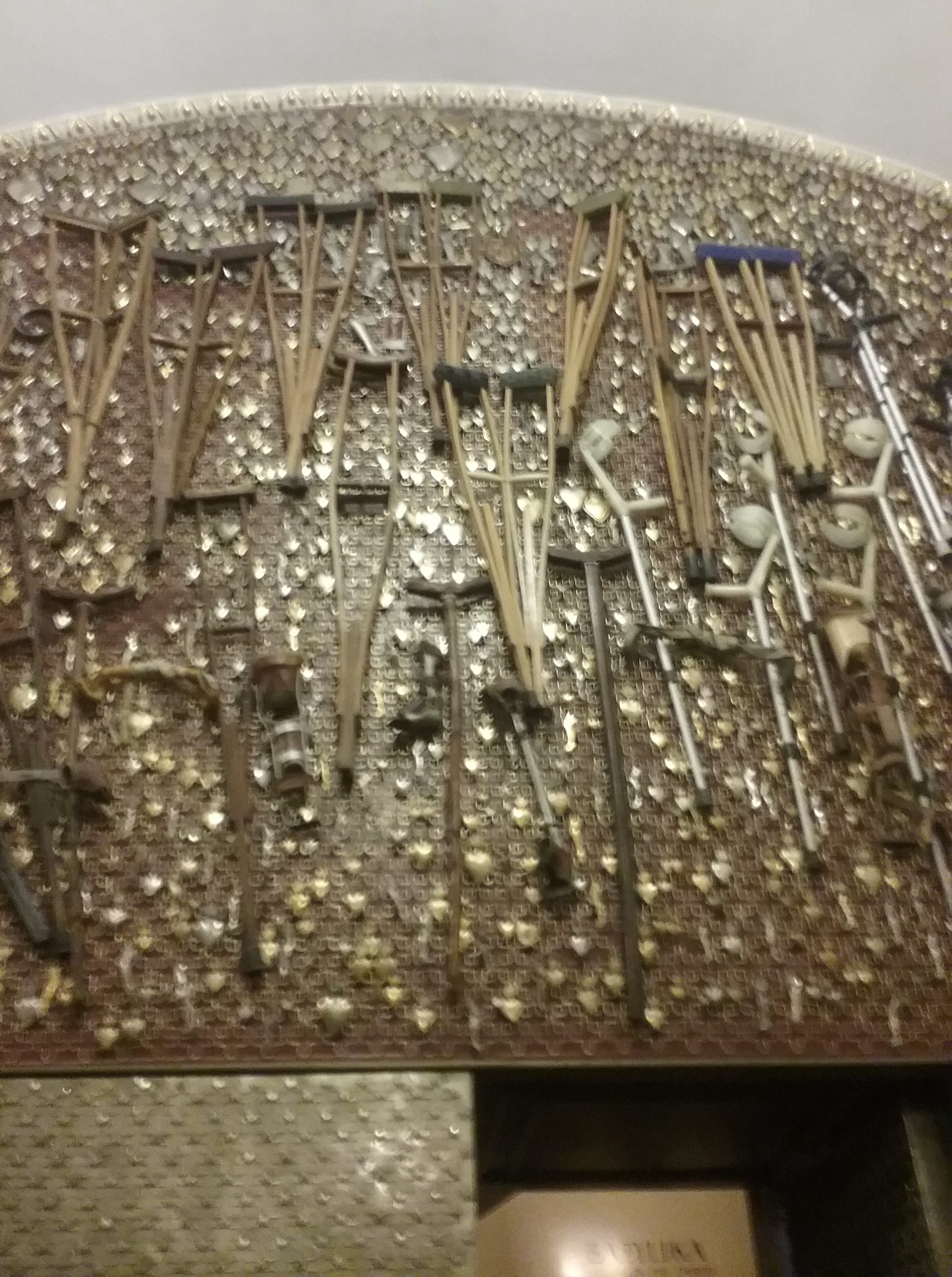
Image: Black Madonna of Częstochowa (Public Domain, U.S.A.). Pope Francis prayed in front of this famous icon during his recent World Youth Day visit to Poland in July of 2016. According to Joan Carroll Cruz, “the miracles attribited to Our Lady of Czestochowa are numerable and spectacular.” When my daughter Bridget Mulcahy visited the image in question at the Jasna Gora Monastery in Poland (during her WYD pilgrimage) she took the following photograph of the “wall of crutches” there which speaks to the miraculous, healing intercession of Our Lady of Czesochowa. Thanks Bridget!

20160801_141730-1

To SHARE on SOCIAL MEDIA: click on “Leave a comment” or “Comments” below (and this will bring up social media icons if they are not already present).

To LEAVE A COMMENT: click on “Leave a comment” or “Comments” below, and then scroll down to the box which says, “Leave Your Own Comment Here,” which is at the end of any comments already made. If the comment section is already present, merely scroll to the end of any comments already made.

All rights reserved.

Any ads following this note are by WordPress and not CatholicStrength.

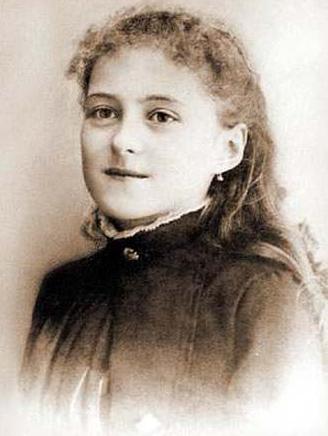
SAINT THERESE AND HER GREAT DESIRE FOR GOD

teresa13anni

“What prepares the soul to be united with God  is the desire for God”     (St. John of the Cross)

From time to time it is helpful to pause and consider whether we are sincerely seeking after God. It is a valuable spiritual exercise simply to gauge your desire for God. A question to consider is whether there is anything in your life you value more than God? It is critical that you love God more than self, and all created things in God.

A great desire for God, the Summum Bonum (Greatest Good), is key to our spiritual progress. The saints saw with true wisdom that the great good in life is the “Ever-Blessed God” who is Infinite Goodness (what can compare to Infinite Goodness: all the other goods in the world, wrapped together as one big bundle of good, are less than nothing compared to He who IS); and seeing this truth, and moved by it, the saints went after God with an unremitting intensity, knowing that union with this Infinitely Good God was the only true and final end of life.

We affectionately call Saint Therese “The Little Flower”.  And all the saints were aware of their extreme littleness compared to God: humility is the pathway to God. But it would be a mistake not to see in Saint Therese the heart of a lion who went after God with a ferocious appetite. In fact, Saint Therese in her autobiography compares herself to “a weak little bird” who has “the eyes and heart of an eagle” (Manuscript B). An ardent desire for God – above all created goods – is characteristic of the saints.

The sentimental image of Therese as a charming French girl who gave her life to God by becoming a nun and offered up little sacrifices on God’s behalf is true – yet her life runs even deeper than that. Her life is the story of a girl and then a young woman who was radically in love with God and who wished to offer herself to God in an exchange of love that took her completely beyond herself and into God (nuptial union). Therese’s “little way” of “making love the mainspring of every action” requires the profound, constant and universal mortification of self-love and self-interest. It is a little way but with huge implications for growth in holiness. The sweet, little way is a death – a death to self. Under-girding Therese’s little way, therefore, is an ardent love of God expressed by a sacrificial life.

Of Therese, Father Christopher O’Donnell says: “When we get beneath the language and culture of Therese, we find that for all her charm, she was almost ruthless in her pursuit of holiness in her complete sacrifice to God’s merciful love.” Here are a few examples from Saint Therese’s autobiography which demonstrate her great desire to offer herself to God:

 –  she reflects in her autobiography that around age 6 “I loved God intensely,  and very often I  offered Him my heart in words taught me by Mummy” (Image, p.32);

 –  At age 13 she writes these words of Saint John of the Cross in “fine lettering” : “To suffer and to be despised” (Gaucher, p.11);

 – At age 14 “while contemplating an image of Christ on the cross, she resolved to ‘remain in spirit at the foot of the cross’ in order to gather the blood that drips from his wounds and give it to souls” (Gaucher, p. 13); and

 – While a nun at Carmel (around age 22) she makes a profound offering of her life to God as a “victim of love” in a written text available online entitled, “An Act of Oblation to Merciful Love.”

What is the lesson here? It is this: you gotta want God. You gotta go after God with great desire. Oh Mother Mary, please place in our hearts a portion of your own desire for God.

Practical recommendation: make a novena to Saint Therese for either a greater desire for God or for greater confidence in God.

“You will seek me and find me when you seek me with all your heart,” said the Lord (Jeremiah 29:13). 


Tom Mulcahy, M.A.

ReferencesIn the opening pages of The Ascent of Mount Carmel Saint John of the Cross constantly reminds the reader of the nothingness of everything else compared to God, and I am using his language and that of Father Faber in this note (paragraph two). I am also relying on Bishop Guy Gaucher’s book, John and Therese: Flames of Love. Photograph of Saint Therese, Public Domain, U.S.A. Saint Therese’s Feast Day is October 1.

To SHARE on SOCIAL MEDIA: click on “Leave a comment” or “Comments” below (and this will bring up social media icons if they are not already present).

To LEAVE A COMMENT: click on “Leave a comment” or “Comments” below, and then scroll down to the box which says, “Leave Your Own Comment Here,” which is at the end of any comments already made. If the comment section is already present, merely scroll to the end of any comments already made.

All rights reserved.

Any ads following this note are by WordPress and not CatholicStrength.


IMPORTANT PROPHETIC WORDS OF THREE MODERN SAINTS FROM POLAND

“Dear friends, may no adversity paralyze you. Be afraid neither of the world, nor of the future, nor of your weakness. The Lord has allowed you to live in this moment of history so that, by your faith, his name will continue to resound throughout the world.” (Pope Benedict XVI)

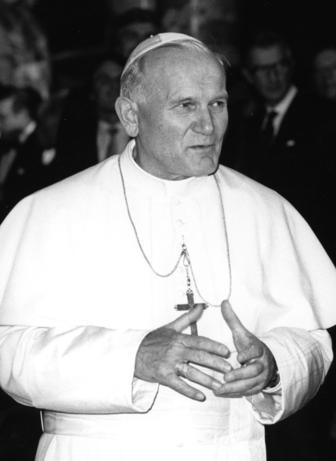
Set forth below are three important prophecies by three modern saints who were all born in Poland. The first prophecy is by Saint Pope John Paul II, and was made during a visit to the United States in 1976 when he was still a Cardinal. The second prophecy is by Saint Maximilian Kolbe, the Franciscan priest who died in a starvation bunker in Auschwitz during World War II, having volunteered to take the place of a married man. The third prophecy is from Saint Faustina Kowalska, the nun whose “Diary” has promoted greater devotion to God’s Divine Mercy. She died in 1938 and was canonized in 2000.


FIRST PROPHECY (By Saint John Paul II)

Vom 15. bis 19. November 1980 besuchte Seine Heiligkeit Papst Johannes Paul II. die Bundesrepublik Deutschland. Auf Einladung von Bundespräsident Karl Carstens hat der Papst seinen pastoralen Besuch mit einem offiziellen in Bonn verbunden. Am 15. November gab der Bundespräsident einen Empfang zu Ehren Seiner Heiligkeit auf Schloß Augustusburg in Brühl bei Bonn. Dort führte Papst Johannes Paul II. auch ein Gespräch mit Bundeskanzler Helmut Schmidt. Gleichzeitig traf Bundesaußenminister Hans-Dietrich Genscher mit Kardinal-Staatssekretär Casaroli zusammen. Im Anschluß an den offiziellen Teil begab sich der Papst auf den Bonner Münsterplatz, um dort eine Ansprache zu halten. Ferner bestand der pastorale Teil aus Besuchen in Köln, Osnabrück, Mainz, Fulda, Altötting und München. In allen diesen Städten hielt Papst Johannes Paul II. die Heilige Messe. Eigentlicher Anlaß seines Aufenthaltes in der Bundesrepublik war der 700. Todestag von Albertus Magnus (1193-1280), dessen Grab der Papst in Köln besuchte. Bundespräsident Karl Carstens und Papst Johannes Paul II. auf Schloß Augustusburg in Brühl.

“We are now standing in the face of the greatest historical confrontation humanity has gone through. I do not think that wide circles of American society or wide circles of the Christian community realize this fully. We are now facing the final confrontation between the Church and the anti-Church, of the Gospel versus the anti-Gospel.

“We must be prepared to undergo great trials in the not-too-distant future; trials that will require us to be ready to give up even our lives, and a total gift of self to Christ and for Christ. Through your prayers and mine, it is possible to alleviate this tribulation, but it is no longer possible to avert it. . . .How many times has the renewal of the Church been brought about in blood! It will not be different this time.” 


SECOND PROPHECY (by Saint Maximilian Kolbe)

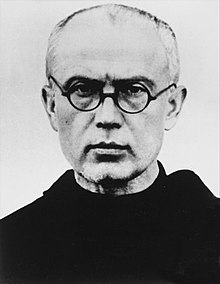
Fr.Maximilian Kolbe 1939.jpg

“Modern times are dominated by Satan and will be more so in the future. The conflict with hell cannot be engaged by men, even the most clever. The lmmaculata alone has from God the promise of victory over Satan. However, assumed into heaven, the Mother of God now requires our cooperation. She seeks souls who will consecrate themselves entirely to her, who will become in her hands effective instruments for the defeat of Satan and the spreading of God’s kingdom upon earth.”


THIRD PROPHECY (by Saint Faustina Kowalska)

200px-Faustina.jpg

“Jesus looked at me and said: ‘Souls perish in spite of my bitter Passion. I am giving them the last hope of salvation: that is the Feast of my Mercy. If they do not adore my mercy, they will perish for all eternity. Secretary of my mercy, write, tell souls about this great mercy of mine, because the awful day, the day of my justice, is near.’ “ (Diary, 965)

 
Comment:  We should be increasingly aware that there are strong forces in our society under the domain of Satan. One sign of this is the massive apostasy we are witnessing. In Luke’s Gospel (Chapter 19) we see that Jesus wept over Jerusalem and prophesied its coming destruction, which occurred in A.D. 70. Jerusalem was not as blessed as nations who have received the Gospel. The greatest immediate threat in all of this is our children and young adults, who are losing their precious faith in massive numbers. Chastisement comes quickly from the dissolution of morality consequent to the loss of faith: suddenly you find yourself living in a society sinking from the weight of its own immorality (this situation is described by Saint Paul at Romans 1: 24-32 ). The wisdom of the three saints mentioned in this note is unanimous that consecration to Mary is of immense value in remaining faithful to our baptismal consecration to Jesus. Pope Francis had his papacy consecrated to Our Lady of Fatima by Cardinal Jose Polycarp of Lisbon, Portugal; the apparitions of the Blessed Virgin Mary at Fatima have a profound prophetic dimension for our times and the trials the Church will have to endure. Perhaps this is a good time to review the great historical and “supernatural facts” of Fatima.


Tom Mulcahy, M.A.


Photo Attribution: The photograph of Pope John Paul II by Lothar Schaack, Nov. 15, 1980, under the Creative Commons Attribution-Share Alike 3.0 Germany license. Attribution: Bundesarchiv, B 145 Bild-F059404-0019 / Schaack, Lothar / CC-BY-SA.  The other two photos, Public Domain, U.S.A.

Sources: For the prophecy by Saint John Paul II, a June 1, 2014 article by Father C. John McCloskey entitled The Final Confrontation. The prophecy of Saint Maximilian Kolbe can be found at the EWTN website.  Church teaching: see CCC 668-679. Also, Ralph Martin has written a pamphlet, also called The FinalConfrontation, which elaborates on the subject matter of this note (available at renewalministries.net). Father Garrigou-LaGrange once wrote about “great supernatural facts” that worldly people tend to dismiss.

To SHARE on SOCIAL MEDIA: click on “Leave a comment” or “Comments” below (and this will bring up social media icons if they are not already present).

To LEAVE A COMMENT: click on “Leave a comment” or “Comments” below, and then scroll down to the box which says, “Leave Your Own Comment Here,” which is at the end of any comments already made. If the comment section is already present, merely scroll to the end of any comments already made.

All rights reserved.

Any ads following this note are by WordPress and not CatholicStrength.
GENESIS CONFIRMED: THE UNIVERSE HAD A BEGINNING!

 explosion-562853_1280-1

   “In the beginning God created the heavens and the earth” (Genesis 1:1)

Not too long ago most astronomers and physicists held to the “steady-state” theory of the universe. This theory postulates that the universe has no beginning or end because it maintains a “constant average density” despite whatever change or expansion occurs.

But the scientific community began to chip away at the steady-state theory. “The death knell for the theory sounded when radio astronomers Arno Penzias and Robert Wilson discovered [in the 1960s] the cosmic microwave background, the leftover radiation from the Big Bang. The steady-staters had no reasonable way to explain this radiation, and their theory slowly faded away as so many of its predecessors had” (pbs.org).

The evidence now generally accepted in the scientific community is that the universe did, in fact, have a beginning, exploding into being billions of years ago in what is referred to as the “Big-Bang” theory. The astronomer Robert Jastrow explains to us that “three lines of evidence – the motions of galaxies, the laws of thermodynamics, and the life story of the stars – pointed to one conclusion: all indicated that the universe had a beginning” (God and the Astronomers, p.111).

“Arno Penzias, who won the Nobel Prize for his discovery of the cosmic background radiation [a ghostly whisper from the original moment of creation] that corroborated the Big-Bang, said, ‘The best data we have are exactly what I would have predicted had I nothing to go on but the five books of Moses, the Psalms, and the Bible as a whole.’”

Astronomer Robert Jastrow concludes: “Now we see how the astronomical evidence [of the Big-Bang origin of the universe] leads to a biblical view of the origin of the world. The details differ, but the essential elements in the astronomical and biblical accounts of genesis are the same: the chain of events leading to man commence suddenly and sharply at a definite moment in time, in a flash of light and energy” (A Scientist Caught, p.14). “Astronomers now find that they have painted themselves into a corner because they have proven, by their own methods, that the world began abruptly in an act of creation…as a product of forces they cannot hope to discover” (God and the Astronomers, p.15).

Tom Mulcahy, M.A.

Sources: My primary sources for this note, and for the quotes set forth above, are Norman Geisler’s article, “Big Bang Theory,” in the Baker Encyclopedia of Christian Apologetics, and chapter eleven of What’s So Great About Christianity by D. D’Souza. I understand that astronomer Robert  Jastrow is an agnostic.

All rights reserved.

To SHARE on SOCIAL MEDIA: click on “Leave a comment” or “Comments” below (and this will bring up social media icons if they are not already present).

To LEAVE A COMMENT: click on “Leave a comment” or “Comments” below, and then scroll down to the box which says, “Leave Your Own Comment Here,” which is at the end of any comments already made. If the comment section is already present, merely scroll to the end of any comments already made.

Any ads following this note are by WordPress and not CatholicStrength.
 

RECONNECTING WITH NATURE IS HEALTHY

 early-morning-299735_1280

I am convinced that many people would experience improved mental well-being if they increased their contact and communion with the natural beauty of God’s creation.

God, who is, as the scholastic theologians say, in His creation by His POWER, PRESENCE and ESSENCE is most assuredly present in the transformative beauty of the natural world.

Commenting on the healing power of nature, Saint Pope John Paul II made the following observation:

“The aesthetic value of creation cannot be overlooked. Our very contact with nature has a deep restorative power; contemplation of its magnificence imparts peace and serenity. The Bible speaks again and again of the goodness and beauty of creation, which is called to glorify God.”  (John Paul II, 1990 World Day of Peace Message, no. 14.)

What is being urged upon us here is an improved communion with nature. Who hasn’t felt a special feeling of tranquility walking along the ocean shore, or gazing upon a majestic mountain? And yet how often do we find ourselves cut-off and deprived of the beauty of nature for many reasons. Pope Francis made this observation in his recent encyclical on the environment, saying, “In some places, rural and urban alike, the privatization of certain spaces has restricted people’s access to places of particular beauty” (no. 45).

Father Irala, in his popular book, Achieving Peace of Heart, tells us that “we must live beauty.” He maintains that we need to be “reeducated” to “receive the external world.” This means, in one context, that if we are looking at a beautiful river we should spend some time peering into it –contemplating it – so that we may receive the vital influx of its beauty. It’s as if he was saying, “take some time to stop and smell the roses.” 

Father Irala tells an interesting story about a businessman who was on the verge of a nervous breakdown. It was apparently felt that the overworked businessman needed some time away from his hectic office to unwind and rejuvenate, but since this remedy wasn’t feasible his physician requested that “an aquarium of tropical fish built in his private office and that he spend an hour every day peacefully watching the graceful convolutions of those little creatures.” It is related that “before the year was out he sent a donation to [his physician’s] hospital as a token of gratitude for his cure” (p.41).

Perhaps many of us need to be reoriented to the beauty of the natural world and its deep healing power. If we are alienated from nature, we are in some sense alienated from God. Near the end of Laudato Si, Pope Francis wrote these poetic words:

“All-powerful God, you are present in the whole universe and in the smallest of your creatures. You embrace with your tenderness all that exists. Pour out upon us the power of your love, that we may protect life and beauty” (no. 246).

Let us not only protect life and beauty; let us immerse ourselves in its “restorative power.”

Tom Mulcahy, M.A.

P.S. As a practical example, many of us spend time walking along a nature trail. To reeducate your mind to the beauty of nature, spend some time actually peering into the moving stream along the trail, or looking receptively at a strange but beautiful flower you pass by. Father Irala says that we should let the beauty “enter deep into us.” We are not talking about pantheism, but rather about God manifested through the beauty of his external creation. This is, in essence, a form of religious contemplation.

To SHARE on SOCIAL MEDIA: click on “Leave a comment” or “Comments” below (and this will bring up social media icons if they are not already present).

To LEAVE A COMMENT: click on “Leave a comment” or “Comments” below, and then scroll down to the box which says, “Leave Your Own Comment Here,” which is at the end of any comments already made. If the comment section is already present, merely scroll to the end of any comments already made.

All rights reserved.

Any ads following this note are by WordPress and not CatholicStrength.