Author: tomlirish

JESUS STRONGLY AND CLEARLY EMPHASIZES THE INDISSOLUBILITY OF MARRIAGE

To LEAVE A COMMENT: click on “Leave a comment” or “Comments” below, and then scroll down to the box which says, “Leave Your Own Comment Here,” which is at the end of any comments already made. If the comment section is already present, merely scroll to the end of any comments already made.

All rights reserved.

Any ads following this note are by WordPress and not CatholicStrength.

 

THE DARK CLOUDS OF EUCHARISTIC AMBIGUITY

 storm-1048942_1920

“The Eucharist is too great a gift to tolerate ambiguity and depreciation.” (Saint Pope John Paul II)

Saint Pope John Paul II was clearly concerned about the dark clouds of Eucharistic ambiguity hovering over the Church. He therefore wrote an encyclical on the Eucharist where he specifically stated the following:

“It is my hope that the present Encyclical Letter will effectively help to banish the dark clouds of unacceptable doctrine and practice, so that the Eucharist will continue to shine forth in all its radiant mystery (Ecclesia de Eucharistia, no.10).”

This great Pope and Saint was deeply concerned about the “shadows” and “confusion” that obscured the sacramental nature of the Eucharist and even encouraged practices contrary to the well established disciplines of the Church. The Pope, expressing his own personal grief over these developments, said in the encyclical:

“Unfortunately…there are also shadows. In some places the practice of Eucharistic adoration has been almost completely abandoned. In various parts of the Church abuses have occurred, leading to confusion with regard to sound faith and Catholic doctrine concerning this wonderful sacrament. At times one encounters an extremely reductive understanding of the Eucharistic mystery. Stripped of its sacrificial meaning, it is celebrated as if it were simply a fraternal banquet. Furthermore, the necessity of the ministerial priesthood, grounded in apostolic succession, is at times obscured and the sacramental nature of the Eucharist is reduced to its mere effectiveness as a form of proclamation. This has led here and there to ecumenical initiatives which, albeit well-intentioned, indulge in Eucharistic practices contrary to the discipline by which the Church expresses her faith. How can we not express profound grief at all this? The Eucharist is too great a gift to tolerate ambiguity and depreciation (Ecclesia de Eucharistia, no. 10).”

In his encyclical on the Eucharist Pope John Paul II reaffirmed the teaching of the Council of Trent that one must be in a state of grace in order to properly receive Holy Communion. The Pope states:

“Along these same lines, the Catechism of the Catholic Church rightly stipulates that ‘anyone conscious of a grave sin must receive the sacrament of Reconciliation before coming to communion’. I therefore desire to reaffirm that in the Church there remains in force, now and in the future, the rule by which the Council of Trent gave concrete expression to the Apostle Paul’s stern warning when it affirmed that, in order to receive the Eucharist in a worthy manner, “one must first confess one’s sins, when one is aware of mortal sin (Ecclesia de Eucharistia, no.36).”

Furthermore, the Pope stresses in his encyclical the impossibility of sharing Holy Communion with other ecclesial communities.

“Precisely because the Church’s unity, which the Eucharist brings about through the Lord’s sacrifice and by communion in his body and blood, absolutely requires full communion in the bonds of the profession of faith, the sacraments and ecclesiastical governance, it is not possible to celebrate together the same Eucharistic liturgy until those bonds are fully re-established. Any such concelebration would not be a valid means, and might well prove instead to be an obstacle, to the attainment of full communion, by weakening the sense of how far we remain from this goal and by introducing or exacerbating ambiguities with regard to one or another truth of the faith. The path towards full unity can only be undertaken in truth. In this area, the prohibitions of Church law leave no room for uncertainty,92 in fidelity to the moral norm laid down by the Second Vatican Council (Ecclesia de Eucharistia, no.44).”

Finally, in his Apostolic Exhortation, Reconciliation and Penance (a document highly relevant to the proper reception of Holy Communion), Pope John Paul II warned the Church against trying to create a theological category out of psychological considerations and mitigating circumstances, stating:

“But from a consideration of the psychological sphere one cannot proceed to the construction of a theological category, which is what the ‘fundamental option’ precisely is, understanding it in such a way that it objectively changes or casts doubt upon the traditional concept of mortal sin.

While every sincere and prudent attempt to clarify the psychological and theological mystery of sin is to be valued, the Church nevertheless has a duty to remind all scholars in this field of the need to be faithful to the word of God that teaches us also about sin. She likewise has to remind them of the risk of contributing to a further weakening of the sense of sin in the modern world (no.17).”

In Familiaris Consortio ( no. 84) Pope John Paul II wrote that divorced and civilly remarried Catholics positively could not receive Holy Communion, for two very profound reasons:

“However, the church reaffirms her practice, which is based upon sacred scripture, of not admitting to eucharistic communion divorced persons who have remarried. They are unable to be admitted thereto from the fact that their state and condition of life objectively contradict that union of love between Christ and the church which is signified and effected by the eucharist. Besides this there is another special pastoral reason: If these people were admitted to the eucharist the faithful would be led into error and confusion regarding the church’s teaching about the indissolubility of marriage.”

The Bishops of the Synods on the Family convened by Pope Francis strongly reaffirmed the decisive authority of Familiaris Consortio in their final report to the Holy Father, making it the document of definite reference. The attempt by some Bishops (in the two Synods) to build a consensus to allow an exception for divorced and civilly remarried Catholics to receive Holy Communion did not occur. Familiaris Consortio is the definite law of the Church and stands supreme over any Eucharistic ambiguity some in the Church have tried to create, much to the confusion of the faithful.

Chapter Eight of Pope Francis’ Amoris Laetitia references the authority of Familiaris Consortio and nowhere claims to change or contradict it. As Cardinal Gerhard Mueller, Pope Francis’ prefect of the Congregation for the Doctrine of the Faith, said: “If Amoris Laetitia intended to rescind such a deeply rooted and such a weighty discipline, it would have expressed itself in a clear manner and it would have given the reasons for it. However, such a statement with such a meaning is not to be found in [the document]. Nowhere does the pope put into question the arguments of his predecessors.” Moreover, any claimed ambiguity in Amoris Laetitia must be read against the clear and decisive prohibition contained in No. 84 of Familiaris Consortio, which strictly prohibits Holy Communion for divorced persons who have remarried without an annulment. As Saint John Paul II reminds us, “The Eucharist is too great a gift to tolerate ambiguity and depreciation.”

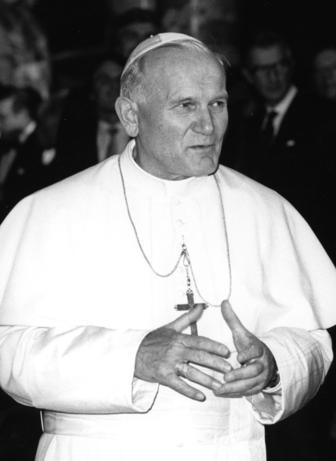
Vom 15. bis 19. November 1980 besuchte Seine Heiligkeit Papst Johannes Paul II. die Bundesrepublik Deutschland. Auf Einladung von Bundespräsident Karl Carstens hat der Papst seinen pastoralen Besuch mit einem offiziellen in Bonn verbunden. Am 15. November gab der Bundespräsident einen Empfang zu Ehren Seiner Heiligkeit auf Schloß Augustusburg in Brühl bei Bonn. Dort führte Papst Johannes Paul II. auch ein Gespräch mit Bundeskanzler Helmut Schmidt. Gleichzeitig traf Bundesaußenminister Hans-Dietrich Genscher mit Kardinal-Staatssekretär Casaroli zusammen. Im Anschluß an den offiziellen Teil begab sich der Papst auf den Bonner Münsterplatz, um dort eine Ansprache zu halten. Ferner bestand der pastorale Teil aus Besuchen in Köln, Osnabrück, Mainz, Fulda, Altötting und München. In allen diesen Städten hielt Papst Johannes Paul II. die Heilige Messe. Eigentlicher Anlaß seines Aufenthaltes in der Bundesrepublik war der 700. Todestag von Albertus Magnus (1193-1280), dessen Grab der Papst in Köln besuchte. Bundespräsident Karl Carstens und Papst Johannes Paul II. auf Schloß Augustusburg in Brühl.

Tom Mulcahy, M.A.


Photo Attribution: The photograph of Pope John Paul II by Lothar Schaack, Nov. 15, 1980, under the Creative Commons Attribution-Share Alike 3.0 Germanylicense.  Attribution: Bundesarchiv, B 145 Bild-F059404-0019 / Schaack, Lothar / CC-BY-SA (at Wikipedia article on Pope John Paul II, incorporated here by reference).

P.S. Pope John Paul II also penned the following important words pertinent to the subject matter of this note:

“In this context, appropriate allowance is made both for God’s mercy towards the sinner who converts and for the understanding of human weakness. Such understanding never means compromising and falsifying the standard of good and evil in order to adapt it to particular circumstances. It is quite human for the sinner to acknowledge his weakness and to ask mercy for his failings; what is unacceptable is the attitude of one who makes his own weakness the criterion of the truth about the good, so that he can feel self-justified, without even the need to have recourse to God and his mercy. An attitude of this sort corrupts the morality of society as a whole, since it encourages doubt about the objectivity of the moral law in general and a rejection of the absoluteness of moral prohibitions regarding specific human acts, and it ends up by confusing all judgments about values.” (Veritatis Splendor, 104).

Ref. I am grateful to Fr Raymond J de Souza for pointing out the importance of Reconciliation and Penance, no. 17, with respect to the issues in question.

To SHARE on SOCIAL MEDIA: click on “Leave a comment” or “Comments” below (and this will bring up social media icons if they are not already present).

To LEAVE A COMMENT: click on “Leave a comment” or “Comments” below, and then scroll down to the box which says, “Leave Your Own Comment Here,” which is at the end of any comments already made. If the comment section is already present, merely scroll to the end of any comments already made.

All rights reserved.

Any ads following this note are by WordPress and not CatholicStrength.


Seven Common Characteristics of the Saints

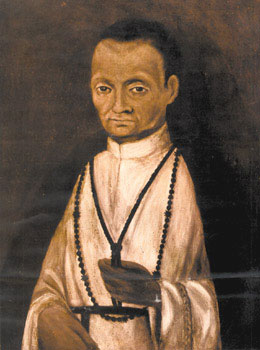
san_martin_de_porres_huaycan

(Saint Martin de Porres)

There are many characteristics that the saints have in common, and here are seven that I have noticed, relying particularly on the great Father Faber:

1. THEY LIVED FOR THE GLORY OF GODComment: The saints understood in an intense and radical manner that God is the Supreme Good of our lives, and so they patterned their lives to do all that they could for the Glory of God. In short, the saints realized that God is our true end and that nothing compares to the inestimable treasure we have in God.

THE WORLD’S SHORTEST INDULGENCED PRAYER FOR THE SOULS IN PURGATORY

 purgatory

(Christian souls arrive in Purgatory singing and escorted by an angel, Canto II, Dante. Drawing by Gustave Dore)

“The faithful who apply indulgences as suffrages for the dead are practicing charity in a superior way and with their thoughts on the things of Heaven are dealing more virtuously with the things of earth.” (Apostolic Constitution on Indulgences)

My mission:  to come up with a short but powerful devotion to the Holy Souls in Purgatory who are counting on our prayers so that they may advance to the one thing their hearts desire and yearn for: union with God.

Plan:  Find the shortest indulgenced prayer possible that can be offered up all day long for the Holy Souls with virtually no effort.

Result:  Consulted The Handbook of Indulgences and discovered on page 82, #55, that “a partial indulgence is granted the Christian faithful who devoutly sign themselves with the cross while saying the customary formula: “In the name of the Father, and of the Son, and of the Holy Spirit. Amen.”

Now, an indulgenced prayer is normally made for your own benefit, but can be applied as a suffrage to the poor souls in Purgatory, thus reducing their sufferings in Purgatory and advancing them nearer to the one true goal of life: to be with God in Heaven. Those souls are counting on our prayers!

WONDERFUL EFFECTS OF THIS DEVOTION

(I am relying on Father Faber, who makes the following points in various contexts in All for Jesus; the whole inspiration and basic content for this note comes from him.)

1. You begin to make the Sign of the Cross with awesome reverence knowing you are helping the poor souls;

2. In practicing this devotion you grow closer to the Trinity as you say their names with tenderness and love; and you remind yourself, in signing yourself with the cross, that the cross is the true wisdom of God, i.e., love entails sacrifice;

3. You give great glory to God because you assist Him in the ultimate goal of His love: bringing souls to Heaven to praise Him;

4. You practice the theological virtues of Faith, Hope and Love because you practice faith in the supernatural value of this devotion as revealed by the Church, you hope for something you cannot see, and you show love for your brothers and sisters in Purgatory by making this prayer applicable to them;

5. You grow in holiness since this prayer, which could have been made for your own welfare as an indulgence to reduce your time in Purgatory, is given in loving sacrifice as a suffrage to the poor souls;

6. You develop a habit of devotion that keeps your mind attuned to the supernatural operation of grace and to the goal of life: salvation! (and this is an attitude which acts as an antidote to worldliness – our arch enemy); and

7. It is possible that when these souls reach Heaven they will pray for you and for your salvation – ALL THIS BY REVERENTLY MAKING THE SIGN OF THE CROSS A FEW TIMES A DAY with the preface of saying: “For the Holy Souls in Purgatory,” or for Grandpa Smith or Aunt Mary. How easy can Jesus make things for us! Or you could say, “MotherMary, For the poor souls in Purgatory you love so much.”

Now imagine for the next 40 years you made such an act of love, by making the sign of the cross for the poor souls 5 times a day (30 seconds of prayer). At the day of judgment, you will have said about 73,000 (seventy-three thousand) prayers for the poor souls in Purgatory! What an awesome devotion in the Communion of Saints!

For the souls in Purgatory: “In the Name of the Father….”

Tom Mulcahy, M.A.

Source: All for Jesus, F.W. Faber

Note: In the updated Manual of Indulgences this prayer is found on page 98, #28, part II (4th Edition).

Image: The image is from the Wikipedia article on Purgatorio by Dante. The caption states: “Purgatorio, Canto II: Christian souls arrive singing, escorted by an angel.” The drawing is by Gustave Dore, Public Domain, U.S.A.

To SHARE on SOCIAL MEDIA: click on “Leave a comment” or “Comments” below (and this will bring up social media icons if they are not already present).

To LEAVE A COMMENT: click on “Leave a comment” or “Comments” below, and then scroll down to the box which says, “Leave Your Own Comment Here,” which is at the end of any comments already made. If the comment section is already present, merely scroll to the end of any comments already made.

All rights reserved.

Any ads following this note are by WordPress and not CatholicStrength.
AMERICAN DEMOCRACY’S SPIRITUAL CRISIS

american-flag-996303_1920
“We are building a dictatorship of relativism that does not recognize anything as definitive and whose ultimate goal consists solely of one’s own ego and desires.” (Pope Benedict XVI)

“Modern man does not know what he is doing because he does not know what he is undoing” (G.K. Chesterton)

Daniel Bell, the famous Harvard sociologist who died in 2011, was deeply concerned about the type of country we would be living in if the religious dimension of society was eclipsed by secularism. In 1976, in somewhat prophetic words, he wrote: “Modern societies have substituted utopia for religion – utopia not as transcendental, but one to be realized through history…with the nutrients of technology….The real problem with modernity is the problem of belief. To use an unfashionable term, it is a spiritual crisis, since the new anchorages have proven illusory, and the old ones have become submerged. It is a situation which brings us back to nihilism; lacking a past or a future, there is only a void…What holds one to reality if one’s secular system of meanings proves to be an illusion? I will risk an unfashionable answer – the return of Western society to some conception of religion.”

Here in the United States we are witnessing our democratic form of government clamoring for life and vitality because it is detached and removed from its Christian heritage. We are witnessing first-hand what happens to a democracy that was so fortunately undergirded by Christian moral principles, when it then decides to abandon those moral principles and to replace them with a system of moral relativism masquerading as tolerance and pluralism. And we are beginning to wonder: can that democracy survive? And we see that the society our children are inheriting is a strangely different society than the one we grew up in; and one senses a painful paganism – really a materialism –  permeating the whole country. The great Saint John Paul II saw this horrifying reality taking place in the Western world. Here is what he said in his very important encyclical, The Splendor of Truth:

“This is the risk of an alliance between democracy and ethical relativism, which would remove any sure moral reference point from political and social life, and on a deeper level make the acknowledgement of truth impossible. Indeed, “if there is no ultimate truth to guide and direct political activity, then ideas and convictions can easily be manipulated for reasons of power. As history demonstrates, a democracy without values easily turns into open or thinly disguised totalitarianism.” (from # 101)

This is happening folks, right now, right before our very eyes. The victims: most especially our kids, with profound desensitization to the spiritual life and to the Kingdom of Jesus Christ, i.e., the only true Kingdom. Our kids at least have a right to see what is transpiring, how they are being robbed of such a humanizing, transcendent force known as the Gospel of Jesus Christ. We are witnessing first-hand a massive loss of faith – virtually an apostasy. Do we realize what this loss of faith means to the future of our democracy?

In his classic work, Democracy in America, Alex de Tocqueville pointed out that the Christian faith of the American people was a great benefit to the success of their democracy. He said: “Liberty cannot be established without morality, nor morality without faith.” One wonders what a modern day Tocqueville would have to say about the situation of our current democracy where Christians, more and more, are becoming second class citizens (think, for a moment, of the chilling effect on free speech for American Christians who are silenced out of fear of losing their jobs).

With paganism comes a loss of sacramental life, and with a loss of sacramental life comes a corresponding loss of salvation. “Ay, there’s the rub.” Indeedwith fewer baptisms will come a corresponding loss of supernatural life in society. The “free man’s worship of nothing” does not bode well for American democracy. One day you may wake up and suddenly realize that with your own children and grandchildren you are an eyewitness to the reemergence of your pagan line of descendants (after how many generations of Catholics who sacrificed so much so that your own progeny could inherit the priceless gift of faith?). Well, be consoled, at least they have really top notch cell phones!  

 And Jesus wept over Jerusalem.


Tom Mulcahy, J.D.

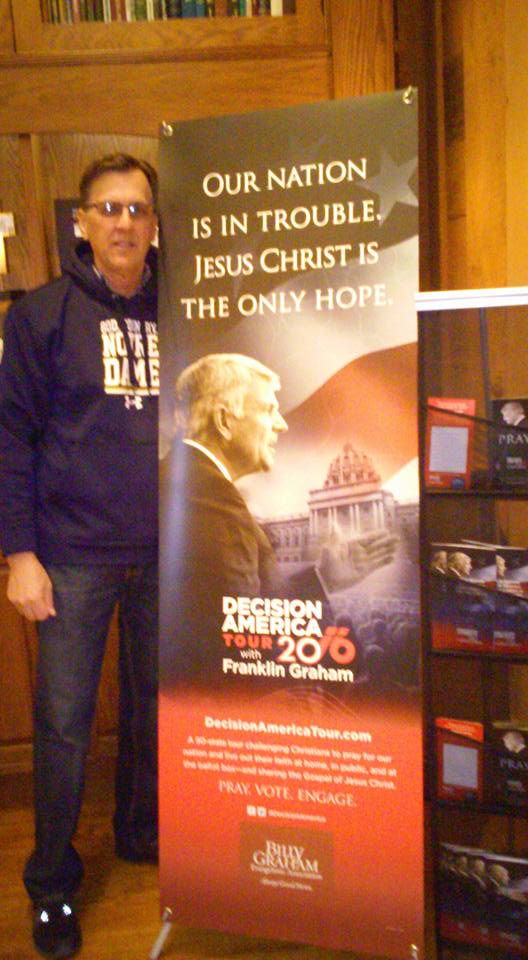
Reference. The edited quote from Daniel Bell is taken from his famous book, The Cultural Contradictions of Capitalism, p.28. During a recent trip to Charlotte, North Carolina my wife took this picture of me at the Billy Graham Library. We agree with the message expressed in the poster.

10398658_974645635957747_4493952309246272323_n

All rights reserved.

To SHARE on SOCIAL MEDIA: click on “Leave a comment” or “Comments” below (and this will bring up social media icons if they are not already present).

To LEAVE A COMMENT: click on “Leave a comment” or “Comments” below, and then scroll down to the box which says, “Leave Your Own Comment Here,” which is at the end of any comments already made. If the comment section is already present, merely scroll to the end of any comments already made.

Any ads following this note are by WordPress and not CatholicStrength.

MANY PEOPLE ARE IGNORING GOD AND RISK THE LOSS OF ETERNAL LIFE

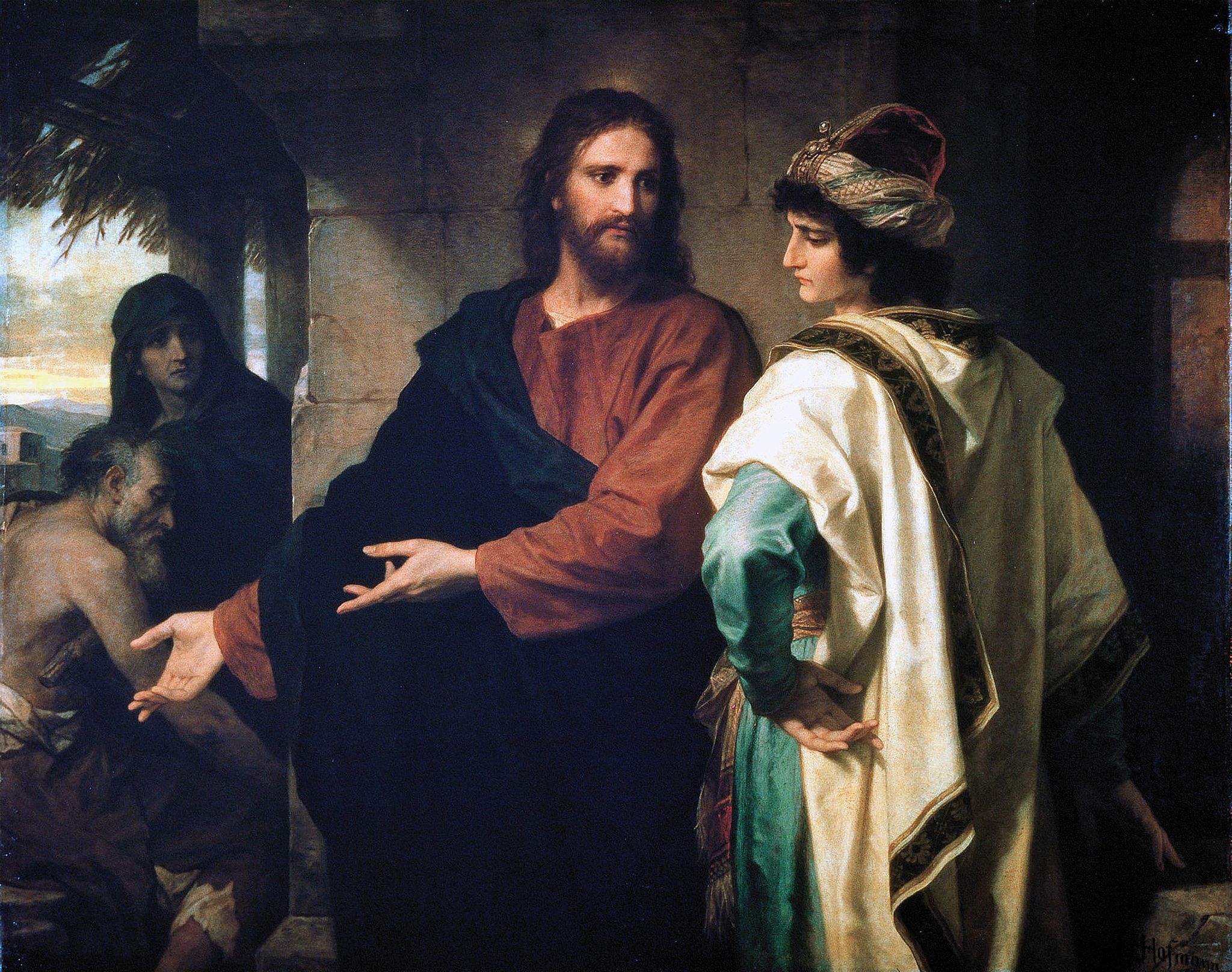
 hoffman-christandtherichyoungruler

 “…they have not opened their hearts to the truth in order to be saved” (2 Thes. 2:11)

Salvation in Christ is a most precious gift. Indeed, it is the greatest gift of all. Dear God, give us the grace to meditate on the magnitude of the gift of salvation merited by Jesus Christ.

Yet, here in the United States and Canada (and certainly in Europe, too) we are witnessing an unprecedented loss of faith. People who can look back at generations of Catholic ancestors who preserved the faith for them have now themselves become the very reemergence of that family’s pagan line of descendants. This loss of faith has enormous implications, and has even the momentum of a mass apostasy. It is worth contemplating what happens to a Christian nation, once blessed by the Gospel, which then rejects it?

Perhaps more often than a human being breathes in air for physical life God is sending each one of us actual graces to grow closer to Him.  On God’s part He is doing everything possible to save us. Here is the great risk God allows: we can reject his many graces and perish. Jesus warns us of this risk on many occasions.

The great Saint Pope John Paul II, a man of very great wisdom, had some very important words to say about the radical possibility of a human being – endowed with a free will – rejecting God’s invitation to eternal life. In Dominum et Vivificantem Saint Pope John Paul II explains in sobering terms that the “radical refusal [of a person] to accept [the] forgiveness of sin” means that this person claims the right to “persist in evil” (46), despite the fact that the Holy Spirit has been sent to convince the world about sin and judgment. “Those who are converted,” says Saint John Paul II, “are led by the Holy Spirit out of the range of the judgment, and introduced into the righteousness of Christ….” (48). To reject the the convincing concerning sin which comes from the Holy Spirit, a human being is, in essence, rejecting the “redemptive power of Christ’s blood” (46).

If a human being is not led out of sin and into the redemption merited by Jesus Christ he “persists in evil” and thereby perishes. The Pope points out that man is tempted to falsify truth by the dark opposition of Satan and the “constant pressure on man to reject God….” (38). Having chosen to persist in evil the human being enters, upon his death, into a definite state of suffering called hell. Saint John Paul II explains:

“Man” perishes” when he loses “eternal life”. The opposite of salvation is not, therefore, only temporal suffering, any kind of suffering, but the definitive suffering: the loss of eternal life, being rejected by God, damnation. The only-begotten Son was given to humanity primarily to protect man against this definitive evil and against definitive suffering. In his salvific mission, the Son must therefore strike evil right at its transcendental roots from which it develops in human history. These transcendental roots of evil are grounded in sin and death: for they are at the basis of the loss of eternal life. The mission of the only-begotten Son consists in conquering sin and death. He conquers sin by his obedience unto death, and he overcomes death by his Resurrection” (no. 14, Encyclical Salvifici Doloris).

Is it possible to grow in holiness if we are not concerned for souls? Zeal for the salvation of souls is a hallmark characteristic of the Saints. The need for a new Evangelization could not be greater or more urgent.

Tom Mulcahy, M.A.

Image: Christ and the Young Rich Man by Heinrich Hoffman, 1889, Public Domain, U.S.A.


P.S. How much grace God sends to someone estranged from Him is not subject to precise theological formulation.The starting point is the Infinite Goodness of God who is generous to every soul. The great Saint Alphonsus de Ligouri  quotes with approval Soto who said: “I am absolutely certain, and I believe that all the Holy Doctors who were worthy of the name were always most positive, that no one was ever deserted by God is this mortal life.” A more recent theologian, Father Garrigou-LaGrange says, “Christ’s humanity communicates to us from minute to minute the actual grace of the present moment, as the air we breathe continually enters our lungs. *** Outside the sacraments, this activity of the Savior transmits the lights of faith to unbelievers who do not resist it.” Finally, Father Faber states: “Figures could not put down the number of graces  He has given and is hourly giving to us” (p. 142); Faber states that even a man in mortal sin, through faith and hope, receives “incessant crowds of…actual graces” (p. 250). At page 313 Faber states that “God is infinitely merciful to every soul,” and “no one ever has been lost…by surprise….” ( The Creator and the Creature, TAN).

To SHARE on SOCIAL MEDIA: click on “Leave a comment” or “Comments” below (and this will bring up social media icons if they are not already present).

To LEAVE A COMMENT: click on “Leave a comment” or “Comments” below, and then scroll down to the box which says, “Leave Your Own Comment Here,” which is at the end of any comments already made. If the comment section is already present, merely scroll to the end of any comments already made.

All rights reserved.

Any ads following this note are by WordPress and not CatholicStrength.

PURGATORY: POPE BENEDICT WONDERFULLY ELUCIDATES ITS NEW TESTAMENT BASIS

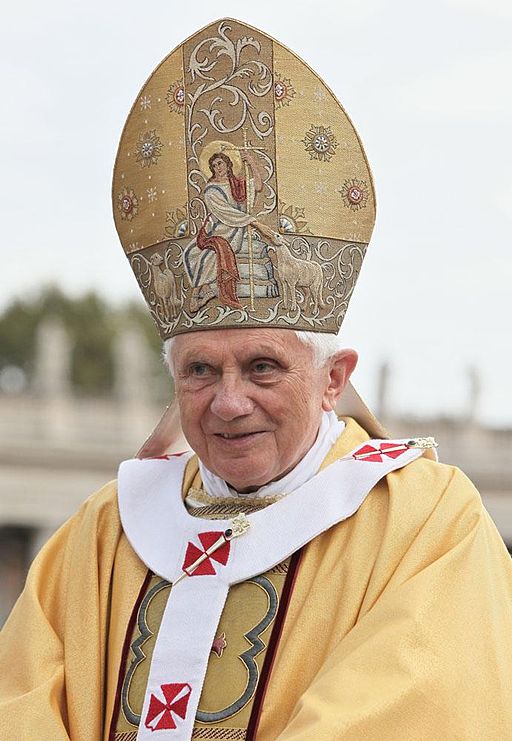
 512px-benedykt_xvi_2010-10-17_4

                  For our God is a consuming fire.” (Hebrews 12:29)

In his encyclical on hope, Spe Salvi, Pope Benedict XVI does a wonderful job of demonstrating how 1 Corinthians 3:10-15 clearly supports the doctrine of Purgatory. It is interesting to note, as well, that Dr. Scott Hahn, a Protestant convert, mentioned this New Testament passage in 1 Corinthians as being decisive for him in accepting the Church’s teaching on Purgatory (he says, “I must admit that theologically and psychologically 1st Corinthians 3 basically sealed it up. It was all sewn up for me when I worked through this, praying, studying, pondering. I think it’s strong and clear.”).

THE LIVING MYSTERIES OF THE ROSARY: A SOURCE OF PROFOUND MEDITATION


YOU ARE SURROUNDED BY A GREAT CLOUD OF WITNESSES: THE SAINTS!

DO ALL CHRISTIANS BELIEVE IN PURGATORY?

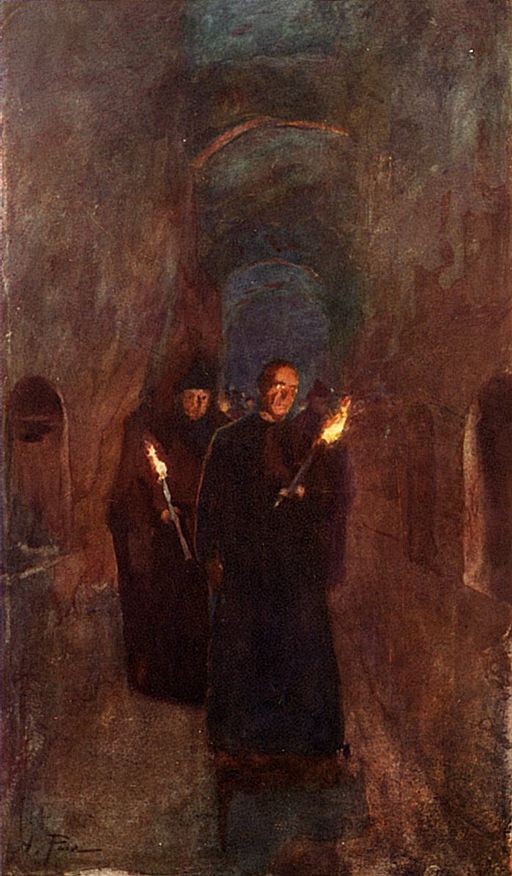
 512px-a-procession-in-the-catacomb-of-callistus

(The Catacombs, where early Christians inscribed on the walls prayers for the dead)

“Our souls demand Purgatory, don’t they? Would it not break the heart if God said to us, ‘It is true, my son, that  your breath smells and your rags drip with mud and slime, but we are charitable here and no one will upbraid you with these things, nor draw away from you. Enter into the joy’? Should we not reply, ‘With submission, sir, and if there is no objection, I’d rather be cleaned first.’ ‘It may hurt, you know’ – ‘Even so, sir.”  (C.S.Lewis, Letters To Malcolm, chapter 20)

“All who die in God’s grace and friendship, but still imperfectly purified, are indeed assured of their eternal salvation; but after death they undergo purification, so as to achieve the holiness necessary to enter the joy of heaven. The Church gives the name purgatory to this final purification of the elect, which is entirely different from the punishment of the damned” (Catechism of the Catholic Church, 1030)

Believe it or not, all Christians do in fact believe in Purgatory.  Let me show you why. We are told in the Letter to the Hebrews that no one can see the Lord without possessing holiness (Hebrews 12:14). This brings us to Larry and Jane Smith, husband and wife, who unfortunately died together in an automobile accident when Larry fell asleep at the wheel of his brand new Ford Explorer.  Little did Larry and Jane know that they would meet the Lord on that fateful day. By way of background, Jane had been a very holy and devout Baptist who walked the straight and narrow path of the Lord.  Moved by her love for Christ, she had led a holy and righteous life and had been very kind to the poor.  The grace of God had certainly worked wonders in her life. On the other hand, Larry had been a habitual sinner.  The three sins which had taken root in his soul were his love for pornography, his dishonest business practices and his hate for certain races.  Fortunately for Larry, the one time he went with his wife to church he picked up a tract on the table and followed the directions which told him “How to be saved.”  That day in church he repented of his sins and accepted Jesus Christ as his personal savior.  He was saved.

For two days after being saved Larry actually managed to avoid committing a serious sin.  But then the struggle became too much and he reverted back into the pattern of sin which had been routine in his life for many years.  Then, as you know, he fell asleep at the wheel and died.

When the moment came for the book of Jane’s life to be laid out in front of the judgment seat of Christ, there was nothing but joy and contentment.  Jane was pure and holy and Jesus was very pleased with the state of her soul.  He gave to her a white linen garment to put on, representing the righteous deeds she had done during her life (see Revelation 19:81).

The moment for Larry’s judgment was not so joyful.  Larry was so full of sin that he could not even look upon the Lord.  When asked by Jesus what he had to say in his defense, Larry was smart enough to remind the Lord that he had been saved the day he repented of his sins and accepted Jesus Christ as his personal savior (since, for the purpose of this fictional story, Jesus is an Evangelical Protestant, Jesus responded to Larry by letting him know that Larry’s faith, as little as there was of it, had saved him).  Jesus told Larry that he was free to walk through the gates of heaven.

But then something happened to Larry. As he started to walk through the gates of heaven, all of the saints and angels in heaven came forward and blocked Larry’s path. They shouted at Larry: “Even though you have been saved, you still stink of sin and our Lord has made it clear that you cannot enter into heaven until you are holy.  You must be purified.  You must be cleansed of your sin.  We cannot have you enter heaven looking at the angels with lustful eyes or still hating races of people who were made in the image and likeness of God.  You must be purged from your sin.”  Larry said: “How is this to be done?”  The angels and saints responded: “You must spend some time outside the gates of heaven doing penance for your sins and transforming your soul, with the aid of God’s grace, from a state of sin to a state of grace.  Then, and only then, can you enter into the kingdom of heaven.  Jesus has saved you from hell, but you are not worthy yet to enter the kingdom of God.  Our God is a consuming fire (Deuteronomy 4:24; Hebrews 12:29), and until the fire of his love destroys all the sin within you, you must wait outside and become purified.  Then, and only then, may you look upon the face of our holy God.”

Although to a Catholic Larry’s fate may well have been worse than Purgatory, the circumstances of his life and death underscore the absolute necessity for a state of purification prior to the glory of entering heaven.  Even if you believe a person is saved by his faith alone in Jesus – irrespective of the conduct of his life – he cannot enter heaven in a defiled state.  He must be purified of his sin.  Therefore, unless you believe a person can somehow enter into heaven in an impure state, you do in fact believe in Purgatory.

Historically, it is quite clear that the early Christians believed in a state of purification after death. We know, for example, that the Christians living in the catacombs in Rome inscribed prayers for the dead on the walls.  In addition, prayers for the dead are contained in some of the earliest Christian writings.* The key proof text in scripture is 2 Maccabees 12:46, which states: “It is therefore a holy and wholesome thought to pray for the dead that they may be loosed from their sins.” Obviously, we would not pray for the dead if they were already in heaven. Every Catholic Mass offered throughout the world includes prayers for the living and the dead, and there is an extraordinary list of Catholic saints who have experienced private revelations of Purgatory, the most recent of which include Saint Padre Pio and Saint Faustina Kowalska (the saint of the Divine Mercy revelations). Finally, is there not in our hearts a God-given instinct to pray for the souls of the dead? In Letters to Malcolm C.S. Lewis makes mention of this instinct to pray for the dead:

“Of course I pray for the dead. The action is so spontaneous, so all but inevitable, that only the most compulsive theological case against it would deter me. And I hardly know how the rest of my prayers would survive if those for the dead were forbidden. At our age, the majority of those we love best are dead. What sort of intercourse with God could I have if what I love best were unmentionable to him? I believe in Purgatory.”

In conclusion, scripture, common sense, Sacred Tradition and our natural desire to pray for the dead convince us that some of  us may have to undergo a period of purgation before entering heaven, for we are told in the clearest Biblical terms, at Revelation 21:27, that —

                      “NOTHING UNCLEAN SHALL ENTER [HEAVEN]….”                             

Tom Mulcahy, M.A.


Image: A Procession in the Catacombs of Callistus by Alberto Pisa, 1905, Public Domain, U.S.A.

References: *See article at catholic.com, *”The Roots of Purgatory,” pertaining to the subject of early Christian writings and Purgatory. See also, Catholicism and Fundamentalism by Karl Keating. Finally, Pope Benedict XVI elaborates profoundly on the New Testament basis for Purgatory in his encyclical, Spe Salvi (sections 45-48), and I will be posting a note on that at some point.

To SHARE on SOCIAL MEDIA: click on “Leave a comment” or “Comments” below (and this will bring up social media icons if they are not already present).

To LEAVE A COMMENT: click on “Leave a comment” or “Comments” below, and then scroll down to the box which says, “Leave Your Own Comment Here,” which is at the end of any comments already made. If the comment section is already present, merely scroll to the end of any comments already made.

All rights reserved.

Any ads following this note are by WordPress and not CatholicStrength.