Author: tomlirish

“CAN I RELAX MY LENTEN FAST ON SUNDAYS?”

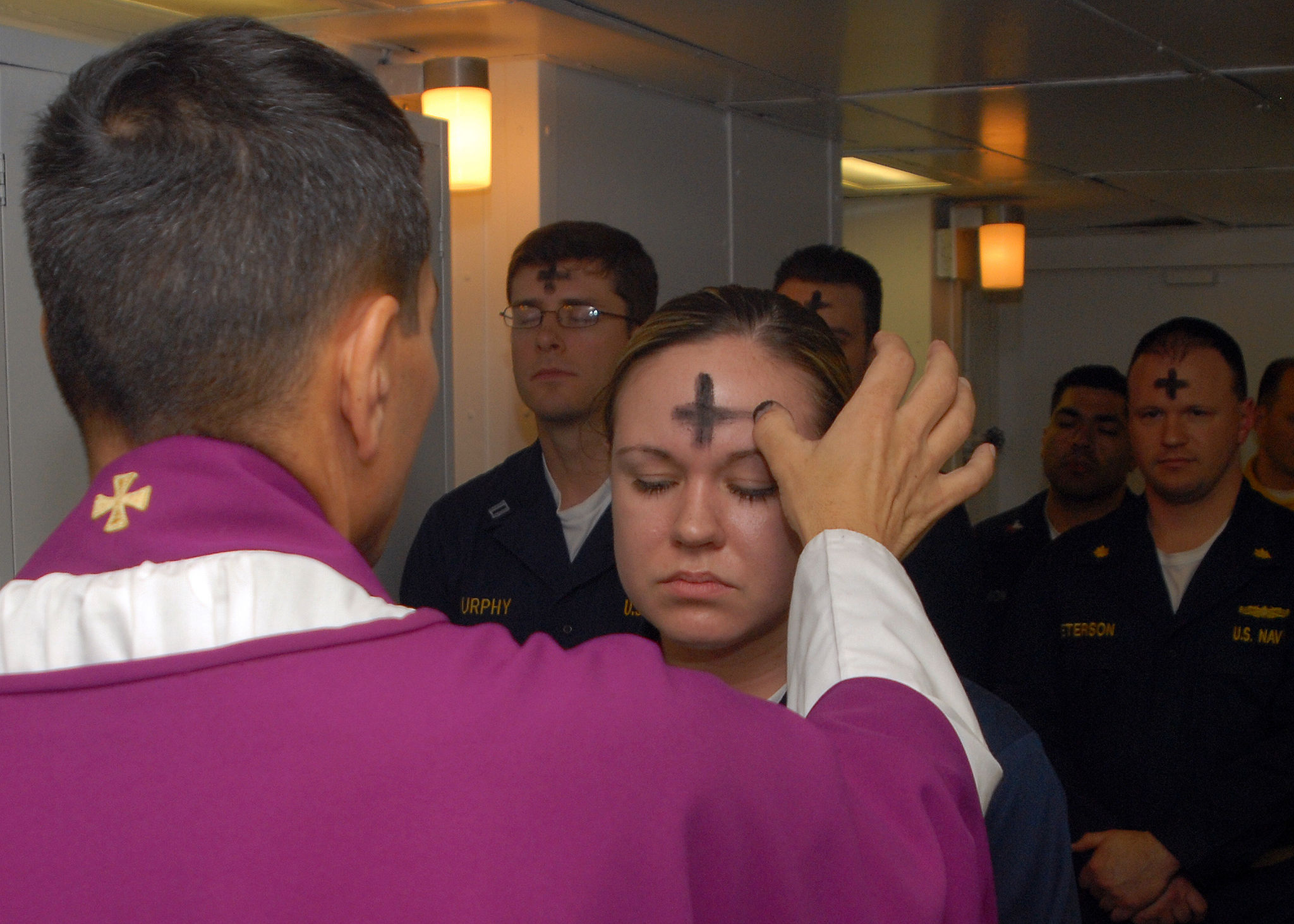
 2048px-US_Navy_080206-N-7869M-057_Electronics_Technician_3rd_Class_Leila_Tardieu_receives_the_sacramental_ashes_during_an_Ash_Wednesday_celebration

Someone emailed me the question, “CAN I RELAX MY LENTEN FAST ON SUNDAYS?” Here’s my response:

Here’s my take. The “forty” day fast during Lent you have in mind is purely voluntary and traditional…it is not mandated by Church – canon  – law, but highly recommended in our tradition. 

What is mandated during Lent is to fast on Ash Wednesday and Good Friday – which means one full meal and two snack meals on those two days. This is called a fast.

Also during Lent we are required by canon law to abstain from meat on Ash Wednesday and all Fridays during Lent. This is called abstinence.

As you know, there are exceptions for the young and the old and sick. Check for the age exceptions.

The so called forty day fast during Lent is in imitation of our Lord’s forty day fast in the desert. See the Catechism of the Catholic Church, no. 540, which reads:

“‘For we have not a high priest who is unable to sympathize with our weaknesses, but one who in every respect has been tested as we are, yet without sinning’ [Heb 4:15]. By the solemn forty days of Lent the Church unites herself each year to the mystery of Jesus in the desert.” (CCC 540).

The 40 day fast is not mandatory, only voluntary. The only binding rules during Lent are mentioned above. The “Sunday” exception is thus really only an exception to a non-binding idea of justice for those doing the 40 day fast voluntarily, based on two considerations: (1) that Sunday, celebrating the Resurrection, is a day of celebration, not fasting, and (2) the period of time from Ash Wednesday to Easter is actually 45 days long, so you’re still going about 40 days even if you skip Sundays!

What do I do? I do my voluntary fast every day from Ash Wednesday until the dawn of Easter! I’m with you…once I start I stay in the desert with Jesus until Easter Sunday! However, to answer the question posed  –  Yes, you can skip fasting on Sundays during Lent, and this is simply up to your own choice.

God Bless you,

Tom Mulcahy

Ref. I reviewed a number of internet articles on this issue, and found the posts by Jimmy Akin to be among the most helpful. Photo by “U.S. Navy photo by Mass Communication Specialist 3rd Class Brian May,” in the Public Domain, U.S.A., per Wikipedia.


All rights reserved.

To SHARE on SOCIAL MEDIA: click on “Leave a comment” or “Comments” below (and this will bring up social media icons if they are not already present).

To LEAVE A COMMENT: click on “Leave a comment” or “Comments” below, and then scroll down to the box which says, “Leave Your Own Comment Here,” which is at the end of any comments already made. If the comment section is already present, merely scroll to the end of any comments already made.

Any ads following this note are by WordPress and not CatholicStrength.
 

NO ONE IS LOST BY SURPRISE

sky-115393_1920

“[God] who desires all people to be saved and to come to the knowledge of the truth.” (1 Timothy 2:4)

“The Lord is not slow in keeping his promise, as some understand slowness. Instead he is patient with you, not wanting anyone to perish, but everyone to come to repentance.” (2 Peter 3:9)

God is just. Infinitely just. He is neither arbitrary or capricious. No one is lost by surprise. Everyone, at the end of life’s journey, will be able to tally up a gargantuan amount of graces sent by the Father of Mercy to save us. A bitter victory it will thus be, as F.W. Faber points out, if we manage to succeed in rejecting these graces.

How much grace God sends to someone estranged from Him is not subject to precise theological formulation.The starting point is the Infinite Goodness of God who is generous to every soul. The great Saint Alphonsus de Ligouri  quotes with complete approval Soto who said:

      “I am absolutely certain, and I believe that all the Holy Doctors who were worthy of the name were always most positive, that no one was ever deserted by God is this mortal life”  (The Great Means of Salvation and of Perfection, p.149).
 

A more recent theologian, Father Garrigou-LaGrange says: Christ’s humanity communicates to us from minute to minute the actual grace of the present moment, as the air we breathe continually enters our lungs. *** Outside the sacraments, this activity of the Savior transmits the lights of faith to unbelievers who do not resist it.” 

Finally, Father Faber states: “Figures could not put down the number of graces  [God] has given and is hourly giving to us” (p. 142); Faber states that even a man in mortal sin, through faith and hope, receives “incessant crowds of…actual graces” (p. 250). At page 313 Faber states that “God is infinitely merciful to every soul,” and “no one ever has been lost…by surprise….”  ( The Creator and the Creature, TAN).

Tom Mulcahy, M.A.
 

P.S. The quote from Father Garrigou-LaGrange is from The Three Ages of the Interior Life. In his encyclical, Redemptoris Missio, Saint John Paul II says the following:

Salvation in Christ Is Offered to All 10. “The universality of salvation means that it is granted not only to those who explicitly believe in Christ and have entered the Church. Since salvation is offered to all, it must be made concretely available to all. But it is clear that today, as in the past, many people do not have an opportunity to come to know or accept the gospel revelation or to enter the Church. The social and cultural conditions in which they live do not permit this, and frequently they have been brought up in other religious traditions. For such people salvation in Christ is accessible by virtue of a grace which, while having a mysterious relationship to the Church, does not make them formally part of the Church but enlightens them in a way which is accommodated to their spiritual and material situation. This grace comes from Christ; it is the result of his Sacrifice and is communicated by the Holy Spirit. It enables each person to attain salvation through his or her free cooperation.”

All rights reserved.

To SHARE on SOCIAL MEDIA: click on “Leave a comment” or “Comments” below (and this will bring up social media icons if they are not already present).

To LEAVE A COMMENT: click on “Leave a comment” or “Comments” below, and then scroll down to the box which says, “Leave Your Own Comment Here,” which is at the end of any comments already made. If the comment section is already present, merely scroll to the end of any comments already made.

Any ads following this note are by WordPress and not CatholicStrength.

THE SHORTEST ROAD TO HEAVEN

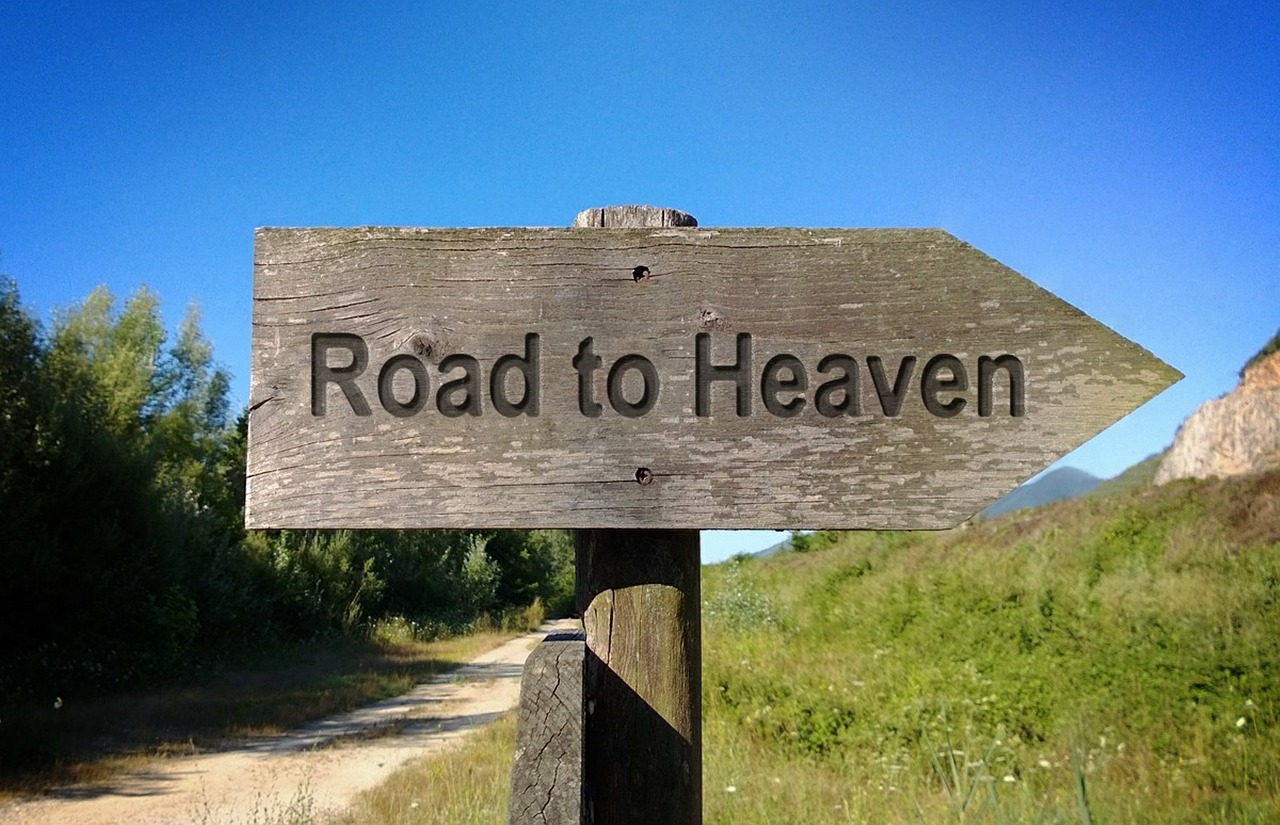
road-to-heaven-608763_1280
 

 “O for some corner, the least, the lowest, and the last in the world to come                        [Heaven], where we may spend an untired eternity in giving silent thanks to Jesus Crucified!” (F.W. Faber)                               

“The sorrow and happiness of each individual soul begins at the foot of the cross. It is well or ill with us according as we are in harmony with [Jesus’] Passion…. [T]here is no earthly object of any real abiding value to us compared with the Passion of our dearest Lord. All is dross compared with it…. In the uttermost distances of our eternal life, where in truth there are no distances, it is the Passion which will still support us, the Passion which will keep the vision open, the Passion out of which the inebriating torrents of God’s splendor will still renew our souls.

The Passion rules the history of the world. Thus it is also the secret of all biographies of individual souls. All their ruin comes from their disloyalty to the Passion. All their holiness in time, and their glory in eternity, are the consequences of their loyalty to the Passion.   

Jesus Christ and Him Crucified – this is the object of our present contemplation. As we grow older we set a greater price on fidelity; and where is there such faithfulness [and such indisputable proof of God’s love for you] as in the Cross? Devotion to the Passion is at once the surest sign of Predestination, and the shortest road to heaven. Happy are they whom the cruelty and treachery of life have driven to the Cross”(emphasis added).

This quote of Father Faber is taken from Notes on Doctrinal and Spiritual Subjects, Part 1, pages 223-232. The quote is edited and is not in the order it was written. I have rearranged some of the sentences and paragraphs to facilitate this short excerpt. Father Faber was preparing a book on the Passion, which he did not complete, and these notes were from the beginning of that unfinished manuscript.

Comment:

The Passion is God’s demonstration of His deep love for us. Our love of God will thus grow in proportion to our devotion to and gratitude for the Savior who “loved me and gave himself for me” (Galatians 2:20). Devotion to our Lord’s Passion is characteristic of the saints (so how much more do we need it?). “He who desires to go on advancing from virtue to virtue, from grace to grace, should meditate continually on the Passion of Jesus…There is no practice more profitable for the entire sanctification of the soul than frequent meditation on the suffering of Christ” (Saint Bonaventure).  Let us then, this Lent, renew our devotion to our Lord’s Passion, and “stand with Mary at the foot of the cross.”

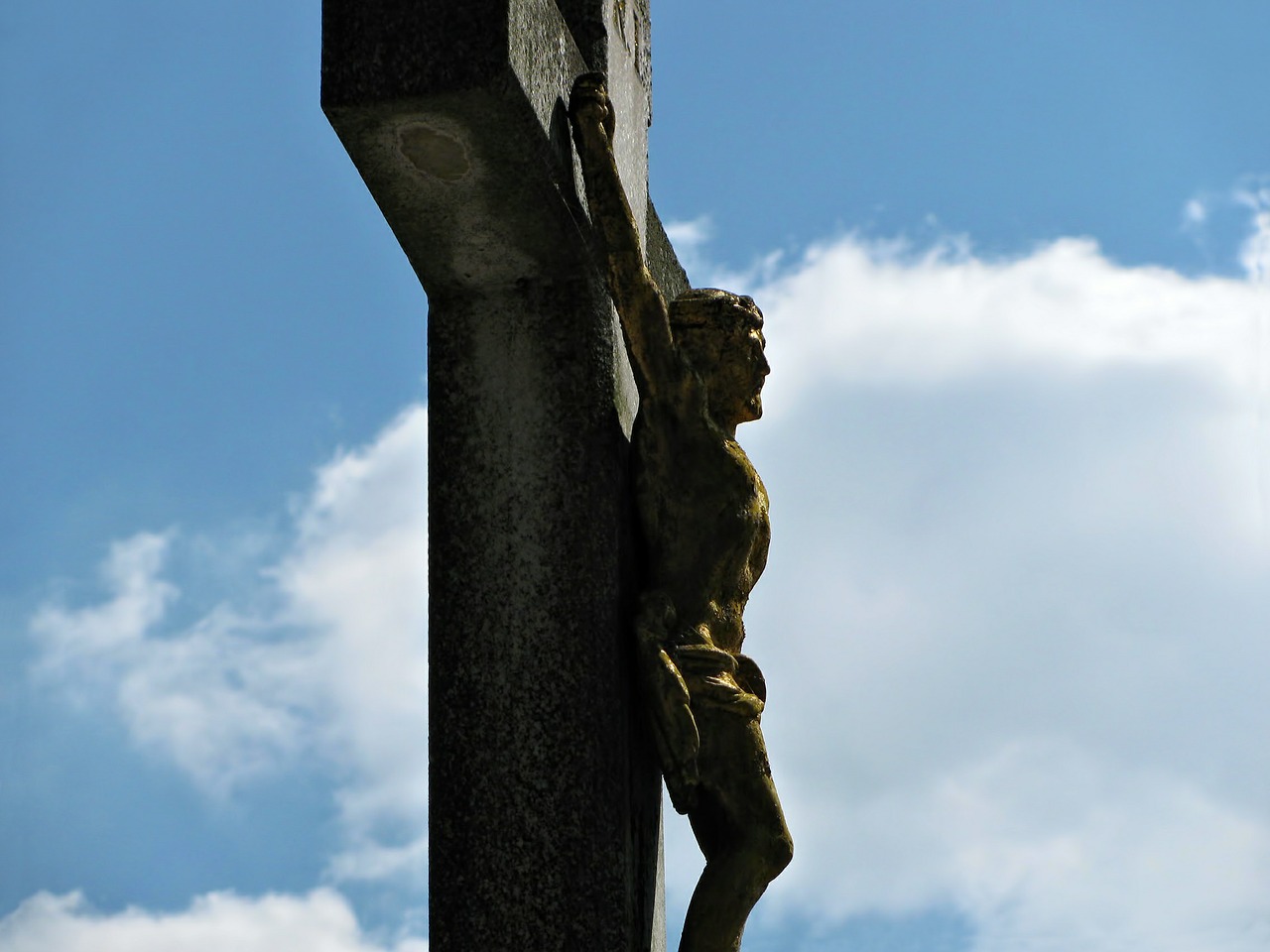
jesus-404147_1280

Practical Recommendation: 

The crucifix in your home is of tremendous value. Spend a few minutes each day in Lent looking at our Lord on the cross and thank him for having come to save you – yeah, you! If directed by your heart, kiss your crucifix and tell the Lord how dear He is to you. In this life we look at a ton of useless images: we ought to be looking at the crucifix!

Wishing you a Blessed Lent,

Tom Mulcahy, M.A.

All rights reserved.

To SHARE on SOCIAL MEDIA: click on “Leave a comment” or “Comments” below (and this will bring up social media icons if they are not already present).

To LEAVE A COMMENT: click on “Leave a comment” or “Comments” below, and then scroll down to the box which says, “Leave Your Own Comment Here,” which is at the end of any comments already made. If the comment section is already present, merely scroll to the end of any comments already made.

Any ads following this note are by WordPress and not CatholicStrength.
ROSARY REPUGNANCE AND ROSARY PERSEVERANCE

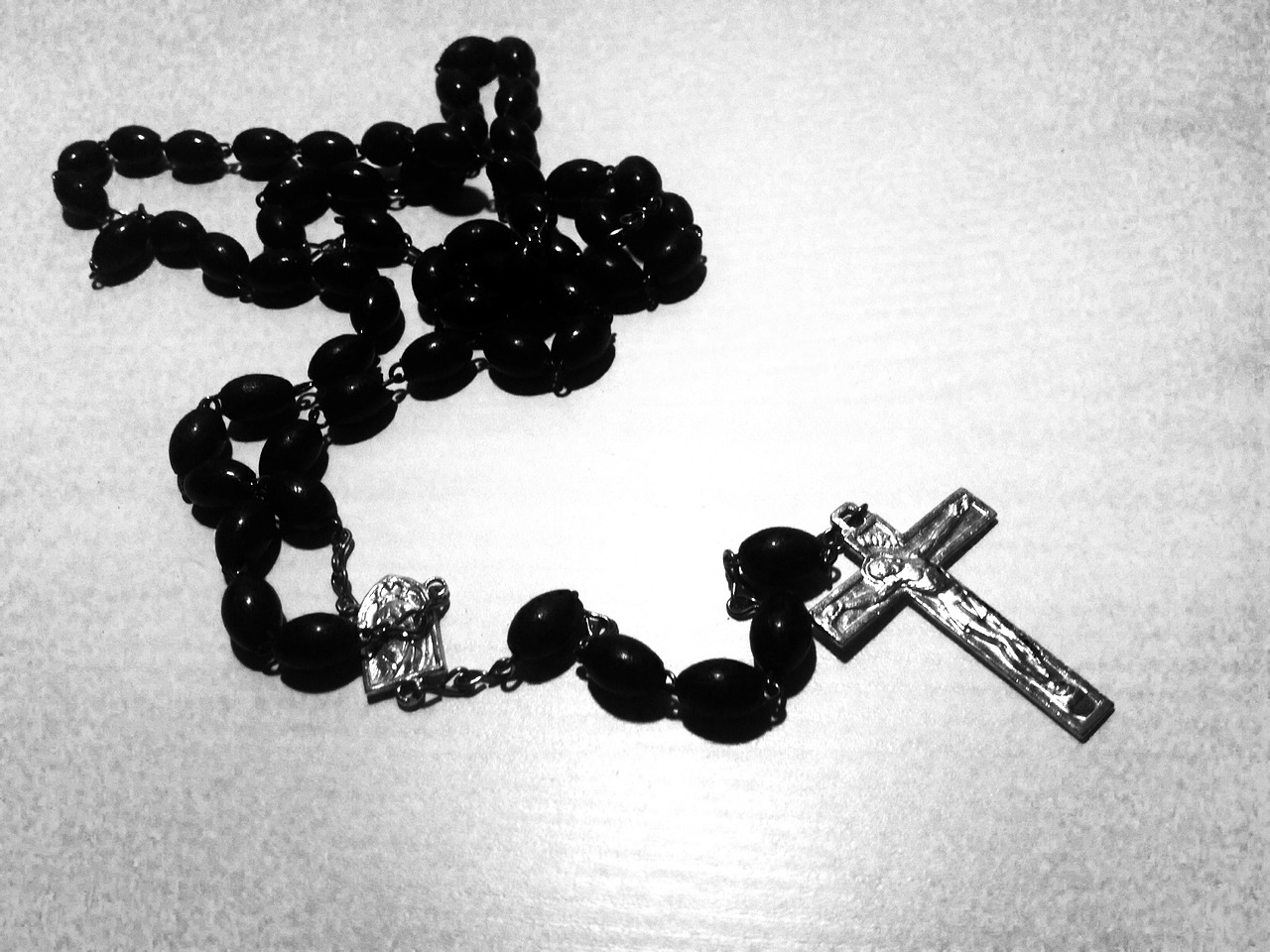
religion-957166_1280

“The Rosary of the Virgin Mary…is a prayer of great significance, destined to bring forth a harvest of holiness” (Saint John Paul II)

It’s not exactly an earth shattering revelation that we sometimes have dryness in our devotions. Sometimes God does His best purifying work in our souls during the time we are in the desert. How are we going to learn to walk by Faith (which is a theological, God-directed virtue) if we are always hankering after consolations and mystical experience? Ask Blessed Mother Teresa whose “dark night” extended two decades. But she never stopped saying her Rosary.

 If Saint Louis de Montfort maintains that a strong devotion to the Rosary is a sign of Predestination, consider it a strong delusion if someone should persuade you to slack off on the Rosary. The devil makes saying the Rosary a special object of repugnance, says a great spiritual writer, because of all the good the Rosary does for us. Dear God, what do we need more in these troubled times than perseverance in the Rosary!

I’m sure that when dedicated long distance runners go on a run they don’t always experience that runner’s high you read about, but that doesn’t mean a long and painful run doesn’t do them good. It is probably that long and painful run that does them the most good, preparing them to endure the Boston Marathon at its most difficult moments.

In practicing spiritual discernment consider all the great things that Saints and Popes and great spiritual writers have said about the Rosary! Consider what Mary asked of us at Fatima. The Rosary is our “chain of perseverance.” This is not the time to go light on the Rosary. Say it with special love during those times of dryness. The spiritual life is ultimately lived in the will rather than the emotions. And emotional life is beautifully purified when the will is made holy.

Tom Mulcahy

Ref.  In notes published after his death, the following was said by Father Faber: “In consequence of all these blessings [from saying the Rosary], the devil makes the Rosary a special subject of temptations, weariness, contempt, and the like. Persevere in it, and it will itself be the chain of your own final perseverance.” He also calls the rosary “an instrument of power” (Notes on Doctrinal and Spiritual Subjects, p. 308).  Three things to ask in our discernment are: Is this thought or suggestion from the Holy Spirit?; Or from my fallen human nature?; Or from the deceptive spirit, the Father of lies?

All rights reserved.

To SHARE on SOCIAL MEDIA: click on “Leave a comment” or “Comments” below (and this will bring up social media icons if they are not already present).

To LEAVE A COMMENT: click on “Leave a comment” or “Comments” below, and then scroll down to the box which says, “Leave Your Own Comment Here,” which is at the end of any comments already made. If the comment section is already present, merely scroll to the end of any comments already made.

Any ads following this note are by WordPress and not CatholicStrength.
THEOLOGY OF THE IMAGINATION

book-863418_1280

 “Examine me, O LORD, and test me. Look closely into my heart and mind.” (Psalm 26:2)

In addition to the purification of the memory (which tends to tenaciously hold on to harmful memories which impede spiritual growth), Saint John of the Cross also calls for a purification of the imagination. A purification of the imagination is needed because the mind becomes polluted when the imagination is used for sinful and evil purposes.

A first step in purifying the imagination is simply to mortify its attempt to imagine sinful pleasures or harmful actions. In this sense there is an active purification of the mind by way of a virtue driven custody of the imagination. The more we cut off the evil inclination of the imagination at its first movement toward sin, the more we rewire the imagination to act in a virtuous manner.

A second and powerful step to purify the imagination is to use the imagination as a method of meditation on the life and mysteries of Jesus Christ. In this manner we begin to use the imagination in an incredibly useful and sanctifying manner.

 All of the mysteries of Christ’s life are potent sources of grace. Thus, meditating on the mysteries of Christ’s life does a “real work” in our souls. The faculty of the imagination is useful in this regard because we can use the imagination to “mystically transport” us back to the side of Christ in all of his mysteries. The Saint who particularly recommended this method of meditation on the mysteries of Jesus’ life by utilizing the imagination is Ignatius of Loyola. His book of Spiritual Exercises contains a series of meditations where you imaginatively enter into the mysteries of Jesus’ life and even converse with Jesus (or Mary) pertaining to the mystery in question. This method of meditation can be profoundly transformative and purifying.

Saint John of the Cross will recommend an even deeper purification of the imagination in a “super-discursive” manner. Here we are talking about a method of prayer where the imagination is placed in silence in order to advance in a deeper form of prayer devoid of images and directed towards the simple contemplation of God (see Book III of The Ascent of Mt. Carmel).

The imagination is capable of greatly aiding our sanctification. By mortification, meditation and contemplation we can utilize the imagination to grow in holiness. Imagine that!

Tom Mulcahy, M.A.

Ref.  See Chapter XXV of Vol. I of The Three Ages of the Interior Life by Father Garrigou-LaGrange. Father Garrigou-LaGrange mentions that Jesus used sensible images in imaginative parables to raise his listeners’ minds to spiritual truths. Here is a link to my previous post on the healing of bad memories:
To SHARE on SOCIAL MEDIA: click on “Leave a comment” or “Comments” below (and this will bring up social media icons if they are not already present).

To LEAVE A COMMENT: click on “Leave a comment” or “Comments” below, and then scroll down to the box which says, “Leave Your Own Comment Here,” which is at the end of any comments already made. If the comment section is already present, merely scroll to the end of any comments already made.

Any ads following this note are by WordPress and not CatholicStrength.



THE LAST LESSON EVERY PERSON LEARNS

board-361516_1280

“Nothing in life has any meaning, except as it draws us further into God, and presses us more closely to Him. The eternal God is blessedly the last and only end of every soul of man. Life as it runs out is daily letting us down into His Bosom; and thus each day and hour is a step homeward, a danger over, a good secured. Hence it is, because God alone is our last end, that He alone never fails us.

The value of everything in life depends on its power to lead us to God by the shortest road. But as the service of God is the creature’s real work, so also is it his true dignity. The rank and pageantry of the world cannot clothe us with real dignity. To serve God is the only honor which it is worth our while to strive after.

So many men die all over the world in the span of just one minute. And what is the last lesson of every one of them: that the service of God is the highest happiness of man. What earthly wisdom will compare with the wisdom of serving God?

The service of the Creator is the creature’s sole end…and he who seeks any other will never find them. It is a miserable thing to build on sand, or to give our money for that which is not bread. Yet it is what we are all of us doing all our lives long, except when we are loving God.”

ifaberf001p1

(Father F.W. Faber)

(adapted with slight paraphrasing from pages 78-84 of The Creator and the Creature: The Wonders of Divine Love, Father F.W. Faber)

Tom Mulcahy, ed.

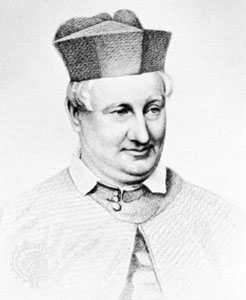
P.S. Personally, this is one of the most powerful quotes I have ever read. It really summarizes in a concise way the true meaning of life. I pray through the Immaculata that these words of Father Faber will touch your heart in a very powerful way. Frederick William Faber engraving by Joseph Brown, BBC Hulton Picture Library (a Public Domain work of art, U.S.A.)

All rights reserved.

 To SHARE on SOCIAL MEDIA: click on “Leave a comment” or “Comments” below (and this will bring up social media icons if they are not already present).

To LEAVE A COMMENT: click on “Leave a comment” or “Comments” below, and then scroll down to the box which says, “Leave Your Own Comment Here,” which is at the end of any comments already made. If the comment section is already present, merely scroll to the end of any comments already made.

Any ads following this note are by WordPress and not CatholicStrength.

THIS MODERN WOMAN LIVED EXCLUSIVELY ON THE EUCHARIST FOR 13 YEARS

Alexandrina_de_Balazar

             “Just as the living Father sent me and I live because of the Father, so the one who feeds on me will live because of me” (John 6:57)

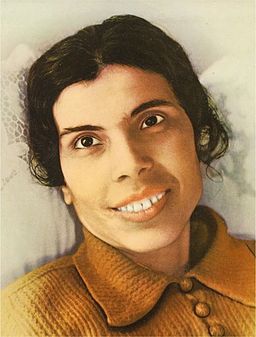
      I bring to your attention Blessed Alexandrina da Costa (pictured above). She lived exclusively on the Eucharist for 13 years and was beatified by Pope John Paul II on April 26, 2004, now himself a Saint! To understand the incredible magnitude of this Eucharistic miracle, consider for a moment that a human being would be lucky to survive even one week without water.
     There is a beautiful book about her by Francis Johnston in which is revealed the revelation she received that many people would become “ardently Eucharistic” through devotion to her. Please note that she was placed in a hospital for forty days and under intense observation was observed to keep her Eucharistic fast, living only on the Bread of Life, which was her sustenance (the official report of Dr. Araujo “confirmed the prodigy as ‘scientifically inexplicable,’ [and stated] it is absolutely certain that during forty days of being bedridden in hospital [Alexandrina] did not eat or drink….”).
     She died in 1955. The manner in which she predicted the supernatural decomposition of her body was observed to have occurred, and no doubt this sped up the process of her rapid beatification. Here below is a short Vatican summary of her life, which I have edited for this post.

“Alexandrina Maria da Costa was born on 30 March 1904 in Balasar, Portugal. She received a solid Christian education from her mother and her sister, Deolinda, and her lively, well-mannered nature made her likeable to everyone.

Her unusual physical strength and stamina also enabled her to do long hours of heavy farm work in the fields, thus helping the family income.

When Alexandrina was 14, something happened that left a permanent imprint on her, both physically and spiritually: it gave her a face-to-face look at the horror and consequences of sin.

On Holy Saturday of 1918, while Alexandrina, Deolinda and a young apprentice were busily sewing, three men violently entered their home and attempted to sexually violate them. To preserve her purity, Alexandrina jumped from a window, falling four metres to the ground.

Her injuries were many, and the doctors diagnosed her condition as “irreversible”:  it was predicted the paralysis she suffered would only get worse.

Until age 19, Alexandrina was still able to “drag herself” to church where, hunched over, she would remain in prayer, to the great amazement of the parishioners. With her paralysis and pain worsening, however, she was forced to remain immobile, and from 14 April 1925 until her death – approximately 30 years – she would remain bedridden, completely paralyzed.

Alexandrina continued to ask the Blessed Mother for the grace of a miraculous healing, promising to become a missionary if she were healed.

Little by little, however, God helped her to see that suffering was her vocation and that she had a special call to be the Lord’s “victim”. The more Alexandrina “understood” that this was her mission, the more willingly she embraced it.

She said:  “Our Lady has given me an even greater grace:  first, abandonment; then, complete conformity to God’s will; finally, the thirst for suffering”.

And so it was that from 3 October 1938 until 24 March 1942, Alexandrina lived the three-hour “passion” of Jesus every Friday, having received the mystical grace to live in body and soul Christ’s suffering in his final hours. During these three hours, her paralysis was “overcome”, and she would relive the Stations of the Cross, her movements and gestures accompanied by excruciating physical and spiritual pain. She was also diabolically assaulted and tormented with temptations against the faith and with injuries inflicted on her body.

On 27 March 1942, a new phase began for Alexandrina which would continue for 13 years and seven months until her death. She received no nourishment of any kind except the Holy Eucharist, at one point weighing as few as 33 kilos (approximately 73 pounds).

Medical doctors remained baffled by this phenomenon and began to conduct various tests on Alexandrina, acting in a very cold and hostile way towards her. This increased her suffering and humiliation, but she remembered the words that Jesus himself spoke to her one day:  “You will very rarely receive consolation… I want that while your heart is filled with suffering, on your lips there is a smile”.

As a “testimony” to the mission to which God had called her, Alexandrina desired the following words written on her tombstone:  “Sinners, if the dust of my body can be of help to save you, come close, walk over it, kick it around until it disappears. But never sin again:  do not offend Jesus anymore! Sinners, how much I want to tell you…. Do not risk losing Jesus for all eternity, for he is so good. Enough with sin. Love Jesus, love him!”.

Alexandrina died on 13 October 1955. Her last words: “I am happy, because I am going to Heaven.'”

     The supernatural confirmations of the Catholic faith – and here quite a recent one concerning this humble child of God- are really quite remarkable and surely should enkindle in our hearts a great desire for the Eucharist, the great Sacrament of Eternal Life.

Tom Mulcahy, M.A.

 Ref. The book I am relying on is: Alexandrina: The Agony and The Glory by Francis Johnson (TAN). Photo: Public Domain, U.S.A. Here is a link to the full Vatican biographical homily concerning Blessed Alexandrina (given by Pope John Paul II):

Alexandrina Maria da Costa – Vatican.va

 All rights reserved.

 To SHARE on SOCIAL MEDIA: click on “Leave a comment” or “Comments” below (and this will bring up social media icons if they are not already present).

To LEAVE A COMMENT: click on “Leave a comment” or “Comments” below, and then scroll down to the box which says, “Leave Your Own Comment Here,” which is at the end of any comments already made. If the comment section is already present, merely scroll to the end of any comments already made.

Any ads following this note are by WordPress and not CatholicStrength.
THE INCREDIBLE POWER WE HAVE TO PRAY FOR OTHERS

SAINT THOMAS AQUINAS: WHY IS HE PREEMINENT AMONG THEOLOGIANS?

DID THE UNIVERSE HAVE A BEGINNING?

explosion-562853_1280 (1)                     

         “In the beginning God created the heavens and the earth” (Genesis 1:1)

Not too long ago most astronomers and physicists held to the “steady-state” theory of the universe. This theory postulates that the universe has no beginning or end because it maintains a “constant average density” despite whatever change or expansion occurs.

But the scientific community began to chip away at the steady-state theory. “The death knell for the theory sounded when radio astronomers Arno Penzias and Robert Wilson discovered [in the 1960s] the cosmic microwave background, the leftover radiation from the Big Bang. The steady-staters had no reasonable way to explain this radiation, and their theory slowly faded away as so many of its predecessors had” (pbs.org).

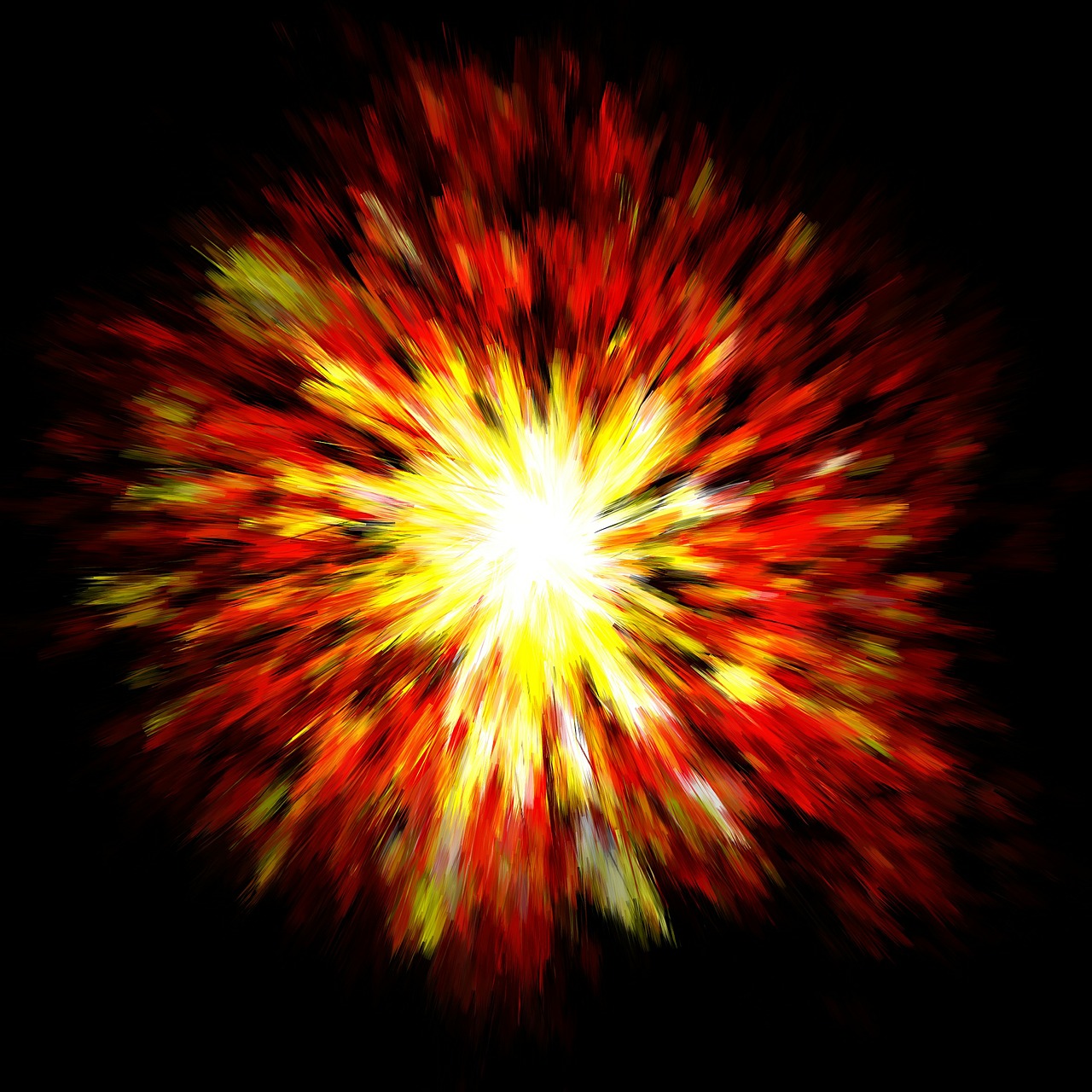
The evidence now generally accepted in the scientific community is that the universe did, in fact, have a beginning, exploding into being billions of years ago in what is referred to as the “Big-Bang” theory. The astronomer Robert Jastrow explains to us that “three lines of evidence – the motions of galaxies, the laws of thermodynamics, and the life story of the stars – pointed to one conclusion: all indicated that the universe had a beginning” (God and the Astronomers, p.111).

“Arno Penzias, who won the Nobel Prize for his discovery of the cosmic background radiation [a ghostly whisper from the original moment of creation] that corroborated the Big-Bang, said, ‘The best data we have are exactly what I would have predicted had I nothing to go on but the five books of Moses, the Psalms, and the Bible as a whole.'”

Astronomer Robert Jastrow concludes: “Now we see how the astronomical evidence [of the Big-Bang origin of the universe] leads to a biblical view of the origin of the world. The details differ, but the essential elements in the astronomical and biblical accounts of genesis are the same: the chain of events leading to man commence suddenly and sharply at a definite moment in time, in a flash of light and energy” (A Scientist Caught, p.14). “Astronomers now find that they have painted themselves into a corner because they have proven, by their own methods, that the world began abruptly in an act of creation…as a product of forces they cannot hope to discover” (God and the Astronomers, p.15).

Tom Mulcahy, M.A.

Sources: My primary sources for this note, and for the quotes set forth above, are Norman Geisler’s article, “Big Bang Theory,” in the Baker Encyclopedia of Christian Apologetics, and chapter eleven of What’s So Great About Christianity by D. D’Souza. I understand that astronomer Robert  Jastrow is an agnostic.

All rights reserved.

 To SHARE on SOCIAL MEDIA: click on “Leave a comment” or “Comments” below (and this will bring up social media icons if they are not already present).

To LEAVE A COMMENT: click on “Leave a comment” or “Comments” below, and then scroll down to the box which says, “Leave Your Own Comment Here,” which is at the end of any comments already made. If the comment section is already present, merely scroll to the end of any comments already made.

Any ads following this note are by WordPress and not CatholicStrength.