Author: tomlirish

CLOSE TO JESUS

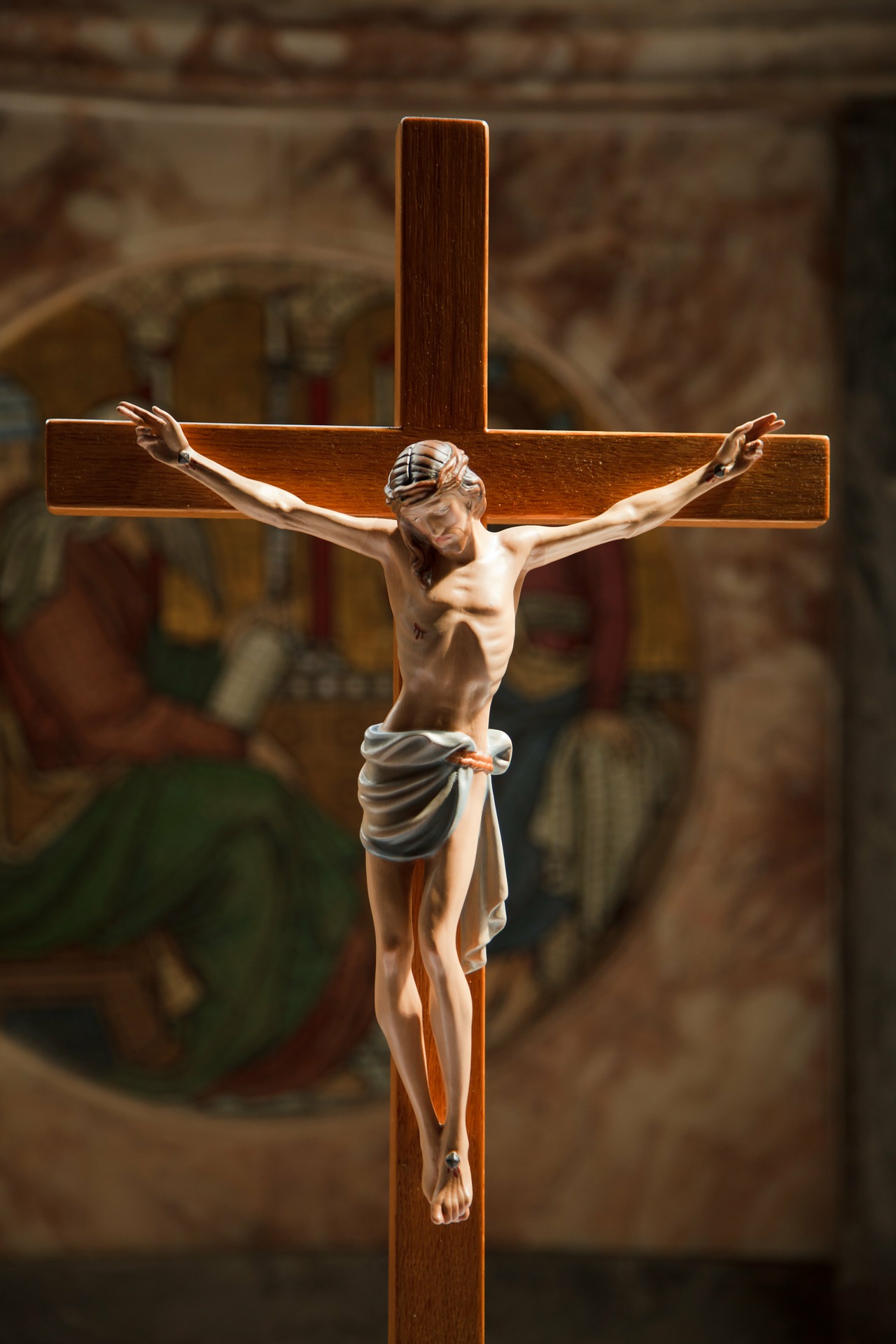
 catholic-2897_1920


                         “By His wounds you have been healed” (1 Peter 2:24)

The days pass by swiftly – and the years too – and we have been fortunate to learn a very valuable lesson: – that there is nothing more important in our lives than being close to Jesus. Some things are meant to come and go, but we must always stay close to Jesus. What is our attraction to the Blessed Sacrament but the amazing things that have passed between us and Jesus when we were so close to Him!  And Mary, our Mother, what is the secret of her unfathomable growth in holiness but closeness to Jesus (see References).

One way to draw closer to Jesus is to adore His holy wounds. The Passionist priest, Father Ignatius, says that “the lovers of Jesus Christ Crucified manifest their devotion and reverence for Him by tenderly kissing the Crucifix….” (p.40, The School of Jesus Crucified). He urges us to “daily adore the Wounds of your Redeemer” (p.229), and to “frequently kiss those adorable wounds with the liveliest sentiments of affection” (p.228). His chapter on devotion to the wounds of Jesus beginning on page 219 is instructive, and calculated to increase our closeness to Jesus. We know that our Lord’s five wounds were still present on His resurrected body: these wounds, which Jesus took with Him to Heaven, “bear eternal testimony to His Infinite love for us, and are fountains of Charity….” (p. 219; see also for visual meditation The Divine Mercy Image).

Commenting on works of Mercy, Pope Francis said the following on July 3, 2013: “We need to touch the wounds of Jesus, we must caress the wounds of Jesus, we need to bind the wounds of Jesus with tenderness, we have to kiss the wounds of Jesus, and this literally.”  

“Let us, then,” says Father Ignatius, “unite ourselves closely to the most holy Wounds of our Savior….” (p. 223). One quick and easy way to do this is to simply gaze upon your crucifix –  and the holy wounds of Jesus – with love and devotion, just as the Hebrew people gazed upon the bronze serpent in the desert in order to be healed (see John 3:14). Once your meditative gaze upon Jesus crucified is over, and whatever words and sentiments have passed between you and Jesus have transpired, you can simply approach the crucifix and end this simple meditation by kissing Jesus’ holy wounds. A simple meditation like this may only last a minute or two, but its value and merit are of profound significance.

“Jesus belongs to us.”

Tom Mulcahy, M.A.

References: In the first paragraph I am simply condensing and paraphrasing the beautiful words of Father Faber including his profound observations in The Foot of the Cross: The Sorrows of Mary, pages 12-123, on closeness to Jesus.  There he states: “But there are moments when we get a transient glimpse in our own souls of what the habitual nearness of the Blessed Sacrament has done for us.” It is Father Faber who reminds us that“Jesus belongs to us.” I recommend Father Ignatius’ book, The School of Jesus Crucified, as a good method to meditate on our Lord’s Passion. By looking upon the bronze serpent, a symbol of Israel’s sins, the Hebrew people were performing a healing and penitential act.

All rights reserved.

To SHARE on SOCIAL MEDIA: click on “Leave a comment” or “Comments” below (and this will bring up social media icons if they are not already present).

To LEAVE A COMMENT: click on “Leave a comment” or “Comments” below, and then scroll down to the box which says, “Leave Your Own Comment Here,” which is at the end of any comments already made. If the comment section is already present, merely scroll to the end of any comments already made.

Any ads following this note are by WordPress and not CatholicStrength.
AN EXTRAORDINARY SAINT PATRICK’S DAY MIRACLE


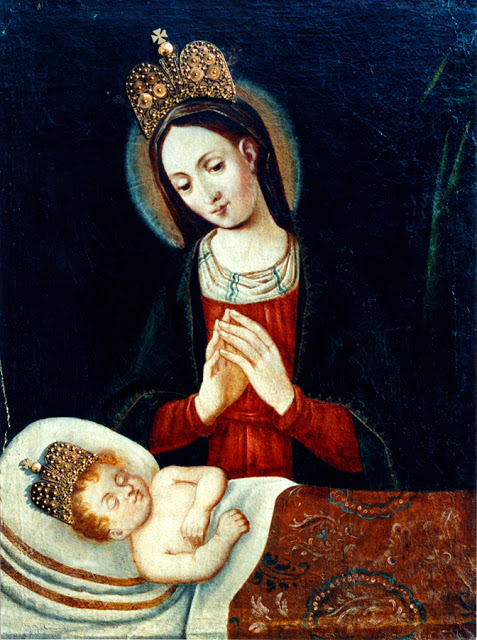
The beautiful picture you are looking at is known as “The Irish Madonna of Hungary.” The portrait itself is from Ireland, but it was brought to Hungary by an Irish priest, Bishop Lynch, who was fleeing English persecution in Ireland around the year 1652. Bishop Lynch worked for ten years among the faithful in Hungary, and just before he was about to return to Ireland he fell ill and died, bequeathing  on his deathbed the portrait in question to the Bishop of Gyor in Hungary who hung the painting in the Cathedral of Gyor. The awesome miracle I am about to discuss involves this picture.

The miracle in question did in fact occur on March 17, 1697 (St. Patrick’s Day) while “thousands were attending Holy Mass in the Cathedral of Gyor” (the year 1697 is highly relevant because in 1697 all priests were expelled from Ireland).

Suddenly “the eyes of the Madonna [in the picture above] began to shed tears and blood which ran down the canvas to the image of the sleeping Jesus. The Irish Madonna was weeping for her suffering children [in Ireland]. The people who had been attending [Mass], as well as those summoned to witness the miracle, took turns in gathering around the portrait while the priests repeatedly wiped the face of the Madonna with a linen cloth that is still preserved in the Cathedral. The miracle continued for more than three hours.”

Every lawyer knows the value of credible witnesses! Here then we see that this miracle was witnessed by a whole contingent of extremely credible witnesses. Joann Carroll Cruz relates the following: “Before long not only Catholics, but also Protestants and Jews flocked to see the miracle. Thousands witnessed the event, and many of these gave testimony of what they saw. A document signed by a hundred people bears the signatures of the governor of the city, its mayor, all its councilmen, the bishop, priests, Calvinist and Lutheran ministers as well as a Jewish rabbi. All volunteered their signatures to the document stating they had witnessed an undeniable miracle.”

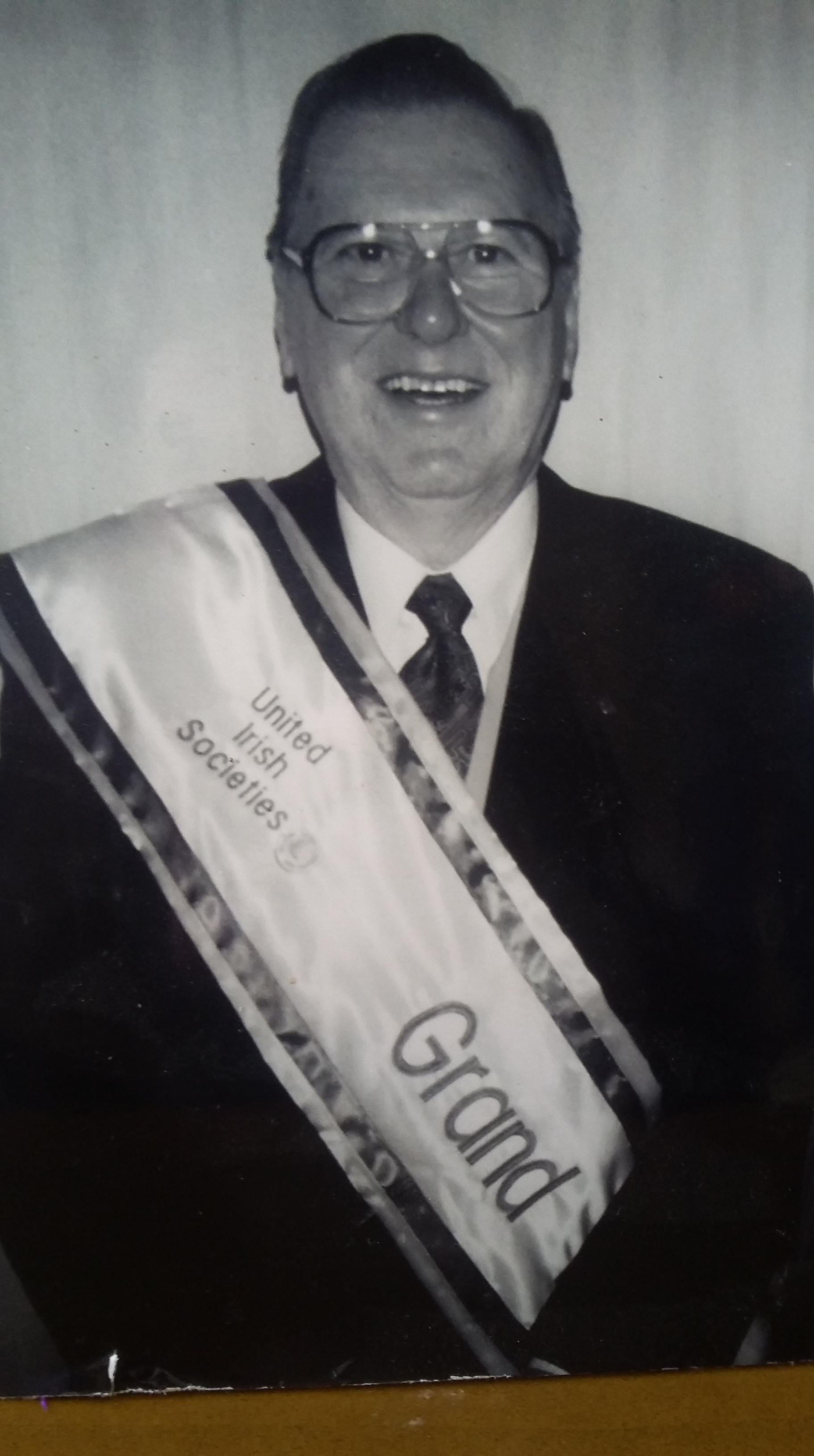
I would like to dedicate this post to the memory of Thomas Joseph Mulcahy, my Father, who was the Grand Marshall for the 2003 Saint Patrick’s Day Parade in Detroit (see photo below). Thanks Dad for your profound devotion to Irish culture and the Catholic faith. Our Lady of the Irish Madonna of Hungary, pray for Tom.

20160307_101656

Saint Patrick, Patron of Ireland, pray for us!


Thomas L. Mulcahy


Reference: For this note I am relying on pages 130-132 of Joan Carroll Cruz’s book, Miraculous Images of Our Lady (TAN), as edited. A short history of some of my Dad’s contributions to the Irish-American heritage are recorded in the book, Modern Journeys: The Irish in Detroit, published by the United Irish Societies.


All rights reserved.

To SHARE on SOCIAL MEDIA: click on “Leave a comment” or “Comments” below (and this will bring up social media icons if they are not already present).

To LEAVE A COMMENT: click on “Leave a comment” or “Comments” below, and then scroll down to the box which says, “Leave Your Own Comment Here,” which is at the end of any comments already made. If the comment section is already present, merely scroll to the end of any comments already made.

Any ads following this note are by WordPress and not CatholicStrength.


IS AMERICAN DEMOCRACY GOING TO COLLAPSE?

american-flag-795305_640

 
      “Modern man does not know what he is doing because he does not know what he is undoing”
(G.K. Chesterton)

      “Take away the supernatural and what you are left with is the unnatural”
(G.K. Chesterton)

       Daniel Bell, the famous Harvard sociologist who died in 2011, was deeply concerned about the type of country we would be living in if the religious dimension of society was eclipsed by secularism. In 1976, in somewhat prophetic words, he wrote: “Modern societies have substituted utopia for religion – utopia not as transcendental, but one to be realized through history…with the nutrients of technology….The real problem with modernity is the problem of belief. To use an unfashionable term, it is a spiritual crisis, since the new anchorages have proven illusory, and the old ones have become submerged. It is a situation which brings us back to nihilism; lacking a past or a future, there is only a void…What holds one to reality if one’s secular system of meanings proves to be an illusion? I will risk an unfashionable answer – the return of Western society to some conception of religion.”

      Here in the United States we are witnessing our democratic form of government clamoring for life and vitality because it is detached and removed from its Christian heritage. We are witnessing first-hand what happens to a democracy that was so fortunately undergirded by Christian moral principles, when it then decides to abandon those moral principles and to replace them with a system of moral relativism masquerading as tolerance and pluralism. And we are beginning to wonder: can that democracy survive? And we see that the society our children are inheriting is a strangely different society than the one we grew up in; and one senses a painful paganism – really a materialism –  permeating the whole country. The great Saint John Paul II saw this horrifying reality taking place in the Western world. Here is what he said in his very important encyclical, The Splendor of Truth:

“This is the risk of an alliance between democracy and ethical relativism, which would remove any sure moral reference point from political and social life, and on a deeper level make the acknowledgement of truth impossible. Indeed, “if there is no ultimate truth to guide and direct political activity, then ideas and convictions can easily be manipulated for reasons of power. As history demonstrates, a democracy without values easily turns into open or thinly disguised totalitarianism.” (from # 101)

    
This is happening folks, right now, right before our very eyes. The victims: most especially our kids, with profound desensitization to the spiritual life and to the Kingdom of Jesus Christ, i.e., the only true Kingdom. Our kids at least have a right to see what is transpiring, how they are being robbed of such a humanizing, transcendent force known as the Gospel of Jesus Christ. We are witnessing first-hand a massive loss of faith – virtually an apostasy. Do we realize what this loss of faith means to the future of our democracy?

     In his classic work, Democracy in America, Alex de Tocqueville pointed out that the Christian faith of the American people was a great benefit to the success of their democracy. He said: “Liberty cannot be established without morality, nor morality without faith.” One wonders what a modern day Tocqueville would have to say about the situation of our current democracy where Christians, more and more, are becoming second class citizens (think, for a moment, of the chilling effect on free speech for American Christians who are silenced out of fear of losing their jobs).

     With paganism comes a loss of sacramental life, and with a loss of sacramental life comes a corresponding loss of salvation. “Ay, there’s the rub.” Indeedwith fewer baptisms will come a corresponding loss of supernatural life in society. The “free man’s worship of nothing” does not bode well for American democracy. One day you may wake up and suddenly realize that with your own children and grandchildren you are an eyewitness to the reemergence of your pagan line of descendants (after how many generations of Catholics who sacrificed so much so that your own progeny could inherit the priceless gift of faith?). Well, be consoled, at least they have really top notch cell phones!  

     And Jesus wept over Jerusalem.


Tom Mulcahy, J.D.

Reference. The edited quote from Daniel Bell is taken from his famous book, The Cultural Contradictions of Capitalism, p.28. The great American prelate, Bishop Fulton Sheen, once said: “There remains the one standard that has not yet been universally used, namely, the choosing of candidates on moral grounds. A nation always gets the kind of politicians it deserves. When our moral standards are different, our legislation will be different. As long as the decent people refuse to believe that morality must manifest itself in every sphere of human activity, including the political, they will not meet the challenge of Marxism [of secular ideology that becomes increasingly totalitarian].” Pope Benedict XVI warned of the “dictatorship of relativism” that is emerging in our time. He said: “We are building a dictatorship of relativism that does not recognize anything as definitive and whose ultimate goal consists solely of one’s own ego and desires.” During a recent trip to Charlotte, North Carolina my wife took this picture of me at the Billy Graham Library. We agree with the message expressed in the poster. (This note previously posted as: American Democracy: Good and Bad Alliances)

All rights reserved.

To SHARE on SOCIAL MEDIA: click on “Leave a comment” or “Comments” below (and this will bring up social media icons if they are not already present).

To LEAVE A COMMENT: click on “Leave a comment” or “Comments” below, and then scroll down to the box which says, “Leave Your Own Comment Here,” which is at the end of any comments already made. If the comment section is already present, merely scroll to the end of any comments already made.

Any ads following this note are by WordPress and not CatholicStrength.

HEALING THE SCRUPULOUS MIND


shield-492992_1920


Here is a letter I once sent to a friend a few years ago about scruples and remedies for scruples. I hope it might be of help to you or to someone you know who suffers from this difficulty. 

Dear Friend,

This problem of scrupulosity is not unusual when a person is making a serious attempt to grow closer to God. Saint Ignatius of Loyola suffered from scruples until he realized the great harm they were doing to him. It is important to be able to discern spiritual warfare and to weed out false and oppressive thoughts. God’s communications normally lead to greater clarity and light. They don’t back you into a corner of hopelessness. “The spiritual battle is won in the mind.” We must control our thoughts rather than letting them control us. This is crucial.

Rest assured, there is a great correlation between growth in holiness and receiving Holy Communion frequently. The devil certainly tempts us to think we have committed some serious sin in order to keep us away from this great sacrament. Sometimes we have to “power-up” our thinking and keep walking towards the altar and receive the Lord and deepen our trust in Him. We need Holy Communion if we are going to progress in the spiritual life. Often we crave certainty in the spiritual life and God is teaching us to walk by faith. Scruples can actually purify the soul if we overcome them by walking in faith and distrusting self. We must learn to overcome all panic (caused by the devil) and to be very patient with our thoughts, and to avoid catastrophizing. Be gentle, not rigorous, with your thoughts.

A person suffering from scruples is allowed to follow the “rule of certitude,” which states that he or she should refrain from considering a matter (over which they have a doubt) gravely sinful unless they can swear out an affidavit that they are 100% absolutely certain they have committed a mortal sin. Otherwise, they should not refrain from Holy Communion (ref. Father Casey’s book, Dealing With Scruples). This rule, faithfully applied, is very helpful to a person struggling with scruples.

Father Tanquerey states in his monumental work, The Spiritual Life (TAN), p.449:

        “Communion is often a torture to the scrupulous….Now the fear [that]
         they may not be in the state of grace proves that they are not certain
         of that fact;hence, they should after a sincere act of contrition approach
         the Sacrament of the Altar; this Contrition together with Holy Communion
         will put them in the state of grace if they are not in it.”


The book, Dealing with Scruples, by Father Casey, is very helpful. Also, at the end of the Spiritual Exercises Saint Ignatius has an appendix of rules to counter scruples. Still further, in the last section of The Imitation of Christ there are very consoling words about approaching and receiving Holy Communion. Father Faber talks about scruples as “little centers of spiritual death,” and we must see them in that light and power-up our resolve to overcome them.

The great remedy for scruples, especially if the problem is ongoing, is to place oneself under obedience to one confessor – a wise and faithful priest – and to fully abide by his decisions regarding all matters in question, exercising a child-like faith in his spiritual guidance. Going from one confessor to another is very counterproductive. 

Section 1456 of the Catechism of the Catholic Church states, in part:“When Christ’s faithful strive to confess all the sins that they can remember, they undoubtedly place all of them before the divine mercy for pardon.” This realization can set a scrupulous heart at rest. 

The spiritual life involves a purification of our own way of thinking. We have trusted too much in our own analysis of the matter. “Self-reliance almost killed me,” says Saint Teresa of Avila. Now God is calling the soul to walk by faith and to overcome our tendency to self-perfection. Someone once said, “our crosses are a door to greater trust in God’s love.” And further that we should have “an indestructible hope in God’s mercy.”  Peter denied Jesus three times but accepted God’s mercy and grew in holiness. Judas trusted in himself, forewent God’s mercy, and is lost. We must be like Peter, not Judas. God will lead us if we trust in Him.

“Jesus, I trust in you.”

I hope this helps. Tell this person: Pray, pray, pray!


Tom Mulcahy, M.A.


P.S. Chesterton’s essay, “The Maniac”, in Orthodoxywas amazingly helpful to me in powering up healthy thinking. Eucharistic adoration is very helpful, and long walks in nature, peering into the beauty of God’s creation, calms oppressive thinking. Finally, “do not dialogue with the devil.” With a scruple we give almost dogmatic credibility to a troubling thought which is defective, unbalanced and overly-rigorous. We heal scruples by recognizing them, and then giving them no power over us. Nothing in this post is intended to be a substitute for good and necessary medical and other professional care.

All rights reserved.

To SHARE on SOCIAL MEDIA: click on “Leave a comment” or “Comments” below (and this will bring up social media icons if they are not already present).

To LEAVE A COMMENT: click on “Leave a comment” or “Comments” below, and then scroll down to the box which says, “Leave Your Own Comment Here,” which is at the end of any comments already made. If the comment section is already present, merely scroll to the end of any comments already made.

Any ads following this note are by WordPress and not CatholicStrength.

LIFE WITH A WIFE

 20160301_172049 (1)

      “Marriage gives rise to a covenant guaranteed by God’s Fidelity” (CCC 1640)

Friendships come and go. And people who we thought would be life-long friends we hardly even see anymore. Who can deny that its not easy to maintain a lasting friendship? People change, circumstances change, and friendships unwind. And some friendships are even harmful, and we need to back off from them, while at other times we rediscover friendships that had been dormant for quite a while. For a good reflection on the profound value of friendship, see C.S. Lewis’ little book, The Four Loves.

But here is the point I want to make: Life with a wife is quite a different thing. Or rather: Life with a wife is the most powerful friendship available on this planet (I’m talking about a sacramental marriage). Why? Because only the friendship of husband and wife is bonded together by a sacrament, and sacramental grace is infinitely elevated above all human relationship skills. In other words, marriage offers husband and wife a life of intimacy, friendship and closeness on a scale above all other relationships that are purely natural. “And the two will become one flesh. So they are no longer two, but one flesh” (Mark 10:8).

Dear brother, your beautiful wife offers you the highest level of happiness available on this planet. God has pledged Himself to marriage by making it a Sacrament, and He cannot be outdone in generosity. No other relationship – save our relationship with God – has the POWER to draw us into the realm of enduring friendship, love and happiness as sacramental marriage does. What a blessing from God! What a Sacrament!

Sure, there will be tough times in any marriage, but this sacrament is there to give you the grace to endure those tough times and even to merit growth in holiness. “By coming to restore the original order of creation disturbed by sin, [Jesus] gives the strength and grace to live marriage in the new dimension of the Reign of God. It is by following Christ, renouncing themselves, and taking up their crosses that spouses will be able to “receive” the original meaning of marriage and live it with the help of Christ”(CCC 1615).

And what is the purpose of any Sacrament but to lead us to the eternal happiness of Heaven! And so in marriage we are always supporting the greatest good available to our beloved – salvation in Jesus Christ and the eternal wedding-feast of the Lamb (see Rev. 19:7, 9; CCC 1612) in Heaven.

Life with a wife is quite a beautiful thing.

Praise God.

Tom Mulcahy

 
Reference: In Marriage: The Mystery of Faithful Love Dietrich von Hildebrand said: “In its value, marriage ranks far above all earthly communities. The higher the good which forms its intrinsic principle, the higher the community ranks. Further, the deeper the point in the soul to which the union appeals, the greater and more essential the role which love plays in it finally, and more closely the unifying principle is connected to our supernatural destiny, the higher the community is.”  The “sacrament of Matrimony… gives spouses the grace to love each other with the love with which Christ has loved his Church; the grace of the sacrament thus perfects the human love of the spouses, strengthens their indissoluble unity, and sanctifies them on the way to eternal life” (CCC 1661).  Once, upon returning home, I said to Chris: “Back to life with a wife.” She didn’t smile!

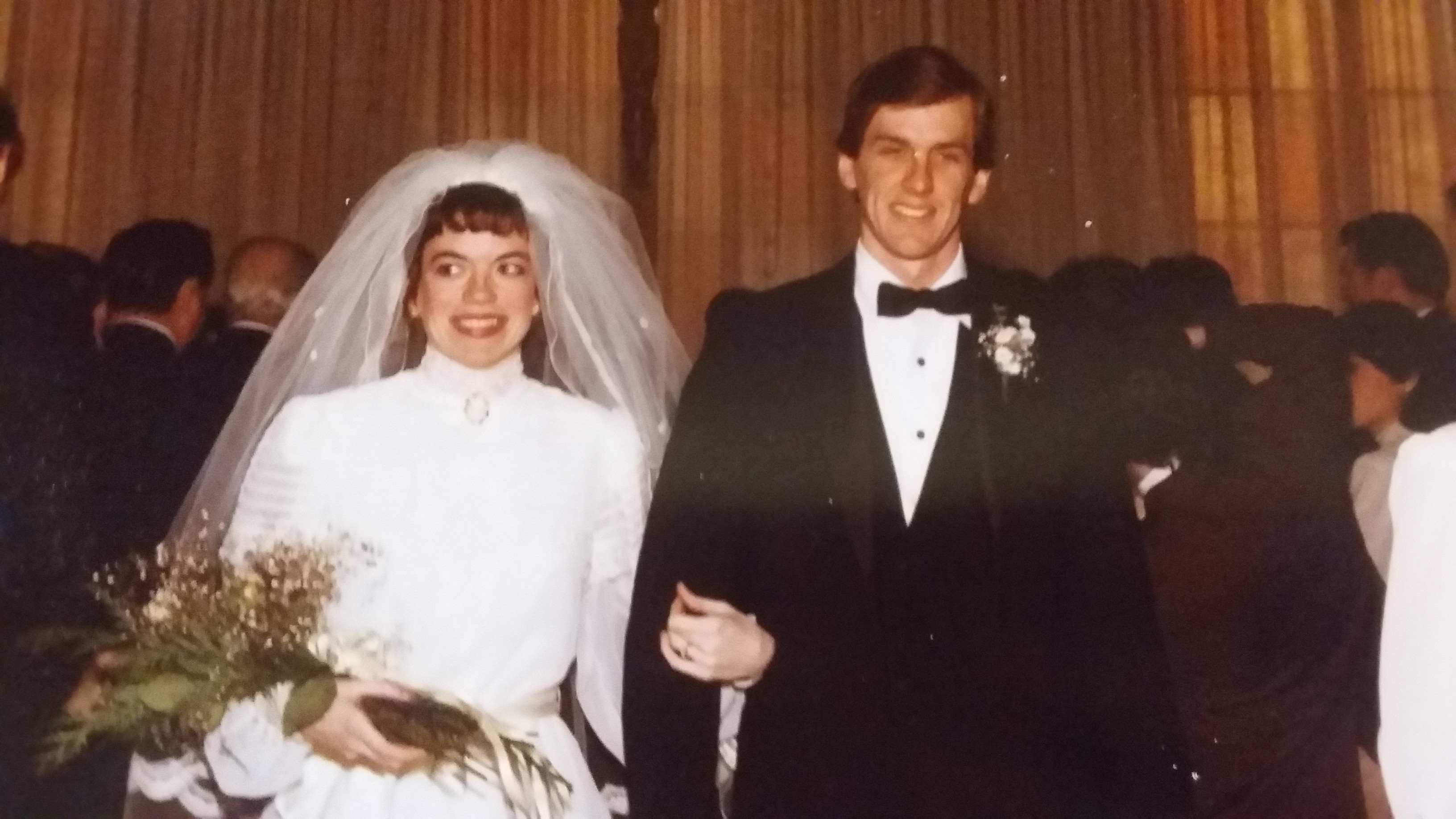
Photo: That’s us…way back in ’84. Happy Anniversary CK!

All rights reserved.

To SHARE on SOCIAL MEDIA: click on “Leave a comment” or “Comments” below (and this will bring up social media icons if they are not already present).

To LEAVE A COMMENT: click on “Leave a comment” or “Comments” below, and then scroll down to the box which says, “Leave Your Own Comment Here,” which is at the end of any comments already made. If the comment section is already present, merely scroll to the end of any comments already made.

Any ads following this note are by WordPress and not CatholicStrength.


THE VERY LAST WORDS I MIGHT SAY TO YOU!

 jesus-389376_1280

          “For I resolved to know nothing while I was with you except Jesus Christ and him crucified.” (1 Corinthians 2:2)


 I came across some very powerful notes of Father F.W. Faber (an acclaimed “master in mystical theology” according to Catholic Encyclopedia) from the second to last homily he ever preached (which was during Lent).  He first preached about the importance of penance and then he mentioned three grand helps in the spiritual battle for our souls.

In the homily he mentioned three grand helps,” the last of which, faith in hell, he lays incredible importance on – and this was in 1863. His point is that loss of belief in hell leads to laxity and spiritual death. Thus, a great safeguard against going to hell is belief in its existence, and that is his point. What’s interesting is that Jesus did not avoid telling us about hell. The key point: faith in hell is a sure deterrent from going there. When Saint Faustina was shown hell, she mentioned that so many of its occupants hadn’t believed in hell (Diary, 741).

Here is the note (by Faber):

“I would urge upon you the three grand helps, and not helps only, but facilities also, of penance. 

      
                               1.     Continual remembrance of our sins. 

                               2.    Continual remembrance of His [Jesus’] Passion. 

                               3.    Continual remembrance of an undoubting faith in Hell.”

With respect to the third point, Father Faber states:


“The devil’s worst and most fatal preparation for the coming of Antichrist is the weakening of men s belief in eternal punishment. Were they the last words I  might ever say to you, nothing should I wish to say to you with more emphasis than this, that next to the thought of the Precious Blood there is no thought in all your faith more precious or more needful for you than the thought of Eternal Punishment.“  
(Fourth Sunday in Lent, 1863; this was the last occasion but one on which Father Faber preached; from: Notes on Doctrinal and Spiritual Subjects, p.23)

These profound thoughts of a very great spiritual writer deserve a moment’s meditation.

Tom Mulcahy, M.A. 

All rights reserved.

To SHARE on SOCIAL MEDIA: click on “Leave a comment” or “Comments” below (and this will bring up social media icons if they are not already present).

To LEAVE A COMMENT: click on “Leave a comment” or “Comments” below, and then scroll down to the box which says, “Leave Your Own Comment Here,” which is at the end of any comments already made. If the comment section is already present, merely scroll to the end of any comments already made.

Any ads following this note are by WordPress and not CatholicStrength.
MARY, SAINT JOHN VIANNEY AND A EUCHARISTIC MIRACLE


 “Whoever eats my flesh and drinks my blood remains in me, and I in them.” (John 6:56)

THREE DAYS OF DARKNESS

cross-15966_640 

                     For this is God’s will, your sanctification (1 Thes. 4:3)

There is in Catholic prophecy predictions of an upcoming period of physical darkness (“three days of darkness”) in which consciences will be illuminated (purified), paving the way for a  period of great evangelization for the church. Even the very sober and trustworthy Ralph Martin posts on his website a prophecy he was given in 1975 in the presence of Pope Paul VI in Rome, and the word received by Mr. Martin then warns of “days of darkness.” I cannot comment on the merit of these predictions (see postscript below regarding three saints linked to this prophecy) since I have always felt the prophecy of my own death had an infallible ring to it (and thus was sufficient to awaken my heart to the call of the Gospel). My interest in these three days of darkness is in the explosion of holiness we would witness in friends and neighbors and in ourselves should the prophecy come to fruition. In such a scenario we would witness people we actually know ascend to incredible holiness in an amazingly short period of time. It would truly be an amazing phenomenon to witness! (a type of Pentecost).

Human beings are capable, with the assistance of grace, of incredible holiness; we are also capable, due to sin and human deceit, of immense degradation. There is, as scripture clearly tells us, a war raging in our souls between the “death-directed flesh” and the the “life-giving Spirit”. To set the mind on the flesh is death. To set the mind on the Spirit is life. Dear God, help us to chose life (see Romans 8:6)

God made us to be holy. This is our vocation: sanctification. God fills us with His own supernatural life to make us holy and unite us in love to Him. Do not underestimate your capacity for holiness, lest you underestimate God Himself. But what holds us back?, or rather what might be of aid to us in growing closer to God and becoming less infatuated with sin? I am going to suggest, relying on my good friend Father Faber, seven things that might help to supercharge our spiritual batteries! I’ll bet one or two of them might really grab your attention and be of special help to you. Here’s the list:


1. NURTURING A GREATER DESIRE FOR GOD
        
Comment: “What prepares the soul to be united with God
                              is the desire for God” (Saint John of the Cross). 
                              The united wealth of the world is as if nothing
                              compared to what God means to you. “He who
                              has God has everything” (Saint Teresa of Avila).

2. NURTURING AN ABIDING SORROW FOR SIN
      Comment:   See Faber’s famous essay, ” Abiding Sorrow for Sin,”
                             in Growth in Holiness (TAN Books). Preferred
                             devotion to aid in obtaining this grace: devotion
                             to our Lord’s Passion and Mary’s Seven Sorrows. See
                             also Chapter 3 of “All for Jesus”.

3. MEDITATING ON THE SANCTITY OF GOD
        Comment: This meditation remedies a low view of God.
                            “The more by assiduous contemplation of
                             HIS attributes we come to know the God to
                             whom we belong.” Book recommendation:
                             The Creator and the Creature” by Faber.
                             Meditating on God’s Infinite holiness helps
                             us to understand the “sinfulness of sin,” and
                             the magnitude of God’s mercy merited for
                             us by Jesus.

4. DEVELOPING A SPIRIT OF EUCHARISTIC ADORATION
       Comment:  An incredibly powerful devotion! I especially
                            recommend it to anyone who is presently enduring
                            some particular hardship or suffering. I highly
                            recommend Saint Eymard’s book, “In the Light
                            of the Monstrance,” which is truly a great book.
                            Father Eymard founded The Blessed Sacrament Fathers.


5. DEVELOPING A MORE INTENSE SPIRIT OF PENANCE
       Comment: Part of our exile here on planet earth is about 
                            penance! Joyful penance! Too much comfort
                            makes us weary of what is so powerfully good
                            for us.

6. MAKING A FIRM PURPOSE OF AMENDMENT FOLLOWING CONFESSION
       
Comment: This is about having a mega-serious attitude about your
                            promised amendment!!!!!!


7. PRACTICING SIMPLICITY
       Comment: Walks in nature, family prayer, saying the rosary, 
                           nurturing a spirit where we do not covet our neighbor’s
                           goods, etc. Faber says (I paraphrase): Look out to God.
                           Love God’s Amazing glory!! Hate the things that 
                           separate you from God. Live simply.”

We do not have to wait for days of darkness to grow in holiness. Grace is available in super-abundance through the sacraments instituted by the Lord of Life.

Tom Mulcahy, M.A.

Postscript: Three Saints who have foretold a period of three days of darkness include Saint Sister Mary of Jesus Crucified (who died in 1878 and was canonized by Pope Francis on May 17, 2015), Saint Caspar del Bufalo (died 1837), and Blessed Anna Maria Taigi (who also died in 1837 and is well known for her extraordinary mystical gifts and experiences). See pages 26-28 of Prophecy For Today by Edward Connnor (TAN). If you search the internet, you will find sites which discuss the possible imminent fulfillment of this prophecy.

All rights reserved.

To SHARE on SOCIAL MEDIA: click on “Leave a comment” or “Comments” below (and this will bring up social media icons if they are not already present).

To LEAVE A COMMENT: click on “Leave a comment” or “Comments” below, and then scroll down to the box which says, “Leave Your Own Comment Here,” which is at the end of any comments already made. If the comment section is already present, merely scroll to the end of any comments already made.

Any ads following this note are by WordPress and not CatholicStrength.

DO YOU REALLY BELIEVE THAT GOD LOVES YOU?

A METHOD OF CONTEMPORARY MEDITATION ON THE PASSION OF JESUS CHRIST

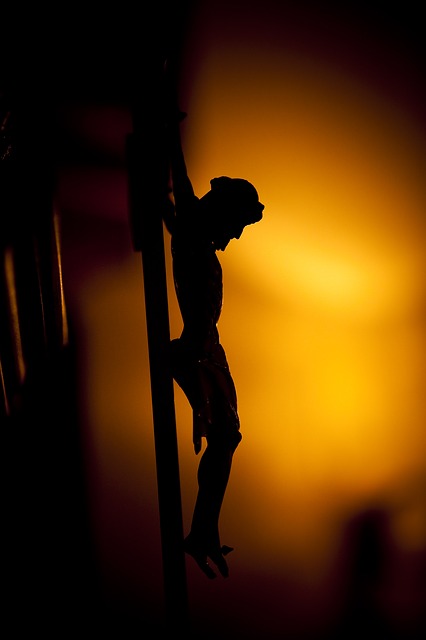
 jesus-753063_640