Author: tomlirish

WHY THE NEW TESTAMENT SUPPORTS THE IMMACULATE CONCEPTION OF MARY

“And the angel … said… : ‘Hail, full of grace, the Lord is with thee: blessed art thou among women’.” (Luke 1:28)

1. Mary’s Immaculate Conception is an infallible doctrine of the Catholic Church promulgated by Pope Pius IX , ex cathedra  (from the chair of St. Peter) on December 8, 1854. The Papal Bull reads:

“We declare, pronounce and define that the doctrine which asserts that the Blessed Virgin Mary, from the first moment of her conception, by a singular grace and privilege of almighty God, and in view of the merits of Jesus Christ, Savior of the human race, was preserved free from every stain of original sin is a doctrine revealed by God and, for this reason, must be firmly and constantly believed by all the faithful.” 

“With these words in 1854, Pope Pius IX in the Papal Bull Ineffabilis Deus, declared Mary’s Immaculate Conception to be dogma. Pius was simply affirming a long-held belief of many Christians East and West before him, that Mary was conceived free of the stain of original sin, on account of Christ’s work, in order to bear God-made-flesh.”  (From Saint John Cantius Parish web-site)

2The dogma is confirmed four years later (in 1858) by the Blessed Virgin Mary herself in the most famous of her apparitions at Lourdes. At Lourdes, when asked her name by St. Bernadette, Mary responded in an extraordinary fashion, saying, “I am the Immaculate Conception.” Since then, Lourdes has been the situs of countless miracles.

3. Some of the early Reformers, such as Martin Luther, at least initially stood firmly behind this doctrine in that they saw that Mary would have to be a pure and sinless vessel in order to communicate to Jesus his sacred and holy body. The following quote from Martin Luther is illustrative:
 
“It is a sweet and pious belief that the infusion of Mary’s soul was effected without original sin; so that in the very infusion of her soul she was also purified from original sin and adorned with God’s gifts, receiving a pure soul infused by God; thus from the first moment she began to live she was free from all sin.”
Martin Luther, (Sermon: “On the Day of the Conception of the 
Mother of God,” 1527).

4. Contrary to popular belief, the doctrine has strong scriptural support in that:

A. Gabriel announces that Mary is “full of grace” (Luke 1:28). If Mary is full of grace it follows that she is without sin (note how the angel does not call Mary by her name, but rather by a title, saying:“Hail, full of grace”  – and the angel is God’s messenger). The Ignatius Catholic Study Bible defends the traditional translation, “Hail, full of grace,” as against some modern translations, stating: “[The Greek word used by Luke], kecharitomene, indicates that God has already graced Mary previous to this point, making her a vessel who ‘has been’ and ‘is now’ filled with divine life. Alternative translations like ‘favored one’… are possible but inadequate.”   

B. Saint Luke (in his Gospel) and Saint John (in the Book of Revelation) identify Mary as the  Ark of the New Covenant, thus comparing her to the all-holy Ark of the Covenant in the Old Testament. See “Topical Essay: Mary Ark of the Covenant” in The Ignatius Catholic Bible Study or click the following on-line article from Catholic Answers: Mary, the Ark of the New Covenant | Catholic Answers

C.  Mary’s Immaculate Conception is internally consistent with the doctrine of Original Sin (which flows from a number of Old and New Testament passages, especially at Romans 5:12-21). Since original sin is transmitted by physical generation, it follows logically that Jesus, who was born without sin, would have to be born from a spotless womb. Mary is that pure and spotless vessel: the woman who overflows with God’s grace; and

D. John the Baptist was sanctified in his mother’s womb. At Luke 1:15 it states that John the Baptist was filled with the Holy Spirit even from birth. The passage, in context, reads as follows:

Then an angel of the Lord appeared to him, standing at the right side of the altar of incense. When Zechariah saw him, he was startled and was gripped with fear. But the angel said to him: “Do not be afraid, Zechariah; your prayer has been heard. Your wife Elizabeth will bear you a son, and you are to give him the name John. He will be a joy and delight to you, and many will rejoice because of his birth, for he will be great in the sight of the Lord. He is never to take wine or other fermented drink, and he will be filled with the Holy Spirit even from birth. Many of the people of Israel will he bring back to the Lord their God. And he will go on before the Lord, in the spirit and power of Elijah, to turn the hearts of the fathers to their children and the disobedient to the wisdom of the righteous—to make ready a people prepared for the Lord.”(Luke 1:11-17)

The angel then identifies himself as Gabriel, the same angel of Mary’s annunciation a few lines later at Luke 1:26, who addresses Mary, not by a name, but by a title, “Hail, Full of grace.”  The point is obvious (I think its obvious): if John was filled with the Holy Spirit from birth, what was done in God’s providence to prepare Mary to be the mother of God? Luke then, as you know, makes a direct comparison between Mary and the Ark of the Covenant, implying the incredible magnitude of her sanctity and holiness. All of this fits in very nicely with the Church’s proclamation of her Immaculate Conception.

Tom Mulcahy, M.A.

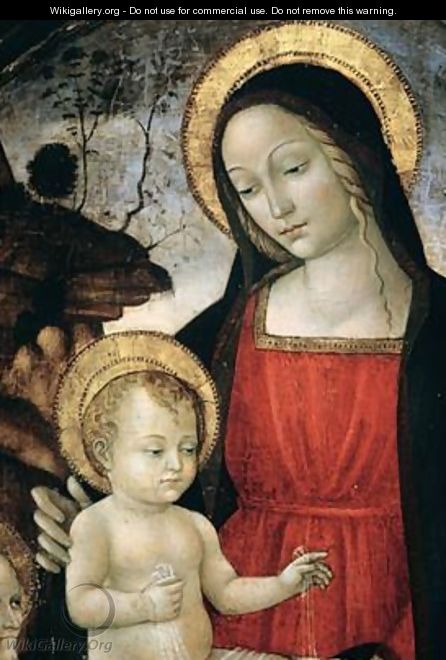
Image: The lead image, Madonna and Child 2, by Bartolomeo Montagna.  According to Wikipedia,  “This image (or other media file) is in the Public Domain [U.S.A.] because its copyright has expired. However – you may not use this image for commercial purposes and you may not alter the image or remove the WikiGallery watermark.”

To SHARE on SOCIAL MEDIA: click on “Leave a comment” or “Comments” below (and this will bring up social media icons if they are not already present).

To LEAVE A COMMENT: click on “Leave a comment” or “Comments” below, and then scroll down to the box which says, “Leave Your Own Comment Here,” which is at the end of any comments already made. If the comment section is already present, merely scroll to the end of any comments already made.

All rights reserved.

Any ads following this note are by WordPress and not CatholicStrength.

THE BLESSED VIRGIN MARY’S MERITS ARE UNFATHOMABLE


                              “HAIL [MARY], FULL OF GRACE” (Luke 1: 28)

If one reflects for a moment on the fact that Mary truly merited to become the Mother of God (“The Blessed Virgin is said to have merited to bear the Lord of all: not that she merited his Incarnation, but that she merited, by the graces she had received, such a degree of purity and sanctity, that she was fit to be the Mother of God” – St. Thomas Aquinas), then one begins to better understand the magnitude of her spiritual motherhood for all who believe (“She is mother wherever [Jesus] is Savior and head of the Mystical Body” – CCC 973).

When we consider the immense assistance Mary can provide to us in the spiritual life, it is helpful to see that the Catechism of the Catholic Church expressly says that her merits are “unfathomable,” which would seem to suggest that they are available to all of us in surplus quantity. The Catechism states:

We also call these spiritual goods of the communion of saints the Church’s treasury, which is “not the sum total of the material goods which have accumulated during the course of the centuries. On the contrary the ‘treasury of the Church’ is the infinite value, which can never be exhausted, which Christ’s merits have before God. They were offered so that the whole of mankind could be set free from sin and attain communion with the Father. In Christ, the Redeemer himself, the satisfactions and merits of his Redemption exist and find their efficacy.This treasury includes as well the prayers and good works of the Blessed Virgin Mary. They are truly immense, unfathomable, and even pristine in their value before God” (from nos. 1476-77).

In his invaluable book, True Devotion to Mary, Saint Louis De Montfort writes earnestly about the “necessity” of devotion to Mary (Chapter 1), and of the importance of developing a “great union” (1.36) with her. He attests in his book to the increase in spiritual life that comes from consecration to Mary. Of this “true devotion” to Mary, Father Faber says:

“I cannot think of a higher work or a broader vocation  for anyone than the simple spreading of this peculiar devotion [to Mary] of Saint [Louis] De Montfort. Let a man but try if for himself, and his surprise at the graces it brings with it, and the transformation it causes in his soul, will soon convince him of its otherwise almost incredible efficacy as a means for the salvation of men, and for the coming of the kingdom of Christ” (Preface to True Devotion to Mary, p. xxii).

Of the power of Mary’s mediation, Saint Pope John Paul II once said:

“In Mary’s case we have a special and exceptional mediation…Jesus Christ prepared her ever more completely to become for all people their ‘mother in the order of grace’ ” (Saint Pope John Paul II, Mother of the Redeemer, 39)

“In the communion of saints,” says the Catechism of the Catholic Church, “a perennial link of charity exists between the faithful who have already reached their heavenly home, those who are expiating their sins in purgatory and those who are still pilgrims on earth. Between them there is, too, an abundant exchange of all good things” (no. 1475).

This exchange of “all good things” is illustrated by Mary’s visit to Elizabeth. We clearly see from Luke’s Gospel that Mary’s visit had an extraordinary effect on Elizabeth, for Luke tells us that upon hearing Mary’s greeting, “the babe in Elizabeth’s womb leaped  for joy and Elizabeth, filled with the Holy Spirit”, praised Mary, exclaiming: 

“Blessed are you among women, and blessed is the fruit of your womb! And why is this granted me, that the mother of my Lord should come to me? For behold, when the voice of your greeting came to my ears, the babe in my womb leaped for joy. And blessed is she who believed that there would be a fulfillment of what what was spoken to her from the Lord” (Luke 1: 42-45).

These are tremendous words uttered by Elizabeth. Let us see exactly what happened when Elizabeth first heard Mary’s greeting. The sequence of events is breathtaking: 1. The babe in Elizabeth’s womb (John the Baptist) leaped for joy; 2. Elizabeth was filled with the Holy Spirit; 3. Elizabeth proclaims that Mary is blessed above all other women; and 4. Elizabeth proclaims Mary’s Divine Maternity, calling Mary “the mother of my Lord.” What is further, and is quite extraordinary, is that John the Baptist has been sanctified in Elizabeth’s womb, just as prophesied earlier in the same Gospel at Luke 1: 15 (these thoughts about Mary’s visitation are gathered from Mary in the Redemption by Adrienne Von Speyr).

This profound relationship between Mary and the Holy Spirit (as clearly seen by Mary’s visit to Elizabeth) was also noted by Saint Louis De Montfort, who said: “The more the Holy Ghost finds Mary, His dear and inseparable spouse, in any soul, the more active and mighty He becomes in producing Jesus Christ in that soul, and that soul in Jesus Christ” (True Devotion to Mary, 1.20).

Mary, by way of her union with the Holy Spirit, holds a very special place in the mystical body of Christ and has been granted a unique maternal office to draw us closer to Jesus. She proclaims: “My soul doth magnify the Lord” (Luke 1:46). Each of us must say, like Elizabeth, “Who am I that the mother of Jesus Christ should come to me with such amazing spiritual assistance?” And yet Jesus wills it so, and it was he who merited Mary’s maternal intercession for us and the “unfathomable” merits she possesses. Why? – because, as Father Faber says, Jesus knew how much we would love Mary.

Thomas L. Mulcahy, M.A.

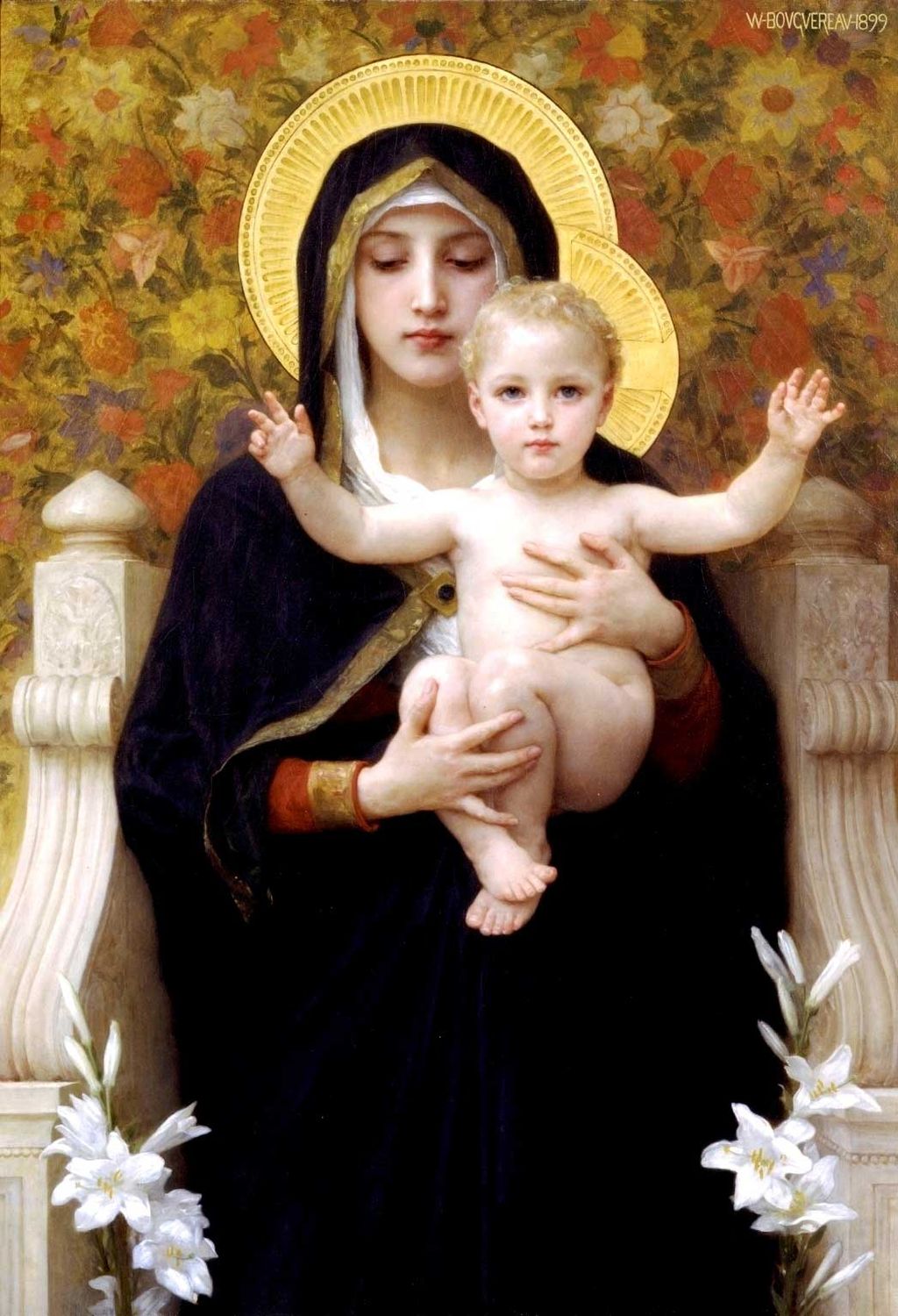
Image: The Virgin of the Lillies (Public Domain, U.S.A.)

Refrences: The quote from Saint Thomas Aquinas appears in The Glories of Mary by Saint Alphonsus de Ligouri, p.253. On the Catholic understanding of merit, see CCC 208, which states: “The merit of man before God in the Christian life arises from the fact that God has freely chosen to associate man with the work of his grace. The fatherly action of God is first on his own initiative, and then follows man’s free acting through his collaboration, so that the merit of good works is to be attributed in the first place to the grace of God, then to the faithful. Man’s merit, moreover, itself is due to God, for his good actions proceed in Christ, from the predispositions and assistance given by the Holy Spirit.” See also CCC 2010.

To SHARE on SOCIAL MEDIA: click on “Leave a comment” or “Comments” below (and this will bring up social media icons if they are not already present).

To LEAVE A COMMENT: click on “Leave a comment” or “Comments” below, and then scroll down to the box which says, “Leave Your Own Comment Here,” which is at the end of any comments already made. If the comment section is already present, merely scroll to the end of any comments already made.

All rights reserved.

Any ads following this note are by WordPress and not CatholicStrength.

SOME RELATIONSHIPS ARE NURTURED IN SILENCE

“When all things were in deepest silence and night was in the midst of her swift course, your almighty word, O Lord, leapt down from your royal throne….” (Wisdom 18: 14-15)

In this note I will discuss very briefly the spiritual value of silence, acknowledging that it would be hard to overemphasize the value and importance placed on silence by the great spiritual writers. My main conclusion will be that the deep awareness of God’s own magnificent presence in our souls is nurtured by silence.

If we meditate for a moment on the silence that existed between Jesus and Mary during the time she carried Him in her womb, and what transpired between her and Jesus during those nine months, our hearts are filled with awe and wonder, and we see anew that silence is not an emptiness but a condition for greater fullness, for greater life, for greater love.

There can be no doubt that exterior silence greatly aids in promoting an interior awareness of God’s presence. It says in the Gospel of Luke, for example, that Jesus “withdrew himself into the wilderness, and prayed” (Luke 5:16).  And Saint John of the Cross – a great master of interior prayer –  loved to pray in the mountains. But it is not always possible to be in the wilderness or in the mountains, and we are advised that “when you pray, go into your room, close the door and pray to your Father, who is unseen. Then your Father, who sees what is done in secret, will reward you” ( Matt. 6:6).

Saint Faustina says that “in order to hear the voice of God, one has to have silence in one’s soul and to keep silence; not a gloomy silence, but an interior silence; that is to say, recollection in God. One can speak a great deal without breaking silence and, on the contrary, one can speak little and be constantly breaking silence” (118). “In silence I tell you everything, Lord, because the language of love is without words” (1489).

Dr. Susan Muto, a contemporary Catholic writer who has written extensively on the spiritual life, discusses how essential growth in inner silence is. She says: “Silence is not only an essential component of the spiritual life we must preserve if we want to welcome God’s word; it is that which preserves us. What is silence? To be silent is not merely to be mute. Spiritual silence is an emptying of self to make room for God. Ultimately it is only silence that can open us to a deeper experience of God….Each time we retreat to a corner of silence in our project-oriented world, we put ourselves in a state of peaceful readiness. We become docile” (Am I Living A Spiritual Life?, pp. 29-30).

Muto adds in another book, “In silence the scattered pieces of my life fall into place, and I see again where I am going. Silence puts me in touch not only with the human spirit in all its richness, but also with the Holy Spirit. It opens me to the dimension of transcendence….Silence becomes a sanctuary in which faith, hope and love are restored. It readies me to listen to words that ring with eternal truths. Silence is almost like a psychic force that produces a heightened capacity for meditation, prayer, and contemplation” (Pathways of Spiritual Living, pp. 56-57).

“Contemplative prayer is silence, the ‘symbol of the world to come’ or ‘silent love.’ Words in this kind of prayer are not speeches; they are like kindling that feeds the fire of love. In this silence, unbearable to the ‘outer’ man, the Father speaks to us His incarnate Word, who suffered, died, and rose; in this silence the Spirit of adoption enables us to share in the prayer of Jesus” (Catechism of the Catholic Church, 2717).

Saint Pope John Paul II adds the following about the importance of silence while praying: “Listening and meditation are nourished by silence….  A discovery of the importance of silence is one of the secrets of practicing contemplation and meditation. One drawback of a society dominated by technology and the mass media is the fact that silence becomes increasingly difficult to achieve.”

To be aware of God’s presence within your soul is a great help in the spiritual journey. The Benedictine monk and well known spiritual writer, Dom Hubert van Zellar, makes this point in a wonderful way in How to Find God:

“The discovery of God present in the soul is one of the most momentous in the soul’s spiritual career…Once the soul has grasped the significance of this doctrine [that God indwells a baptized soul that is in sanctifying grace], the whole horizon changes; the implications are limitless…More and more, the soul of prayer should come to realize that it is the Holy Spirit who is acting….” (edited from pages 119-121).

This great discovery of God present in your soul is nurtured by silent prayer. I therefore close with these challenging but also encouraging words from one of the great Masters of prayer in the Catholic tradition, Father Jean Nicolas Grou, who writes:

“Do not tell me you can pray with your heart only when you are praying with your mouth….The heart when it prays often invites and even forces the mouth to be silent: and if this silence is unknown to you…how greatly you are to be pitied if you know nothing of this interior prayer and never practice it. My intention is not by any means to disturb and alarm Christian souls [but] to convince them that there is a more excellent way than praying aloud…to beg the Holy Spirit to teach us…to try again and again to keep silence in God’s presence for a few moments; to refuse to be discouraged; to keep our imagination from taking fright; to accustom our minds to it little by little. [T]hose who follow this road with discretion will find it profitable, and will be glad that they made the effort….” (How to Pray, pp.63-67, as edited).

Thomas L. Mulcahy, M.A.

P.S. In nature God is present in his creation by His immensity, similar to how an artist is present in his work, but in a more radical or powerful way. But by way of sanctifying grace, God truly indwells a baptized soul, not secondarily but as truly and really present. The title for this note comes from a colorized FB post which said: “Some relationships are nurtured in silence.”

To SHARE on SOCIAL MEDIA: click on “Leave a comment” or “Comments” below (and this will bring up social media icons if they are not already present).

To LEAVE A COMMENT: click on “Leave a comment” or “Comments” below, and then scroll down to the box which says, “Leave Your Own Comment Here,” which is at the end of any comments already made. If the comment section is already present, merely scroll to the end of any comments already made.

All rights reserved.

Any ads following this note are by WordPress and not CatholicStrength.


WHY AMORIS LAETITIA IS MUCH WORSE THAN ORIGINALLY THOUGHT

“I am not speaking only of the divorced and remarried, but of everyone, in whatever situation they find themselves.” (Pope Francis)

From the beginning the controversy regarding Amoris Laetitia has been portrayed as being limited to whether a divorced and civilly remarried Catholic might be permitted, in certain circumstances, to receive Holy Communion. The purpose of this note is to demonstrate that the reach of Amoris Laetiti goes well beyond just the divorced and remarried, at least for those who do not intend to interpret the exhortation through the previous teachings of the Church regarding the impermissibility of exceptions for intrinsically evil acts.

In fact, in the controversial Chapter 8 of Amoris Laetitia Pope Francis states that the type of mercy being advocated is not just for the divorced and remarried but for everyone “in whatever situation.” He states:

297. It is a matter of reaching out to everyone, of needing to help each person find his or her proper way of participating in the ecclesial community and thus to experience being touched by an “unmerited, unconditional and gratuitous” mercy. No one can be condemned for ever, because that is not the logic of the Gospel! Here I am not speaking only of the divorced and remarried, but of everyone, in whatever situation they find themselves. 

In a 2016 letter to Pope Francis, distinguished professors Germain Grisez and John Finnis pointed out just how easy it would be for those not committed to Catholic orthodoxy to interpret Paragraph 297 of Amoris Laetitia in a way that runs profoundly afoul of Catholic morality, and they petitioned the Pope to correct such a misunderstanding (see, “The Misuse of Amoris Laetitia to Support Errors Against the Catholic Faith,” available online). These professors provided numerous examples in their letter as to how no. 297 could be used to support immoral behavior.

Even within the parameters of a more restrictive interpretation, AL 297 specifically mentions couples “living together,” and by the time you get to paragraph 301 the generalized use of the term “irregular situations” begins to appear. No precise definition of what “irregular situations” means is given, but one presumes the more generalized language is purposeful.

Here is the very troubling passage from Amoris Laetitia (no. 301) which clearly suggests that a person can be in a “concrete situation” where he has no choice but to live in mortal sin (and is thus justified in remaining in his objectively sinful condition even though he knows the rule):

301.  For an adequate understanding of the possibility and need of special discernment in certain “irregular” situations, one thing must always be taken into account, lest anyone think that the demands of the Gospel are in any way being compromised.  The Church possesses a solid body of reflection concerning mitigating factors and situations. Hence it is can no longer simply be said that all those in any “irregular” situation are living in a state of mortal sin and are deprived of sanctifying grace.  More is involved here than mere ignorance of the rule.  A subject may know full well the rule, yet have great difficulty in understanding “its inherent values”, or be in a concrete situation which does not allow him or her to act differently and decide otherwise without further sin.  

Amoris Laetitia, no. 303, contains another very controversial statement made by Pope Francis, stating that a person can come to the realization that God wills him to stay in his sinful condition. It reads, in pertinent part:

“Yet conscience can do more than recognize that a given situation does not correspond objectively to the overall demands of the Gospel. It can also recognize with sincerity and honesty what for now is the most generous response which can be given to God, and come to see with a certain moral security that it is what God himself is asking amid the concrete complexity of one’s limits, while yet not fully the objective ideal. In any event, let us recall that this discernment is dynamic; it must remain ever open to new stages of growth and to new decisions which can enable the ideal to be more fully realized.”

In his great encyclical on Catholic morality, Veritatis Splendor, Saint Pope John Paul II specifically foresaw and rejected the type of argument put forth in Amoris Laetia (303) quoted above. He stated very clearly that

“It would be a very serious error … to conclude that the Church’s teaching is essentially only an “ideal” which must then be adapted, proportioned, graduated to the so-called concrete possibilities of man.” (VS 103) 

Still further, Saint John Paul II stated:

“circumstances or intentions can never transform an act intrinsically evil by virtue of its object into an act “subjectively” good or defensible as a choice.” (VS 81)

Pope John Paul II explained in Veritatis Splendor the clear Catholic teaching that an intrinsically evil act cannot be creatively transformed into something willed by God under concrete circumstances (the suggestion put forth in AL 303 and 301).

“The negative moral precepts, those prohibiting certain concrete actions or kinds of behavior as intrinsically evil, do not allow for any legitimate exception. They do not leave room, in any morally acceptable way, for the “creativity” of any contrary determination whatsoever.” (Veritatis Splendor 67)

“The negative precepts of the natural law are universally valid. They oblige each and every individual, always and in every circumstance. It is a matter of prohibitions which forbid a given action semper et pro semper, without exception.” (VS 52)

By trying to claim that an intrinsically evil act like adultery, fornication or other “irregular situation” may be the most generous response a person can give to God at a certain moment in his life, Pope Francis has embraced situation ethics and has strayed far from the firm and authentic foundations of Catholic morality. Pope John Paul II had already warned that such an argument is clearly erroneous.

CONCLUSION: Amoris Laetitia potentially opens the door to the justification of practically any type of mortal sin, not only because it is arguably for “everyone” in “all situations,” but also because “no area of Christian morality can remain unscathed” if the general statements about moral acts in the document are considered valid, to quote the great Dominican scholar, Father Aidan Nichols. For example, why would a married gay couple not be able to claim under the rationale of Amoris that their union is the best response they can make given their concrete situation. Thus, when Dr. Joseph Seifert referred to Amoris Laetitia as a “theological atomic bomb” which in essence would blow up Catholic morality, making all Catholic morality essentially optional, his opinion was not mere hyperbole.

Amoris Laetitia has created quite a mess for those who teach moral theology. One could forcefully argue it is the greatest threat to Catholic morality the Church has ever encountered.

Thomas L. Mulcahy, M.A., J.D.

To SHARE on SOCIAL MEDIA: click on “Leave a comment” or “Comments” below (and this will bring up social media icons if they are not already present).

To LEAVE A COMMENT: click on “Leave a comment” or “Comments” below, and then scroll down to the box which says, “Leave Your Own Comment Here,” which is at the end of any comments already made. If the comment section is already present, merely scroll to the end of any comments already made.

All rights reserved.

Any ads following this note are by WordPress and not CatholicStrength.

WHY THE FEAST OF ALL SAINTS IS SO IMPORTANT!

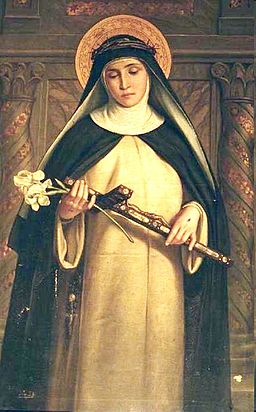
(Saint Catherine of Siena)

“Or do you not know that the saints will judge the world?” (1 Corinthians 6:2)

There is a reason why the feast of All Saints is, in essence, the culmination of all other Feasts! This is because each new saint is a manifestation of the triumph of the Gospel. Thus, the great spiritual writer, Father Olier, says:

“In a certain sense the feast of All Saints seems to me to be greater than that of Easter or the Ascension because this mystery perfects our Lord. But Jesus as Head is not perfect except in union with all His members, who are the saints….This feast is very glorious because it is an external manifestation of the life hidden in Jesus Christ, for all the excellency of the perfection of the saints is nothing more than an emanation of His Spirit poured forth on them” (The Mystical Evolution, Volume 2, p.501).

It would therefore be a mistake to think that the saints have merely an ornamental presence in Heaven. As Saint Paul says rather boldly at 1 Corinthians 6:2, “Do you not know that the saints shall judge the world.” Commenting on this verse, The Ignatius Catholic Study Bible says: “Only here in the Bible do we learn that Christians will condemn both unbelievers (6:2) and fallen spirits (6:3) at the final judgment” (see also Revelation 20:4).

In a profound text entitled, “How the Saints Save and Judge the World”, the great Dominican, Father Albert L. Weiss, says:

“In His merciful Providence God sent each saint to remind the world of its duties and to save it from its corrupt life. The saints, whose lives are a flagrant contradiction to the worldly spirit in general and to that of their own age in particular, are selected as instruments of salvation by the compassionate Doctor to the nations. But he who does not accept them as mediators, must accept them as judges, just as he must accept Jesus Christ, who did not come to judge the world but to save it (John 3:17)…. For those who receive the saints, they are a great means of salvation. A people will never fall hopelessly into corruption as long as they have a single saint” (The Mystical Evolution, Vol. II, p. 373, as edited).

“The witnesses who have preceded us into the kingdom, especially those whom the Church recognizes as saints, share in the living tradition of prayer by the example of their lives, the transmission of their writings, and their prayer today. They contemplate God, praise him and constantly care for those whom they have left on earth. When they entered into the joy of their Master, they were ‘put in charge of many things.’ Their intercession is their most exalted service to God’s plan. We can and should ask them to intercede for us and for the whole world” (Catechism of the Catholic Church, 2683).

And on this subject of the importance of the saints, Father Faber warns us to not underestimate the dignity and power they hold:

The honor of God …is deeply implicated in the worship paid to the saint. In some sense [God] is more jealous of it than of His own; less patient of levity with [His saints] than with Himself, and frequently punishes persons for this [levity]. The saints themselves have entered into the dispositions of God, and, with a sort of vindictive holiness, hard for us in our present state to understand, resent familiarities and impertinences….  Faith is the chief ingredient in a true devotion to the saints; faith is the reality of their power, and of their relationship towards us. It is a great sign of a man being supernatural when he fears to offend a saint. The favors of the saints form a great department of the Divine Mercies, and play an important part in the sanctification of holy men….” (from: Notes on Doctrinal and Spiritual Subjects, Volume I, pages 381-82.).

Father Weiss explains that “the saints have always been the most faithful sons of the Church….The more united anyone is to the Church, the more certain he is of union with her Founder and Lord, the author of all graces and the model and end of all sanctity. The more tightly one is bound with the mystical body of Jesus Christ, the more he adheres to this divine Head….” (Id at 485).

“All the good we do,” says a great spiritual writer, “Jesus Christ does in us.” Accordingly, “we may say that [Jesus] has done, in a manner, all the good works of the Saints….” Thus, “when we keep the feast of some Saint, we keep the feast of Jesus Christ, who is the author of all the sanctity of the Saints” (Father L. Lallemant, The Spiritual Doctine, p.262).

What could give Jesus more glory than the success of the Gospel verified by the saints? The saints, then, are the fruit of the redemptive Incarnation, and are coheirs with Jesus Christ, sharing in His glory (Romans 8:17). “God is glorified in His saints” ( 2 Thes. 1:10).

Tom Mulcahy, M.A.

Image: Saint Catherine of Siena by an anonymous painter, 19th century (Public Domain, U.S.A.)

To SHARE on SOCIAL MEDIA: click on “Leave a comment” or “Comments” below (and this will bring up social media icons if they are not already present).

To LEAVE A COMMENT: click on “Leave a comment” or “Comments” below, and then scroll down to the box which says, “Leave Your Own Comment Here,” which is at the end of any comments already made. If the comment section is already present, merely scroll to the end of any comments already made.

All rights reserved.

Any ads following this note are by WordPress and not CatholicStrength.

YOU ARE SURROUNDED BY SAINTS WHO CARE ABOUT YOUR SALVATION!


“…we are surrounded by such a great cloud of witnesses….”  (Hebrews 12:1)

THE CATHOLIC SAINTS ARE A KEY TO UNDERSTANDING THE MEANING OF LIFE


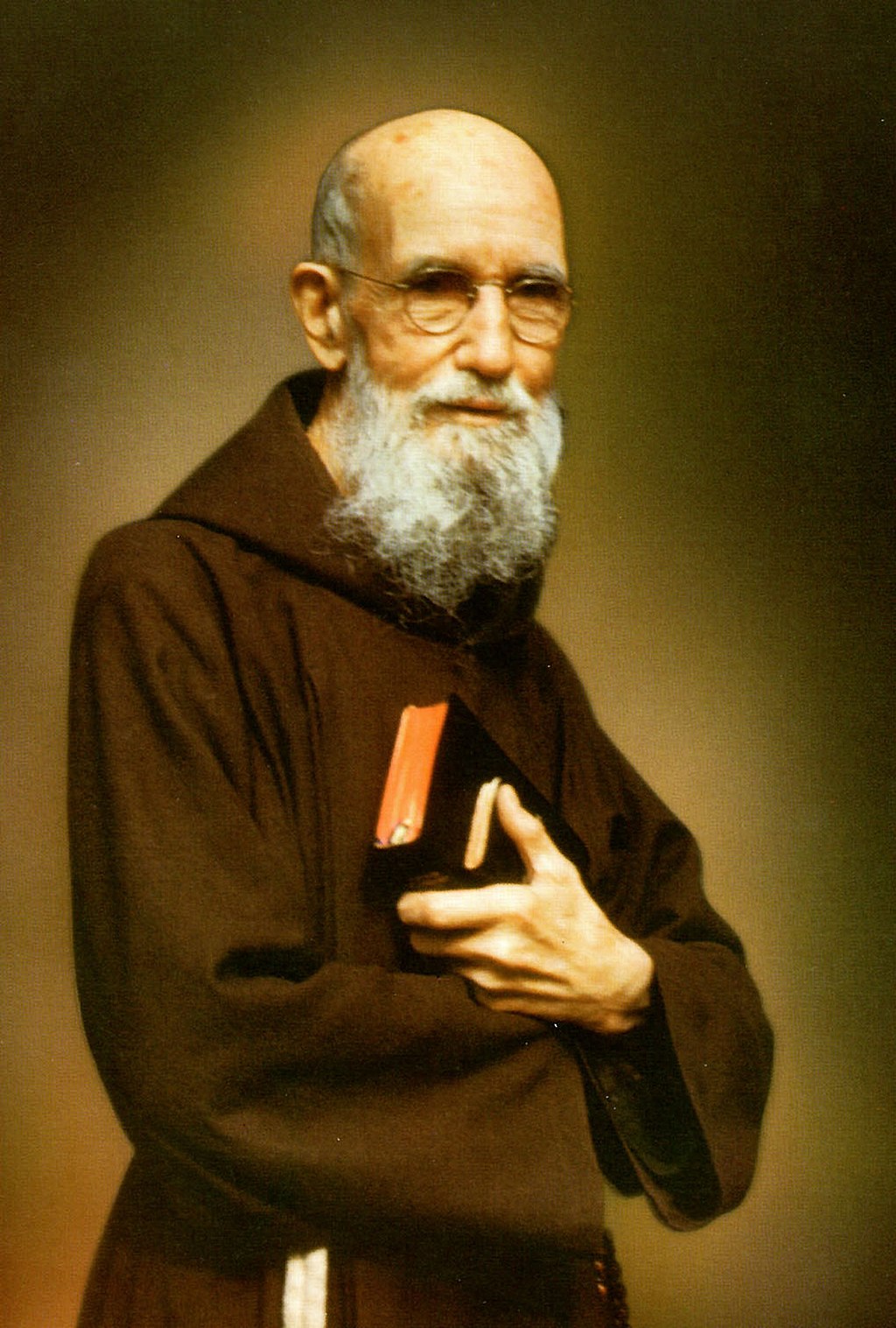
(Father Solanus Casey who will be beatified on Nov. 18, 2017)

                           “[God] is Glorified in His Saints” (2 Thes. 1:10)

We are all looking for evidence and knowledge that points to the ultimate meaning of life. And the purpose of this note is to suggest that the Catholic Saints hold the key (or should I say a key) to unlocking and discovering the meaning of life. Indeed, the more we study the lives of the saints, the more we will discover the meaning of life.

This interest in the saints “is not an interest of mere pious curiosity. It is inspired by the growing realization that the saints, and the saints alone, have found what all other men are vainly seeking – a real life. It is beginning to dawn on the intelligence of those who are sincerely searching for the truth and who, with unprejudiced minds, are seeking for a solution to the problem of existence that the real men and women are the saints and it is only they who know what life is” (The Holy Spirit, p. 11, Father Edward Leen).

Father Leen. a great spiritual writer who died in 1956, adds: “Earnest souls are beginning to regard the saints…as men and women who have received a deep initiation into the secret of living and who are, in consequence, apt to initiate others. It is felt that they alone know while all others are but groping in a state of more or less blindness. The saint is recognized to be the one who really succeeds in finding life and is, therefore, studied chiefly as an ‘essayist on living’. They considered their highest knowledge to be…persevering contact with God.”

Take, as one example, Father Solanus Casey, who lived and worked for many years in Detroit as the door-keeper at Saint Bonaventure’s (not very far from where I am writing this note). Although he is presently only “Venerable,” this Capuchin priest who died in 1957, and will be beatified on November 18 of this year, was deeply initiated into the true meaning of life. As a consequence of this initiation he had great confidence in God and a profound love for the poor and sick. A number of books have been written about his ministry to the sick (who would come to see him at St. Bonaventure’s where he was a simple porter) and the many healing miracles attributed to him (from which he got the reputation as a miracle worker). His simple life touched the lives of so many people seeking hope, healing and encouragement, and continues to do so. I have personally sought his intercession at the site of his tomb in the Solanus Casey Center in Detroit, and I know many other people who have done likewise (see solanuscenter.org). Father Solanus, pictured above, is one example of how a “Saint” shows to us the true meaning of life.

Take, as another example, the renowned and holy priest of Ars, Saint John Vianney. He died in 1859 and was canonized in 1925. He labored incessantly to restore the faith and vitality of the villagers in Ars, sometimes spending up to 18 hours a day in the confessional. He lived a very austere and mortified life. One thing we can learn from his life, in contrast to the cynicism and anti-supernaturalism of our age, is that miracles actually do occur. This saintly priest tells us in his own written words of a miracle he personally witnessed. He tells a story  about a parishioner of his who was having trouble believing the host really becomes the body of Jesus Christ at Mass. The parishioner said a sincere prayer to the Blessed Virgin Mary asking her to help him believe. St. John Vianney then relates what happened as he was distributing communion:

“I do not say this happened to someone else, but that it happened to myself. At the moment this man came up to receive Holy Communion, the Sacred Host detached Itself from my fingers while I was still a good way off, and went off Itself and placed Itself upon the tongue of that man.”

And in more recent times we have the Eucharistic prodigy involving Blessed Alexandrina da Costa. Her life was one of expiatory suffering and was intimately tied to the Passion of Jesus. She lived exclusively on the Eucharist for 13 years and was beatified by Pope John Paul II on April 26, 2004, now himself a Saint! To understand the incredible magnitude of this Eucharistic miracle, consider for a moment that a human being would be lucky to survive even one week without water.

There is a beautiful book about her by Francis Johnston in which is revealed the revelation she received that many people would become “ardently Eucharistic” through devotion to her. Please note that she was placed in a hospital for forty days and under intense observation was observed to keep her Eucharistic fast, living only on the Bread of Life, which was her sustenance (the official report of Dr. Araujo “confirmed the prodigy as ‘scientifically inexplicable,’ [and stated] it is absolutely certain that during forty days of being bedridden in hospital [Alexandrina] did not eat or drink….”).

She died in 1955. The manner in which she predicted the supernatural decomposition of her body was observed to have occurred, and no doubt this sped up the process of her rapid beatification. If you are looking for truth, the life of Blessed Alexandrina da Costa says look to the Eucharist!

A great spiritual writer, Father John G. Arintero, tells us that “one saint is sufficient to illumine a century.” And in our present times how many of us were greatly influenced – and even returned to the Catholic faith – because of the illuminating life of Saint Pope John Paul “the Great.” It is not possible in this short note to relate how this priest, pastor, philosopher and Pope, not to mention mystic and theologian, profoundly influenced the course of the Church and world events for the better. But his impact and holiness were so huge that he has already been canonized a Saint, and there is little doubt that his encyclicals and other papal writings will greatly guide the church for years and decades to come. And what does this saint tell us?: he tells us that a major turning point in his life, in his growth in holiness, was the consecration of his life to the Virgin Mary.

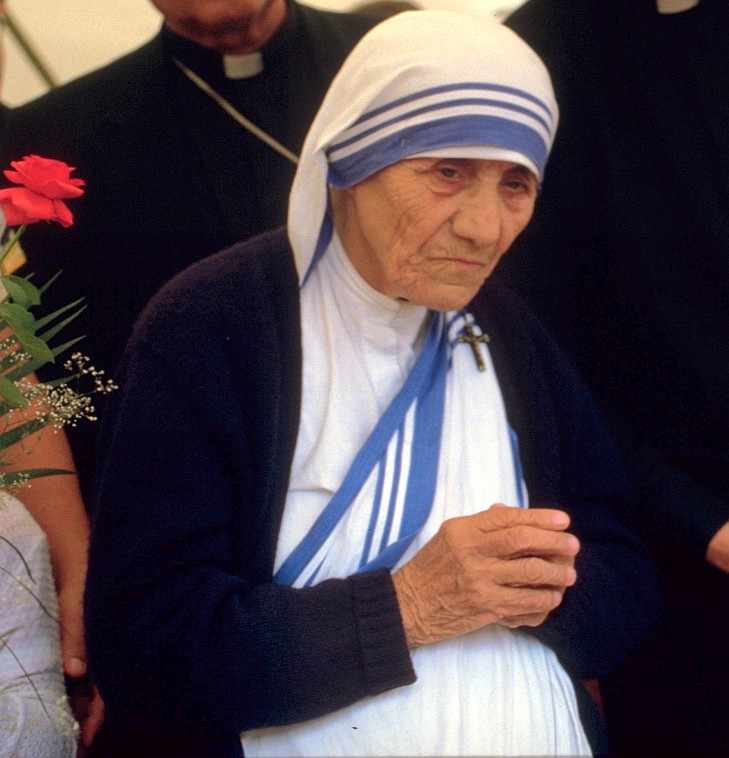
And Saint Mother Teresa, canonized by Pope Francis on September 4, 2016, also had a huge impact on the world through her devotion to the poor. And, like Saint Pope John Paul II, she made and greatly valued the DeMontfort consecration to the Blessed Virgin Mary. Additionally, she placed a high priority on the Eucharist and Eucharistic adoration. She was always seen carrying a rosary. An excellent book which sets forth the nature of her mystical life, and the communications she received from Jesus and Mary, is Come Be My Light by Father Brian Kolodiejcchuk.

MotherTeresa_094

The great spiritual writer, Father Albert M. Weiss, says that those who “receive the saints” find a “great means of salvation.” He adds: “A people will never fall hopelessly into corruption as long as they have a single saint.”

Can we not see that the lives of the saints, with all their supernatural manifestations of grace, show us what truth really is and WHO truth really is?

The Saints are so many mirrors reflecting the life of Jesus Christ. And Jesus Christ is the Way, the Truth, and the Life (John 14:6).

Tom Mulcahy, M.A.

Photo Attribution: The photo of Mother Teresa is by Turelio, July 13, 1986 under a Creative Commons Attribution-Share Alike 2.0 Germany license (found at Wikipedia). The photo or drawing of Father Solanus Casey is by photographer Mohatma Gandhi under the Creative Commons Attribution-Share Alike 3.0 Unported license (at Wikipedia).

ReferencesThe Holy Spirit by Father Edward Leen; Saint John Paul the Great by Jason Evert (see quote by Cardinal George on back cover); Nothing Short of a Miracle by Patricia Treece; Alexandrina: The Agony and the Glory by Francis Johnston; The Mystical Evolution by Father John G. Arintero; The Little Catechism of the Cure of Ars (TAN); and Dictionary of Saints by John Delaney.

To SHARE on SOCIAL MEDIA: click on “Leave a comment” or “Comments” below (and this will bring up social media icons if they are not already present).

To LEAVE A COMMENT: click on “Leave a comment” or “Comments” below, and then scroll down to the box which says, “Leave Your Own Comment Here,” which is at the end of any comments already made. If the comment section is already present, merely scroll to the end of any comments already made.

All rights reserved.

THE BIBLICAL BASIS FOR PURGATORY


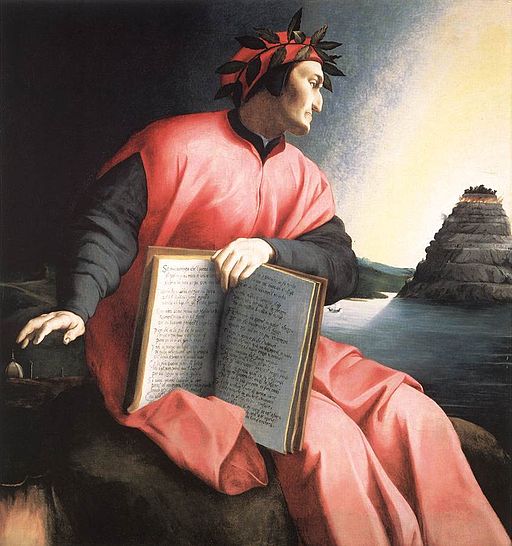
(LIGHT AND HOPE: DANTE SEES PURGATORY IN A PORTRAIT BY AGNOLO BONZINO, PUBLIC DOMAIN, U.S.A.)

                       “For our God is a consuming fire.” (Hebrews 12:29)

In his encyclical on hope, Spe Salvi, Pope Benedict XVI does a wonderful job of demonstrating how 1 Corinthians 3:10-15 clearly supports the doctrine of Purgatory. It is interesting to note, as well, that Dr. Scott Hahn, a Protestant convert, mentioned this New Testament passage in 1 Corinthians as being decisive for him in accepting the Church’s teaching on Purgatory (he says, “I must admit that theologically and psychologically 1st Corinthians 3 basically sealed it up. It was all sewn up for me when I worked through this, praying, studying, pondering. I think it’s strong and clear.”).

A QUICK TOUR OF THE SEVEN MYSTICAL MANSIONS OF SAINT TERESA OF AVILA


    “I began to think of the soul as if it were a castle made of a single diamond.”

Introduction: This note is merely a summary of Saint Teresa of Avila’s great book on Catholic mysticism, The Interior Castle, which was first published in 1588. The Saint herself, a Carmelite nun, was a great mystic, and her personal style of writing demonstrates that she composed The Interior Castle from profound personal experience. Her Feast Day is October 15.

1. The soul.  Saint Teresa of Avila begins her famous book about the soul’s progress in prayer and virtue by lamenting how little effort many people make to care for their immortal souls. She states that “faith tells us that we possess souls” made in the image and likeness of God. Therefore, we should take time to consider the “soul’s great dignity and beauty,” and to “carefully preserve the soul’s beauty.” (Intr. 11; IC 28-29)

2. The castle metaphor. Teresa envisions the soul “as if it were a castle made of a single diamond” in which there are seven mansions (each mansion containing many rooms). The outer walls of this castle constitute the human body. Outside the castle there are many “venomous creatures” who represent the attraction of sin which the soul is now trying to overcome. Those outside the castle are paralyzed by sin. (IC 28)

3. God dwells in the soul. A central concept of Teresa’s spirituality is the realization that God is immanent – that is, He dwells within the innermost mansion of the human soul (thus, using Teresa’s image of the castle, He dwells in the seventh mansion). “All harm comes to us from failing to realize that God is near.” For “the Kingdom of God is within you” (Luke 17:21).

4. The soul’s mission. The soul can journey within these mansions to unite itself to God, so as to plant itself, like a tree, in the “living waters of life.” This journey to God is the soul’s essential mission. Even in this lifetime, the soul can make it all the way to the seventh mansion where it is completely united with God. This journey is completed in Heaven where the soul experiences the beatific vision. (IC 33)

5. The soul’s enemy: mortal sin. If we knew how much damage one mortal sin does to the soul, Teresa believes we would go to the “greatest trouble imaginable” to avoid committing such a sin. “No thicker darkness” clouds the soul than mortal sin: it produces nothing but “misery and filth,” bringing “endless and eternal evils in its train.” (IC 33-34)

6. The journey begins with forgiveness. We need to “beg” God to “deliver us” from such evil, and to redeem ourselves “in the blood of Christ,” so as to “remove the pitch which blackens the diamond.” (IC 35)

7. We enter the castle through prayer. Escaping the “snakes and other poisonous creatures” that live outside the castle, and redeemed by God’s boundless mercy, the soul enters the castle through prayer. “Souls without prayer are like people whose bodies and limbs are paralyzed.” (IC 31)

8. THE FIRST MANSION. Entering the first mansion through the practice of prayer, the soul needs to spend time in the rooms of “self-knowledge” and humility. In these rooms, the soul spends time meditating on its own “baseness” and God’s goodness, and turns from thinking about itself to setting its “eyes upon Christ, our Good,” lest the devil should deceive the soul once more to prefer sin to God. Teresa sternly warns the nuns she is writing to that “without humility all will be lost.” (IC 38)  To defend itself from the attractions of “worldly pleasure” and “worldly ambition,” as well as the deceptions of the devil, Saint Teresa advises the soul “to make the [Lord’s] blessed Mother” the soul’s “intercessor, and also His saints, so that these may do battle for the soul….” (IC 40)

NOTE: Mansions 1-3 correspond to the purgative stage of the journey (turning from sin to virtue); mansions 4-5 correspond to the illuminative stage of the journey (entering into supernatural prayer); and mansions 6-7 correspond to the unitive stage of the journey (spiritual betrothal and marriage). Additionally, mansions 1-3 correspond to the active part of the journey, where the soul is conscious of its own effort, supported by grace, to overcome sin and draw closer to God, whereas mansions 4-7 correspond to the passive part of the journey, where the soul becomes aware that God is acting upon it. (Reference: Mary E. Giles, 161; and as explained by Saint Teresa herself)

9. THE SECOND MANSION. In the second mansion the soul is growing in holiness through perseverance in prayer, conversations with good people, reading good books and listening to edifying sermons. The soul spends time in the room of the practice of prayer. The soul is moving farther into the castle as it purges its imperfections and grows in charity. It now has a greater desire for God. Here the devil begins to wage a fierce war against the soul, reminding the soul of the pleasures and honor the soul formerly experienced outside the castle. Consequently, for the soul to persevere, it is vital that the soul “flee evil companionship” and be willing to embrace suffering. The soul must not abandon prayer, and should immediately seek God’s mercy should it fall or stumble. (Intro. 11; IC 47)

By now the soul is advancing in prayer. Besides meditation, it is now learning how to concentrate the mind in order to effect recollection of the soul (the prayer of active recollection, IC 52). Teresa tells us that if we quietly speak to Him within our souls, He will hear us. She says, “The Lord is within us and we should be there with Him.” She further states that this prayer is “called recollection because the soul collects together all the faculties and enters within itself to be with its God.” The prayer of active recollection begins by the soul withdrawing the senses from all outward things, and thus consciously closing its eyes the soul looks inwardly to be with her King (God). We thus retire within ourselves to find God. This is not yet supernatural prayer since the soul’s own effort is crucial and controlling. Teresa explains in detail how to enter into this type of prayer in The Way of Perfection, chapters 28-29. Regarding this prayer, Teresa states:

 “I only beg you to test it, even at the cost of a little trouble. I assure you…you will find Him within you.”

Teresa recommends practicing this form of prayer for six months to a year, saying that once the “Lord has granted it, you will not exchange it for any treasure.” As a practical matter this exercise is best carried out in a quiet setting and in a prayerful posture. Then, after having recollected yourself, look inwardly and speak with your mind and heart to the infinitely good Father who dwells within (note: above paragraph based primarily on The Way of Perfection).

Note: Here we see a fundamental difference between meditation and mental prayer. We meditate using images and symbols, such as meditating on a Gospel scene. In mental prayer, the aim is to bypass mediated, symbolic knowledge and to seek direct contact with God in our soul. Meditation and active recollection are similar to the extent they involve primarily the soul’s own effort in prayer, whereas passive (supernatural) recollection involves God’s own action upon the soul. Thus, when I use the terms interior, mental, mystical or contemplative prayer, I am referring to what Saint Teresa calls the prayers of active and then passive recollection, all in contrast to meditative prayer. However, meditative prayer is still invaluable even when the soul begins to make progress in mental or interior prayer (moreover, meditation can effectively serve as a platform for interior prayer, having ignited a flame through reasoned considerations contained in a book, for example, so that the soul then seeks God inwardly).

Recommendation: If you begin the practice of interior prayer (active recollection, it is recommended that you do so in conjunction with a trustworthy and experienced spiritual director, in order to avoid pitfalls along the way.

10. THE THIRD MANSION.  Souls entering the third mansion have overcome their “initial difficulties” and are “most desirous not to offend His Majesty.” They “avoid committing even venial sins,” spend “hours in recollection” (prayer), practice “works of charity,” and are “very careful in their speech.” They “make good use of their lives and possessions.” They experience consolation and spiritual sweetness in prayer and meditation. They are living “upright and carefully ordered lives.”

However, a greater reward necessitates a greater love, and the souls in this mansion are still governed by reason: “their love is not yet ardent enough to overwhelm their reason.” They need to learn that “perfection consists not in consolations, but in the increase of love.” These souls have not yet made a “full surrender of their wills to God” (Intro. 12; IC 67). To increase the resoluteness of the soul’s will, God may allow it to experience long periods of aridity in prayer. Teresa tells her nuns not to panic when this happens, for God “knows well” how to test us. Such a test has the effect of making the soul conscious of its misery, to gain a “clearer perception of its shortcomings,” and to realize that it still has strong attractions to “earthly things.” This experience helps the soul to gain “a great deal of humility,” to learn the value of perseverance and suffering, and prepares the soul for the life of mystical prayer which will come in the fourth mansion.

11. THE FOURTH MANSION. Entrance into the fourth mansion marks a significant advancement in the soul’s journey to a greater and more profound intimacy with God. As Teresa states, “the soul is now getting nearer to the place where the King dwells.” The fourth mansion marks the transition from the purgative and active stage of the journey to the illuminative and passive stage. In short, in this mansion the soul is beginning to enter into supernatural prayer as the King (God) takes more direct action to communicate Himself to the soul.

It is in this mansion that Teresa explains the difference between active and passive recollection. The soul in the first three mansions was primarily involved in prayer that constituted active recollection. Active recollection involves the soul’s effort in prayer, such as choosing the time and place to pray, and consciously closing his eyes in order to turn within towards God. The soul may experience sweetness and consolation during this type of prayer, but these consolations are more akin to natural satisfactions than to God’s supernatural activity. However, in the fourth mansion the soul begins to experience for the first time two types of supernatural or mystical prayer, namely:

               1) The Prayer of Supernatural (or passive) Recollection; and

               2) The Prayer of Quiet

Teresa reminds us that the interior world of God is always close hand, and that if we continue to persevere in the practice of prayer, overcoming obstacles, trials and servile fear, a greater, disinterested love of the King will arise in the soul preparing it for the gift of supernatural prayer. If there is one point Teresa wants to make it is this: don’t abandon prayer. In the prayer of supernatural recollection, the soul “involuntarily closes his eyes and desires solitude,” not out of choice but because of God’s action upon the soul. The soul then begins to experience a “temple of solitude” being built around it, “like a hedgehog or a turtle withdrawn into itself. The senses and all external things seem to gradually lose their hold on him, while the soul, on the other hand, regains its lost control.” The soul cannot force this experience on God: it is a pure gift for which praise and thanksgiving is the appropriate response. This type of prayer is a form of contemplation or infused loving – as are the forms of mystical prayer in mansions 4-7. In short, mansions 1-3 correspond first to meditation and then to active recollection; mansions 4-7 correspond to contemplative prayer (or infused prayer). In active recollection we are like a man-made aqueduct that is miles away from the ocean; in contemplation we are tapped directly into the ocean (Saint Teresa’s metaphor).

The prayer of quiet is an even deeper form of recollection which comes directly from God. It is “accompanied by the greatest peace and quiet and sweetness within ourselves.” With “no effort the soul drinks directly from God” and experiences an incredible feeling of peace. “As this heavenly water begins to flow from this source…it proceeds to spread within us and cause an interior dilation and produce ineffable blessings.” The soul should not strive for this type of prayer, because God gives it when the “soul is not thinking of it at all.” Yet Teresa states that the Lord “will not fail to grant this favor” to the soul who reaches “true humility and detachment.”

12. THE FIFTH MANSION. Entering the fifth mansion, the soul is still in the illuminative stage of the journey. There are still “hidden treasures” in the castle. Teresa wonders how she will ever be able to explain the “riches and delights” found in the fifth mansion. She also tells us that many of her nuns make it to the lofty state of prayer found in this mansion.

The soul will now go even deeper in prayer – to unite herself to God in what is appropriately called The Prayer of Union. Some scholars call this prayer the prayer of incipient union or the prayer of the sleep of the faculties. Here the soul “falls asleep to the things of the world,” and in this sort of death becomes united to God. Thus the faculties are suspended, and there is virtually an unconsciousness, as the soul appears to have withdrawn from the body. The hallmark experience of this prayer is the certainty that, however short in duration, the soul was united to God. Teresa explains:

“God implants Himself in the interior of that soul in such a way that, when it returns to itself, it cannot possibly doubt              that God has been in it and it has been in God; so firmly does this truth remain within it that, although for years God may never grant it that favor again, it can never forget it or doubt that it has received it. This certainty of the soul is very material.”

Teresa compares the soul’s growth and progress (in a “celebrated analogy”) to the silkworm. This large and ugly worm appears to be almost dead in the winter, but when the warm weather comes it begins to feed on mulberry leaves, and then to spin silk from twigs on the ground, as it makes itself into a very tight cocoon. “Then, finally, the worm…comes right out of the cocoon a beautiful white butterfly.” Likewise, the soul spins its own cocoon through penance, prayer and mortification until it becomes hidden in God. When it becomes quite dead to the things of this world “it comes out a little white butterfly.”

Having experienced the prayer of union, the soul now has the most “vehement desire” for penance, solitude “and for all to know God.” It is overwhelmed for having “merited such a blessing.” The soul is now being prepared for the betrothal to the King which will take place in the sixth mansion. Teresa warns the soul to remain humble, for the “power of hell” is still capable of winning the soul back to sin. The soul is still susceptible to the perils of pride and self-delusion. Self-love must be crushed. The soul must keep her “eyes fixed on the King’s greatness,” and grow in love. “Love is never idle.” The soul must keep advancing.

13. THE SIXTH MANSION.  Entrance into the sixth mansion marks the transition from the illuminative stage of the journey to the unitive stage. The soul has fallen deeply in love with the King, and is now ready for spiritual betrothal to Him. However, the journey through the sixth mansion will not be without danger and affliction, and to persevere the soul will have to suffer much. “Oh, my God,” Teresa laments, “how great are these trials which the soul will suffer, both within and without, before it enters the seventh mansion.”

Still, the suffering to be experienced by the soul in the sixth mansion will be counter-balanced by many mystical experiences the soul undergoes of a truly amazing nature. It is in the sixth mansion that the soul begins to experience extraordinary mystical phenomena that one associates with some of the great saints like Padre Pio and John Bosco. These experiences of God, which Teresa is recounting from personal experience, include:

            –locutions

            -visions

            -raptures

            -ecstasies                     

            -tearful desire to be taken out of this earthly exile

            – flights of the spirit, and

            – jubilations

             (IC 139-157)

Teresa explains these experiences in significant detail (there are eleven chapters describing the sixth mansion), but cautions the soul not to rely on them for the fear the soul might think too highly of itself or even become delusional. Yet it is in these raptures that the King speaks secretly to the soul and the soul “becomes consumed with desire” for the King, “so clearly conscious is it of the presence of its God.” These ecstatic visits from the King constitute, in essence, an engagement period prior to the spiritual marriage which will take place in the seventh mansion.

Mixed in with these ecstatic experiences are terrible times of suffering. In mansion three the King tested the soul’s resolve by subjecting it to a profound period of aridity. Passing this test, the soul moved on to mansion four, entering the illuminative stage and experiencing infused prayer. To enter into mansion seven the soul is going to have to withstand even greater hardships. These hardships include physical illness, depression and persecutions, and even seemingly insignificant trials like backbiting and undeserved praise (Intro. 13). Teresa tells the soul that some of these sufferings are “comparable only with the tortures of hell.” And yet the soul bears it all because of her intense love for the King.

Teresa calms the soul by encouraging her not to neglect meditative prayer. The soul is not to restrict itself to contemplative or infused prayer. It is beneficial that the soul meditate on the sacred humanity of Jesus, on the Blessed Virgin Mary, and on the lives of the saints.

Teresa is really making a very important philosophical point: that the world of supernatural prayer cannot be separated from the categorical world of time and space. Thus, practicing meditative prayer keeps the soul grounded in reality and protected from delusion. This is a practical warning from Teresa that the soul should not chase after mystical phenomena unless it is firmly rooted in the historical faith of Christianity.

The soul in the sixth mansion has been on a roller-coaster ride, experiencing the highs of many phenomenal mystical experiences and the lows of many trials and afflictions. She has proven to her beloved that, like a faithful marriage partner, she will stay with Him in good times and in bad. She has weathered the storm and is ready to enter the peaceful confines of the seventh mansion.

14. THE SEVENTH MANSION. When the soul comes to the seventh mansion, she enters into spiritual marriage with her bridegroom, the King. The soul has penetrated to the very center of itself “where His Majesty alone dwells.” Teresa refers to this place in the soul as a “second Heaven.”

The soul “is brought into this mansion by means of an intellectual vision” where the “Most Holy Trinity reveals Itself in all three Persons. Here all three Persons communicate Themselves to the soul and speak to the soul” (IC 209). Teresa is, no doubt, recounting here what she experienced when she entered the seventh mansion. She indicates that in addition to this experience she also was granted a vision of Jesus “in great splendor, beauty and majesty” after receiving communion. Jesus spoke to her at that moment.

There are many wonderful effects produced in the soul as a result of this spiritual marriage. These include:

     – a “self-forgetfulness which is so complete that it really seems as though the soul no longer existed..so entirely is she employed seeking the honor of God”

     – there is produced in the soul “a great desire to suffer” and the soul bears no “enmity to those who ill-treat them”

     – the soul has a “marked detachment from everything,” experiences “no aridities or interior trials,” but always maintains a “tender love” for the Lord, wanting always to give “Him praise”

    – the soul experiences almost constant “tranquility”

    – the soul has “no lack of crosses,” but they do not “unsettle” the soul’s peace

    – the soul “loses its fear” and acquires great “strength” to serve the Lord and the Church

    – the soul is ready to bear any cross for the love of the Bridegroom

    – the soul experiences the almost constant “presence” of the Bridegroom

      (IC 210-231)

Teresa returns to the image of the silkworm to help describe the transformation the soul has undergone in the seventh mansion. This worm, which after much toil and labor, emerged from its cocoon as a beautiful white butterfly (in the fifth mansion), “dies, and with the greatest joy, because Christ is now its life.” The soul is now “endowed with the life of God.”

St. Paul’s exclamation, “I have been crucified with Christ, I live, not I, but Christ lives in me” (Galatians 2:19-20), is illustrative of what has happened to the soul. In fact, Teresa points to Paul as a preeminent example of this total transformation in Christ, for having so completely united himself to the Lord through visions, prayer and contemplation, he was ready to suffer “terrible trials” for the Lord, never remaining idle.

Teresa ends her book by reminding her nuns that prayer is not a thing in and of itself, as if for personal enjoyment and to satisfy a quest for mystical phenomena. Rather, prayer is necessary to acquire the strength that makes one fit for service, and to lead souls to God. She also reminds her nuns that humility is the foundation of the interior castle. “Without humility all will be lost” (IC 229, 37).

Saint Teresa finished writing Interior Castle in 1557 “on the vigil of St. Andrew.”

15.  Five crucial points made by Saint Teresa in Interior Castle:

1) God is always near. He dwells within the soul (“for the Spirit of God dwells within you”  – Romans 8:9);

2) Prayer is absolutely, unequivocally indispensable, with humility and self-knowledge (knowledge of my weakness and God’s Infinite Goodness) being the foundation of prayer;

3) All harm comes to us when we fail to realize that God is near; therefore, DO NOT take your gaze off of Jesus, the King of your soul;

4) The spiritual journey, although sustained by grace, demands intense effort, including detachment, mortification and perseverance, as well as patience, as the soul waits for God to act on it (desire for God is crucial); and

5) Progress on the spiritual journey is not only possible and desirable, but is also necessary.

Thomas L. Mulcahy, M.A.

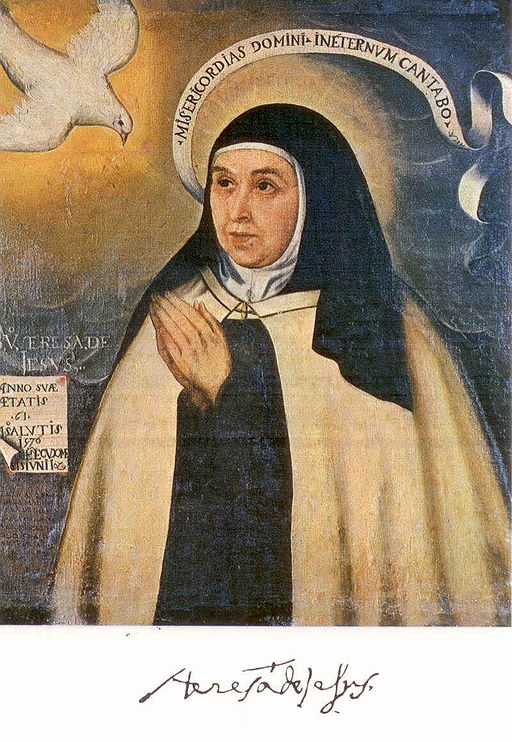
Image: According to Wikipedia, “This is the one portrait of Teresa that is probably the most true to her appearance. It is a copy of an original painting of her in 1576 at the age of 61” (original by Fray Juan de la Miseria), Public Domain, U.S.A.

References: I am relying primarily on the text of Interior Castle itself, including the Introduction by E. Allison Peers (Image Books); and the essay on Teresa of Avila by Mary E. Giles in Great Thinkers of the Western World (HarperCollins); and The Way of Perfection by Saint Teresa of Avila (Image Books); and Ralph Martin’s  audio presentation on Saint Teresa available at renewalministries.net. Regarding 15.4 above, Saint Pope John Paul II wrote, “[Although] the journey is totally sustained by grace, it nonetheless demands an intense spiritual commitment” (NMI 32). The word “mystical” can apply even to the purgative stage of the journey inasmuch as the life of sanctifying grace is a supernatural power.

To SHARE on SOCIAL MEDIA: click on “Leave a comment” or “Comments” below (and this will bring up social media icons if they are not already present).

To LEAVE A COMMENT: click on “Leave a comment” or “Comments” below, and then scroll down to the box which says, “Leave Your Own Comment Here,” which is at the end of any comments already made. If the comment section is already present, merely scroll to the end of any comments already made.

All rights reserved.

Any ads following this note are by WordPress and not CatholicStrength.

CONTACT WITH NATURE IS HEALING


“The part played by the senses in the perception of beauty is even rendered enormous in us, and well nigh-indispensable…only sense knowledge possesses perfectly in man the intuitiveness required for the perception of the beautiful.” (Jacques Maritain)

I am convinced that many people would experience improved mental well-being if they increased their contact and communion with the natural beauty of God’s creation. 

God, who is, as the scholastic theologians say, in His creation by His POWER, PRESENCE and ESSENCE is most assuredly present in the transformative beauty of the natural world.