Author: tomlirish

WHAT REALLY IS THE PURPOSE OF PENANCE?

“Then Jesus told his disciples, ‘If anyone would come after me, let him deny himself and take up his cross and follow me’.”(Matt. 16:24)

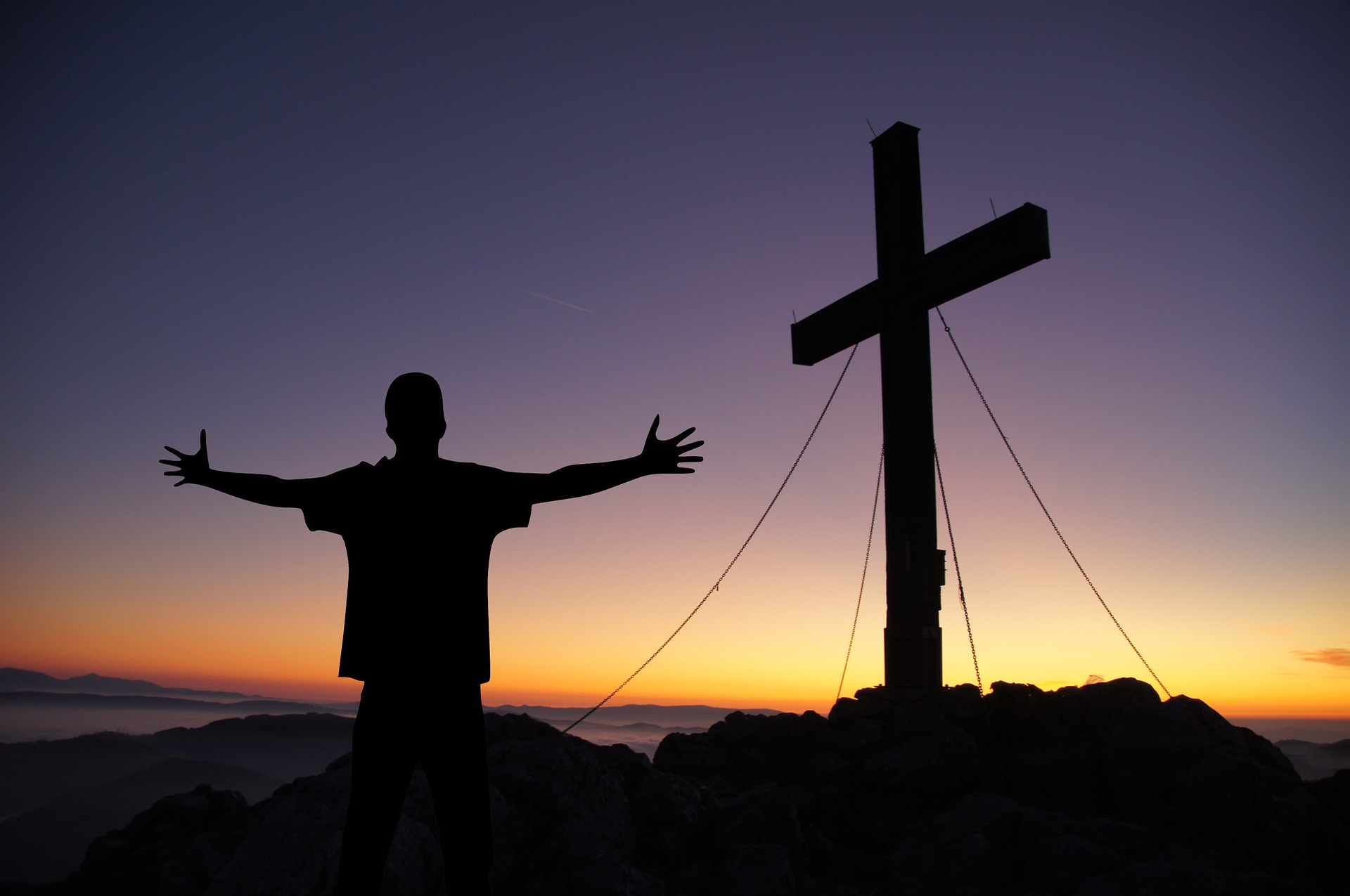
“Taking up one’s cross each day and following Jesus is the surest way of penance” (Catechism of the Catholic Church, 1435)

A great spiritual writer once said that “we should never forget the sufferings of the Lord.” In view of the tremendous graces we have received through the merits of Jesus Crucified, we are called to live penitential lives in a love for God which has its foundation in forgiveness. How do we lead this penitential life? – through acts of the virtue of penance nourished by our contact with Jesus, our mediator, in the Eucharist. “Daily conversion and penance find their source and nourishment in the Eucharist, for in it is made present the sacrifice of Christ which has reconciled us with God. Through the Eucharist those who live from the life of Christ are fed and strengthened. ‘It is a remedy to free us from our daily faults and to preserve us from mortal sins’ (CCC 1436).”

Frankly, I believe that one of the primary purposes of penance is to remind us that we owe everything to God – our ongoing acts of penance showing how grateful we are for His merciful love, and how much we wish to avoid offending God in the future. And this penitential mindset helps to keep us in the presence of God as we meet head on the challenges and difficulties of the day.

Penance is a manifestation of our attitude towards sin and God’s mercy. Penance means we dislike sin. Penance means we are grateful to God for His forgiveness. Penance means we don’t want to loose our distaste for sin. Penance serves as an antidote to worldliness. Penance keeps a check on avarice. Penance means we want to make reparation for the injustice of sin. Penance means our love for God is manifested by an abiding sorrow for sin.

I think of penance as being similar to football practice. If you don’t practice and work hard in preparation for the game you’re most likely going to perform poorly on game day. Saint John Paul II says, “To do penance means, above all, to re-establish the balance and harmony broken by sin, to change directions at the cost of sacrifice” (Reconciliation and Penance, 26). Developing a spirit of penance, a spirit of sacrifice, a spirit of ongoing sorrow for our sins, therefore has a very important role to play in the Christian life. As Saint Paul says, “I discipline my body like an athlete, training it to do what it should. Otherwise, I fear that after preaching to others I myself might be disqualified” (1 Corinthians 9:27).

But what is penance? Does penance mean that I eat spinach instead of carrots, that I sleep on the floor rather than my bed, that I wear a heavy chain around my waist?  “Jesus’ call to conversion and penance, like that of the prophets before him, does not aim first at outward works, ‘sackcloth and ashes,’ fasting and mortification, but at the conversion of the heart, interior conversion. Without this, such penances remain sterile and false; however, interior conversion urges expression in visible signs, gestures and works of penance” (CCC 1430).

In trying to understand what penance is, let me make three important distinctions which should prove to be helpful. Let us distinguish between repentance, penance and The Sacrament of Penance.

Repentance, in the Biblical sense, involves a “conversion of heart,” a turning away from sin and towards God. “The time is fulfilled, and the Kingdom of God is at hand: repent, and believe in the Gospel” (Mark 1:15). Repentance involves a profound sorrow for our personal sins and incorporation into the life of Christ which begins with baptism (where all our sins are forgiven and the life of grace is poured into our souls).

But how are we to maintain this conversion since the strong residual effects of sin still remain in us even after baptism? It is here that acts of penance have a helpful role to play. Penitential actions play an important role in maintaining our conversion, and in protecting us from falling back into sin. In Luke’s Gospel we read, “Bear fruits that befit repentance” (Luke 3:8). Exterior actions of self-discipline help us to achieve this goal. Indeed, acts of penance can be a profound sign of a deep, inward conversion (they certainly were in the lives of the saints).

But what is penance? According to Catholic theology, penance is a virtue. “St. Thomas Aquinas… says that penance is a special virtue which labors to efface sin and its consequences, inasmuch as sin is an offense against God. Wherefore penance is a part of justice, and, inspired by charity, it commands other subordinate virtues, in particular temperance, as exemplified in fasting, abstinence, [and] vigils…. Mortification, properly so called… depends on the virtue of penance, and mortification in the broad sense… depends on each virtue, inasmuch as each one rejects the vices that are contrary to it” (Father Garrigou-Lagrange). Repentance, then, is an act of conversion, whereas penance is a virtue (closely associated with justice, temperance and mortification) that helps – among other things –  to maintain our conversion and sorrow for sin lest we be tempted back into a life of sin.

“There exists…an efficacious means of removing those scars of sin, scars which do not permit God to communicate His life to us in abundance. This means is the virtue of penance. What is that virtue? A habit which, when it is well-rooted and a lively one, disposes us continually towards expiation for sin, and towards destruction of the results of sin….[I]t is above all an habitual attitude of the soul that keeps alive in us a regret at having offended God and a desire to make amends for our sins. It is this, as an habitual feeling, that ought to prompt our acts of penance” (Blessed Columba Marmion).

“To resist the enemy’s temptation, which leads first of all to light faults and then to graver ones, Christ Himself told us that we must have recourse to prayer, fasting, and almsgiving.  And then the temptation will become the occasion of meritorious acts of faith, confidence in God, and love of God” (Father Garrigou-Lagrange).

But what if we do fall back into serious sin? It was for this possibility that Jesus established the Sacrament of Penance so that mortal sins committed after baptism could be forgiven through the ministry of the priest, following a profession of our contrition for such sins and a firm purpose of amendment. At such time the priest normally prescribes a specific penance (often in the form of certain prayers) for the penitent. Obviously, the Sacrament of Penance is a huge ally in our fight against sin. Even vexing venial sins can be placed under the powerful light of purification this sacrament provides.

Besides protecting us from sin, the virtue of penance can also be exercised as an act of charity towards our neighbor. “In virtue of our incorporation into Christ…we are all members of the same body of Christ. Since our works of satisfaction can contribute to the welfare of others, will not our charity help us to do penance, not only for ourselves but likewise on behalf of our brethren? Is not this the best means of obtaining their conversion or, if they have turned to God, their perseverance? Is not this the best service we could possibly render them, a benefit worth infinitely more than all the temporal goods we could confer upon them? Thus, to atone for our neighbor’s faults is but to carry out the will of God who having adopted us as His children commands us to love our neighbor as we love ourselves” (Father Adolphe Tanquerey).

Finally, acts of penance can reduce or even eliminate our period of purification in Purgatory. As the Catechism of the Catholic Church explains: The forgiveness of sin and restoration of communion with God entail the remission of the eternal punishment of sin, but temporal punishment of sin remains” (CCC 1473). “[E]very sin, even venial, entails an unhealthy attachment to creatures, which must be purified either here on earth, or after death in the state called Purgatory. This purification frees one from what is called the “temporal punishment” of sin” (CCC 1472).  “A conversion which proceeds from a fervent charity can attain the complete purification of the sinner in such a way that no punishment would remain” (CCC 1472). As Father Tanquerey explains, a “prompt and wholehearted penance” assists us in this life to make satisfaction for the “temporal punishment” that remains after sin is forgiven. He adds that “expiation on earth is easier since this is the acceptable time for mercy” and it is “more fruitful” since our acts of satisfaction are also “meritorious,” and therefore “a source of grace and greater glory.”

It seems to me a distinction can also be made between involuntary and voluntary penances. All the suffering and hardships, all the trials and tribulations, that come our way each day, if accepted with patience and resignation, out of love for God, out of sorrow for our past sins, can be considered involuntary – but nevertheless very meritorious –  penances. The Catechism states: “Taking up one’s cross each day and following Jesus is the surest way of penance” (CCC 1435). But to those involuntary penances, we can add our own planned penances, such as kneeling for thirty minutes before the Blessed Sacrament, fasting, a work of mercy, or some other sacrificial act of penitential value (see the partial list at CCC 1437). Every sacrificial act done for the love of God, attesting to the good fruit of a repentant heart, is a meritorious act of penance, supernatural in value, advancing us on the path to the Eternal Life merited by Jesus Christ for us.

Beautiful penance, says Father Faber, planet earth is the place for beautiful penance. Everything we do can be offered up to God as an act of loving penance, as reparation and atonement for our sins, as a manifestation of our sorrow for sin, and as a means to root out the disorders in our soul. “Penance is,” says Father Adolphe Tanquerey in his monumental work The Spiritual Life, “the most effective means for cleansing the soul of past faults and even for guarding it against future ones.” Penance can also greatly assist our neighbor! As the angel at Fatima proclaimed, “PENANCE, PENANCE, PENANCE.”

In summary, we are called to lead penitential lives in order to break any attachment to sin. According to the great Father Olier we should pray to the Holy Spirit for the spirit of penance. In union with “the atoning Christ within us,” says Father Olier, we can become quite proficient in making meritorious acts of penance of great value for ourselves and our neighbors.

May you be blessed with the peace that comes from practicing the virtue of humble penance.

Thomas L. Mulcahy, M.A.

References:

  1. Catholic Bible Dictionary (Doubleday). See entry on Repentance.
  2. Our Sunday Visitor’s Encyclopedia of Catholic Doctrine.
  3. Theological Dictionary (Herder and Herder). See entry on Penance and the attitude proper to penance.
  4. The Three Ages of the Spiritual Life by Father Garrigou Lagrangr, Vol. I. See Chapter 20.
  5. Christ, The Life of the Soul by Blessed Columba Marmion, Chapter 4.
  6. The Spiritual Life by Adolphe Tanquerey (TAN). A comprehensive discussion on penance, pages 340 -361. The quotes from Father Olier contained herein.

To SHARE on SOCIAL MEDIA: click on “Leave a comment” or “Comments” below (and this will bring up social media icons if they are not already present).

To LEAVE A COMMENT: click on “Leave a comment” or “Comments” below, and then scroll down to the box which says, “Leave Your Own Comment Here,” which is at the end of any comments already made. If the comment section is already present, merely scroll to the end of any comments already made.

All rights reserved.

Any ads appearing in this note are by WordPress and not CatholicStrength.


MEMO TO SELF: GRATITUDE FOR THE ROCK

  • “And I tell you, you are Peter, and on this rock I will build my church, and the powers of death shall not prevail against it”  (Matthew 16:18)

    I said to myself the other day, “self, what is on your mind?” Self responded, “I’ve been thinking about how important the rock has been in my life.” “What rock is that,” said self-reflective self? “The rock of Peter,” said self in a sort of self-less way. And then self went on to explain what he meant to his self-reflective and thoughtful companion.

    “Remember that day when we were walking down the road and we bumped into Mr. Moral Relativism. That guy was slick. He told us he was sure that there were no universal moral truths, and he even introduced us to a few of his friends: Mr. Fornication, Mr. Contraception, Mr. Pornography, Mr. Abortion, and Mr. Anything Goes. We were really taken in by his arguments, and his friends assured us he was right – relatively speaking, they said.”

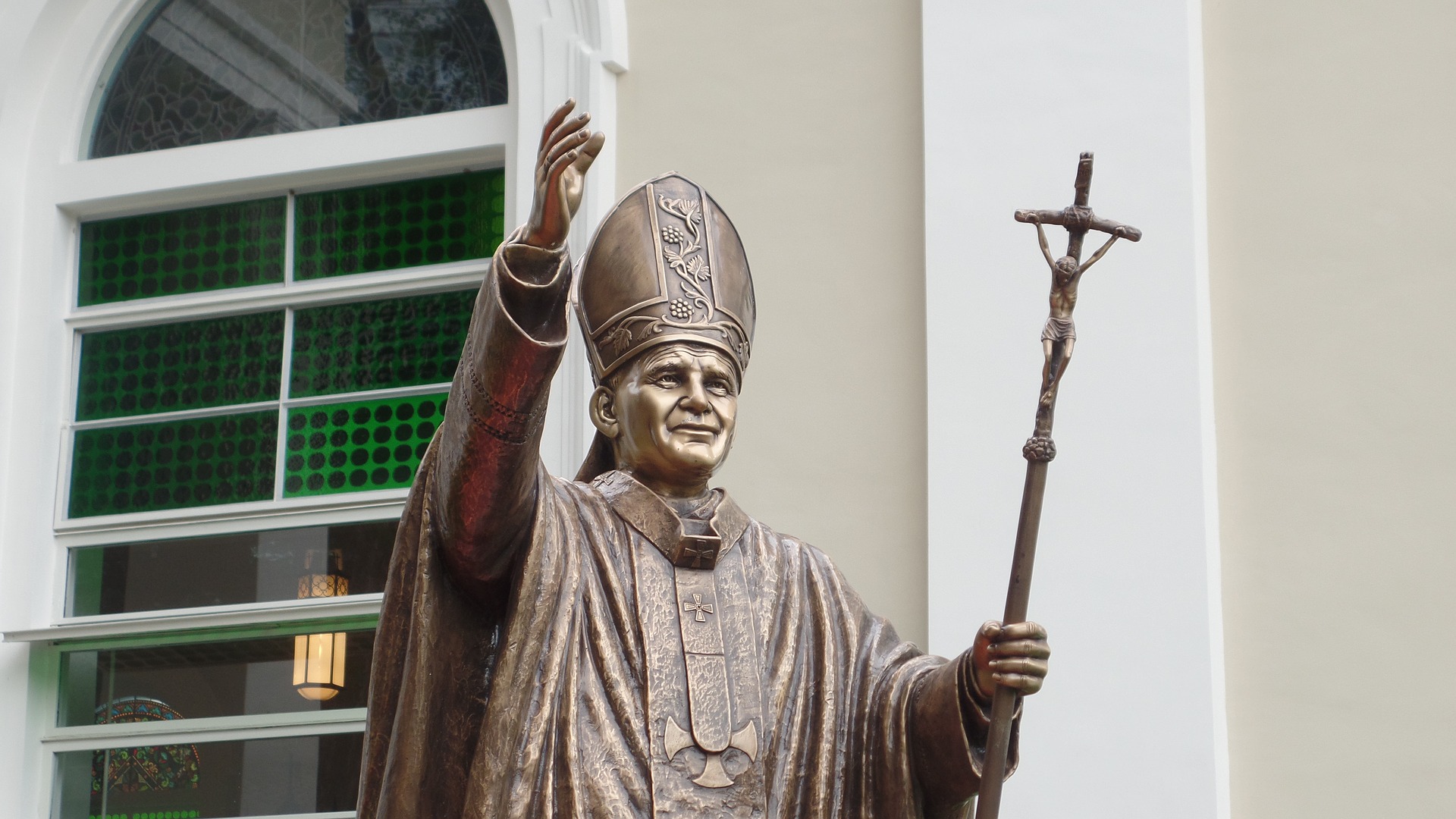
    Self continued, “We might have followed Mr. Moral Relativism and his friends down that wide path which said, ‘Untruth: Unknown and Dangerous,’ but then I noticed a much narrower path just a short distance away which said, ‘The Way, the Truth and the Life’, so we walked over to that path and encountered a kind looking man wearing a white hat, a white robe and holding on to a large staff.”

    We asked the man who he was, and he said, “I am the Successor of Peter, and Peter was the rock upon whom Jesus built his church.” This man, whom we came to know as John Paul II, explained to us that there is an objective moral order in the world precisely because the world is an image and reflection of God – its Creator. He told us that he had written and promulgated an encyclical, The Splendor of Truth, in which he not only refuted the theory of moral relativism but reaffirmed with the authority of Christ’s Vicar the universality and objectivity of the moral law.

    This kindly man handed me a copy of his encyclical, and I saw that at paragraph 115 he had written the following:

    “Each of us knows how important is the teaching which represents the central theme of this Encyclical and which is today being restated with the authority of the Successor of Peter. Each of us can see the seriousness of what is involved, not only for individuals but also for the whole of society, with the reaffirmation of the universality and immutability of the moral commandments, particularly those which prohibit always and without exception intrinsically evil acts” (paragraph 115 of Veritatis Splendor).

    Wow,” said self (to himself), “we almost made a wrong turn. Thank goodness that Jesus established this office of Peter. I mean all of that untruth looked attractive. But I knew deep in my heart something wasn’t right, or rather that something was wrong. Jesus was very wise to set-up the Petrine ministry.” And then self said a prayer, as he walked down that narrow path, “thank you Lord Jesus for protecting me from untruth by building your church on the rock.”

    Tom Mulcahy  (see commentary below)


    Inspiration: For format: Bunyan’s The Pilgrim’s Progress.

    Link to encyclicalVeritatis splendor – Ioannes Paulus PP. II – Encyclical Letter 

    Commentary: It is hard to imagine that a Pope could now write a document touching profoundly upon Catholic morality without setting forth the principles in Veritatis Splendor. Nevertheless, I quote from Father De Souza:

    “The drafters of Amoris Laetitia knew that the teaching of Veritatis Splendor posed a serious challenge. That is why, astonishingly for one of the longest papal documents in history, including some 400 footnotes, there is not a single reference to Veritatis Splendor. It is the equivalent of writing an apostolic exhortation on Catholic social doctrine and never referring to Leo XIII’s Rerum Novarum, or on biblical studies and never referring to Divino Afflante Spiritu by Venerable Pius XII.” (Quote from Father Raymond J. De Souza’s article, “When the Splendor of Truth is Hidden.”)

    See my previous post:

    SAINT JOHN PAUL II WARNED THAT AN AMORIS LAETITIA-LIKE …

    To SHARE on SOCIAL MEDIA: click on “Leave a comment” or “Comments” below (and this will bring up social media icons if they are not already present).

    To LEAVE A COMMENT: click on “Leave a comment” or “Comments” below, and then scroll down to the box which says, “Leave Your Own Comment Here,” which is at the end of any comments already made. If the comment section is already present, merely scroll to the end of any comments already made.

    All rights reserved.

    Any ads appearing in this note are by WordPress and not CatholicStrength.
 

WHY CARDINAL MULLER’S AMORIS LAETITIA DECOY IS NO LONGER WORKING

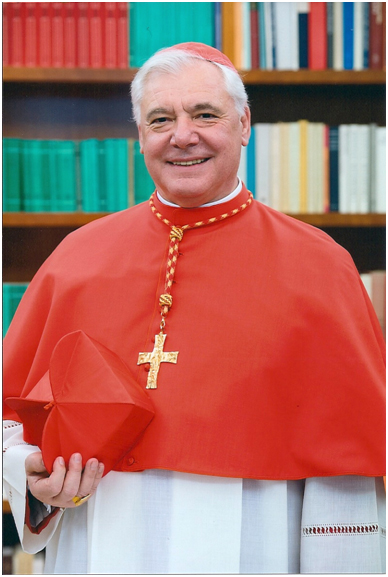
(Cardinal Gerhard Ludwig Muller)

Cardinal Muller relates that one day he received notice that three of his best priests for the Congregation of the Doctrine of the Faith (CDF) were summarily dismissed by Pope Francis without notice or explanation. This episode highlights the tension that must have existed between Pope Francis and his then doctrinal chief, Cardinal Muller. When the Cardinal repeatedly sought out an explanation from the Pope regarding these sudden dismissals, the Pope finally responded by explaining – essentially –  that he’s the Pope!

The further revelation by credible sources, and reported by the National Catholic Register, that the CDF  – of which Muller was the head –  “lodged a large number of corrections of Amoris Laetitia before its publication…’and not one of the corrections was accepted'” helps us to understand that Cardinal Muller must have recognized significant doctrinal problems in the Amoris Laetitia draft. One would think that the Pope – and those helping him formulate the AL document –  would have wanted to iron out these doctrinal concerns raised by the CDF, but it very well might be the case that the CDF was seen more as an obstruction to the AL revolution than anything else. Cardinal Muller, an accomplished theologian, was thus left with the predicament that AL was going to be released for publication containing the very errors his congregation had hoped to smooth out. For a general discussion pertaining to errors in Amoris Laetitia, please see the following two posts:

WHY AMORIS LAETITIA IS MUCH WORSE THAN ORIGINALLY …
An Open Letter to Pope Francis | John Finnis and Germain Grisez …

Cardinal Muller, whom Pope Francis would ultimately replace with the Pope’s confidant, Archbishop Luis Ladaria , then had to come up with a game plan to corral in the errors in Amoris. The Cardinal’s essential plan was to contend that there were no changes in doctrine in Amoris as long as the exhortation was read or interpreted through the previous teachings of the Magisterium. In other words if the famous footnote 351 in AL seemed to say rather clearly that there were circumstances where a divorced and civilly remarried Catholic could receive Holy Communion without an annulment, this interpretation was erroneous since it contradicted the Magisterial teaching which preceded it. This was the Cardinal’s essential strategy for all potential errors in Amoris.

Thus Cardinal Muller wrote in a book introduction that if it appeared that the Pope was denying hell in AL 297, such interpretation is invalid because the Magisterium teaches the doctrine of hell; and if it appeared that Pope Francis was adopting a classic Protestant understanding of justification in the highly controversial Chapter 8 of AL, such interpretation is invalid because it conflicts with the Catholic understanding of justification. Consequently, if theologians complained that AL 301-303 smelled of situation ethics, one could anticipate that Muller would say that it ain’t so – because the Church has condemned situation ethics (in Veritatis Splendor).

Muller’s strategy worked for a while, and thus made it seem that Amoris Laetitia wasn’t so bad after all – just stick to an orthodox interpretation. The difficulty here, of course, is that one could say that Martin Luther (or even, as an exaggeration, Frederick Nietzsche) passes theological muster if interpreted and strained through the filter of Catholic orthodoxy.

The big problem for Cardinal Muller has been that he does not control the ultimate narrative for Amoris (although he tried). The narrative for AL was (and continues to be) under the control of the Pope – the Pope who apparently rejected Muller’s doctrinal concerns over Amoris; the Pope who ended up letting Muller go; the Pope who clearly decided to color outside the lines of Catholic orthodoxy, setting forth in AL what his collaborators have termed a “paradigm shift” in Catholic morality, which was the intended purpose of AL from the beginning.

Now as Cardinal Muller fades into the background, some of Pope Francis’ collaborators are relying on Amoris to potentially justify blessing homosexual unions, and others to justify Protestant spouses of Catholics receiving Holy Communion (of course, after due discernment). All of this would appear strangely blasphemous to orthodox Catholicism, but Cardinal Muller’s decoy – his strategy – no longer seems to be working.

Thomas L. Mulcahy, M.A., J.D.

P.S. Just a few days ago I was reading that Cardinal Gerhard Müller “rejects the notion of a ‘paradigm shift’ in Church teaching.” The article from CWN adds:  “In an unusual public disagreement among prominent cardinals, the former prefect of the Congregation for the Doctrine of the Faith takes issue with the use of a term (“paradigm shift”) that was used by the Secretary of State, Cardinal Pietro Parolin, with reference to Amoris Laetitia. Cardinal Müller says that term ‘seems to be a relapse into a modernist and subjectivist way of interpreting the Catholic faith’.”

I use the word “decoy” in the sense of a prudent strategy under difficult circumstances or permissible decoy. Naturally, it is quite commendable that Cardinal Muller has courageously tried to protect the deposit of faith, and, in particular, Catholic morality. Perhaps, in hindsight, a better strategy would have been to point out the errors in Amoris Laetitia from the get-go.

To SHARE on SOCIAL MEDIA: click on “Leave a comment” or “Comments” below (and this will bring up social media icons if they are not already present).

To LEAVE A COMMENT: click on “Leave a comment” or “Comments” below, and then scroll down to the box which says, “Leave Your Own Comment Here,” which is at the end of any comments already made. If the comment section is already present, merely scroll to the end of any comments already made.

All rights reserved.

Any ads appearing in this note are by WordPress and not CatholicStrength.


THE AMAZING REWARD GOD HAS PREPARED FOR THOSE WHO LOVE HIM

“Eye has not seen, ear has not heard, nor has it so much dawned on man what God has prepared for those who love Him.” (1 Corinthians 2:9)


INTRODUCTION: 

The ultimate trajectory of the spiritual life is Heaven, and great spiritual writers have constantly pointed out the value of meditating on the “Four Last Things” – Death, Judgment, Heaven and Hell. Here we are in Lent, and our Lord’s sufferings remind us that he has merited for us a simply stunning inheritance that will lead to an eternity of happiness. This eternity is as close as death’s doorstep, and who knows when our next step will lead us into that Eternal Life?

REFLECTION:

In evaluating our lives, we should not discount the length of eternal life.  What God is offering to us, ETERNAL LIFE, is simply stunning, overwhelming and unfathomable! Certainly a fundamental part of the Ignatian Exercises is simply to do the math: to reflect on the shortness of life and the incredible length of eternity. And then to choose wisely, which is why we pray to the Holy Spirit for the gift of Wisdom. To miss out on Heaven – and all that Heaven is – simply cannot be an option. “Who could endure the loss?”

 As to death, it is a great grace to realize that we are going to die. In essence, our lives are but a preparation for death. God, in His providence, already knows the day and moment of our death, and He has already put in place the graces we will need to be saved. We need to cooperate with those graces, and all will be well.

Unfortunately, so many people live their lives without much thought about their impending death. They realize that other people die but they sort of see themselves as a bystander to the death of other people –  somehow convincing themselves that it won’t happen to them.

And although attending someone’s funeral may make such a person anxious about death, it is also the case that we are quite adept at putting in to place psychological defense mechanisms that quickly assuage such thoughts and turn our attention back to the world.

As I see it, there is a gigantic cultural conspiracy in place to convince us that we are not going to die. The plan is to outlive death by taking the right vitamins, wearing the best make-up, and seeing the best doctors. And yet everyone still dies. We are all on an absolute collision course with death. Only God knows for sure how much time we have left. And the clock keeps ticking.

I think it is interesting that in Saint Mother Teresa‘s mystical life the Virgin Mary told her to tell families to say the rosary (reference: Come Be My Light, Doubleday, p.99). This prayer not only helps us to contemplate the life of Christ, including his death and resurrection, but it continually reminds us of the two most important moments in our lives – the present moment and the moment of our death. We ask Mary to “pray for us now and at the hour of our death.”  It is in the “sacrament of the present moment” that we can choose to conform our will to God’s grace, and it is at the moment of death that we need all of Heaven (that great cloud of witnesses, Hebrews 12:1) interceding for us to persevere to the end.  It is important to pray for the grace of final perseverance and for the fortitude to die a good death. It is reassuring to know that we are asking Mary’s help in this regard when we pray the rosary.

 In First Corinthians it says (at 2:9):

“Eye has not seen, ear has not heard, nor has it so much dawned on man what God has prepared for those who love Him.”

Don’t put your trust in the passing things of this world (those idols have no power to save you). Be a little greedy for Heaven, and in the process transform that greed into love and gratitude for a God who, after dying for our sins and humbling himself to be our very eternal life-giving food, has prepared for us such an immense reward that the magnitude of the joy and love we will experience in Heaven is beyond our narrow understanding, lasting for endless ages, in the glory of the “ever-blessed” life of God. In short, to say that Heaven is going to be awesome is an incredible understatement.

“For whoever would draw near to God must believe that He…rewards those who seek Him” (Hebrews 11:6).

Tom Mulcahy, M.A.

Inspiration: The Imitation of ChristThe Spiritual Exercises of Saint Ignatius of Loyola; and F.W. Faber’s The Creator and the Creature (from where I derive the title to the note and I am otherwise heavily indebted to him for the tone and content of the note; it is Faber who mentions that our next step may be the one into eternity). Saint Mother Teresa of Calcutta was canonized by Pope Francis on September 4, 2016!

To SHARE on SOCIAL MEDIA: click on “Leave a comment” or “Comments” below (and this will bring up social media icons if they are not already present).

To LEAVE A COMMENT: click on “Leave a comment” or “Comments” below, and then scroll down to the box which says, “Leave Your Own Comment Here,” which is at the end of any comments already made. If the comment section is already present, merely scroll to the end of any comments already made.

Any ads in this note are by WordPress and not CatholicStrength.

FATIMA AND THE PROPHETIC DIMENSION OF THE AMORIS LAETITIA CRISIS

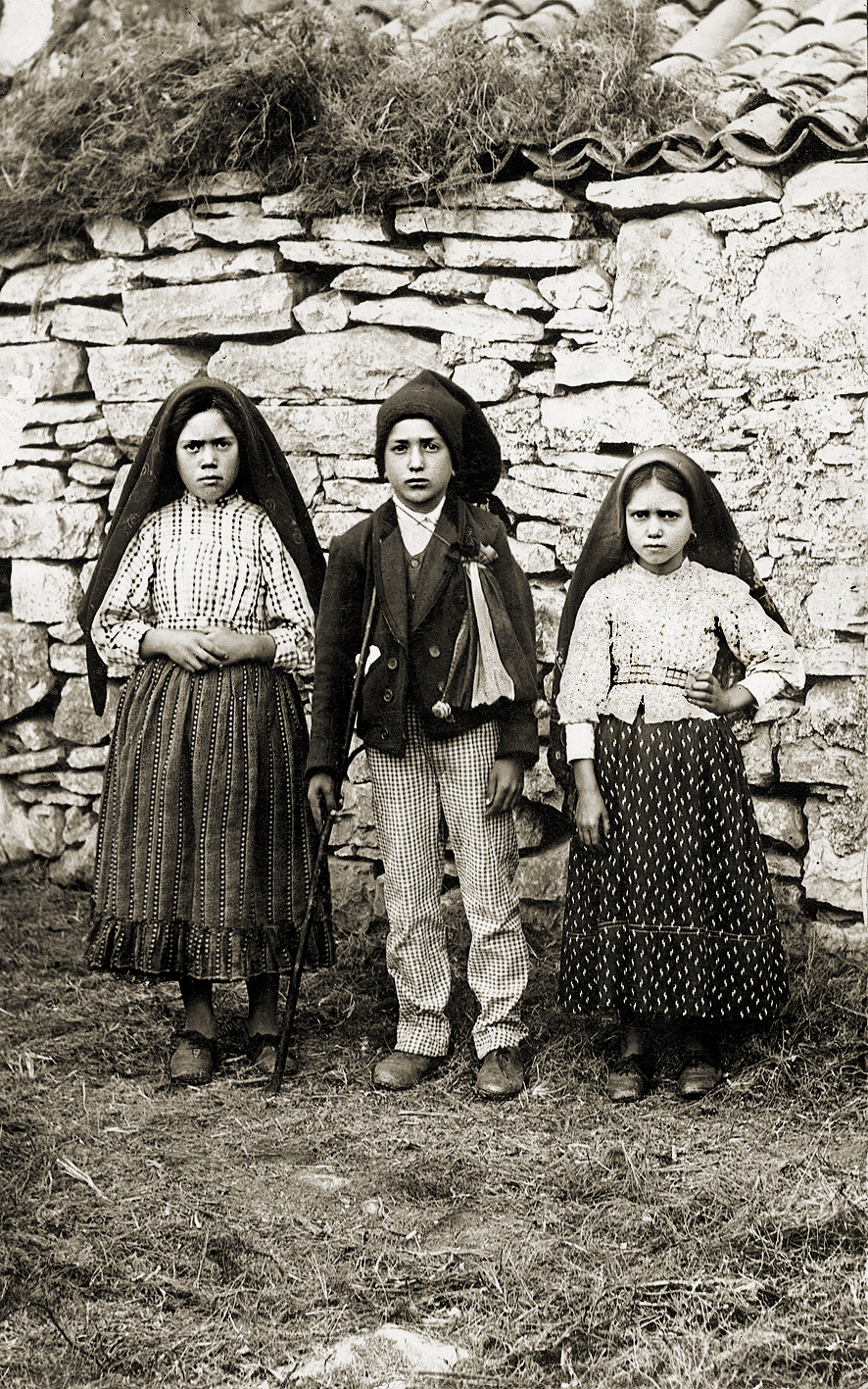
(Photo: Public Domain, U.S.A.)

“Each of us knows how important is the teaching which represents the central theme of this Encyclical and which is today being restated with the authority of the Successor of Peter. Each of us can see the seriousness of what is involved, not only for individuials but also for the whole of society, with the reaffirmation of the universality and immutability of the moral commandments, particularly those which prohibit always and without exception intrinsically evil acts” (Pope John Paul II, Veritatis Splendor, no. 115)

“Since the Ascension God’s plan has entered into its fulfillment. We are already at ‘the last hour’. ‘Already the final age of the world is with us, and the renewal of the world is irrevocably under way….” (Catechism of the Catholic Church, no. 670)

Since first writing this post nearly a year ago the crisis over Amoris Laetitia has only deepened and accelerated, and among those who view the papal exhortation as a “paradigm shift” in Catholic morality some are even invoking the document to the point of suggesting or implying that it might be permissible to approve of or bless homosexual unions in the Church (and it is not hard to anticipate that this idea will gain further momentum under the Amoris rationale). The whole idea seems to be that –  through a process of discernment – otherwise intrinsically evil acts can be justified and seen as good in God’s eyes (see AL 301-303, for instance).

Just in the last several weeks  I have read reports about a Vatican commission studying the possibility of modifying Humanae Vitae, of a Jewish member of the Vatican Academy for Life discussing possible exceptions that would justify abortion in special circumstances, and, of course, the continuing drama involving Cardinal Marx’s nuanced remarks pertaining to the possibility of blessing homosexual unions (regarding the blessing of such unions Marx said, “This I really have to leave up to the local pastor and the accompaniment of that person”). It should be noted, as a recent article by Maike Hickson pointed out, that Bishop Franz-Josef Bode, the Vice President of the German Bishops’ Conference, “has called for a discussion about the possibility of blessing homosexual relationships. He believes there to be ‘much [that is] positive’ in such relationships.” Of course, if the Pope simply said “this blessing is not possible,” as he most definitely should have a long time ago, the laity could be spared all the confusion and harm to the faith that results.

Just a few days ago I was reading that Cardinal Gerhard Müller, whom Pope Francis removed as Prefect for the Congregation of the Doctrine of the Faith, “rejects the notion of a ‘paradigm shift’ in Church teaching.” The article from CWN adds:  “In an unusual public disagreement among prominent cardinals, the former prefect of the Congregation for the Doctrine of the Faith takes issue with the use of a term (“paradigm shift”) that was used by the Secretary of State, Cardinal Pietro Parolin, with reference to Amoris Laetitia. Cardinal Müller says that term ‘seems to be a relapse into a modernist and subjectivist way of interpreting the Catholic faith’.” Frankly, the phrase “paradigm shift” seems to be a euphemism (or code words) for “new teaching” or, one might contend, good old-fashioned heresy (as Cardinal Muller seems to be implying).

Here in the United States Cardinal Cupich has begun conducting conferences for Bishops on the implementation of Amoris Laetitia (and Cardinal Cupich is fond of saying that Amoris Laetitia favors a more “mature,” conscience based morality – that is, he favors the subjectivist approach to Catholic morality). And a well known papal consultor gave a talk here in America (at Boston College) where he maintained there are no longer any moral norms (Father Antonio Spadaro, who said: “It is no longer possible to judge people on the basis of a norm that stands above all.”). There are many more examples I could give of this fundamental assault on Catholic moral principles that have guided the Church for two-thousand years.

The question therefore deserves to be asked: Is the Catholic Church on the brink of destroying its own morality? The basic premise of the short outline below is that the minor chastisement prophesied at Fatima will coincide with the introduction of heresy into Church teaching. Situation ethics was strongly condemned by Pope John Paul II in Veritatis Splendor, yet we see the dangerous framework of this subjectivism in Amoris Laetitia (see 301-303), and the surge flowing therefrom to radically change Catholic morality by the approval of intrinsically evil acts. Does the Church think that God is going to remain passive during this planned and orchestrated attack on Catholic morality, which is so contrary to the moral imperative of the Fatima message and the constant teachings of the Church?

This is a speculative note regarding the prophetic dimension of this crisis in Catholic morality brought on by Amoris Laetitia. The author claims no special prophetic charism or expertise, and the outline presented here simply proceeds from his analysis of certain materials (in addition to the Bible) referenced in the note, along with the present circumstances that challenge the Church and the world. As the quote above from the Catechism states, “we are already at the last hour.”

A POSSIBLE OUTLINE OF PROPHETIC EVENTS WE MIGHT BE ENCOUNTERING PRESENTLY OR VERY SOON

1.Our key prophecy will be the first two secrets of Fatima, and we will see that the chastisement and period of peace made known in the Fatima prophecy coincide with the broad spectrum of Catholic prophecy at large.

2. We will also place weight on the following prophetic statement of Saint Pope John Paul II, which was made during a visit to the United States in 1976 when he was still a Cardinal, and reads:

“We are now standing in the face of the greatest historical confrontation humanity has gone through. I do not think that wide circles of American society or wide circles of the Christian community realize this fully. We are now facing the final confrontation between the Church and the anti-Church, of the Gospel versus the anti-Gospel.

“We must be prepared to undergo great trials in the not-too-distant future; trials that will require us to be ready to give up even our lives, and a total gift of self to Christ and for Christ. Through your prayers and mine, it is possible to alleviate this tribulation, but it is no longer possible to avert it. . . .How many times has the renewal of the Church been brought about in blood! It will not be different this time.” 

3. We will also note that Saint Louis de Montfort stated that the Virgin Mary (and specifically those consecrated to Mary) would play a special role in bringing forth the fulfillment of Jesus’ Kingdom in history (noting as well that scholars disagree on exactly how the Saint says this will take place). See Handbook of the Spirituality of St. Louis de Montfort, pages 345-365 on “End Times.” Another great and more recent Marian Saint, Maximilian Kolbe,  said the following:

“Modern times are dominated by Satan and will be more so in the future. The conflict with hell cannot be engaged by men, even the most clever. The lmmaculata alone has from God the promise of victory over Satan. However, assumed into heaven, the Mother of God now requires our cooperation. She seeks souls who will consecrate themselves entirely to her, who will become in her hands effective instruments for the defeat of Satan and the spreading of God’s kingdom upon earth.” (from EWTN website)

4. In his book, Catholic ProphecyThe Coming Chastisement Yves Dupont offers the following conclusion:

“I regard it as certain that there will be two different stages. The first stage will only be the beginning of sorrows [see Matt. 24:8], and it will be shortened for the sake of the elect, and the Gospel will then be preached throughout the world. This will be the period of peace under the Great Monarch, the period of conversion and general prosperity which we and our children may enjoy – in short, the period of peace promised by Our Lady of Fatima” (p.91).

5. Another great scholar of Catholic prophecy, Father Edward Conner, in his book Prophecy for Today, sees the general sequence of prophetic events unfolding in this manner:

A. “Before the Gospel is preached and accepted in all the world, there shall come world wars and insidious doctrines accompanied by widespread persecution.

B. This era shall be terminated by the the direct interference of God destroying the evil systems or persons responsible for the persecutions; and through the leadership of a great civil ruler and a great spiritual leader, a period of peace will come during which nations will hear and accept the true Faith [this period of peace coincides with the Fatima prophecy of a period of peace].”

C. A great apostasy will follow [and Antichrist will come, leading to the Second Coming of Jesus Christ and the end of the world as set forth in Holy Scripture].”

6. A seminal and very long book on Catholic prophecy published in 1996, Trial, Tribulation and Triumph, by Desmond A. Birch, generally agrees that there will be a minor chastisement (meaning not the final chastisement at the end of the world), a period of peace, a major chastisement (Antichrist), and then the Second Coming of Jesus Christ. As to the minor chastisement, which will be followed by a period of peace, these are the first three elements in his long chronology of how it will come about:(1) “At some point in the future, the corrupt faithless age we live in now will come to an end either through inner conversion of sufficient number of people who turn to prayer, sacrifice, and penance,—or there will be a chastisement. This would be a Minor Chastisement preceding the Age of Peace. St Louis de Montfort described this Age of Peace as the Age of Mary. (2) If this chastisement is not averted through conversion, the Latin Church will be afflicted by heresy and schism. (3) The chastising elements will come in two forms, (a) manmade and (b)Heaven-sent” (page 553). Following his description of this minor chastisement, Birch goes on to describe the period of peace which will result, and then the rise of Antichrist and the end of the world.

7. A key insight of Birch is that the minor chastisement prophesied at Fatima (if not averted by prayer and penance) will come by way of heresy and schism entering the Church.

8. The second secret of Fatima, given to the seers on July 13, 1917, coincides with the general prophetic understanding of a chastisement and then a coming period of peace. It states (as verbatim from the Vatican website) the following:

“You have seen hell [the children’s vision of hell is the first secret] where the souls of poor sinners go. To save them, God wishes to establish in the world devotion to my Immaculate Heart. If what I say to you is done, many souls will be saved and there will be peace. The war is going to end: but if people do not cease offending God, a worse one will break out during the Pontificate of Pius XI. When you see a night illumined by an unknown light, know that this is the great sign given you by God that he is about to punish the world for its crimes, by means of war, famine, and persecutions of the Church and of the Holy Father. To prevent this, I shall come to ask for the consecration of Russia to my Immaculate Heart, and the Communion of reparation on the First Saturdays. If my requests are heeded, Russia will be converted, and there will be peace; if not, she will spread her errors throughout the world, causing wars and persecutions of the Church. The good will be martyred; the Holy Father will have much to suffer; various nations will be annihilated. In the end, my Immaculate Heart will triumph. The Holy Father will consecrate Russia to me, and she shall be converted, and a period of peace will be granted to the world.”

9. Saint John Paul II was known as the “Fatima Pope,” devoting himself profoundly to the Fatima message following his having been shot and almost killed in St. Peter’s Square on May 13, 1981 (the anniversary of the first apparition of Mary at Fatima). Sister Lucia, the Fatima seer, confirmed that Pope John Paul II’s 1984 consecration of Russia to the Immaculate Heart of Mary had been “accepted by Heaven” (see Fatima for Today, p.260). On May 13, 1982, Pope John Paul II spoke the following words during a homily given in Fatima, Portugal:

“In the light of a mother’s love we understand the whole message of the Lady of Fátima. The greatest obstacle to man’s journey towards God is sin, perseverance in sin, and, finally, denial of God. The deliberate blotting out of God from the world of human thought. The detachment from him of the whole of man’s earthly activity. The rejection of God by man…. [He] reads it again with trepidation in his heart, because he sees how many people and societies—how many Christians—have gone in the opposite direction to the one indicated in the message of Fátima. Sin has thus made itself firmly at home in the world, and denial of God has become widespread in the ideologies, ideas and plans of human beings.”

10. Pope Benedict XVI suddenly resigned as Pope on February 28, 2013, the first Pope to resign since Pope Gregory XII in 1415.

11. On  March 13, 2013  Jorge Mario Bergoglio was elected Pope, becoming the 266th Pope, and the first Jesuit Pope. He took the papal name Francis. Apparently with the help of certain Cardinals, Pope Francis then embarked on an intense campaign to essentially change Catholic doctrine regarding the absolute impermissibility of  divorced and civilly remarried Catholics to receive the Holy Eucharist, a move which, in the opinion of some high-ranking clergy, could ultimately open up reception of the Holy Eucharist to people in other types of “irregular unions” (all of which would serve to ultimately undermine Catholic teaching regarding mortal sin because reception of the Eucharist is the summit of the Catholic life). When Pope Francis failed to obtain consensus at the Synod on the Family for the change he so earnestly desired, he nevertheless pushed his communion exception through in his Apostolic Exhortation, Amoris Laetitia, cleverly placing the key language for such an exception in the back of the document in the now infamous footnote 351. Although there has been a de facto schism in the Catholic Church for quite some time, Pope Francis’ bold move marked the first time a challenge to authentic Catholic teaching was undertaken at the highest level of the Church. There is now a great battle going on in the Church over Amoris Laetitia, and Pope Francis seems intent on bringing a new type of Catholic morality into existence, slowly, so as not to upset the faithful all at once (in general, this new morality –  in its fullest development – would grant those in “irregular” situations access to the Eucharist, which is an interpretation which has been proposed by some, and even Pope Francis mentioned that cohabiting couples may be in a “real marriage”). This is my sense, after careful evaluation, of where Amoris Laetitia is taking the Church; I am open to being shown where I may be wrong. My concern here is to protect the integrity of doctrine as passed on to the Church from Jesus and the apostles.

12. Based on the foregoing (relying on Desmond Birch’s insight) the conditional chastisement warned of by the Virgin Mary at Fatima is closely connected to the “the Latin Church [being] afflicted by heresy and schism.” We may have reached a pivotal point regarding the Fatima prophecy of a chastisement; it may be that such a chastisement is needed for the purification of the Church and the protection of the papacy, considering as well the great moral upheaval presently taking place in the world. Pope Benedict XVI once said, “We would be mistaken to think that Fatima’s prophetic mission is complete.”

13. It is not my job to suggest whether a particular teaching constitutes material or formal heresy. Rather, I feel called to point out that Amoris Laetitia is profoundly at odds with Saint John Paul II’s great encyclical on moral theology, Veritatis Splendor, and that the ultimate trajectory of Amoris Laetitia would lead to a dramatic reformulation of Catholic morality, allowing those in so-called “irregular unions” access to the fullness of the faith which the Eucharist is (thus essentially creating an end-run around the infallible doctrine of the Church that those in mortal sin are prohibited from receiving the Eucharist). In the end, then, the whole system of Catholic morality would be rendered optional. If this be the case, then Amoris Laetitia would represent a profound rejection of traditional, orthodox Catholic morality.

14. “In the end my Immaculate Heart will triumph.” Pray the Rosary every day as Mary entreated us at Fatima. Pray for the Church.

Thomas L. Mulcahy, M.A.

P.S. To further understand the enormous implications to Catholic morality occasioned by Amoris Laetitia, please refer to my previous posts set forth below:

why amoris laetitia is much worse than originally … – Catholic Strength

THE HUGE “MITIGATING CIRCUMSTANCES” MISTAKE IN AMORIS …

does a tendency toward universalism account for amoris laetitia?

Additionally, I bring to your attention and discernment these words of the Blessed Virgin Mary in an apparition said to bear upon Fatima:

“The work of the devil will infiltrate even into the Church in such a way that one will see cardinals opposing cardinals, bishops against bishops. The priests who venerate me will be scorned and opposed by their confreres (other priests): churches and altars will be sacked; the Church will be full of those who accept compromises and the demon will press many priests and consecrated souls to leave the service of the Lord.” (Approved message of the Blessed Virgin Mary to Sister Agnes Sasagawa, Akita, Japan, October 13, 1973)

To SHARE on SOCIAL MEDIA: click on “Leave a comment” or “Comments” below (and this will bring up social media icons if they are not already present).

To LEAVE A COMMENT: click on “Leave a comment” or “Comments” below, and then scroll down to the box which says, “Leave Your Own Comment Here,” which is at the end of any comments already made. If the comment section is already present, merely scroll to the end of any comments already made.

All rights reserved.

Any ads appearing in this note are by WordPress and not CatholicStrength.
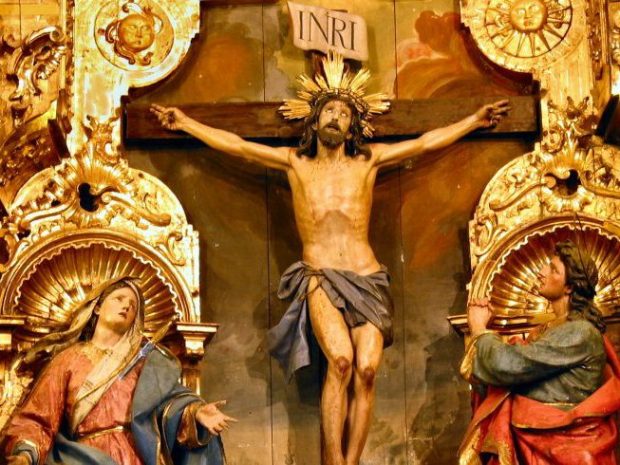
A MIRACULOUS CRUCIFIX IN SPAIN

“There is no practice more profitable for the entire sanctification of the soul than the frequent meditation of the sufferings of Jesus Christ” (Saint Bonaventure)

The Passion of Jesus Christ rules the history of the world says the great Father Faber, and as if to put an exclamation point on this statement Jesus allowed incredible manifestations of his salvific passion to occur in the Church of Saint Peter in Limpias, Spain from 1914 through 1921.

The six foot crucifix which hangs in the Church of Saint Peter in Limpias, Spain (see image above) is, according to Joann Carroll Cruz, “a meditation on the sufferings of Our Lord and is thought to portray [Jesus] Crucified in his final moments of his agony.” Cruz adds that the “face of Our Lord is of particular beauty, with its eyes of china looking toward Heaven….” More than 8000 people, according to Cruz, have witnessed – and testified to –  supernatural phenomena associated with the facial expressions and head movements of Jesus on this beautiful crucifix. In this note, I will highlight some of the compelling testimonies of some very prominent and reliable witnesses. Given the cumulative power of so many eye-witness testimonies concerning the miraculous nature of this crucifix it seems impossible to deny the credibility of these supernatural manifestations of Jesus’ Passion.

Here is a bird’s eye view of some of the very compelling testimonies:

August/1914: While fixing an electric light over the high altar in the church, Don Antonio Lopes, a monk of the Pauline Fathers, gazed at the crucifix and noticed “with astonishment that Our Lord’s eyes were gradually closing, and for five minutes I saw them quite closed” (this is the first of 8000 testimonies regarding witnessed movements of Jesus’ face and head on the Limpias crucifix).

April/2019: A group of nuns known as the Daughters of the Cross saw both the eyes and lips of the crucifix move.

May 5, 1919: Dr. Adolfo Arenaza publishes his testimony in the secular press stating that while looking through his field glasses he saw the movement of the eyes four times. He states: “Does Our Lord really move his eyes…I am of the opinion that he really does move them, for I have seen it myself.”

August 4, 1919: Rev. Valentin Incio of Gijon visits Limpias and and wrote the following pertaining to his observation of the miraculous crucifix:

“At first our Lord seemed to be alive; His head then preserved its customary position…but His eyes were full of life and looked about in different directions….Now came the most touching moment of all. Jesus looked at all of us, but so gently and kindly, so expressively, so lovingly and divinely, that we fell on our knees and wept and adored Christ.”

September 11, 1919: Father Antonio de Torrelavega, a Capuchin monk, “sees blood streaming from the left corner of Our Lord’s mouth.” The next day he

“observed anew, only still more frequently, the movement of the eyes and…blood flowing down from the corner of the mouth. Several times He looked at me. Many other people who were kneeling round me also observed this….Now I verify it; there is no doubt the Santo Christo [crucifix] moves his eyes.”

September 15, 1919: “The Coadjutor of St. Nicholas Church in Valencia, D. Paulino Girbes, relates in his statement…that he was in the company of two Bishops and 18 priests when they knelt before the crucifix.” He states:

“We all saw the face of the Santo Cristo become sadder, paler….The eyes gave a gentle glance now at the Bishops and then in the direction of the sacristy. The features at the same time took on the expression of a man who is in his death-struggle. This lasted a long time. I could not resrain my tears and began to weep….”

There are so many other compelling testimonies of highly credible and distinguished witnesses that I don’t have time to type them all into this note! Many more detailed accounts are in Joann Carroll Cruz’ book, Miraculous Images of Our Lord. Moreover, there is a 200 plus page book from 1923, The Wonderful Crucifix of Limpias, available online, which provides numerous accounts “of the extraordinary manifestations of the crucifix at Limpias.”

CONCLUSION: The credible evidence supporting the supernatural phenomena associated with the crucifix at Limpias is simply overwhelming. Of the 8000 signed testimonies regarding this amazing phenomenon, 2500 are accompanied with legal affidavits. But what is the message of Limpias? Is it not that God so loved us that He sent his only son to give his life for our salvation? But what if we fail to honor our Lord’s Passion, or even worse if we lack gratitude for His saving death? Limpias is a powerful reminder that the Lord’s Passion is real, tremendously real, and made present in every Mass said throughout the world each day! The miraculous manifestations at Limpias are pretty amazing, but the Mass of Calvary is simply of infinite value.

“The Passion rules the history of the world. Thus it is also the secret of all biographies of individual souls. All their ruin comes from their disloyalty to the Passion. All their holiness in time, and their glory in eternity, are the consequences of their loyalty to the Passion. Jesus Christ and Him Crucified – this is the object of our present contemplation. As we grow older we set a greater price on fidelity; and where is there such faithfulness [and such indisputable proof of God’s love for you] as in the Cross? Devotion to the Passion is at once the surest sign of Predestination, and the shortest road to heaven. Happy are they whom the cruelty and treachery of life have driven to the Cross” (F.W. Faber).

Thomas L. Mulcahy, J.D.

P.S. In the following link is a detailed video of the supernatural crucifix:

Santo Christo de Limpias – YouTube

References: My information for this note comes from Joann Carroll Cruz’ book, Miraculous Images of Our Lord (TAN).

To SHARE on SOCIAL MEDIA: click on “Leave a comment” or “Comments” below (and this will bring up social media icons if they are not already present).

To LEAVE A COMMENT: click on “Leave a comment” or “Comments” below, and then scroll down to the box which says, “Leave Your Own Comment Here,” which is at the end of any comments already made. If the comment section is already present, merely scroll to the end of any comments already made.

All rights reserved.

Any ads in this note are by WordPress and not CatholicStrength.

THE FINAL HERESY AND THE FUTURE OF THE CATHOLIC CHURCH

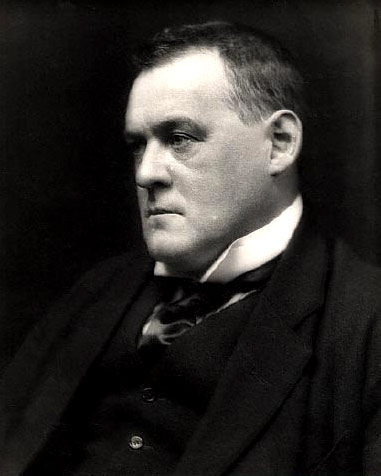
(Hilaire Belloc, 1915, Public Domain, U.S.A.)

“We are now standing in the face of the greatest historical confrontation humanity has gone through. I do not think that wide circles of American society or wide circles of the Christian community realize this fully. We are now facing the final confrontation between the Church and the anti-Church, of the Gospel versus the anti-Gospel.” (Saint Pope John Paul II)

In the last chapter of his book, The Great Heresies, the famous Catholic historian, Hilaire Belloc, who died in 1953, discusses the nature of the final heresy to attack the Church which he calls “a wholesale assault on the fundamentals of the Faith – upon the very existence of the Faith.” The final heresy is therefore aimed at the complete destruction of the Catholic Church. And what is this final heresy, what is this manifestation of the Anti-Christ?, it is atheism. Belloc comments: “of such moment is the struggle immediately before the world.”

Belloc refers to atheism as the “Modern Attack” against the Church. He says the “modern attack is materialistic because in its philosophy it considers only material causes.” It is superstitious, as well, says Belloc, because it nourishes itself on the silly vagaries of spiritualism…and other fantasies.” He mentions atheistic communism as one example of the “Modern Attack,” although perhaps a “passing one.”

Belloc maintains that this all-out attack against the Church is “now at our gates,” and he wrote The Great Heresies around 1938. He states that the “fruit” of the modern attack is to “undermine every form of restraint imposed by human experience acting through tradition,” but he maintains that there are other “evil effects” which may prove more permanent than the breakdown of sexual morality. He does say, however, that the “Modern Attack on the Faith will have in the moral field a thousand evil fruits….”

The “quarrel” we are in right now, says Belloc, “is between the Church and the anti-Church – the Church of God and the anti-God – the Church of Christ and the Anti-Christ.” Atheism thus represents the forces of the anti-God, and according to Belloc “the modern attack is far more advanced than is generally appreciated.” Even at the time he lived Belloc could say that “the mood of the faith has been largely ruined,” and that “we have already arrived at a strange pass” where the opponents of the Catholic Faith simply do not understand the Catholic Church. From this predicament, Belloc predicts that a new “paganism” will emerge that tends more towards cruelty than enlightenment.

Belloc predicts that “either we of the Faith shall become a small, persecuted, neglected island amid mankind, or we shall be able to lift at the end of the struggle the old battle cry, “Christus Imperat.”

ANALYSIS AND COMMENTARY

Here we are some 80 years after Belloc wrote The Great Heresies, and his points regarding the “Modern Attack” on the Catholic faith seem spot on. What concerns me most – as we witness firsthand the breakdown of the Catholic faith in the Western world –  is the growing tendency of the Catholic Church in many quarters, and even at very high levels, to align itself in certain ways with movements that seem to be under-girded by the advance of atheism – movements like the LGBT movement and the Global Warming movement.

The LGBT movement could not have risen to its present heights without the general breakdown of religion in the culture and the repudiation of the natural law (and the repudiation of the natural law represents an attack on God’s sovereignty and Divine revelation). I don’t think anyone would deny that there has been a certain push within the Vatican to make gay unions more acceptable to the Catholic consciousness, as in the Pope’s famous “Who am I to judge” comment, and in his tacit support for the legal recognition of gay unions (but not marriage). Most recently, Vatican adviser, Father James Martin, has been prominently in the news advancing an agenda which seems to call on the Church to reverse its condemnation of the practice of homosexuality, and one of the Pope’s top advisers, Cardinal Marx, has insinuated the possibility of blessing gay unions in the Church (the perceived difficulty here with the Church, then, leans to the “LG” side of the movement).

And the Global Warming movement is no doubt closely aligned with the culture of death. There is – it cannot be denied – an alliance between the Global Warming movement and the culture of death. The Global Warming movement is full of high-ranking members (apart from the Church) who see human population as something that needs to be dramatically reduced – by contraception and abortion – in order to save the planet. The culture of death is an anti-God culture. The Vatican, itself, has shown a certain infatuation with speakers at its conferences who advocate radical population reduction policies – not that the Vatican itself in any way endorses abortion rights. However, there is a rumbling within the Vatican walls (by some) to moderate Humanae Vitae and approve of contraception (and one wonders if this development comes under the influence of global warming concerns?).  The Church, in this way, makes itself more vulnerable to be engulfed by secular ideologies that threaten to distance it from the teachings of Jesus Christ and the Sacred deposit of faith entrusted to it.

We also sense in the Vatican a movement away from the strong reaffirmation of Catholic morality that Popes John Paul II and Benedict XVI watched over. In fact, with the publication of Amoris Laetitia we saw for the first time the introduction of moral relativism or situation ethics into the teachings of the Church (see AL 301-303). This would appear to be a concession to ways of thinking previously antithetical to the Church and its morality.  See my post link below:

why amoris laetitia is much worse than originally … – Catholic Strength

Fatima was a warning about atheism and its devastating consequences for society by the spreading of its errors. We are on the threshold of a new paganism, or it may even be the case that we have entered the era of the new paganism. The key characteristic of this era is that it is atheistic – that is, anti-God. The Church itself seems drawn into some of the currents of this movement, and seems even perturbed at those members who resist.  Atheism will destroy the Church. Our foundation is God and His commandments.

Thomas L. Mulcahy, M.A.

References: The quote from Pope John Paul II was made when he was a Cardinal during a visit to the United States in 1976. Pope John Paul II spoke of “the confrontation between the culture of death and the culture of life” in his encyclical, The Gospel of Life. 

To SHARE on SOCIAL MEDIA: click on “Leave a comment” or “Comments” below (and this will bring up social media icons if they are not already present).

To LEAVE A COMMENT: click on “Leave a comment” or “Comments” below, and then scroll down to the box which says, “Leave Your Own Comment Here,” which is at the end of any comments already made. If the comment section is already present, merely scroll to the end of any comments already made.

All rights reserved.

Any ads appearing in this note are by WordPress and not CatholicStrength.


THE HEALING OF OVERSENSITIVITY


“We take captive every thought to make it obedient to Christ” (2 Corinthians 10:5)

Sensitivity can be like a virtue, as in a mature sensitivity to sin,  or as in sensitivity to those in need of emotional or material help. A sensitivity to the inspirations of the Holy Spirit is a pathway to great holiness. But in this note we are addressing over-sensitivity as a hindrance to spiritual growth and well-being. We are talking primarily about superficial wounds that should have been healed a long time ago, but wounded feelings gave a seemingly small hurt a much longer life than it deserved as it was magnified, day in and day out, completely out of proportion to the harm it should have caused. Hopefully, we will find a remedy to this problem!

Oh those wounded feelings – we give such power to them to become much more than they ever should have been! A great spiritual writer of keen psychological insight, F.W. Faber, states that oversensitivity manifested in wounded feelings “is the secret cause of one-half of the disedifying inconsistencies of religious people. It rules us more powerfully than any of our passions. It absorbs our character into itself, until it alone almost becomes our character.” He adds: “We behold every day into what depths of incalculable meanness it can plunge” otherwise “affectionate hearts” (Spiritual Conferences, p.230, as edited).

“Thus the mortification of it becomes one of the primary duties of the spiritual life; and the intense suffering which this causes is the ladder by which we climb higher” (p. 232). The “mortification of sensitiveness is a peculiar process. It is not a blunting…or putting to death of sensitiveness, as it is with vices. But it is a brave making use of the torture of our wounded feelings to get nearer God and kinder to men.”

“Sensitiveness affects us in various ways. We imagine offense has been intended where it was never dreamed of. It constructs entire imaginary histories upon what is often no foundation at all . It magnifies and exaggerates things. It puts the wildest construction upon innocent actions. It throws a monstrous significance into a catch phrase, and then broods upon it for years. Our mind is crowded with suspicions. We are hardly able to distinguish between what is shadow and what is substance. We forget God. We give shadows the power to harm us. We grow moody and bitter. Now, what grace, what conceivable Christ-like thing, can grow in such an atmosphere as this” (pages 233-34, as edited)?

This “morose brooding” over our wounded feelings can become “almost incurable.” The judgment is “burned into our mind” that this person has been so unkind that we simply cannot forgive him. “We have now gone very far. We have come in sight of hatred. It is possible now for us to hate. These “ugly developments of our sensitiveness” must be overcome. We must get this “ruin out of the way” (pages 234-35, as edited).

REMEDIES

Because of all the harm oversensitivity can cause to our life in general, and to our spiritual progress, it is ALL-IMPORTANT that we find the grace and strength to overcome it. Contance Hull relates that Saint Therese became overly sensitive at a very earl age secondary to her sister’s death. “She became overly-sensitive and cried easily. This would be her battle for ten years, when at fourteen, she found the grace and strength to overcome this oversensitivity and truly began to live her journey of spiritual freedom.”

The first step toward the healing of oversensitivity would seem to be an honest recognition of all the harm oversensitivity is causing in our life, together with a strong desire to overcome it (or to moderate it). In modern psychology the recognition of distorted thinking patterns is essentially curative. Our conscious thoughts, when exaggerated or magnified, become distorted and this can become the source of much unhappiness – especially for an oversensitive soul. When we learn to check these distortions, essentially keeping them down so to speak, we are on the road to recovery! This proper management of our thoughts, this “cognitive therapy,” is very helpful.

Father Faber, who lived well before the advent of cognitive behavioral therapy but seemingly anticipated its value, urges us to suffer bravely in this mortification of oversensitivity. He says: “There is abundance to mortify in all this. We must be very unsparing of ourselves. A touch will not cure the matter. We must hold the caustic firmly, and press it hard, and keep it long on the place….” We must overcome “the quickness to feel an unkindness” and the “subtlety which causes us to fancy unkind intentions when there were none.” Further, “we must check ourselves sharply whenever we have caught ourselves brooding on the matter [in our mind]” (pages 236-37, as edited).

Now in the spiritual life mortification of oversensitivity is aided by prayer and sacramental life. The call of the spiritual life is toward the love of God and neighbor. When we keep this primary call in mind – that we are under a profound obligation to love God and neighbor – it brings a proper perspective not only to all our relationships but also to all our thoughts. If to fulfill this duty we must thicken our skin a bit, and mortify our unkind thoughts, and keep a forgiving heart, all of these acts are supernaturally meritorious, causing us to grow in holiness. Let us therefore contemplate, as Faber says, “the magnificent fruits of wounded feelings when they are consecrated by grace.”

Thomas L. Mulcahy, M.A.

References: I am relying primarily on Father Faber’s essay, “Wounded Feelings,” in Spiritual Conferences (TAN Books). The essay is about thirteen pages long.

To SHARE on SOCIAL MEDIA: click on “Leave a comment” or “Comments” below (and this will bring up social media icons if they are not already present).

To LEAVE A COMMENT: click on “Leave a comment” or “Comments” below, and then scroll down to the box which says, “Leave Your Own Comment Here,” which is at the end of any comments already made. If the comment section is already present, merely scroll to the end of any comments already made.

All rights reserved.

Any ads appearing in this note are by WordPress and not CatholicStrength.
DOES A TENDENCY TOWARD UNIVERSALISM ACCOUNT FOR AMORIS LAETITIA?

“The teaching of the Church affirms the existence of hell and its eternity. Immediately after death the souls of those who die in a state of mortal sin descend into hell, where they suffer the punishments of hell, “eternal fire.” The chief punishment of hell is eternal separation from God, in whom alone man can possess the life and happiness for which he was created and for which he longs.” (Catechism of the Catholic Church, no. 1035, promulgated by Saint Pope John Paul II)

This note on the impact of “universal salvation” on the modern church begins with a somewhat frightening quote from a great spiritual writer of the nineteenth century, F.W. Faber, who seemed to have a premonition that the loss of belief in hell was going to infiltrate the Church. He says:

“The devil’s worst and most fatal preparation for the coming of Antichrist is the weakening of men’s belief in eternal punishment. Were they the last words I  might ever say to you, nothing should I wish to say to you with more emphasis than this, that next to the thought of the Precious Blood there is no thought in all your faith more precious or more needful for you than the thought of Eternal Punishment.” 

Apokatastasis is the heresy that claims that – in the end –  all men are saved. It is a denial of hell or in the eternity of hell. It’s most famous disciple was Origen. In more recent times the theology of universal salvation (universalism) has made its way back into the Church through the apokatastasis-leaning writings of the Protestant, Karl Barth, and the Catholic, Hans Urs von Balthasar, although these men speak more to the hope or probability of universal salvation than to its dogmatic certainty (still von Balthasar popularized the notion that in view of God’s infinite love it is unlikely anyone is damned forever, even if the possibility cannot be ruled out).

“The history of the doctrine of universal salvation is a remarkable one. Until the nineteenth century almost all Christian theologians taught the reality of the eternal torment of hell….Since 1800 this situation has entirely changed and no traditional Christian doctrine has been so widely abandoned as that of eternal punishment….Universal salvation is now so widely accepted… that many theologians assume it virtually without argument” (Richard Bauckham as quoted in Will Many Be Saved, p. 130). Although Mr. Bauckham’s statement may be overly broad it nevertheless gives us some perspective on the rapid disenfranchisement of the church from the doctrine of hell (as in not preaching about hell, or popularizing the notion that only horrible characters go there, or in simply not preaching about sin).

I remember reading Pope Francis’ Apostolic Exhortation on evangelization, The Joy of the Gospel, and thinking to myself, “Wow!, he mentions hardly a word about the salvation of souls in a lengthy document dedicated to the preaching of the Gospel!” And then came the Encyclical Letter on the environment, Laudato Si, and the basic focus in that document was the salvation of  planet earth from threats such as global warming.

The purpose of this note is to question whether the infiltration of the heresy of universalism – or some modified version of it formulated to pass theological muster –  has now made its way even into the highest levels of the Church (at least in a finely nuanced manner)? My concern is that the loss of belief in eternal damnation necessarily results in a relaxation of doctrine, most especially in the area of morality. And fundamentally what is Amoris Laetitia but a relaxation or weakening of Catholic morality pertaining to intrinsically evil acts?

Cardinal Ratzinger, the future Pope Benedict XVI, once said: “The lack of the fear of God is the beginning of folly. When the fear of God…no longer holds sway, people lose their standard, their criterion…there emerges an idolatry…and the door is wide open for every kind of folly.” And what is most directly responsible for the loss of the fear of God among Christians than the loss of belief in eternal punishment.

As Father Dwight Longenecker said just a few years ago: “The effects of universalism on the church are catastrophic. It’s not real hard to understand. People aren’t dumb. If everyone is going to be saved, then why bother to go to church? If everyone is going to be saved there is no such thing as mortal sin. If everyone is going to be saved there is no need for evangelism. If everyone is going to be saved there is no need to feed the hungry, become a priest, build the church and become a saint.”

In Pope Francis’ Amoris Laetitia we are confronted by what seems to be a stunning manifestation of universalism in a Papal exhortation (at no. 297), which reads:

297. It is a matter of reaching out to everyone, of needing to help each person find his or her proper way of participating in the ecclesial community and thus to experience being touched by an “unmerited, unconditional and gratuitous”mercy. No one can be condemned for ever, because that is not the logic of the Gospel! (emphasis added)

Regarding no. 297, renowned theologian “Josef Seifert warns that it’s ‘nearly unavoidable’ to deduce [from it] a denial of Hell—a fear echoed by others. Anna Silvas notes Amoris Laetitia’s ‘missing’ lexicon of eternity: ‘There are no immortal souls in need of eternal salvation to be found in the document!’ ” (from “Amoris Laetitia and the Four Last Things,” available online).

Further, and of great significance, the acknowledged “ghostwriter” of Amoris Laetitia, Archbishop Victor Manuel Fernandez, apparently leans towards universalism as seen from a 1995 article where he stated:  “I rely firmly upon the truth that all are saved.” 

Even if the phrase “no one can be condemned forever” refers primarily to earthly life in relationship to the Church, the phrase is equally troubling and problematic – this is so because a person who refuses the grace of the Holy Spirit to repent of mortal sin is in a state of condemnation and cannot be granted a free pass to stay in his sinful condition. In any event, even this alternative explanation, not only being contrary to the Church’s teaching regarding mortal sin, also involves a tacit denial of the eternity of hell (or affirms the new theology that no one actually goes there). As Pope John Paul II said in Dominum et Vivificatem, “If man rejects the ‘convincing concerning sin’ which comes from the Holy Spirit,” he is in essence rejecting the “redemptive power of Christ’s blood” (no. 46).

Let me add here that the great Catholic moral theologian, Germain Grisez, sent a letter to Pope Francis, co-signed by John Finnis, outlining significant difficulties regarding the manner in which Amoris Laetitia could be interpreted. Pages 22 through 30 of that letter of 31 pages pertain to the very liberal interpretation of hell that could be deduced from Amoris Laetitia. See “The Misuse of Amoris Laetitia to Support Errors Against the Catholic Faith” (available online).

So we are confronted by a conundrum: what motivated Pope Francis to tinker with Catholic moral theology in such an unprecedented manner? After all, Pope John Paul II had warned that the types of arguments made in Amoris Laetitia, wherein circumstantial exceptions are made possible for intrinsically evil acts (see AL 301-303), would constitute “a very serious error” (VS 103). Saint John Paul II specifically said:

“The negative moral precepts, those prohibiting certain concrete actions or kinds of behavior as intrinsically evil, do not allow for any legitimate exception. They do not leave room, in any morally acceptable way, for the “creativity” of any contrary determination whatsoever.” (Veritatis Splendor 67)

“The negative precepts of the natural law are universally valid. They oblige each and every individual, always and in every circumstance. It is a matter of prohibitions which forbid a given action semper et pro semper, without exception.” (VS 52)

With such strong and clear statements regarding the integrity of Catholic morality in VERITATIS SPLENDOR, what could have so easily encouraged Pope Francis to move in the opposite direction, causing great confusion in the Church, and casting a shadow over the moral teachings of the Church?

Thomas L. Mulcahy, M.A., J.D.

References: Will Many Be Saved?  by Ralph Martin (Wm. B. Eerdmans Publishing Co.). This book was written before Pope Francis’ Papacy. Martin argues that Hans Urs von Balthasar believed in and did, in fact, teach universalism, while formulating it as a hope and not a doctrine (see p. 135). The quote from Father Faber is from Notes on Doctrinal and Spiritual Subjects, p.23).

Note: It is possible to believe in hell, or speak of hell, but to further believe that it is not eternal and will ultimately be empty (this type of belief is a form of universalism).

To SHARE on SOCIAL MEDIA: click on “Leave a comment” or “Comments” below (and this will bring up social media icons if they are not already present).

To LEAVE A COMMENT: click on “Leave a comment” or “Comments” below, and then scroll down to the box which says, “Leave Your Own Comment Here,” which is at the end of any comments already made. If the comment section is already present, merely scroll to the end of any comments already made.

All rights reserved.

Any ads following this note are by WordPress and not CatholicStrength.